Executive Overview
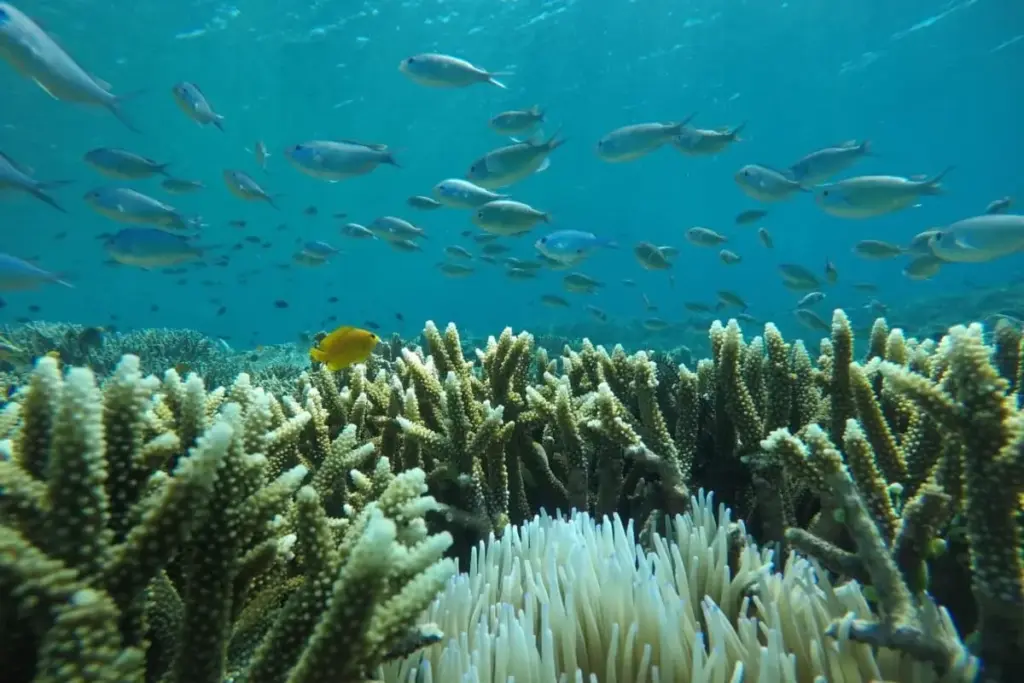
Coral reefs, the vibrant underwater metropolises often celebrated as the "rainforests of the sea," face an unprecedented existential crisis. Driven by relentless climate change, catastrophic marine heatwaves causing widespread coral bleaching, and localized industrial pressures such as sand mining and coastal development, these critical marine ecosystems are deteriorating at an alarming rate. Yet, a fundamental paradox hampers global conservation efforts: because coral reefs exist in a submerged realm far removed from daily human experience, they remain largely "out of sight and out of mind" for the majority of the global population.
Traditional conservation narratives—often dominated by dense academic papers, dry statistical metrics, and graphs depicting bleak ecological trajectories—have largely failed to capture the public’s imagination or drive systemic behavioral change. Recognizing this critical communications gap, a coalition of marine scientists and conservationists has put forward a compelling new paradigm. In a landmark research article published in the journal Science Advances, these researchers argue that bridging the chasm between empirical science and expressive art is no longer just a creative luxury, but a biological necessity.
By leveraging music, visual arts, film, dance, and interactive design, the scientific community aims to transform the abstract concept of coral degradation into a visceral, tangible reality. This approach seeks to bypass cognitive fatigue and emotional detachment, replacing them with empathy, heightened ocean literacy, and galvanized public support. While historical art-science collaborations have often remained localized or fragmented, recent case studies—ranging from grassroots musical movements in the Colombian Caribbean to global urban art installations—demonstrate that creative expression possesses a unique, scalable power. It can democratize marine science, engage marginalized coastal communities, and translate raw data into calls to action that resonate from small fishing villages to the halls of United Nations climate summits.
Detailed Chronology: The Evolution of the Art-Science Conservation Paradigm
The convergence of marine biology and creative expression did not happen overnight. It represents a gradual realization within the academic community that ecological data alone is insufficient to alter the trajectory of global environmental degradation.
-
Pre-2020: The Isolation of Marine Science
For decades, coral reef research was confined primarily to peer-reviewed journals, academic symposia, and technical reports intended for policymakers. While these documents successfully cataloged the rapid decline of reefs due to rising sea surface temperatures and ocean acidification, they largely failed to penetrate public consciousness. Public engagement initiatives were typically restricted to passive museum exhibits or documentaries that, while visually stunning, offered limited pathways for active civic participation. -
The Early 2020s: The Rise of Grassroots Creative Interventions
As the severity of global coral bleaching events escalated, individual scientists began partnering organically with local artists, muralists, and musicians. These pioneers recognized that communities living adjacent to reefs often possessed deep cultural ties to the ocean that were disconnected from Western scientific frameworks. Projects emerged globally, using community-based art to spark local dialogues about overfishing, pollution, and habitat loss. However, these initiatives remained largely anecdotal, operating in regional silos without a unified theoretical framework. -
The Colombian Catalyst (2023–2024)
A pivotal moment in community-level art-science integration occurred in the Colombian Caribbean. Dr. Monica Medina, a biology professor at the University of California, Los Angeles (UCLA), engaged in grassroots outreach near her field sites. There, she connected with Jalimer, a young artist performing Champeta—a vibrant, high-energy local music genre akin to reggaeton. Recognizing the cultural reach of the genre, Medina discussed the environmental pressures facing local marine ecosystems with the musician. This dialogue inspired Jalimer to compose an original track addressing environmental impacts, which he brought to Medina’s research team for scientific fact-checking. The ensuing collaboration produced a culturally resonant music video that was embraced not only by his home fishing community but also by civic leaders, including the mayor of Cartagena. -
Global Recognition at COP16 (Late 2024)
The success of the Colombian grassroots initiative vaulted from local coastal waters to the international stage when the Colombian Ministry of Environment officially invited Jalimer to perform at COP16, the United Nations biodiversity conference held in 2024. This milestone underscored how localized artistic expressions rooted in scientific accuracy could command international attention, illustrating the scalable potential of cultural diplomacy in conservation. -
The Science Advances Manifesto (Current Milestone)
Synthesizing years of empirical observation and emerging case studies, a group of prominent coral scientists published a seminal research article in Science Advances. This publication formally positions art not merely as an educational tool, but as a rigorous, strategic intervention capable of translating invisible underwater stressors into visible, accessible crises that demand immediate public and political mobilization.
Supporting Context & Metrics: The Scale of the Crisis and the Reach of Art
To understand why scientists are turning to the arts, one must examine the staggering scale of the coral reef crisis and the psychological barriers inherent in human environmental perception.
The Ecological Emergency
Coral reefs cover less than 0.1% of the ocean floor, yet they support approximately 25% of all marine life, making them one of the most biologically diverse ecosystems on the planet. Beyond their ecological value, reefs provide vital ecosystem services to over half a billion people worldwide, offering coastal protection from storm surges, sustaining multi-billion-dollar fisheries, and driving local economies through marine tourism.
However, these systems are on the frontline of anthropogenic climate change. Persistent marine heatwaves have triggered successive waves of global coral bleaching, a stress response where corals expel the symbiotic algae living in their tissues, turning ghostly white and frequently dying of starvation. Compounding this thermal stress are localized anthropogenic pressures:
- Coastal Development and Sand Mining: Dredging and mining operations physically destroy reef structures, smother benthic organisms with sediment, and disrupt coastal hydrodynamics.
- Ocean Acidification: As carbon dioxide emissions lower ocean pH, the chemical building blocks required for corals to construct their calcium carbonate skeletons become increasingly scarce.
- Pollution and Runoff: Agricultural nutrient runoff and plastic pollution fuel algal blooms and disease outbreaks that outcompete and smother coral colonies.
The Psychology of Distance
Despite these existential threats, public engagement remains disproportionately low compared to terrestrial conservation issues like deforestation or endangered charismatic megafauna (e.g., pandas, tigers, and elephants). This disparity stems from what environmental psychologists term "psychological distance" and the invisible nature of the underwater environment. Because the decline of a coral reef occurs largely beneath the waves—out of sight for the vast majority of the human population—it fails to trigger the visceral empathy and urgency elicited by burning forests or stranded terrestrial animals.
The research published in Science Advances addresses this perceptual barrier directly. The authors argue that artistic interventions—ranging from large-scale, coral-inspired sculptures in urban centers to immersive acoustic compositions—serve as translational bridges. By rendering the microscopic and submerged visible at a human scale, art short-circuits the psychological distance between urban populations and remote marine ecosystems.

Official Statements and Expert Perspectives
The integration of creative methodologies into hard science has sparked robust dialogue within both the marine biology and environmental education communities.
Dr. Monica Medina, co-author of the Science Advances article and professor of biology at UCLA, emphasizes the profound multiplier effect that culturally grounded art can achieve. Reflecting on her collaboration with the Champeta musician Jalimer, Medina noted in an interview with Mongabay:
"I spoke with him near one of my field sites, about how Champeta could play a role in changing local people’s perceptions about the environment if there were more songs with relevant lyrics… He surprised me months later with a song that he asked me to fact-check for the environmental impact statements."
Detailing the reception of the project within the community and beyond, Medina added:
"I know that his community in the fishing village he grew up in was very proud of his initiative and people received the song well locally, including the mayor of Cartagena at the time… The song had limited but great local impact. If the music movement around this topic was bigger, the education and conservation impact could be remarkable."
While the potential of art-science collaborations is increasingly celebrated, independent experts urge rigorous evaluation of these initiatives to ensure they translate into meaningful, long-term behavioral changes. Leanne Hepburn, a coral biologist and environmental literacy expert who was not involved in the drafting of the research article, offered a balanced perspective on the study’s implications:
"The paper recognizes, perhaps finally, that communicating the coral reef crisis needs more than scientific evidence and papers. Art can make an ecosystem that is distant and invisible for many people feel tangible."
However, Hepburn also highlighted the need for caution within the conservation community, warning against uncritical assumptions regarding human behavioral psychology:
"Where I think we need to be more cautious is in assuming a progression from awareness to inspiration and then to action. An important next step for this work is understanding how art–science collaborations can translate into greater ocean literacy and participation, for whom, and under what circumstances."
Future Outlook: Bridging Data and Dialogue for Global Conservation
As marine scientists and creative practitioners look toward the future, the primary challenge lies in scaling these initiatives beyond isolated regional successes and transforming them into a coordinated global movement.
Overcoming Fragmentation
Historically, art-science projects have suffered from a lack of institutional support and standardized evaluative metrics. Many projects are born from ad-hoc partnerships between individual researchers and local artists, leading to short-lived campaigns that dissipate once initial funding or local enthusiasm wanes. To secure a lasting impact, future conservation strategies must systematically integrate artistic communication into large-scale grant proposals, institutional frameworks, and governmental environmental education curricula.
Defining Pathways from Awareness to Action
As Leanne Hepburn noted, raising public awareness is merely the first step in a complex behavioral chain. Future research agendas inspired by the Science Advances article must focus on empirical measurements of audience engagement. Conservationists need to answer critical questions:
- Which artistic mediums (e.g., immersive digital installations, cinematic documentaries, local musical genres, or interactive public sculptures) are most effective for specific demographic groups?
- How can creative engagement be directly channeled into policy advocacy, sustainable consumer choices, and direct-action volunteering?
- How can indigenous and local communities retain ownership of the cultural narratives surrounding their marine environments?
The Road Ahead
The survival of the world’s coral reefs hangs in the balance. While cutting-edge scientific interventions—such as selective breeding for heat-tolerant corals, assisted gene flow, and active reef restoration—are essential on the biological front, they cannot succeed in a vacuum. Technical solutions require broad public mandate and political will, both of which are driven by cultural resonance and emotional connection.
By dissolving the artificial boundaries that have long separated the analytical rigor of the laboratory from the expressive freedom of the studio, the scientific community is forging a new language for the oceans. Through this synthesis of art and science, the silent, invisible death of coral reefs can be transformed into a resonant, unmistakable call to action—one that echoes from coastal fishing villages to global climate forums before it is too late.