Executive Overview
British fisheries are standing at the precipice of an unprecedented ecological and economic catastrophe. According to alarming new findings released by marine conservation researchers at the Blue Marine Foundation, the United Kingdom’s vital fish stocks face an imminent risk of total collapse. This impending disaster is primarily driven by widespread, systemic regulatory non-compliance within the commercial fishing sector, specifically the rampant continuation of illegal fish discarding.
Despite a landmark ban introduced over a decade ago under European Union law—a regulation largely integrated into post-Brexit domestic fisheries frameworks—commercial trawlers are routinely dumping vast quantities of less commercially valuable marine life back into the sea. In some regions of the UK, the scale of this waste is staggering: vessels are discarding up to six times more fish than they officially bring ashore. This hidden mortality is decimating non-target species, destabilizing marine food webs, and rendering sustainable quota management systems entirely ineffective.
Conservationists argue that successive UK administrations have systematically neglected enforcement mechanisms, effectively writing environmental laws that they lack the political will to uphold. As the ecological deficit catches up with maritime regulators, scientists warn that time is running out to reverse course before critical commercial and foundational fish populations pass the point of no return.
Detailed Chronology: From Legislative Hope to Systemic Failure
To understand the severity of the current crisis, it is necessary to examine how the UK fishing industry arrived at this juncture. The timeline of modern fisheries management in British waters has been defined by lofty legislative ambitions repeatedly undermined by poor enforcement and economic expediency.
The 2013 EU Landing Obligation (The Discard Ban)
For generations, the practice of "discarding"—throwing unwanted, undersized, or commercially unviable fish overboard, often dead or dying—was an accepted, albeit controversial, byproduct of quota-based management. Because fishermen were legally restricted to landing only specific quantities of targeted species, catching fish outside these quotas meant they had to be thrown back.
In response to public outcry and mounting scientific evidence of extreme waste, the European Union introduced the "Landing Obligation" in 2013. Phased in progressively across different fisheries until complete implementation in 2019, the ban outlawed the practice of throwing away quota-regulated species. The core philosophy of the law was simple: if you catch it, you must land it, count it against your quota, and find a use for it. The policy was designed to incentivize fishermen to adopt more selective gear, avoid areas populated by juvenile fish, and provide an honest accounting of total marine mortality.
The Post-Brexit Regulatory Vacuum (2020–2025)
Following the United Kingdom’s departure from the European Union, the rhetoric from Westminster emphasized "taking back control" of British waters and implementing gold-standard environmental management. In theory, the UK retained the core tenets of the landing obligation within domestic legislation.
However, enforcement mechanisms quickly fractured. Independent fisheries monitors and environmental watchdogs began noting a glaring discrepancy between official catch declarations and independent observations at sea. Without the overarching enforcement pressure of the EU’s European Fisheries Control Agency (EFCA)—and facing intense lobbying from commercial fishing associations struggling with economic viability—UK regulatory bodies, such as the Marine Management Organisation (MMO), largely adopted a passive oversight posture. Reports of widespread, non-punitive non-compliance multiplied year after year.
The 2026 Emergency Warnings
By mid-2026, the cumulative impact of a decade of de facto non-enforcement reached a critical mass. Comprehensive data analyses compiled by marine scientists and conservation NGOs revealed that illegal discarding had not only persisted but, in many high-intensity trawl fisheries, had become standard operational procedure. The Blue Marine Foundation’s landmark disclosure in August 2026 laid bare the reality: British waters were experiencing industrial-scale waste while regulators looked the other way, setting the stage for an ecological reckoning.
Supporting Context & Metrics: The Anatomy of Modern Trawling Waste
The term "discarding" often conjures images of a few stray fish being tossed back into the waves. In reality, modern commercial bottom-trawling is an industrial enterprise operating on a massive scale, and the metrics associated with it reveal an environmental tragedy of extraordinary proportions.
The Six-to-One Discard Ratio
According to field research highlighted by the Blue Marine Foundation, certain coastal and offshore regions around the UK exhibit discard-to-landed ratios as high as six to one. This means that for every single kilogram of marketable fish brought to port to be sold for human consumption, up to six kilograms of marine life are hauled up in nets, crushed, suffocated, and thrown back overboard—the vast majority of them dead or fatally injured.
[ Industrial Trawler Net Catch ]
         │
         ├──► 1 kg Landed (Marketable Species: Cod, Haddock, Sole)
         │
         └──► 6 kg Discarded (Bycatch, Undersized, Unvalued Species: Whiptail, Rays, Juvenile Demersal)
This staggering discrepancy stems from the economic realities of mixed-fisheries trawling. When a heavy net sweeps the seabed, it captures everything in its path. If a vessel’s quota for a high-value species like cod is exhausted, but it continues to trawl for permitted species like prawns or whiting, any cod caught alongside them are legally required to be discarded (under the pre-2013 rules) or illegally dumped to avoid prosecution and quota deductions.
Ecosystem-Wide Collateral Damage
The ecological cost extends far beyond the targeted commercial species. Bottom-trawling is an inherently indiscriminate harvesting method. The practice tears up fragile benthic habitats—such as cold-water coral reefs, maerl beds, and sponge aggregations—which serve as essential nursery grounds for juvenile fish.
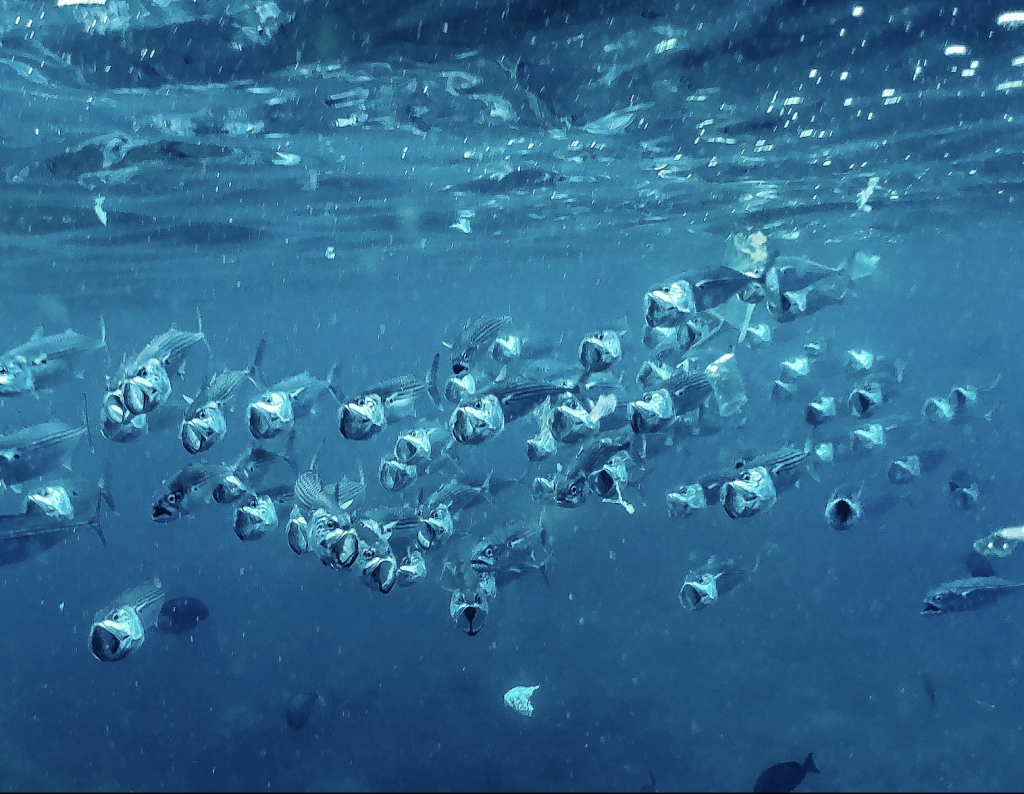
When immense quantities of non-commercial bycatch (including sharks, rays, marine mammals, and non-quota finfish) are dumped overboard, it fundamentally alters the trophic balance of the marine ecosystem. Scavenger species may experience artificial population booms, while slow-reproducing apex predators and foundational forage fish face terminal declines.
The Illusion of "Sustainable" Quotas
Fisheries management is heavily reliant on scientific stock assessments. These assessments depend heavily on catch data reported by fishermen. If commercial operators routinely discard massive percentages of their actual catch without reporting it, the official data fed into scientific models becomes dangerously skewed.
Governments set total allowable catches (TACs) based on these flawed models. Consequently, authorities may believe a fish stock is stable and authorize continued fishing pressure, while the actual population is being hollowed out by unreported mortality. This systemic data distortion is what researchers describe as the primary pathway to sudden, unexpected stock collapse.
Official Statements and Industry Reactions
The release of the Blue Marine Foundation’s findings has triggered sharp rebukes from conservation advocates and placed intense political pressure on government regulators.
The Conservationist Perspective
Jonny Hughes, a prominent spokesperson and conservation leader at the Blue Marine Foundation, did not mince words when addressing the systemic failures of British maritime policy. In a scathing critique of government oversight, Hughes stated:
"The government has been ignoring the law it wrote a decade ago, and the results are catching up with it fast. This was inevitable."
Hughes emphasized that the crisis is not the result of a sudden natural disaster or an unforeseeable biological shift, but rather the predictable outcome of regulatory negligence. By failing to deploy adequate monitoring technologies—such as Remote Electronic Monitoring (REM) with closed-circuit television (CCTV) on vessels—successive administrations enabled an environment of impunity.
The Regulatory and Political Silence
In contrast to the urgent warnings issued by scientists, response from the Department for Environment, Food and Rural Affairs (Defra) and the Marine Management Organisation (MMO) has faced accusations of bureaucratic obfuscation. While official policy maintains a zero-tolerance stance on illegal fishing practices, critics point out that budgetary constraints, a lack of at-sea inspection vessels, and a reluctance to penalize powerful commercial fishing lobbies have created a wide gulf between statutory declarations and operational reality.
Commercial Fisheries Divide
The commercial fishing sector itself remains deeply divided over the issue. Smaller-scale, coastal, and low-impact fishers—who utilize static gear such as pots, lines, and gillnets—have vocally condemned industrial trawlers, arguing that heavy dredging and unregulated discarding are destroying the livelihoods of sustainable operators. Conversely, representatives for large-scale trawl fleets argue that rigid, poorly designed quota allocations make compliance nearly impossible without rendering their operations economically unviable, creating a vicious cycle of rule-breaking and concealment.
Future Outlook: Can British Fisheries Be Saved?
As the UK confronts the very real prospect of commercial fish stock collapse, the path forward requires a radical overhaul of maritime governance, enforcement, and cultural attitudes toward ocean resource management. Without immediate, decisive intervention, iconic species that have sustained coastal communities for centuries could vanish from British waters entirely.
1. Mandatory Remote Electronic Monitoring (REM)
The single most effective technological solution to illegal discarding is the widespread implementation of Remote Electronic Monitoring systems, incorporating onboard cameras and sensor arrays on all commercial fishing vessels above a certain tonnage. Trials have repeatedly demonstrated that when skippers know their sorting decks are being monitored, rates of illegal discarding plummet dramatically. Regulators must make REM a non-negotiable condition of licensing.
2. Transitioning Away from Destructive Gear
Long-term ecological recovery cannot be achieved through quotas alone; it requires spatial management. Phasing out bottom-trawling and dredging in sensitive inshore marine protected areas (MPAs) is essential. Incentivizing a transition toward low-impact, selective fishing gear will protect juvenile fish, preserve benthic habitats, and ensure that sustainable fishers can reap the economic rewards of a recovering ocean.
3. Radical Transparency and Independent Oversight
Fisheries management must shift away from self-reporting models toward independent, science-led verification. Observer programs, real-time catch documentation, and stringent port-side inspections must be adequately funded and aggressively enforced.
Conclusion
The warning issued by the Blue Marine Foundation is not merely an environmental alarm bell; it is a final notice. The laws required to protect Britain’s marine heritage already exist on paper. What has been missing is the political courage to enforce them. If Westminster continues to turn a blind eye to the industrial-scale waste occurring off our coasts, the UK risks turning its bountiful marine estate into an ecological wasteland—leaving behind empty nets, silenced coastal communities, and a depleted ocean from which there is no return.