Executive Overview
France is currently facing a public health and safety crisis along its coastlines, rivers, lakes, and private backyards. According to official government figures released by Sports and Youth Minister Marina Ferrari, the nation has recorded a staggering 301 drownings since June 19. This represents an alarming 14% increase compared to the same tracking period in the previous year. Public health officials and meteorological experts have drawn a direct correlation between this sudden, deadly spike in water-related fatalities and the prolonged, punishing heatwaves that have gripped Western Europe over recent months.
As temperatures soar well above historical seasonal averages across France, Spain, and Italy, millions of residents and tourists alike are seeking immediate relief from the stifling conditions. However, this mass exodus toward water bodies—ranging from unsupervised wild rivers and industrial canals to residential swimming pools—has triggered a tragic sequence of preventable deaths.
Government authorities, emergency response teams, and civil protection agencies are now on high alert. The crisis extends far beyond simple statistics; it highlights a profound vulnerability in public behavior, safety infrastructure, and emergency communication during extreme weather events. While firefighters and rescue personnel battle massive, climate-fueled wildfires scorching thousands of hectares of arid land across Southern Europe, paramedics are simultaneously working around the clock to resuscitate victims pulled from rivers, lakes, and private pools.
Minister Ferrari did not mince words during her broadcast interview on France Inter radio, labeling the rising death toll a "tragic toll" that demands immediate intervention. The government is currently locked in urgent consultations with regional prefectures and municipal authorities to re-evaluate swimming safety, enhance supervision in high-risk zones, and ramp up public awareness campaigns before the peak of the summer vacation season claims even more lives.
Detailed Chronology of the Crisis
The Early-Season Warning Signs
The roots of the current crisis can be traced back to the onset of meteorological summer, when early heat domes settled over the Iberian Peninsula and rapidly expanded northward into French territory. As early as June, long before the traditional peak of the tourist season, state officials detected a dangerous behavioral shift among the populace.
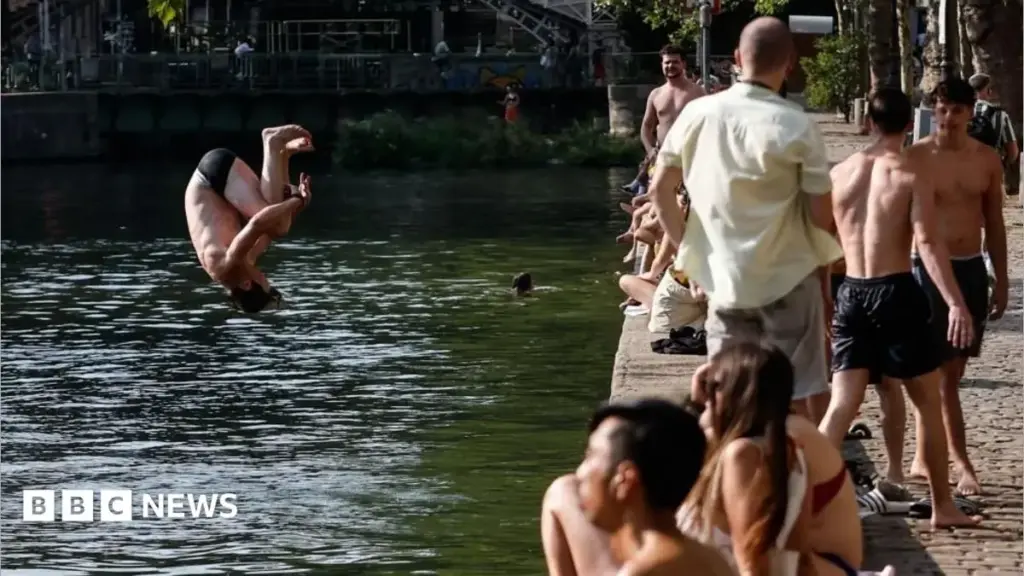
On June 19, government monitors formally initiated intensified tracking protocols for water-related accidents, recognizing that early-season heat spikes historically catch the public off-guard. Just days into this tracking period, Minister Marina Ferrari issued an urgent public warning, cautioning that far too many citizens were attempting to beat the heat by plunging into perilous open-water environments—such as fast-flowing rivers and industrial canals—without accurately assessing the inherent dangers or understanding their own physical limitations.
Despite these early appeals for caution, the meteorological conditions intensified. Instead of abating, the heatwaves locked into place, creating a persistent, suffocating atmospheric trap across much of mainland France.
The Mid-Summer Escalation
As July progressed, the heatwaves intensified, and the daily tally of water-related fatalities began to climb at a rate that alarmed civil protection agencies. Emergency services across multiple regions reported an unprecedented surge in water-rescue operations.
By late July, the cumulative death toll officially crossed the 300 mark, hitting 301 recorded drownings. Investigators and emergency dispatchers noted a distinct geographical and demographic spread in the tragedies. While coastal beaches managed by professional lifeguards generally maintained stable safety records, unsupervised inland waters—particularly rural rivers, lakes devoid of rescue stations, and urban canals—became hotspots for fatal accidents.
Concurrently, a secondary, less visible crisis was unfolding in residential areas. Emergency responders noted a high frequency of distress calls originating from private homes, where elderly residents and young children were falling victim to sudden immersion incidents in backyard swimming pools. The combination of intense ambient heat, underlying health conditions, and thermal shock proved fatal in numerous instances, shifting the profile of the typical drowning victim beyond the stereotype of the adventurous adolescent taking risks in open water.
Supporting Context & Metrics: The Climate-Drowning Nexus
Quantifying the Surge
The statistical core of the current emergency rests on the 14% year-on-year increase in drownings reported by the Ministry of Sports and Youth. To understand the gravity of this metric, public health analysts must look at the compounding variables of climate acceleration, demographic shifts, and human psychology during extreme weather events.
- Total Fatalities (Post-June 19): 301 recorded deaths.
- Percentage Increase: 14% higher than the equivalent period tracked previously.
- Primary Risk Environments: Unsupervised open water (rivers, canals, lakes) and private residential pools.
- Vulnerable Demographics: Risk-taking adolescents/young adults in open water, alongside elderly individuals in private pools.
The Macro-Climatological Driver
To view the French drowning crisis in isolation is to miss the broader systemic emergency unfolding across the European continent. Europe is not merely experiencing a series of hot summers; it is enduring a structural transformation of its climate systems.
According to authoritative data from the Copernicus Climate Change Service—the Earth observation component of the European Union’s space program—Europe stands out as the fastest-warming continent on Earth. The region is currently heating up at roughly twice the global average rate. This accelerated warming is driven by a combination of atmospheric feedback loops, changes in jet stream behavior, and geographical vulnerabilities that trap heat over the Mediterranean basin and push warm air deep into Western and Northern Europe.
This unprecedented thermal loading has direct consequences for human behavior. As ambient temperatures shatter historical records—frequently pushing past 40°C (104°F) in parts of France, Spain, and Italy—the human body’s natural cooling mechanisms are overwhelmed. The psychological and physiological imperative to seek cooling relief becomes overwhelming.
However, natural and artificial water bodies do not scale in safety to meet this sudden surge in demand. Rivers swollen by erratic weather patterns, lakes with sudden drop-offs, and canals designed for industrial transport rather than recreation become death traps for individuals desperate to lower their core body temperatures. Furthermore, concurrent climate impacts—such as the massive wildfires scorching thousands of hectares in Southern Europe—create a multi-front disaster scenario, stretching civil protection resources, firefighting units, and emergency medical services to their absolute limits.
Official Statements and Administrative Responses
Voices from the Government
The French government has faced mounting pressure to explain how a preventable seasonal crisis escalated to such lethal proportions. Speaking directly to the public through France Inter radio, Sports and Youth Minister Marina Ferrari provided a candid assessment of the situation, outlining both the causes of the accidents and the government’s strategy for mitigation.
"The number of deaths is a tragic toll," Minister Ferrari stated during her Friday broadcast. She emphasized that human behavior under extreme climatic stress is a primary vector for the crisis. According to Ferrari, citizens are frequently throwing caution to the wind in their quest for thermal relief: "Many deadly accidents have occurred in areas that are not authorised or supervised for swimming."
Highlighting the specific geographical hazards, the minister drew attention to environments that lack any form of professional oversight: "A number of the drownings were recorded in open water, in canals for example." These industrial and semi-natural waterways present hidden dangers, including strong undercurrents, icy sub-surface currents, sudden depth variations, and sheer concrete banks that make exiting the water nearly impossible without a ladder or assistance.
The Private Pool Phenomenon
While public safety campaigns traditionally focus on beaches and rivers, Ferrari highlighted a less discussed yet equally lethal frontier: the private domestic swimming pool.
"Many drownings, particularly among the elderly, occurred in individual pools," she noted.
The physiological mechanics behind these domestic tragedies are often misunderstood by the public. Minister Ferrari explained that sudden immersion in colder water on an intensely hot day can trigger a violent physiological reaction known as cold-water shock. This sudden chilling of the skin causes an involuntary gasp reflex, rapid hyperventilation, and a massive spike in blood pressure and heart rate, which can easily induce cardiac arrest in older individuals or those with pre-existing cardiovascular conditions.
Furthermore, Ferrari warned that individuals frequently overestimate their physical endurance during heatwaves: "People can also exceed their physical capabilities." Dehydration, electrolyte imbalance, and heat exhaustion impair judgment and physical stamina, meaning a swimmer who might easily manage a pool length on a temperate day can rapidly succumb to exhaustion and slip beneath the surface when the ambient temperature is hovering near record highs.
Corrective Measures and Institutional Action
In response to the mounting death toll, the Ministry of Sports and Youth is not relying solely on public warnings. Ferrari confirmed that the government is actively collaborating with regional prefectures, local municipal councils, and safety organizations "to improve swimming areas and make things safer."
These emergency interventions include:
- Enhanced Signage and Barricades: Deploying clear, multilingual warning signs around known hazardous spots, illegal swimming holes, and dangerous canal stretches.
- Increased Surveillance: Mobilizing municipal police and auxiliary patrols to monitor high-risk wild swimming areas and deter individuals from entering unauthorized waters.
- Targeted Public Health Messaging: Launching specialized communication campaigns aimed at vulnerable groups—specifically targeting the elderly regarding the risks of private pool use during heatwaves, and educating younger demographics on the lethal hidden currents of rivers and canals.
- Infrastructure Upgrades: Fast-tracking municipal grants to improve safety infrastructure around legal, designated bathing areas, ensuring better life-saving equipment availability and increased lifeguard presence where feasible.
Future Outlook: Living with Extreme Heat and Water Risks
As Europe enters the second half of the summer season, the structural reality of climate change ensures that the dangers associated with heatwaves and water recreation are not temporary anomalies, but rather the new normal. Public policy experts, urban planners, and emergency management professionals agree that France—and the wider European community—must fundamentally adapt its infrastructure and safety paradigms to survive a rapidly warming world.
The Need for Structural Adaptation
Looking ahead, municipal authorities face the challenge of designing urban and rural environments that provide safe, accessible cooling options for populations that can no longer rely on traditional temperate summers. Relying solely on punitive measures, such as ticketing individuals who swim in unauthorized rivers or canals, has proven ineffective when citizens are driven by extreme discomfort.
Instead, urban planners advocate for the rapid expansion of public aquatic infrastructure:
- Creation of Managed Urban Swimming Zones: Developing secure, filtered, and supervised swimming areas within urban rivers and lakes (following successful models in cities like Paris, Basel, and Munich).
- Expansion of Public Aquatic Facilities: Extending the operating hours of municipal swimming pools and subsidizing access during peak heatwave events to give vulnerable populations safe, monitored alternatives to dangerous wild swimming spots.
- Advanced Early-Warning Systems: Integrating meteorological heatwave forecasts directly with public safety alerts regarding water temperatures and thermal shock risks.
Behavioral Shift and Long-Term Resilience
Ultimately, mitigating future drowning spikes will require a profound cultural shift in how society perceives and responds to extreme weather. Public education systems must incorporate climate resilience and water safety as core curricula, ensuring that younger generations grow up fully cognizant of the hidden mechanical and physiological dangers posed by natural waterways during environmental stress events.
Minister Ferrari’s stark warning serves as both an immediate plea for caution and a long-term diagnostic of a society struggling to keep pace with environmental degradation. As global temperatures continue their upward trajectory, driven by unabated greenhouse gas emissions, the margins for human error in the water shrink ever smaller.
For the remainder of this summer, the message from French authorities remains unequivocal: respect the water, avoid unsupervised and unauthorized swimming zones, account for the brutal physiological shocks of extreme heat, and recognize that the lakes, rivers, and pools offering the promise of instant relief can, in a matter of seconds, turn lethal. Protecting human life against the backdrop of a heating planet will require constant vigilance, robust public investment, and a collective recalibration of how society interacts with nature in an era of climate extremes.