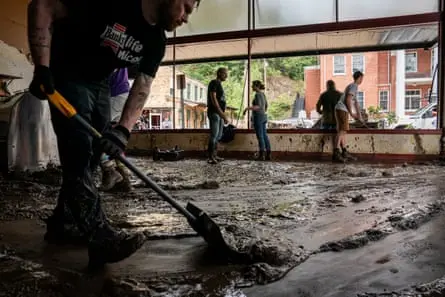
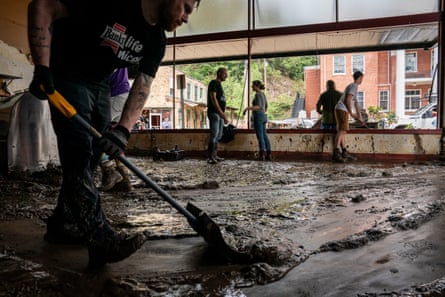
Two years after the catastrophic fury of Hurricane Helene devastated the western half of North Carolina—leaving behind at least 107 dead and inflicting nearly $60 billion in damages in what remains the worst natural disaster in the state’s modern history—the physical scars are slowly giving way to normalcy. Vibrant downtowns have re-emerged, critical road networks have been painstakingly reconstructed, and swollen rivers have long since receded below their banks.
Yet, beneath this facade of recovery, the physical and political remnants of the storm linger heavily. "For Rent" signs still mark the storefronts of businesses that could not weather the financial ruin, and fragments of storm debris can occasionally be found trapped in remote waterways.
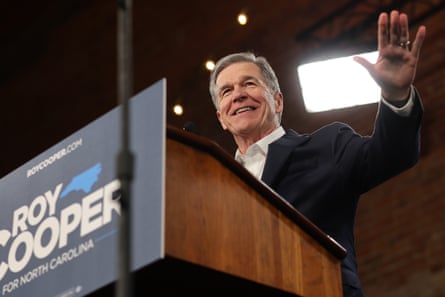
More profoundly, in the fierce, high-stakes battle for North Carolina’s open U.S. Senate seat, it is as though Hurricane Helene never left. With longtime Republican Senator Thom Tillis retiring, Democrats view this upcoming midterm election as a rare, golden opportunity to capture a vital seat in a politically polarized state that has repeatedly rebuffed national Democratic candidates. With the balance of power in the U.S. Senate for the remainder of Donald Trump’s presidency hanging in the balance, the race between the two frontrunners—Democratic nominee Roy Cooper and Republican nominee Michael Whatley—has devolved into a bitter referendum on disaster management, federal bureaucracy, and local resilience.
Executive Overview
The race to succeed Thom Tillis has rapidly transformed into one of the most closely watched and fiercely contested midterms in the United States. North Carolina has long been a heartbreak state for Democrats; despite consistently close margins, no Democrat has won a U.S. Senate election or carried the state at the presidential level since 2008. Bolstered by aggressive legislative maneuvering and carefully drawn congressional maps, the Republican Party has maintained a tight grip on state governance.
However, the unprecedented trauma of Hurricane Helene in September 2024 has fundamentally scrambled traditional political calculations. The disaster struck a heavily conservative region of western North Carolina, disrupting local economies, exposing vulnerabilities in emergency response frameworks, and sparking an ongoing debate over accountability.
Both major-party nominees are inextricably tethered to the storm’s aftermath. Roy Cooper, the popular former two-term Democratic governor, was at the helm when the tropical system made landfall, leaving him vulnerable to criticism over the immediate pace of state assistance. Conversely, Michael Whatley—former chair of the Republican National Committee and a key figure in the Trump administration’s disaster review apparatus—finds himself dogged by the moniker of "recovery czar," a title weaponized by Democrats to saddle him with responsibility for federal shortfalls.
With recent polling showing a tight contest and national parties pouring millions into the state, the election has crystallized around a singular, haunting question for western North Carolinians: Who is truly to blame for the sluggishness of the relief efforts, and who can be trusted to champion the region’s long-term recovery in Washington?

Detailed Chronology of a Catastrophe and Its Aftermath
To understand the intense political crosscurrents of the 2026 Senate race, one must examine the timeline of compounding crises that have tested western North Carolina over the past half-decade.
September 2024: Hurricane Helene Makes Landfall
Striking the mountainous interior of North Carolina as a destructive tropical system, Helene brought catastrophic rainfall, catastrophic flash flooding, and devastating winds. Mountain communities that considered themselves shielded from coastal hurricanes were entirely unprepared for the sheer volume of water. Rivers like the French Broad surged to historic, unthinkable heights, obliterating infrastructure, homes, and municipal centers. The death toll ultimately climbed to at least 107, and economic damages soared to an estimated $60 billion.
Late 2024 to Early 2025: Political Finger-Pointing and Presidential Visits
In the immediate aftermath, Donald Trump seized upon the devastation to aggressively criticize the Biden administration’s disaster response, ultimately carrying North Carolina with 51% of the vote in the November 2024 presidential election. Upon returning to the White House in early 2025, Trump visited the state and publicly suggested that Michael Whatley would oversee structural improvements to the recovery process. This off-the-cuff designation stuck, earning Whatley the controversial label of "recovery czar" in local and national media outlets—a title his campaign has vigorously disputed, noting it was never an official government appointment.
2025–2026: Bureaucratic Roadblocks and Bureaucratic Shifts
As recovery dragged on, relief efforts became mired in red tape. Under Kristi Noem, Trump’s first homeland security secretary, a mandate requiring personal secretarial approval for all Federal Emergency Management Agency (FEMA) expenditures exceeding $100,000 severely bottlenecked rebuilding projects. Frustration mounted among local officials across party lines.
Simultaneously, Whatley was appointed to the FEMA Council Review Board, which evaluated agency operations and ultimately released a controversial report proposing a radical decentralization of disaster response, shifting primary responsibility away from the federal government and into the hands of state and local entities.
The political logjam eased only partially following the early 2026 confirmation of a new homeland security secretary, Markwayne Mullin, which streamlined agency approvals. Yet, the foundational debate over whether federal aid was adequate or arrived too late remains a defining theme of the current Senate campaign.
Supporting Context & Metrics: On the Ground in Marshall and Canton
The human toll of these administrative delays and natural disasters is vividly apparent in mountain towns like Marshall and Canton, where local leaders and business owners grapple with a "new normal."
Marshall: A Riverside Town Rebuilding from the Mud
In Marshall, a picturesque riverside seat of Madison County with a population of just 961, the French Broad River crested an astonishing 27 feet above flood level during Helene, surging dangerously close to the second-story windows of downtown buildings. The floodwaters swept away the town hall and post office, while completely inundating the historic county courthouse and rendering it structurally unusable.
Today, Marshall’s main street retains an artsy, resilient charm, featuring a thrift store, a high-end bicycle retailer, and a boutique trading in arcade games and cassette tapes. Yet, the economic engine of the town has fundamentally shifted. Longtime business owners like Joel Friedman, proprietor of Zuma Coffee, note that the reliable nine-to-five corporate lunch crowd has vanished, replaced primarily by weekend visitors and tourists. While gross sales have clawed their way back, profit margins have been squeezed tight by broader economic inflation. Furthermore, local employees face mounting pressures from escalating healthcare costs following Congress’s decision to let temporary federal Affordable Care Act subsidies expire.
The historic courthouse across from Zuma Coffee remains permanently shuttered. Madison County officials have opted to abandon the flood-prone site entirely, planning a new administrative complex on higher ground financed through a combination of state General Assembly appropriations and FEMA allocations.
Despite these steps forward, local frustration runs deep. Aaron Haynie, the Democratic mayor of Marshall, remains an ardent supporter of Roy Cooper, arguing that the former governor’s deep personal ties to the state will translate into more authentic advocacy in Washington. Conversely, Matthew Wechtel, a Republican county commissioner, contends that Cooper was largely a "no-show" during the critical weeks following the disaster, asserting that the vast majority of tangible relief originated from the state legislature rather than the executive branch.
Canton: Compounding Crises in Haywood County
Roughly two dozen miles south of Marshall sits Canton, a community that has absorbed an extraordinary succession of catastrophic blows. In 2021, Tropical Storm Fred inundated the town. Just two years later, 1,100 high-paying jobs vanished overnight with the closure of a historic paper mill that had anchored the local economy for over a century. Then came Hurricane Helene, putting the entire municipality underwater once again.
"Everything was flooded. We lost homes, businesses, things that we had rebuilt from ’21, gone again," recalled Zeb Smathers, Canton’s Democratic mayor.
Smathers’ familiarity with FEMA spans multiple disasters. While he noted that the federal agency was frustratingly sluggish during Tropical Storm Fred, its initial response to Helene was notably swifter—though subsequent bureaucratic hurdles under federal leadership slowed long-term payouts.
Like Madison County, political divides frame the discourse in Canton. Brandon Rogers, a conservative county commissioner who opposes abortion, fondly recalls Governor Cooper calling him personally right after the storm to coordinate emergency helicopter deliveries of water, food, and insulin. While Rogers praised Cooper’s hands-on logistical responsiveness, political alignments mean his vote in November will go to Michael Whatley, whom Rogers believes will effectively represent conservative economic interests in the Senate.
Official Statements and Campaign Crossfire
The rhetorical warfare between the Cooper and Whatley campaigns highlights the central irony of the race: both candidates are intensely fighting over a disaster response that many western North Carolinians view as fundamentally flawed.
- The Whatley Campaign Perspective: DJ Griffin, a spokesperson for Michael Whatley, has forcefully pushed back against the "recovery czar" label, emphasizing Whatley’s active role in securing $10.75 billion in federal hurricane relief through close collaboration with Republican members of North Carolina’s congressional delegation. "If you look very, very, very, very closely, you’ll notice there’s no czar in that description. Not a czar of any sort," Griffin stated, adding that Whatley remains actively engaged with local leaders to address lingering regional needs.
- The Cooper Campaign Perspective: Countering this narrative, a spokesperson for Roy Cooper’s campaign argued that the federal funds secured by congressional Republicans covered a mere 15% of the total destruction wrought by the storm. The campaign highlighted Cooper’s executive leadership in signing two bipartisan bills that allocated over $877 million in state-level relief funds before he left office. "DC insider Michael Whatley has completely failed in his role as federal recovery czar," the campaign charged in a statement.
- The Academic View: Christopher Cooper, a political science professor at Western Carolina University, underscores the volatile nature of this political calculus. "I don’t think it’s to anybody’s political benefit to be tapped as the person who was in charge of Helene recovery—Democrat, Republican, Green, Libertarian—doesn’t matter," Cooper observed. "People in western North Carolina are fairly united that there wasn’t enough done and that Helene relief has been more of a failure than a victory. The question is who they blame for that."
Future Outlook: The Balance of Power in the Balance
As the midterm elections draw closer, North Carolina’s Senate race has evolved into a premier national battleground. For Democrats, capturing Tillis’s seat represents the holy grail of their midterms strategy—a rare pickup opportunity in a traditionally red state that could tip the balance of power in the U.S. Senate during the latter half of Donald Trump’s presidency. For Republicans, holding the seat is a matter of institutional preservation, a vital firewall against legislative gridlock in Washington.
Yet, beyond the national partisan framing, the election serves as a deeply personal referendum for the citizens of western North Carolina. Voters are forced to weigh competing narratives of administrative competence, federal oversight, and state leadership. Whether they see Roy Cooper as a dedicated chief executive who rushed vital aid to the mountains, or view Michael Whatley as an effective connector to the levers of federal power, the ghosts of Hurricane Helene ensure that the road to Washington must first pass through the muddy, resilient streets of Marshall and Canton.