Executive Overview
For decades, the pursuit of green hydrogen has been hampered by a stubborn paradox: producing the zero-carbon fuel typically requires more energy than the resulting gas actually contains, while traditional manufacturing methods rely heavily on fossil-fuel-derived energy that generates massive greenhouse gas emissions. Yet, a paradigm shift is quietly unfolding beneath our feet. Across the globe, geoscientists and venture-backed startups are racing to tap into "geologic hydrogen"—naturally occurring reserves of high-purity H₂ generated by subterranean geochemical reactions.
Recent discoveries in deep mines spanning from Northern Ontario to the mountains of Oman suggest that Earth’s crust is continuously manufacturing vast quantities of hydrogen. While pioneering researchers like University of Toronto geochemist Barbara Sherwood Lollar calculate that individual mines could leverage local venting gases to power their own operations, the broader ambitions of the burgeoning natural hydrogen industry are planetary in scale. According to estimates by the US Geological Survey (USGS), trillions of tons of hydrogen lie locked within the Earth’s crust—enough to meet global energy demands for centuries if even a fraction can be economically recovered.
However, translating this subterranean promise into a commercial reality requires overcoming monumental hurdles. While a flurry of global exploration is underway—backed by high-profile investors like Bill Gates—no one has yet proven a commercially viable, large-scale natural reservoir. As researchers pivot from merely discovering natural hydrogen to attempting to artificially stimulate its production in deep-rock formations, the energy world stands at a critical crossroads. The ultimate challenge is no longer proving that Earth produces hydrogen, but learning how to harvest it cleanly, reliably, and at scale.
Detailed Chronology: From Deep-Mine Microbes to a Global Energy Hunt
The 1990s: Accidental Discoveries in the Canadian Shield
The modern chapter of geologic hydrogen exploration began not in an oil patch, but in the dark, water-logged tunnels of the Kidd Creek mine in northern Ontario. In the 1990s, Barbara Sherwood Lollar descended more than three kilometers into the ancient, stable continental crust of North America. There, her team of geochemists stumbled upon pockets of ancient brine that had been isolated from the surface for over a billion years.
To their astonishment, this primordial fluid was not sterile. It sustained a thriving ecosystem of subterranean microbes that fed entirely on hydrogen gas—a gas produced locally by continuous, low-temperature chemical reactions between the water and the surrounding iron-rich rock, as well as the radioactive decay of surrounding elements. At the time, the discovery was celebrated primarily as a microbiological marvel, offering a glimpse into how life might persist in extreme environments on Earth or other planets. It would take decades for researchers to look at those same hydrogen measurements through an energy lens.
The 2010s to 2020s: Revisiting Historical Data and Global Prospections
As the global climate crisis accelerated the search for zero-carbon fuels, Sherwood Lollar revisited her team’s decades-old Kidd Creek data. Recognizing the acute need for clean energy sources that bypass the energy-intensive manufacturing steps of industrial hydrogen production, she began to wonder if the gas bleeding out of the mine’s rock formations could serve a practical purpose.
Simultaneously, reports of natural hydrogen seeping from unexpected places began to accumulate globally. In 2024, a research team led by Laurent Truche at the University of Grenoble Alpes in France published a landmark study revealing that at least 200 metric tons of hydrogen were venting annually from the Bulqizë chromium mine in Albania. Similar discoveries and historical anomalies—from bubbling springs in Mali to ancient oceanic rift formations in the US Midwest—catalyzed a modern exploration gold rush. Dozens of startups materialized overnight, including Australian firm HyTerra and Koloma, a venture backed by Bill Gates’s Breakthrough Energy Ventures.
2025 and Beyond: The Push for Artificial Stimulation and Field Tests
As pure-play exploration expanded, researchers realized that waiting to stumble upon a natural reservoir might be too slow for an energy transition in crisis. By 2025, scientific efforts pivoted toward active stimulation: attempting to accelerate the natural geochemical reactions that produce hydrogen by injecting water, heat, or chemical catalysts deep into reactive rock formations.
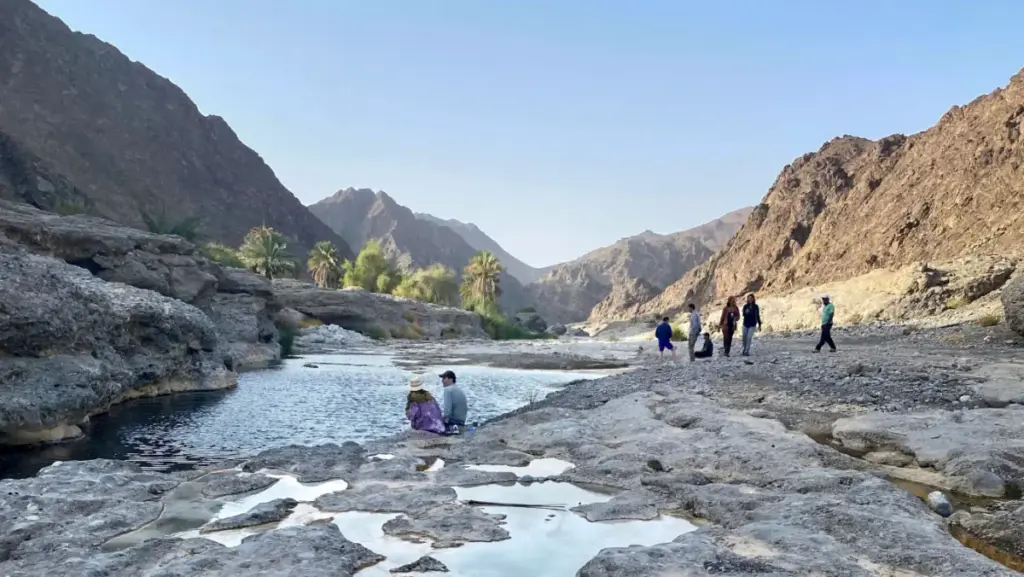
A major proof-of-concept arrived in the mountains of Oman, where an international research team drilled a one-kilometer borehole and injected 50,000 cubic meters of water into subsurface ophiolites—mantle rocks known to generate hydrogen when exposed to water. When researchers unsealed the well months later, it spewed a pressurized gas mixture consisting of 90% hydrogen. This breakthrough, paired with new methodological data published in PNAS regarding the Kidd Creek mine, has transformed geologic hydrogen from a scientific curiosity into one of the most closely watched frontiers in renewable energy.
Supporting Context & Metrics: Quantifying the Subterranean Supply
To understand the economic potential of geologic hydrogen, scientists are turning to rigorous data collection, measuring everything from borehole leakage rates to planetary reserves.
The Kidd Creek Mine Audit
In a study published in the journal PNAS, Sherwood Lollar and her colleague Oliver Warr analyzed a comprehensive data set compiled from 35 boreholes at the Kidd Creek mine over more than ten years. Their meticulous calculations revealed a striking consistency: each borehole steadily released an average of eight kilograms of hydrogen per year.
Extrapolating this emission rate across the mine’s more than 14,000 active boreholes yields an estimated 141 metric tons of hydrogen escaping into the atmosphere annually through mine ventilation shafts. While this quantity is modest on a global energy scale, Sherwood Lollar points out that capturing this fugitive gas could easily power a substantial portion of the mine’s own daily industrial operations, serving as a vital local testing ground for the technology.
Global Scale and Crustal Reservoirs
On a macro level, the numbers grow exponentially. Researchers at the US Geological Survey (USGS) have published peer-reviewed models estimating that Earth’s crust holds trillions of tons of dissolved and trapped hydrogen. Because the chemical processes that generate it—chiefly serpentinization (where water reacts with iron-rich mantle rocks) and radiolytic splitting of water molecules—are ongoing and widespread, natural hydrogen is effectively a renewable resource, unlike finite fossil fuels.
However, translating crustal abundance into accessible reserve metrics remains a primary obstacle. Unlike oil and natural gas, which are often trapped in large, concentrated sedimentary basins, hydrogen molecules are notoriously small and reactive. They can easily leak through caprocks or be consumed by subsurface microbes before ever accumulating in extractable reservoirs. Consequently, public data on private exploration finds remains scarce as startups jockey for competitive advantages and investor capital.
ARPA-E and the 10,000x Speed Challenge
Recognizing that natural migration and accumulation are too slow to rely on passively, the US Department of Energy’s Advanced Research Projects Agency-Energy (ARPA-E) has launched targeted funding initiatives. ARPA-E is backing more than a dozen projects aimed at artificially stimulating hydrogen-producing reactions underground. The agency’s stated benchmark is ambitious: researchers must find ways to accelerate subsurface hydrogen generation rates by a factor of 10,000. Hitting this precise threshold, scientists estimate, is the key to making engineered geologic hydrogen commercially viable against incumbent energy sources.
Official Statements and Expert Perspectives
As the scientific community races to validate the viability of geologic hydrogen, leading researchers offer a balanced view of the triumphs and hurdles ahead.
-
On the Reality of the Process:
"The results from Kidd Creek add to the growing evidence that natural hydrogen generation and migration are genuine geological processes. The remaining challenge is not proving that natural hydrogen exists, but proving that it can be produced economically and reliably at commercial scale."
— Laurent Truche, Geochemist, University of Grenoble Alpes -
On Localized Utilization and Industrial Synergy:
"If we can set some smart minds into figuring out how to hook it up and use it, then we’ve got a win for this nascent economy… Capturing the hydrogen venting from mines like Kidd Creek wouldn’t change the world overnight, but it would offer a modest source of energy—perhaps enough to power a substantial portion of the mine’s operations—and provide a valuable local demonstration that geologic hydrogen really can be put to use."
— Barbara Sherwood Lollar, Geochemist, University of Toronto -
On the Complexities of Subsurface Stimulation:
"While drilling in Oman and injecting 50,000 cubic meters of water produced a well spewing 90% hydrogen gas, a slew of unknowns remain. The most crucial question is a basic one: Is the hydrogen rising up out of the well made through active stimulation, or had it been there all along?"
— Jo Shannon, Geoscientist, University of Southampton
Future Outlook: The Road Ahead for Natural Hydrogen
The transition from academic curiosity to commercial energy powerhouse will not be straightforward. As exploration companies deploy seismic imaging and geochemical surveys across the US Midwest, Australia, Africa, and Europe, they face significant technical, regulatory, and scientific roadblocks.
Unresolved Scientific Questions
Chief among the unanswered questions is reservoir dynamics. Unlike conventional petroleum exploration, where decades of seismic data can pinpoint trapped hydrocarbons with high precision, exploring for hydrogen requires entirely new geological models. Because hydrogen is so chemically active, it reacts with surrounding minerals, reducing the likelihood of large accumulations unless sealed by exceptionally impermeable caprocks. Furthermore, when scientists artificially stimulate rocks—as seen in the recent Oman borehole experiment—they must definitively prove whether the extracted gas is newly synthesized via engineering or merely pre-existing gas liberated from a natural trap.
Economic and Regulatory Horizons
From an economic standpoint, the industry must develop specialized transport and storage infrastructure. Because hydrogen molecules are tiny and prone to embrittling steel pipelines, existing natural gas infrastructure cannot be universally repurposed without careful retrofitting. Regulatory frameworks must also catch up; natural hydrogen currently occupies a legal grey area in many jurisdictions, straddling the line between mining laws, water rights, and oil and gas regulations.
Yet, despite these daunting hurdles, the momentum is undeniable. Driven by the existential demand for deep decarbonization, the hunt for Earth’s hidden hydrogen is shifting the boundaries of energy exploration. Whether harvested from the venting shafts of ancient Canadian mines or stimulated through engineered wells in mountain ophiolites, geologic hydrogen holds the potential to rewrite the global energy equation. The ancient fires burning deep within the Earth may ultimately provide the clean fuel that powers our collective future.