Executive Overview
For Hélène Duguy, the towering chimneys and labyrinthine piping of France’s Vallée de la Chimie—the industrial "Chemical Valley" sprawling south of Lyon—were simply part of the local scenery. Growing up, the plants that lined the banks of the Rhône River were a constant backdrop to daily life, emblematic of a region long proud of its heavy manufacturing heritage.
Today, at 34, Duguy looks at those same industrial complexes with entirely different eyes. Now an ambitious and sharp environmental lawyer with the international NGO ClientEarth, she is spearheading a high-stakes legal crusade against the corporate titans powering Europe’s chemical sector. Her mission is as personal as it is professional: to hold polluters accountable for the pervasive spread of per- and polyfluoroalkyl substances (PFAS)—synthetic compounds notoriously dubbed "forever chemicals" because they stubbornly refuse to break down in nature.
The fight is no longer an abstract legal exercise. Investigative journalism and rigorous scientific testing have laid bare a chilling reality: PFAS have infiltrated the air, soil, waterways, and even the bloodstream of residents living in the shadows of these factories. From warnings against consuming homegrown eggs and poultry to landmark legal victories across Europe, Duguy and her coalition of litigators are working to transform invisible contamination into inescapable corporate accountability. Armed with a deep-seated sense of justice and a rare insider’s knowledge of corporate defense strategies, Duguy is determined to dismantle the narrative that toxic industry is an unalterable price of economic survival.
Detailed Chronology: From Blind Trust to Legal Warfare
The Illusion of Safety in the Shadow of the Valley
For decades, the residents of St-Genis-Laval and surrounding municipalities near Lyon lived in peaceful coexistence with the chemical plants defining their regional economy. Among them was Duguy’s mother, whose apartment overlooks the very industrial corridor where massive chemical processing plants operate day and night.
For a long time, the potential hazards of living next door to heavy chemical manufacturing remained distant. As Duguy recalls, her mother simply trusted local authorities and municipalities to regulate safety and protect public health. PFAS, by their very nature, make this trust easy to maintain: they are odorless, tasteless, and entirely invisible to the naked eye. Without a visible plume of smoke or an immediate crisis, the insidious accumulation of synthetic toxins in the local ecosystem felt remote, a theoretical concern rather than an urgent threat.
The Turning Point: Food Warnings and Realized Risk
The illusion of safety shattered when environmental authorities issued explicit public health warnings regarding the safety of homegrown food and locally produced eggs. Testing revealed that bioaccumulation had transferred industrial toxins from the soil and groundwater into the food chain, making backyard farming a hidden health hazard.
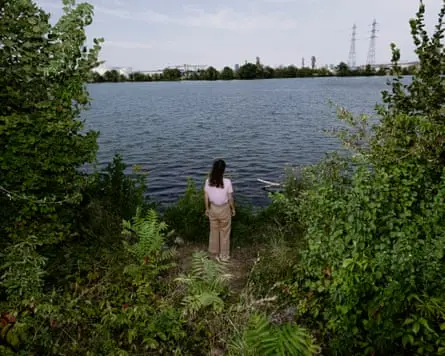
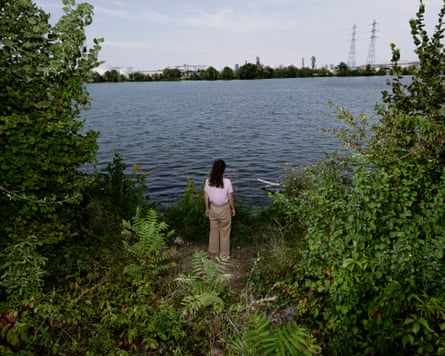
The localized advisory fundamentally changed how residents viewed their environment. For Duguy’s mother, the abstract threat suddenly became concrete enough to prompt serious considerations of selling her flat and leaving the area. Standing beside the Rhône River during a weekend visit, Duguy reflected on the profound shift in perspective. Confronting the continuous exposure of people she grew up with made the environmental degradation intensely relatable, turning an abstract European policy debate into a deeply personal fight for justice.
Shifting Sides: From Corporate Defense to Public Advocacy
Duguy’s path to the courtroom is uniquely informed by her professional evolution. Before joining ClientEarth six years ago, she worked at the corporate law firm Squire Patton Boggs, where she was embedded within the public policy division. In that role, her brief included advising chemical and industrial corporations on environmental law and helping them mitigate the impact of regulatory compliance on their bottom lines.
While acknowledging the internal conflict of her early career, Duguy notes that the experience provided an invaluable education. Understanding how corporate actors think, assess risk, and lobby regulators gave her critical insight into the machinery of industrial defense. After a year in corporate advisory, she pivoted decisively toward public interest law, driven by an unyielding sense of justice. At ClientEarth, she has leveraged this background to build an elite network of environmental lawyers across Europe, fostering cross-border collaboration and strategic litigation designed to force regulatory and corporate reform.

Supporting Context & Metrics: The Scale of the PFAS Crisis
Understanding "Forever Chemicals"
PFAS represent a massive family of synthetic chemicals comprising thousands of distinct variants utilized in everything from non-stick cookware and waterproof apparel to firefighting foams and industrial lubricants. Their indestructible carbon-fluorine bonds—the strongest in organic chemistry—make them exceptionally durable under extreme heat and chemical stress.
However, that exact durability is what makes them an ecological nightmare. Once released into the environment, PFAS persist indefinitely. Scientific studies have consistently linked long-term exposure to a litany of severe health outcomes, including:
- Various forms of cancer (particularly kidney and testicular cancer)
- Birth defects and developmental delays in children
- Suppressed immune system function and lowered vaccine efficacy
- Disruption of thyroid and metabolic hormones
The European Footprint
The contamination in Lyon’s Chemical Valley is far from an isolated incident. Investigative mapping projects and environmental databases reveal that PFAS pollution has been detected at an estimated 17,000 sites across the United Kingdom and Europe. Hotspots range from military fire-training bases and industrial discharge zones to municipal water treatment plants.
The economic and structural footprint of these chemicals has effectively carved out what environmental advocates term "sacrifice zones"—geographical pockets where local communities bear the disproportionate health and environmental costs of maintaining high-polluting industries. ClientEarth’s legal strategy targets this exact paradigm, aiming to prove that the current operational models of major chemical producers violate fundamental human rights and environmental protection frameworks.
Landmark Legal Precedents Across Europe
Duguy’s work extends far beyond French borders, providing strategic counsel and coordination for legal teams mounting challenges throughout the continent:
- The Miteni Case (Italy): Duguy advised legal teams in Italy during the historic prosecution of the Miteni chemical plant. The case culminated in 17-year prison sentences for 11 former corporate executives found guilty of poisoning the soil and groundwater across a 100-square-kilometer zone with catastrophic levels of PFAS.
- French Litigation: ClientEarth is actively supporting French citizens and legal associations taking chemical giants Arkema France and Daikin Chemical France to court. Plaintiffs accuse the companies of knowingly generating widespread pollution in St-Genis-Laval and surrounding communes.
- Pan-European Challenges: Beyond industrial pollution, ClientEarth has taken systemic aim at regulatory bodies. The NGO recently filed a human rights complaint against the Belgian government before the European Committee of Social Rights, arguing that state inaction in preventing widespread PFAS contamination violates citizens’ rights to health. Additionally, ClientEarth is challenging the European Union’s controversial reapproval of the pesticide glyphosate in the European Court of Justice.
Official Statements and Socio-Economic Debates
Challenging the Jobs-Versus-Environment Narrative
One of the most persistent roadblocks faced by local environmental campaigns in Lyon’s Chemical Valley—and similar industrial hubs across the globe—is the economic argument weaponized by industry stakeholders. Corporate defenders frequently frame environmental regulations and cleanup mandates as job killers, suggesting that cracking down on toxic emissions will force plant closures and devastate local working-class communities.
Duguy argues that this narrative is a manufactured defensive strategy designed to stall regulatory enforcement.
"When you think about creating a toxic-free environment or a toxic-free society, you need to look at everything holistically," Duguy explains. "If you have fewer jobs in those toxic industries, you could create new jobs in safe industries. While we keep providing opportunities for those toxic industries to thrive, we prevent other safe industries from really becoming important for the economy."
At the same time, Duguy displays a nuanced understanding of local anxieties, acknowledging that abstract environmental advocacy from distant NGOs can occasionally feel disconnected from the day-to-day economic realities experienced by families dependent on industrial paychecks. Having grown up taking pride in her region’s industrial innovation, she recognizes the psychological hurdle of confronting the dark side of a local economic engine.
The Strategic Shift: Moving Beyond Compensation
According to ClientEarth, traditional civil litigation focused solely on financial settlements is insufficient to solve a systemic ecological crisis. While financial compensation provides a measure of justice for affected individuals, it does not stop corporations from calculating fines as a routine cost of doing business.
"Our goal is not just to get compensation, but to force regulators to act, and that’s why this litigation path is very strategic," Duguy emphasizes.
By utilizing human rights frameworks, administrative law, and corporate accountability mandates, legal teams are attempting to shift the legal burden back onto state regulators and corporate boards. The objective is to make preventative compliance cheaper and safer than systemic pollution.
Future Outlook: Translating Invisible Threats into Action
As the legal battles in France, Belgium, and Italy advance through the courts, the overarching challenge remains bridging the gap between scientific reality and public perception. Because PFAS contamination is largely invisible, mobilizing broad public outrage requires breaking through layers of technical jargon and corporate deflection.
Duguy remains optimistic that the wave of strategic litigation currently sweeping Europe will serve as a catalyst for a broader cultural and regulatory awakening.
"The problem with PFAS is that it’s something that you cannot grasp, but hopefully those actions that we’re launching will trigger some kind of emotion that can lead to action," she reflects. "If not, we will just continue to face really awful consequences and then try to think of solutions when it’s too late."
For the residents of Lyon’s Chemical Valley and communities across Europe, the outcome of these legal battles will determine whether accountability can catch up with legacy pollution. For Hélène Duguy, the journey from watching factories from her mother’s balcony to challenging boardrooms across the continent represents more than a career—it is the fulfillment of a lifelong pursuit of justice, ensuring that the hidden price of industrial progress is finally paid by those responsible, rather than the communities forced to live alongside it.