The Earth’s life support system is flashing critical warning signs. According to the latest data compiled by the European Union’s Copernicus Climate Change Service, the world’s oceans have reached an unprecedented thermal milestone, registering hotter than at any point in modern recorded history.
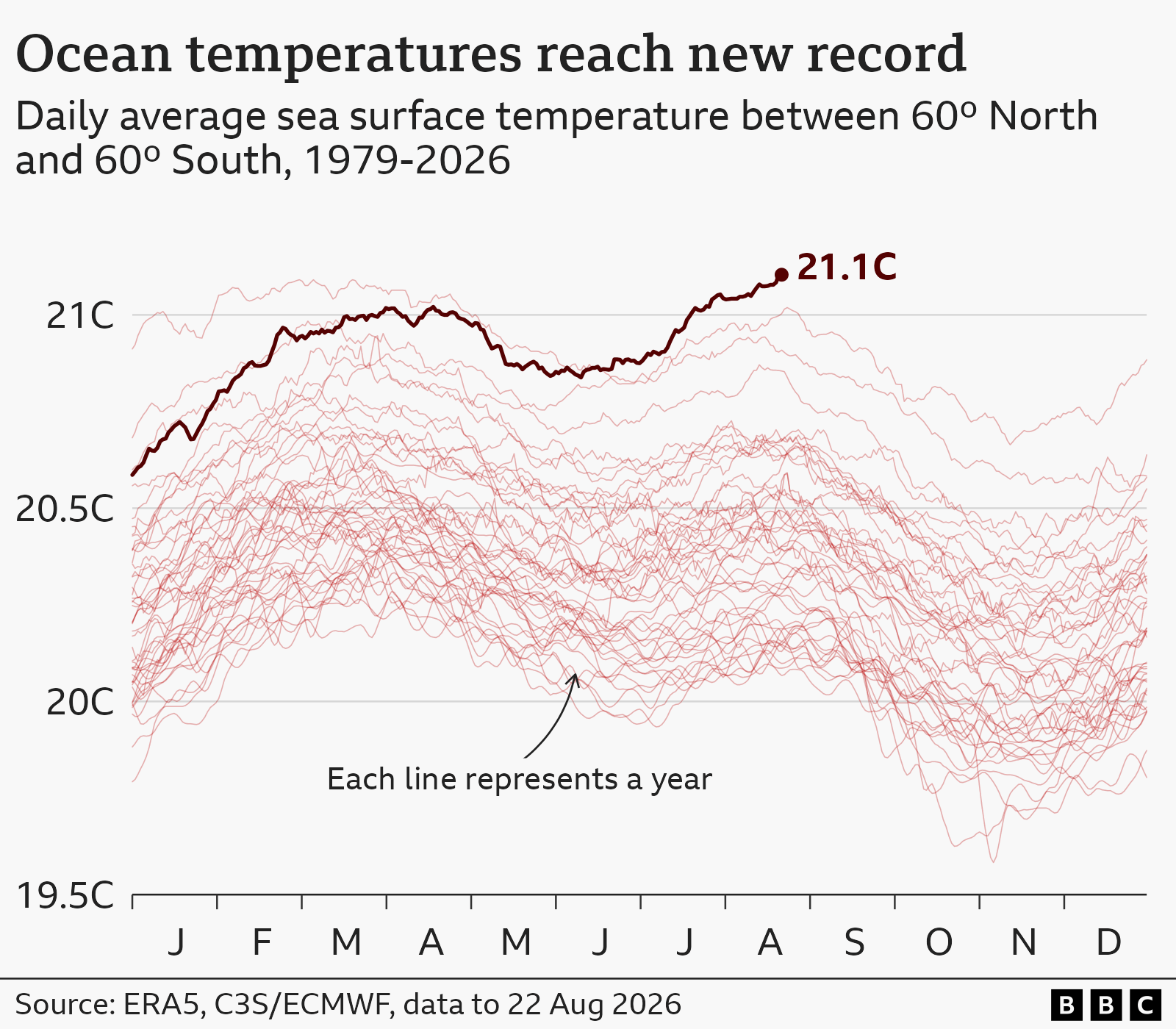
On Saturday, the average surface temperature of the planet’s seas—excluding the polar regions—surged to a blistering 21.1°C (70°F). This figure eclipses the previous high-water mark of 21.09°C, which was recorded across three separate days in March 2024. While the fractional margin of the record might appear narrow at first glance, the timing, trajectory, and geographic distribution of this persistent thermal anomaly have alarmed the international scientific community.
The extraordinary heat is being driven by a compounding collision of two major forces: decades of unrelenting, human-induced greenhouse gas emissions and the accelerating development of a formidable El Niño weather pattern. Because the world’s oceans absorb more than 90% of the excess heat trapped by industrial fossil-fuel burning, they act as the primary buffer of anthropogenic climate change. However, scientists warn that this buffer is reaching its saturation point, threatening catastrophic feedback loops that could destabilize global weather patterns, accelerate sea-level rise, and devastate marine ecosystems for generations.
Detailed Chronology and Thermal Trajectory
To understand the severity of the current crisis, climatologists look closely at the seasonal behavior of global sea surface temperatures (SSTs). Typically, worldwide marine temperatures peak annually between March and April. This cycle corresponds with the end of the southern hemisphere’s summer—a crucial dynamic, given that the southern hemisphere contains a significantly larger proportion of the planet’s ocean surface area than the northern hemisphere, thereby exerting dominant leverage over global averages.
Under normal historical conditions, temperatures steadily decline or plateau as the calendar transitions into the middle and latter parts of the year. Instead, the data for 2026 reveals a terrifying aberration: rather than dropping off after April, global sea surface temperatures have maintained a relentless upward trajectory since June, defying historical baselines established since continuous satellite monitoring began in 1979.
The journey toward this latest record has been marked by a series of near-misses and escalating spikes. Throughout early 2024, scientists watched in disbelief as global oceans broke daily temperature records for over a year straight. Yet, the current surge is occurring months outside of the traditional peak window, catching researchers off guard.
Measurements captured 10 meters (32 feet, 10 inches) below the surface—compiled via a robust network of marine buoys, commercial shipping vessels, and orbiting satellites—demonstrate that this heat is not localized to a single basin. It is pervasive, systemic, and deeply entrenched within the water column.
Supporting Context & Metrics: The Mechanics of an Overheated Planet
The extraordinary warmth gripping the globe’s seas is the product of a complex interplay between systemic climate change and cyclical ocean-atmosphere oscillations.
The El Niño Catalyst
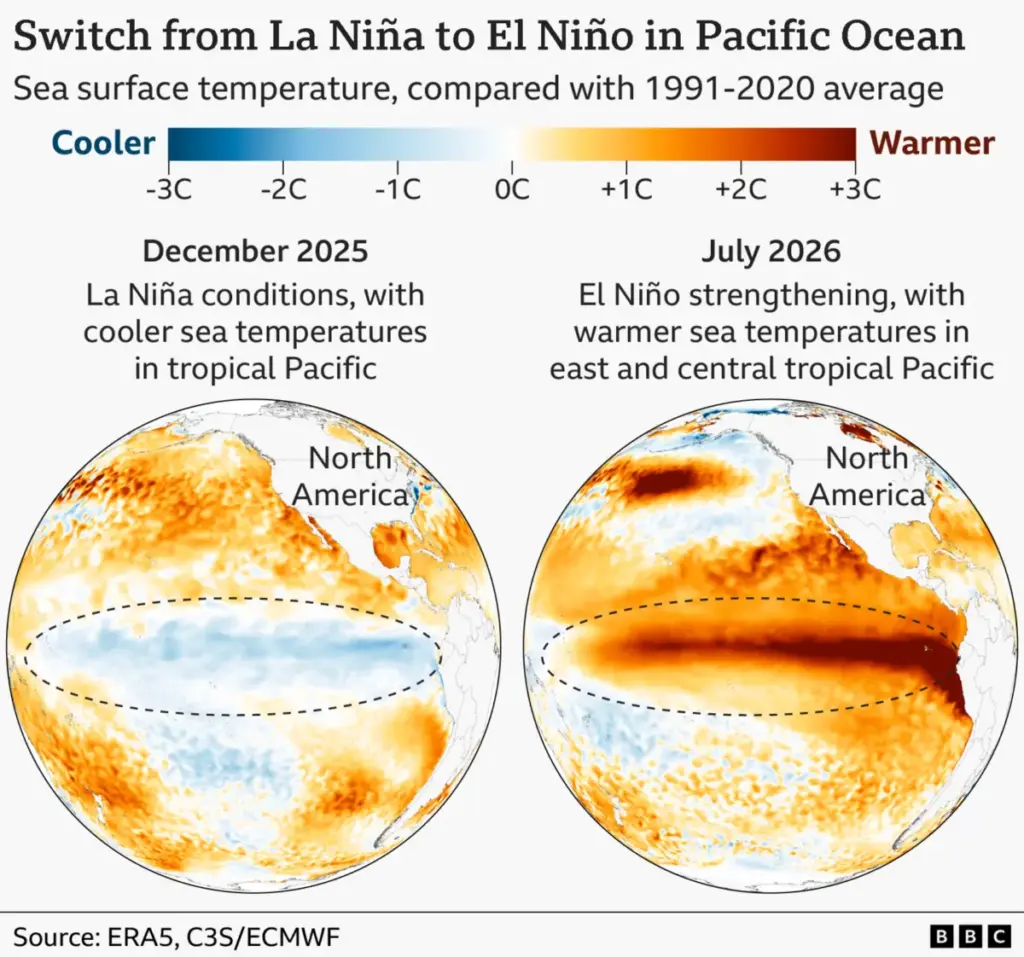
The natural climate phenomenon known as El Niño plays a starring role in the current thermal spike. Characterized by the appearance of unusually warm surface waters in the central and eastern tropical Pacific Ocean, El Niño routinely drives global average temperatures upward by releasing vast amounts of heat stored in the tropical Pacific into the atmosphere.
What makes the current situation uniquely alarming is the timing of the phenomenon. El Niño is still months away from reaching its anticipated maturity around the Christmas holiday season. Meteorological models suggest that this developing El Niño event is tracking to become one of the strongest in centuries.
"The fact that we are already breaking records at this stage of the cycle is an early indicator of how extraordinarily strong this El Niño is becoming," explains Dr. Jeremy Grist, a senior research fellow at the National Oceanography Centre in Southampton. "All things being equal, we should fully expect the global ocean temperature record to be shattered yet again when we reach the traditional peak window in March and April of 2027."
Beyond the Pacific: Regional Anomalies
While the tropical Pacific remains the engine room of El Niño, the extreme temperatures observed in 2026 are by no means restricted to its geographic footprint. Waters far removed from the equatorial Pacific are experiencing historic marine heatwaves.
In Europe, the regional seas have become focal points for extreme thermal stress. According to Professor Tim Smyth, director of science at the Plymouth Marine Laboratory, the western English Channel has endured nearly continuous marine heatwave conditions for more than three consecutive years. In July, temperatures in these waters peaked at an astonishing 7°C (12.6°F) above normal historical averages—a deviation described by researchers as entirely "unprecedented."
Official Statements and Expert Analysis
The scientific consensus surrounding these unfolding events is unified: the oceans are buckling under the cumulative weight of human activity.
"This record is another clear signal of an ocean under growing stress. El Niño is adding heat to the system, but it is doing so on top of decades of human-driven warming."
— Dr. Samantha Burgess, Deputy Director, Copernicus Climate Change Service
Experts emphasize that viewing these temperature spikes as isolated weather anomalies misdiagnoses the chronic nature of the crisis. The global ocean is essentially running a persistent fever caused by the unchecked accumulation of greenhouse gases in the atmosphere.
"The latest Copernicus data reinforce the troubling upward trend in ocean temperatures. Because oceans absorb more than 90% of excess anthropogenic heat, they are bearing the brunt of our fossil-fuel dependency. The increasing frequency of marine heatwaves is putting immense pressure on marine ecosystems and the coastal communities that depend upon them."
— Professor Tim Smyth, Plymouth Marine Laboratory
The cascading impacts of this thermal overloading are manifold:
Supercharged Weather Extremes: Warmer seas evaporate at higher rates, injecting massive amounts of moisture and latent heat into the atmosphere. This fuels more violent tropical cyclones, atmospheric rivers, and torrential downpours.
Atmospheric Feedback Loops: Coastal land regions lose the moderating, cooling effect of historic sea breezes, turning marine heatwaves into intensified land-based heatwaves that threaten human health and agricultural output.
Sea-Level Rise: As water warms, it expands physically—a process known as thermal expansion. Combined with melting polar ice caps, this drives rising sea levels that threaten low-lying coastal cities and island nations with catastrophic flooding.
Ecosystem Collapse: Coral reef bleaching events are becoming global and recurring, while cold-water species are being driven toward extinction as their metabolic demands outstrip oxygen availability in warmer, stratified waters.
Future Outlook: Navigating Uncharted Waters
As the planet looks toward the remainder of 2026 and into 2027, the trajectory of global ocean temperatures remains deeply concerning. With the peak of the multi-month El Niño event still ahead of us, scientists anticipate that further temperature records will fall before the decade is out.
The immediate outlook underscores an urgent need for global climate mitigation strategies. While natural cycles like El Niño dictate the short-term undulations of the climate graph, the baseline upward slope is dictated entirely by human emissions. Without rapid, deep, and sustained reductions in global greenhouse gas emissions, the oceans will continue to store ever-greater quantities of heat, pushing marine environments past irreversible ecological tipping points.
For policymakers, coastal planners, and coastal communities alike, the data from Copernicus serves as a stark reminder: the time for adaptation planning and aggressive decarbonization is not tomorrow—it is today. As Dr. Burgess and her colleagues continue to monitor the daily pulse of the planet’s seas, the world is left to confront the reality of an altered marine landscape, where yesterday’s extreme is rapidly becoming today’s normal.