Executive Overview
The expansion of global coal mining capacity suffered an unprecedented contraction in 2025, reaching its lowest level in over a decade. Driven by a historic surge in clean energy deployment across East Asia and tightening regulatory frameworks in key producing nations, the volume of newly commissioned coal mine capacity plunged by nearly 40% compared to 2024 levels, according to comprehensive findings published by Global Energy Monitor (GEM).
This historic decline marks the second consecutive year that global mine additions have fallen to a decade low, signaling an acceleration of a structural downward trajectory that first emerged in 2019. The sharp deceleration was predominantly spearheaded by the world’s leading producer and exporter—China and Australia—where newly added capacity contracted by 44% and 96%, respectively.
       GLOBAL NEW COAL MINE CAPACITY ADDITIONS (2019–2025)

  Index
  100 |====== (2019 Peak Baseline)
   90 |
   80 |       ====== (Post-Pandemic Volatility)
   70 |
   60 |               ====== (2024 Initial Low)
   50 |
   40 |                       ================ (2025 -40% YoY Record Low)
    0 +------------------------------------------------------------>
      2019     2021      2023      2024      2025
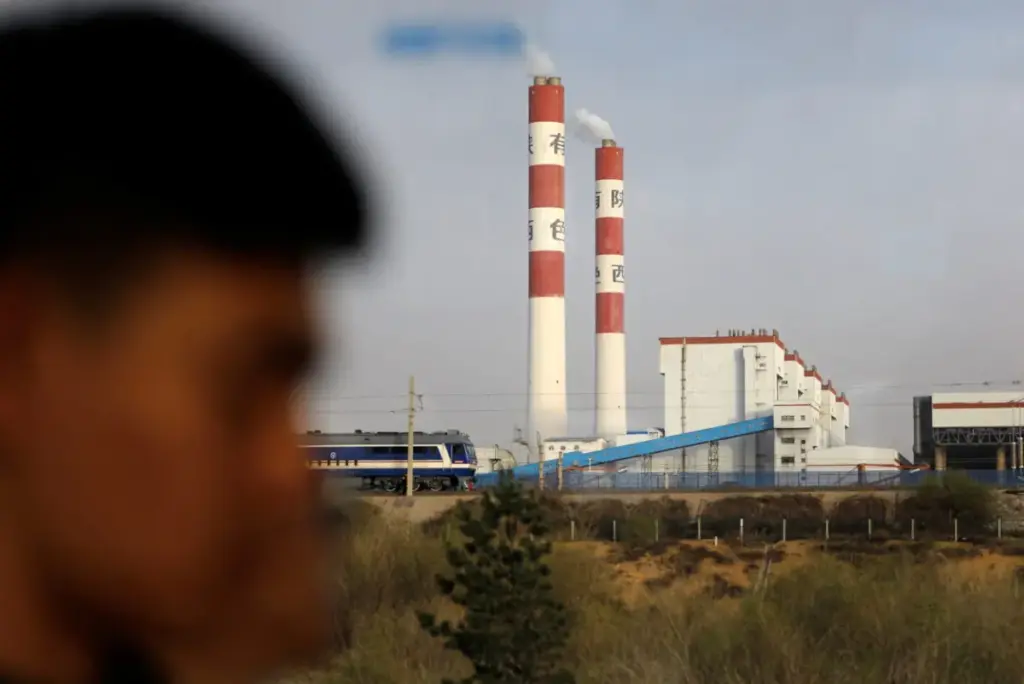
The primary catalyst for this supply-side retrenchment is a fundamental realignment of electricity generation across East Asia. In China, massive installations of utility-scale solar and wind power have begun displacing thermal coal in the power mix, prompting state energy planners to curb new mining projects. Concurrently, Australia’s coal export sector faced a severe contraction as its primary East Asian buyers—Japan, South Korea, and Taiwan—substantially scaled back their long-term demand projections for thermal coal.
While short-term power market fluctuations created temporary rebounds in coal consumption during early 2026, the underlying fundamentals point toward a permanent shift away from capital investment in greenfield mining assets.
Detailed Chronology: The Structural Shift (2019–2026)
+-----------------------------------------------------------------------------+
|                           TIMELINE OF DECARBONIZATION                       |
+-----------------------------------------------------------------------------+
| 2019: Peak baseline for global coal mine expansions; deceleration begins.  |
| 2024: First decade-low benchmark achieved in global mine capacity.           |
| 2025: Global mine additions drop 40% YoY; Australia (-96%), China (-44%).   |
| H1 2026: Temporary short-term rebound in thermal power burn; grid caps.     |
+-----------------------------------------------------------------------------+
2019–2023: The Inflection Point and Post-Pandemic Volatility
The global coal industry reached an operational turning point in 2019, when capital allocation for new mining projects began a prolonged decline. Although post-pandemic energy security concerns and geopolitical disruptions between 2021 and 2023 caused localized surges in coal burn, financial institutions and state planners increasingly redirected capital toward renewable energy, preventing a sustained recovery in long-term mine construction.
2024: Setting the Decade-Low Benchmark
By 2024, the cumulative effect of clean energy additions began impacting mining project pipelines. New coal mine capacity additions fell to what was then a ten-year low. Institutional investors increasingly classified coal assets as high-risk, while major global engineering firms retreated from providing services for greenfield mining developments.
2025: The Accelerated Contraction
In 2025, the supply restriction intensified. According to the GEM report, new capacity additions dropped by roughly 40% year-over-year. The collapse was concentrated in the world’s most critical supply nodes:
- Australia: New additions dropped by 96%, virtually halting the expansion of export-oriented mine capacity.
- China: New mine development slowed by 44% as the National Energy Administration (NEA) strictly restricted new mine permits to align supply with slowing thermal demand growth.
2026: Market Friction and Short-Term Rebounds
The transition encountered localized turbulence in the first half of 2026. Despite the ongoing contraction in mine construction, thermal coal power generation experienced a temporary uptick in China due to seasonal weather disruptions, transmission bottlenecks, and localized curtailment of renewable power. However, market analysts emphasize that this short-term operational burn has not translated into renewed interest in long-term mining capital projects.
Supporting Context & Regional Metrics
Country-by-Country Breakdowns
| Country / Region | 2024–2025 Capacity Addition Trend | Key Primary Drivers | Underlying Market Factor |
|---|---|---|---|
| China | -44% YoY decline | Solar & wind displacement; NEA regulatory caps | Grid integration challenges vs. long-term overcapacity prevention |
| Australia | -96% YoY decline | Collapse in East Asian seaborne export demand | Structural phase-down by key import partners (JP, KR, TW) |
| Japan | Import Demand Reduction | Post-Fukushima nuclear reactor restarts | Strategic pivot to baseload nuclear and renewable imports |
| South Korea | Import Demand Reduction | Ban on unabated coal power plant construction | Strict national climate mandates and emissions targets |
China: Renewable Scale and Regulatory Intervention
China’s 44% drop in new mine capacity additions reflects a structural conflict between clean power deployment and traditional coal infrastructure investment.
               CHINA'S DUAL ENERGY PIPELINE (2025)

      +---------------------------------------------------+
      | Renewable Energy Additions (Solar & Wind)         |
      | [========== FAST EXPANSION ==========]            |
      +---------------------------------------------------+
                               |
                               v (Displaces Thermal Generation)
      +---------------------------------------------------+
      | New Coal Mine Approvals (NEA Cap Rules)          |
      | [==== -44% DECLINE ====]                          |
      +---------------------------------------------------+
The rapid deployment of solar and wind generation across western and northern China has altered the operational role of thermal power, shifting coal from a primary baseload energy source to a peaking resource designed to manage renewable variability.
Concurrently, China’s National Energy Administration (NEA) instituted stricter permit controls to prevent structural overcapacity. These measures restricted capital allocation to existing facility modernizations while sharply reducing greenfield project approvals.
However, the transition faces ongoing operational challenges: in the first half of 2026, grid transmission limits led to the temporary curtailment of clean power, requiring an operational surge in existing coal fleets. Despite this localized fluctuation, the long-term trend for new mine approvals remains suppressed.
       EAST ASIAN SEABORNE COAL IMPORT TRAJECTORY

  Import Volume
    |
    |==== Japan (Nuclear Restarts Displacing Thermal Imports)
    |
    |==== South Korea (Unabated Coal Construction Ban)
    |
    |==== Taiwan (Power Sector Decarbonization Push)
    +---------------------------------------------------> (Declining Demand)
Australia and the East Asian Seaborne Market
Australia’s 96% drop in new coal mine additions represents a direct market response to shifting procurement strategies across East Asian seaborne import markets. Historically, Australian producers tailored project pipelines to supply power generation utilities in Japan, South Korea, and Taiwan.
                  AUSTRALIAN SEABORNE COAL DYNAMICS

  [ Australian Mine Pipeline ] ----(-96% Drop)----> [ Seaborne Export Markets ]
                                                          |
             +--------------------------------------------+--------------------------------------------+
             |                                            |                                            |
             v                                            v                                            v
[ Japan: Nuclear Restarts ] [ South Korea: Unabated Coal Bans ] [ Taiwan: Renewable Push ]- Japan: Strategic energy policy has targeted a post-Fukushima nuclear revival, focused on restarting approved reactor fleets to displace imported fossil fuels and reduce generation costs.
- South Korea: Federal policies prohibiting the construction of new unabated coal-fired power plants (facilities without integrated Carbon Capture and Storage) have reduced long-term fuel purchase agreements for Australian producers.
- Taiwan: State energy initiatives prioritizing liquefied natural gas (LNG) imports and offshore wind expansion have constrained the growth of imported thermal coal.
Official Statements and Institutional Perspectives
Global Energy Monitor (GEM) Analysis
Evaluating the data, project leads at Global Energy Monitor noted that the drop in mine development demonstrates that energy transition targets are reshaping capital expenditure decisions:
"The data from 2025 provides clear evidence that the global coal mine project pipeline is shrinking. The sharp reduction in capacity additions across major producing regions shows that project developers are anticipating reduced long-term thermal demand as East Asian economies scale up renewable and nuclear generation."
Policy Directives from the Chinese National Energy Administration (NEA)
Addressing the market shift, representatives from China’s National Energy Administration emphasized the need to balance supply-side capacity with long-term energy planning:
"China’s energy policy focuses on building a modern power grid capable of absorbing high volumes of clean energy while optimizing traditional supply chains. Approvals for coal mine development are subject to strict environmental, safety, and operational criteria to ensure alignment with high-quality green growth objectives."
Australian Market and Industry Observers
Commenting on the sharp reduction in domestic mining development, Australian energy transition analysts pointed to changing global capital markets and buyer demand:
"A 96% reduction in new capacity additions reflects changing financial conditions in international coal markets. With major import partners throughout Asia establishing clear decarbonization trajectories, international project financing for greenfield thermal mines has become increasingly difficult to secure."
Future Outlook and Structural Challenges
Policy and Legislative Friction: The NSW Greenfield Precedent
The long-term contraction of coal mining capacity is set to accelerate as sub-national jurisdictions implement legislative restrictions on new mine developments. A key indicator of this shift occurred in New South Wales (NSW), Australia’s primary thermal coal-producing state, where regional authorities passed legislation prohibiting new coal mining operations on undeveloped greenfield land.
+-----------------------------------------------------------------------------+
|                     FUTURE MARKET STRUCTURAL DRIVERS                        |
+-----------------------------------------------------------------------------+
| 1. Policy Restraints: Greenfield bans (e.g., New South Wales legislation).  |
| 2. Nuclear Re-integration: Japanese restarts reducing thermal import demand.|
| 3. Technology Mandates: South Korean bans on unabated thermal power.        |
| 4. Grid Infrastructure: Transmission fixes to eliminate power curtailment.  |
+-----------------------------------------------------------------------------+
This ban removes significant potential supply from future global development pipelines, limiting Australian producers to brownfield expansions of existing sites and locking in a structural decline in new supply capacity over the coming decade.
Navigating Grid Bottlenecks and Renewables Curtailment
While long-term capital investments in mining continue to contract, short-term generation demand highlights ongoing power grid challenges. The operational surge in coal burn during early 2026 underscored how grid transmission limitations can lead to the temporary curtailment of clean power.
To maintain this downward trend in mine construction without triggering regional power shortages, energy markets will require targeted investments in energy storage, high-voltage direct current (HVDC) power transmission networks, and regional market dispatch mechanisms.
Long-Term Market Trajectory
The global trajectory for thermal coal project development has moved from a period of market expansion to one of targeted supply management. With South Korea legally limiting unabated coal assets, Japan pursuing nuclear restarts despite ongoing public debate over waste storage, and China accelerating utility-scale clean power additions, the financial case for new greenfield coal mines continues to weaken.
Unless energy security crises force major structural policy reversals, the record-low mine capacity additions observed in 2025 mark an irreversible shift in global energy capital allocation.