Executive Overview
Despite the undeniable reality of intensifying climate disruptions—ranging from catastrophic wildfires and unprecedented floods to the economic fallout of soaring insurance premiums—the global climate movement faces a critical bottleneck: a profound failure of communication. While clean energy technologies have emerged as the cheapest forms of power on Earth, public mobilization remains dangerously stagnant.
According to data from the Yale Program on Climate Change Communication, approximately 80 million Americans are deeply alarmed about climate change. Of those, roughly 40 million express a desire to be politically active on the issue. Yet, only about 3 million are actually engaged. When the remaining 37 million "silent advocates" are asked why they remain on the sidelines, their most common response is as simple as it is damning: nobody has asked them to act.
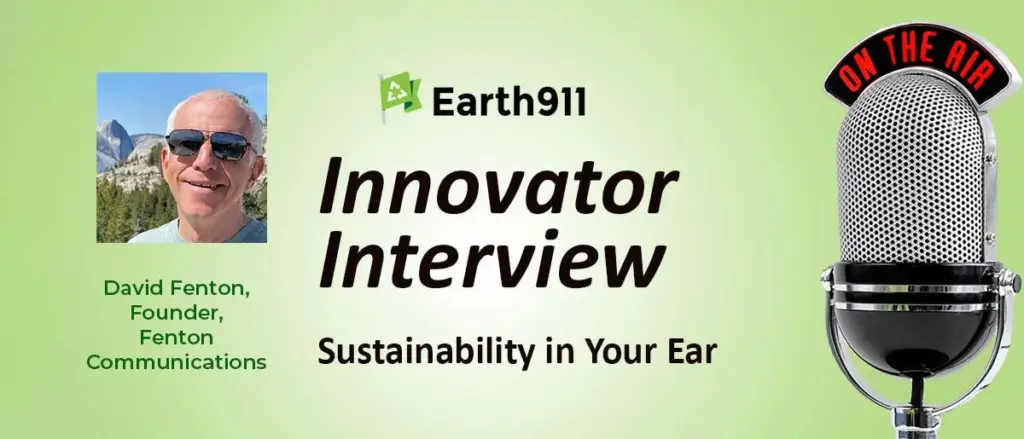
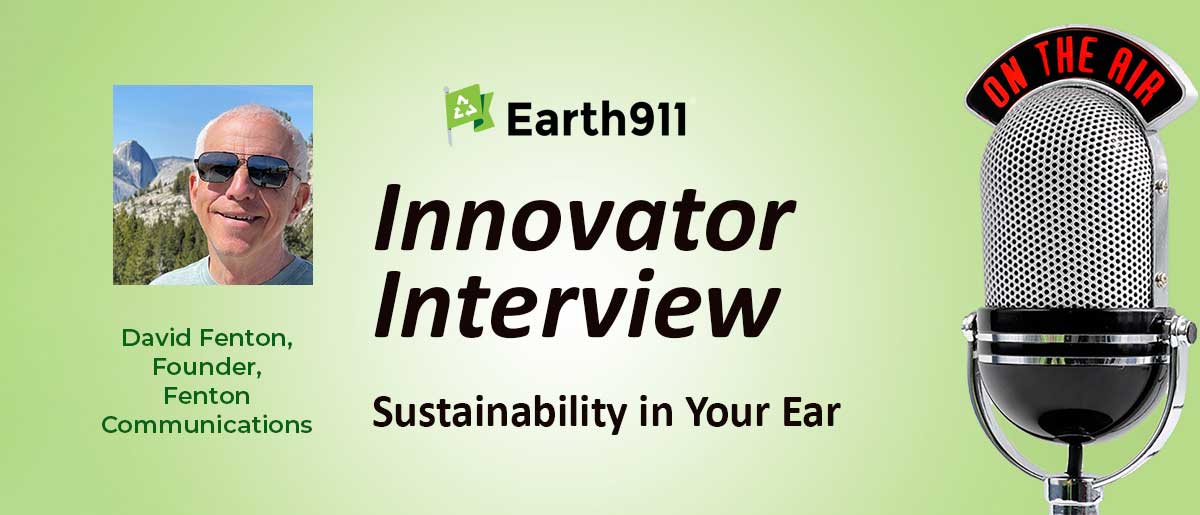
This staggering gap between public concern and political mobilization is the central focus of a recent, wide-ranging discussion on the podcast Sustainability In Your Ear, hosted by Mitch Ratcliffe. His guest, legendary public relations pioneer and progressive activist David Fenton, argues that the climate movement is suffering from self-inflicted "unilateral disarmament" in the face of a highly sophisticated, well-funded propaganda machine operated by the fossil fuel industry.
The consequences of this communication breakdown are starkly visible in federal policy. The landmark Inflation Reduction Act (IRA), the crowning achievement of modern U.S. climate policy, passed by a single vote—only to face immediate, aggressive rollback efforts by opponents who also operate on razor-thin legislative margins. Fenton argues that a major policy won by a single vote is never truly secure; without broad, deep-seated public demand, legislative victories remain highly vulnerable to political swings.
To bridge this chasm, the climate movement must undergo a structural and linguistic revolution. It must abandon abstract, academic jargon in favor of simple, visceral language, dismantle the institutional aversion to marketing, and invest heavily in permanent communication infrastructures that can reach beyond the progressive echo chamber.
Detailed Chronology: Fifty Years of Progressive Advocacy
To understand the roots of today’s communication failures, it is instructive to examine the history of modern progressive campaigns. David Fenton’s fifty-year career provides a masterclass in how public opinion is shaped, won, and maintained.
[1960s: Movement Photography] ➔ [1979: No Nukes Concerts] ➔ [1982: Fenton Communications Founded] ➔ [1990s: Anti-Apartheid & Divestment] ➔ [2010s: NY Fracking Ban]The Early Years: From Underground Press to Mass Mobilization
Fenton’s journey began in the late 1960s as a high school dropout photographing the anti-war movement and the Black Panther Party for the underground press. This early exposure to grassroots activism revealed a fundamental truth: movements require highly visible, culturally resonant symbols and narratives to challenge entrenched power structures.
In 1979, Fenton co-produced the historic "No Nukes" concerts at Madison Square Garden. The event successfully fused popular culture with political activism, demonstrating how artists and public figures could translate complex energy policy into a popular, emotional cause.
The Founding of Fenton Communications (1982)
In 1982, Fenton founded Fenton Communications, the first public relations firm in the United States dedicated exclusively to progressive and environmental causes. Over the next four decades, the firm pioneered campaigns that reshaped global politics:
- The Anti-Apartheid Movement: Fenton helped orchestrate public relations strategies in the U.S. that elevated the profile of Nelson Mandela and intensified international pressure to dismantle apartheid in South Africa.
- The New York Fracking Ban: Working alongside high-profile activists, Fenton designed a highly targeted campaign to ban hydraulic fracturing in New York State. The strategy included placing Yoko Ono and Sean Lennon’s prominent "Imagine There’s No Fracking" billboard directly along Governor Andrew Cuomo’s daily commute, ensuring the political decision-maker was confronted with the message every day.
- The Fossil Fuel Divestment Movement: In a masterstroke of strategic messaging, Fenton collaborated with the heirs of the Rockefeller family—whose ancestral fortune was built on Standard Oil—to announce their divestment from fossil fuels. By using the ultimate oil-fortune insiders as the messengers, the campaign stripped the fossil fuel industry of its moral legitimacy and catalyzed a global divestment movement that has since captured trillions of dollars in assets.
The Great Divergence: Corporate Sophistication vs. NGO Silence
While Fenton’s career demonstrates the power of targeted, creative public relations, these successful campaigns represent exceptions rather than the rule within the broader environmental movement.
Over the past three decades, a profound divergence has occurred. The fossil fuel industry and its conservative allies recognized that public persuasion is a core business requirement. They built a highly coordinated network of think tanks, online influencers, media outlets, and digital marketing apparatuses designed to manufacture doubt, deflect blame, and preserve the status quo.
In contrast, the environmental NGO and philanthropic sector grew vast and wealthy but increasingly insular. The movement began spending billions of dollars annually on scientific research, policy white papers, and litigation, while treating public communication as an afterthought—or worse, as a tool used almost exclusively to solicit donations from existing mailing lists.
Supporting Context & Metrics: The Cognitive Science of Climate Communication
The failure of the climate movement to mobilize the public is not a failure of science or policy; it is a failure of cognitive design.
       [80 Million Alarmed Americans]
                    │
       [40 Million Want to Act]
                    │
     ┌──────────────┴──────────────┐
     ▼                             ▼
[3 Million Active]        [37 Million Inactive]
(Only asked for money)    ("Nobody has asked me to act")
The Yale "Six Americas" Disconnect
Data compiled by the Yale Program on Climate Change Communication reveals a massive, untapped base of political power:
- The Alarmed: Roughly 80 million Americans fall into the "alarmed" category regarding climate change.
- The Willing: Of those, 40 million express a desire to be politically active on the issue.
- The Active: Only 3 million are currently politically active.
- The Gap: A reserve of 37 million Americans remain completely unmobilized, primarily because existing advocacy groups fail to recruit them for meaningful action, focusing instead on financial solicitation.
Furthermore, the general public remains largely isolated from the conversation. Only 12% of Americans report seeing or hearing about climate change on social media—the primary news source for a growing majority of the population. Meanwhile, two-thirds of Americans say they rarely or never hear about the issue from friends, family, or mainstream media outlets.
The "Enlightenment Fallacy"
To explain why wealthy climate philanthropies and NGOs ignore public persuasion, Fenton points to the work of cognitive linguist George Lakoff, who wrote the foreword to Fenton’s book, The Activist’s Media Handbook.
Lakoff describes the "Enlightenment Fallacy" as the erroneous belief that human beings are entirely rational actors who make decisions based on logical, scientific evidence. Under this fallacy, scientists and policy advocates assume that if a piece of research is accurate and intellectually sound, it will naturally disseminate and persuade the public on its own merits.
A corollary to this belief is that the act of "selling" or marketing ideas is manipulative, dirty work beneath the dignity of serious academics and policy professionals.
In contrast, corporate and conservative entities, heavily staffed by business school graduates trained in cognitive and marketing science, understand that human beings make decisions based on values, emotions, and metaphors. They recognize that public persuasion requires continuous repetition, simple messaging, and strategic framing.
The Vocabulary Trap
The climate movement’s reliance on academic and bureaucratic language has actively alienated the public. Cognitive testing reveals that several key terms used by advocates produce negative or confusing mental frames:
| Term | Public Perception / Cognitive Trap | Better Alternative | Cognitive Benefit |
|---|---|---|---|
| "Net Zero" | Virtually meaningless to the average citizen; lacks emotional urgency or concrete imagery. | "Clean Energy Transition" | Evokes health, progress, and modern technology. |
| "Carbon" | Sounds like an abstract, scientific element rather than a dangerous, tangible threat. | "Pollution" | Universally understood as harmful; no political or corporate entity can defend "pollution." |
| "Climate Justice" | Evokes mental frames of police, courts, and legal battles rather than fairness or shared prosperity. | "Fairness and Shared Safety" | Builds a broad-tent coalition around mutual protection and public health. |
The Power of Simple Metaphors
Cognitive science demonstrates that people learn through physical metaphors that activate existing neural networks. The most effective framing for explaining global warming is the "pollution blanket" metaphor:
- Burning fossil fuels releases a thick layer of pollution that wraps around the Earth.
- This layer acts like a blanket, trapping heat that would otherwise escape into space.
- This trapped heat is destabilizing our weather, threatening our homes, and driving up insurance costs.
This simple, visual explanation utilizes concepts that every human being understands: a blanket, heat, and pollution. It bypasses abstract chemistry and immediately assigns responsibility to the source of the problem.
Official Statements and Strategic Philosophies
David Fenton on the Information War
Throughout his interview on Sustainability In Your Ear, David Fenton emphasized the need for a total tactical reboot of progressive advocacy:
"We are practicing what I would call a unilateral disarmament in the information wars. You cannot decarbonize the economy at the speed we need to according to physics without the public being on board… If we’re winning and losing major policy battles by a single legislative vote, we are ultimately losing."
Fenton was equally critical of the NGO sector’s structural refusal to engage in marketing:
"The environmental groups do a lot of great things: policy, law, science. But they don’t communicate. They don’t spend money on communicating, by and large, even though they’re very wealthy… They only go out to communicate with their members to raise money, not to educate or get people involved in action."
Commenting on the lack of institutional support for highly effective public messengers, Fenton pointed to the evangelical climate scientist Dr. Katharine Hayhoe:
"She’s a Christian evangelical climate scientist at Texas Tech University… She’s amazingly talented, and she has no help online, none. She has no video team, no social media team, no PR firm, no strategist. She does it all by herself… She’d have 15 or 20 million followers if she had help. But she can’t raise money because our philanthropic community doesn’t value this work."
Mitch Ratcliffe on the "Recycling" Misdirection
Host Mitch Ratcliffe highlighted how the lack of systemic climate communication has left the public confused about how to take effective action:
"When Americans are asked how to solve climate change, the most common answer is ‘reduce, reuse, and recycle.’ Recycling is a materials strategy… But no rate of curbside recycling participation decarbonizes the grid or the commercial truck fleets. We are short of the 40 million voices that make systemic transition politically survivable."
Future Outlook: Building a Modern Persuasion Infrastructure
For the climate movement to secure permanent victories, it must transition from a "Tower of Babel" of fragmented, highly academic voices into a unified, disciplined, and modern communication force.
       [Philanthropic Funding Shift]
                     │
     ┌───────────────┴───────────────┐
     ▼                               ▼
[Unified Simple Messaging]  [Permanent Media Infrastructure]
(E.g., "Pollution Blanket") (Influencer Support, Ad Campaigns)
     │                               │
     └───────────────┬───────────────┘
                     ▼
       [Broad-Tent Public Mobilization]
The Emergence of Dedicated Advocacy Firms
Signs of a structural shift are beginning to emerge. The clean energy industry, tired of being politically outmaneuvered on issues like offshore wind and battery mining, has begun funding dedicated advocacy platforms:
- Amped (amped.org): Launched to help the renewable energy sector mount sophisticated, proactive communication campaigns, moving beyond defensive, fact-checking public relations.
- GoodPower (goodpower.org): Led by figures like Leah Qusba, this organization leverages artificial intelligence to spot anti-renewable disinformation campaigns in real-time, allowing local advocates to respond with localized, economically focused messaging.
- The $300 Million Rumor: Industry insiders report that a major climate philanthropy is currently exploring the launch of a $300 million permanent public communications campaign designed to build sustained, multi-year public demand for decarbonization.
The Rise of Parasocial Influencers
As trust in traditional institutions and mainstream media continues to decline, public opinion is increasingly shaped by individual influencers and trusted public figures. The fossil fuel industry is already actively recruiting and funding online personalities to promote their interests.
The climate movement must counter this by providing professional media teams, strategists, and distribution networks to authentic, trusted messengers—such as local TV meteorologists, clean energy entrepreneurs, and conservative voices who can frame climate action as a defense of traditional, patriotic values.
Legislative and Platform Reforms
In the long term, protecting both public discourse and democratic institutions will require regulatory action on digital platforms:
- AI Labeling: Federal and international mandates requiring all artificial intelligence-generated content to be clearly labeled.
- Identity Verification: Platform regulations designed to curb the influence of automated bot networks, ensuring that social media interactions represent real human voices rather than coordinated disinformation campaigns.
The Grassroots Prescription
For individual citizens and local advocates, the path forward requires a shift in daily behavior:
- Talk About It: Break the silence. Normalizing conversations about weather anomalies, local energy transitions, and the health impacts of fossil fuel pollution is the most basic, effective form of advocacy.
- Post and Share: Use personal social media platforms to amplify simple, clear messages, focusing on local solutions and clean energy benefits.
- Pressure the Funders: Demand that local and national environmental non-profits and foundations allocate a significant portion of their budgets to public marketing, regional communication campaigns, and grassroots organizing rather than repetitive direct-mail fundraising.
The clean energy transition is no longer a scientific or economic challenge; the solutions are ready, affordable, and scaling. The battle is now entirely political, and politics is governed by public opinion. Until the climate movement learns to fight and win the information war, its physical victories will remain fragile, temporary, and incomplete.