

Executive Overview
In the misty coastal enclave of Newport, Oregon, several hundred scientists, government officials, and environmental advocates converged for an urgent, high-stakes two-day summit. The sole focus of the gathering was not a sprawling ecosystem or a broad taxonomic group, but a single, iconic marine mammal: the eastern North Pacific gray whale (Eschrichtius robustus).
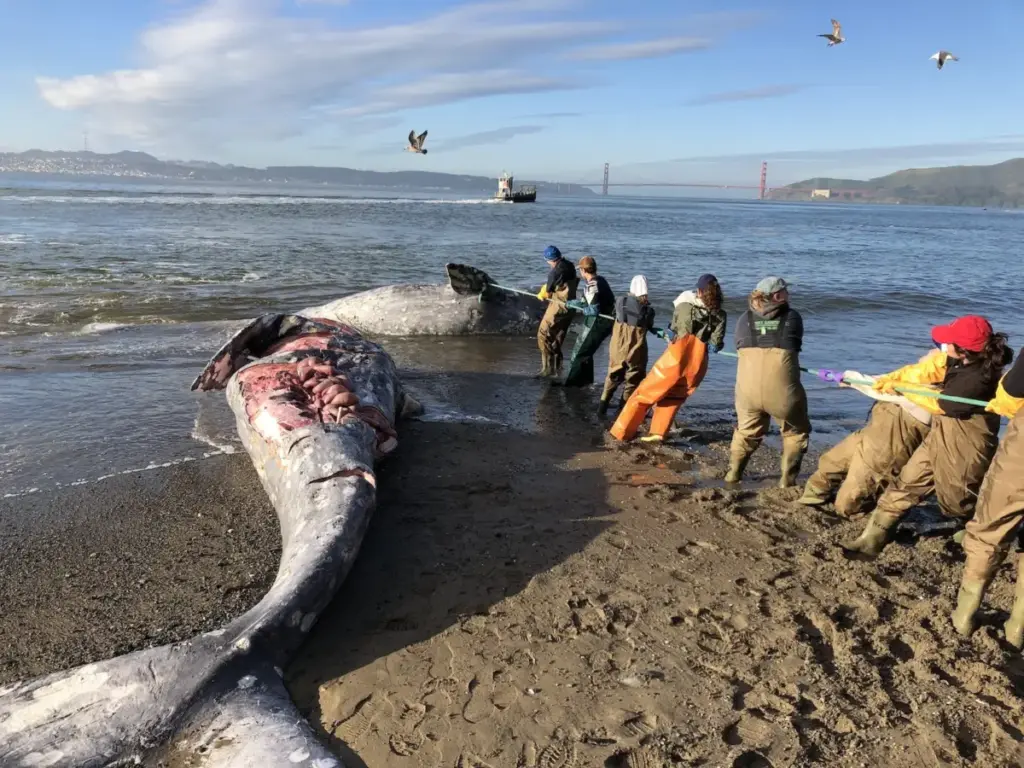
The atmosphere inside the conference hall was thick with tension, defined as much by what was left unsaid as by the stark data presented from the podium. Over the past decade, the U.S. West Coast gray whale population has plummeted by roughly half, dropping from a peak of up to 30,000 individuals to a fragile band numbering between 11,700 and 17,000. This steep decline has been punctuated by grim ecological milestones: this past summer alone, 187 gray whale carcasses washed ashore along the western seaboard.
At the root of this collapse is a rapidly warming Arctic, where disappearing sea ice has disrupted the benthic food webs that sustain the whales during their hyperphagic summer feeding months. Arriving on their winter breeding grounds in Mexico starved of caloric reserves, female whales are producing historically low numbers of calves—including a record-low 85 births estimated last year.
Compounding this environmental crisis is a volatile political landscape. The National Oceanic and Atmospheric Administration (NOAA) has missed statutory legal deadlines to respond to a petition urging the relisting of gray whales under the Endangered Species Act (ESA). Conservation groups have already filed a notice of intent to sue, setting the stage for a bitter courtroom showdown. Meanwhile, sweeping budget and staff cuts enacted by the Trump administration across federal science agencies have left government researchers wary, muzzled, and fighting to defend baseline conservation science from partisan reshaping.
Detailed Chronology: From Historic Recovery to Present Collapse
To understand the precarious state of the eastern gray whale, one must look at the long, turbulent history of human-whale interactions.
The Pendulum of Exploitation and Protection
For centuries, human activity has dictated the fortunes of the gray whale. In the 19th and early 20th centuries, commercial whaling decimated global populations. The Atlantic gray whale was hunted to extinction—marking what marine biologists note as the only complete extinction of a whale species in recorded human history.
By the mid-20th century, eastern Pacific gray whales were similarly depleted. However, international whaling bans implemented in the mid-1940s, followed by robust domestic legislation such as the Marine Mammal Protection Act of 1972 and the Endangered Species Act, threw the species a lifeline. Over the subsequent decades, the U.S. West Coast population made a legendary recovery, more than doubling in number. By 1994, federal wildlife officials deemed the population sufficiently robust to remove it from the endangered species list entirely.
The Decadal Plunge (2016–Present)
For over two decades, the gray whale stood as a crowning conservation success story. That narrative unraveled rapidly after 2016, when population estimates peaked between 25,000 and 30,000.
Within ten years, that number was slashed in half. Scientists tracking the die-off point to cascading ecological disruptions in the Arctic. As greenhouse gas emissions drive global heating, the Arctic is warming nearly four times faster than the rest of the planet. Sea ice is melting earlier and forming later, profoundly altering the productivity of the shallow Arctic seas where gray whales dive to feed on amphipods and other benthic crustaceans.
Deprived of their primary energy source, the whales are beginning their epic 10,000-mile round-trip migration—one of the longest of any mammal—with insufficient energy reserves. This nutritional deficit manifests in catastrophic reproductive failures and heightened vulnerability to natural and anthropogenic hazards.
Supporting Context & Metrics: The Science of Starvation and Ship Strikes
The biological metrics emerging from field research paint a dire picture of a population under siege from multiple fronts.
Nutritional Stress and Navigational Hazards
When gray whales suffer from chronic malnutrition, their behavioral patterns shift. Driven by hunger, individuals are increasingly straying from traditional migratory corridors into high-traffic, confined coastal waters in search of opportunistic meals.
A prime example is the San Francisco Bay Area, where researchers have documented an alarming surge in whale strandings. Scientists estimate that anywhere from one-fifth to one-half of all gray whales entering the San Francisco Bay ultimately succumb to vessel strikes. This past summer alone, 13 dead whales were discovered in the region. Marine biologists emphasize that this figure represents only a fraction of the true mortality, as many starving, compromised whales sink into the depths before ever reaching a shore.
The Calf Crisis and Disputed Counts
The reproductive output of the population has hit unprecedented lows. In a healthy year, the eastern Pacific population typically produces approximately 1,000 calves. Last year, however, scientific surveys estimated a mere 85 births—a historic low that signals severe demographic vulnerability.
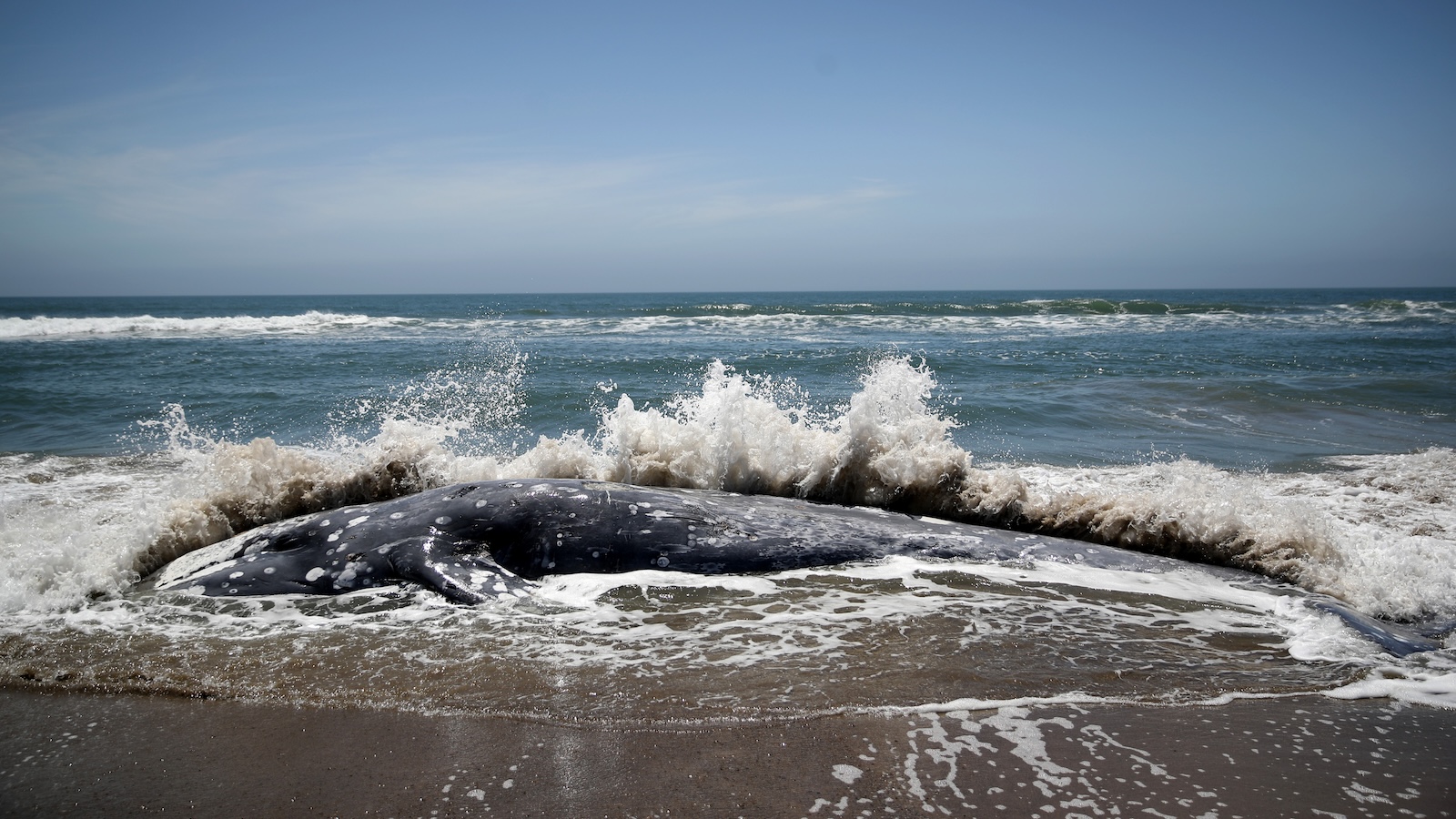
Yet, a contentious debate has erupted over recent population data. NOAA recently released estimates suggesting that the whale population rebounded by roughly 5,000 individuals over the past year. Independent marine scientists and conservation advocates have openly rejected these figures as statistically implausible. Mark Palmer of the Earth Island Institute noted the physical impossibility of such a rapid rebound given the microscopic number of calves born in preceding seasons. Critics argue that these optimistic numbers may reflect methodological artifacts or political pressures rather than ground-truthed biological reality.
Official Statements & The Political Landscape
The tension at the Newport conference was palpable, driven by a pervasive fear among government scientists and grant-dependent researchers regarding federal retaliation.
Walking on Eggshells
According to conference attendees, event organizers explicitly stipulated that policy and political debates were to be barred from the proceedings. Presenters kept strictly to empirical science, avoiding any direct critique of the federal agencies funding their work.
"People were walking on eggshells there," explained Mark Palmer. He noted that the reluctance to address governance was a direct response to the political climate taking shape since 2025. The current administration has instituted sweeping staff reductions and budget reallocations within NOAA to align with partisan objectives, proposed the total elimination of the Marine Mammal Commission, and systematically rolled back critical habitat protections under the Endangered Species Act.
Furthermore, NOAA is currently sitting on a backlog of approximately 400 species awaiting federal listing decisions, while dragging its feet on releasing official gray whale birth counts and failing to respond within legal timeframes to petitions for relisting. NOAA officials declined requests for comment.
Legal Action on the Horizon
Frustrated by federal inaction, conservation groups are turning to the courts. At the end of August, three major environmental organizations—including the Center for Biological Diversity and the Earth Island Institute—filed a formal notice of intent to sue the Trump administration over its failure to respond to the petition to relist gray whales under the ESA.
Miyoko Sakashita, an attorney leading the impending litigation for the Center for Biological Diversity, stressed that a formal listing is a mandatory legal and biological step. "The law says they have to use the best available science," Sakashita stated. "When we look at this terrible population decline, it seems like there cannot be any other answer than to proceed forward with a threatened or endangered listing."
A federal listing would legally compel agencies to formulate a comprehensive recovery plan, unlock critical funding for habitat restoration and population monitoring, and establish regulatory guardrails that could buy the species vital time.
Future Outlook: Mitigating Hazards in an Uncertain Era
While the overarching crisis of Arctic climate change demands global systemic decarbonization—what biologist Richard Steiner describes as an existential imperative to avoid "apocalyptic" outcomes—regional stakeholders are racing to implement localized mitigation strategies.
Slowing Down the Fleet
In the absence of federal mandates on the U.S. West Coast (unlike mandatory speed limits enforced on the East Coast), researchers and technologists are pioneering voluntary protective measures. Rachel Rhodes leads Whale Safe, an initiative spearheaded by the Benioff Ocean Science Laboratory at the University of California, Santa Barbara. The project maps real-time whale locations in busy shipping lanes using advanced hydrophone acoustic monitoring, thermal cameras, and satellite telemetry.
"In an ideal world, ships would be able to avoid whales entirely," Rhodes explained. "But waterways are often too busy and confined for that to be possible. So the next best thing is to ask ships to slow down to 10 knots or less."
Complementary regional programs, such as Blue Whales Blue Skies, have achieved notable success by offering financial incentives and public commendations to shipping corporations that voluntarily reduce speeds in whale hotspots. However, compliance remains patchy, with certain high-speed commercial operators and cruise lines continuing to disregard voluntary advisories.
The Ultimatum for Policymakers
As the legal battle over endangered species protections unfolds and Arctic sea ice continues its historic retreat, the survival of the eastern North Pacific gray whale hangs in the balance. The biological warning signs are unambiguous, and the scientific community has fulfilled its duty of documenting the collapse.
"The scientists have done their job in reporting the dire situation for gray whales," concluded Richard Steiner. "Now it’s time for the policymakers to put that science to work in protecting them as much as possible." Whether policymakers will heed that call before the gray whale follows its Atlantic counterpart into extinction remains one of the defining conservation questions of our time.



