Executive Overview
What truly constitutes a victory in modern environmental campaigning? Is it the definitive legal protection of a sprawling forest ecosystem that serves as a sanctuary for hundreds of threatened species—including the vulnerable koala—after decades of tireless grassroots advocacy? Or does the moral purity of that victory depend entirely on the mechanics of how the battle was won, particularly if the realization of the reserve relies on corporate carbon offsetting schemes that allow major industrial polluters to offset their emissions rather than cut them at the source?
This is not a purely academic thought experiment. It is the core dilemma currently fracturing the Australian environmental movement and placing the Greens in a high-stakes legislative bind ahead of a pivotal Senate vote. In blunt political terms, the minor party is weighing whether to execute an extraordinary maneuver: supporting a Nationals motion to strike down a state-federal plan that would establish the long-discussed Great Koala National Park in northern New South Wales and drastically curtail native forest logging.
Originally scheduled for a vote, the motion was delayed after the Greens requested additional time to forge a consensus position—a clear indicator of how deeply divisive the issue has become within progressive ranks. While the national political spotlight has only recently begun to focus on the dispute, the structural ramifications for both conservation policy and Australia’s carbon market could be profound. At stake is a 476,000-hectare reserve, the integrity of Australia’s carbon crediting framework, and a fractured coalition of environmentalists, First Nations leaders, and political strategists who cannot agree on whether the ends justify the means.
Detailed Chronology: From Grassroots Campaign to Senate Deadlock
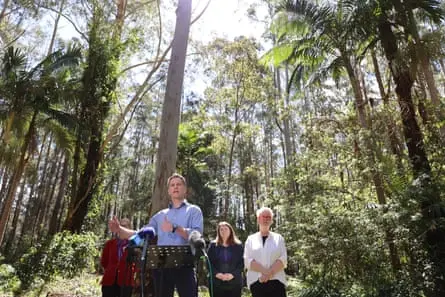
The story of the Great Koala National Park traces its roots back decades, born from the fierce dedication of local campaigners around Coffs Harbour who sought to protect an interconnected matrix of forests harboring over a hundred threatened species, including greater gliders, glossy black cockatoos, and the rapidly declining koala population. This grassroots mobilization earned the backing of diverse community groups and traditional custodians alike.
The Political Evolution and Delays
- Early 2010s: NSW Labor signals tentative support for a protected koala reserve while sitting in opposition. Despite vocal community backing, concrete legislative steps stall for years.
- September 2025: Under Premier Chris Minns, the New South Wales government formally announces plans to incorporate 176,000 hectares of state forest—an area more than twice the size of Canberra—into existing protected public lands, creating a massive 476,000-hectare reserve. State projections indicate the park will safeguard approximately 12,000 koalas, critical water catchments, and significant carbon sinks.
- June 2026: Final confirmation of the park’s financial feasibility arrives when the Albanese federal government approves a NSW proposal enabling the state to leverage the park to generate hundreds of millions of dollars in carbon credits.
- August 2026: The political fault lines widen. The Greens seek a delay on a Senate vote regarding a Nationals motion to disallow the carbon crediting method underpinning the park, exposing deep rifts between veteran conservationists and pragmatists.
Supporting Context & Metrics: Unpacking the Carbon Offset Mechanism
To understand why a progressive conservation victory has triggered a civil war among climate activists, one must examine the mechanics of Australia’s carbon crediting system.
+-----------------------------------------------------------------------------+
                 AUSTRALIA'S SAFEGUARD MECHANISM AT A GLANCE
+-----------------------------------------------------------------------------+
| • Scope: Covers ~200 large industrial facilities emitting >100,000 tonnes   |
|   of CO2 equivalent annually (mines, gasfields, smelters, manufacturers).   |
| • Reduction Target: Facilities must cut emissions intensity by up to 4.9%   |
|   annually.                                                                 |
| • Compliance Options: Direct on-site emission reductions OR the purchase    |
|   of carbon offsets (Australian Carbon Credit Units / Safeguard Credits).   |
| • The Controversy: Heavy polluters can buy credits to meet targets instead   |
|   of transforming industrial processes directly.                            |
+-----------------------------------------------------------------------------+
The Safeguard Mechanism and Industrial Emissions
Carbon credits remain opaque to the general public, yet they form the bedrock of federal climate policy. Each credit theoretically represents one metric ton of greenhouse gas emissions either prevented from entering or actively drawn down from the atmosphere. In Australia, these credits have historically stemmed from outback vegetation regeneration projects and landfill methane capture initiatives.
While the underlying goals—such as expanding forests and mitigating methane leaks—are uncontroversial, the execution has faced severe criticism. Independent scientific studies published in leading journals have highlighted major shortcomings in Australian and international offset projects, indicating that a substantial portion of issued credits fail to reflect genuine, additional emissions reductions.
Despite these scientific warnings, the federal government continues to endorse and issue these units. Under the revamped Safeguard Mechanism—a regulatory policy governing approximately 200 of the nation’s largest industrial emitters—businesses can purchase carbon credits and claim them as compliance against mandatory emission caps.
Critics and climate scientists argue that relying on offsets undermines the imperative for deep, direct industrial decarbonization. They contend that offsets should be deployed sparingly, reserved only for hard-to-abate sectors, rather than serving as an easy escape hatch for fossil fuel extractors and heavy manufacturers.

Official Statements and Competing Perspectives
The debate has polarized the environmental movement, pitting legendary conservationists against pragmatic ecologists and First Nations representatives.
The Case Against: The "Additionality" Argument
Prominent voices—including the Australia Institute and influential former Greens leaders Bob Brown and Christine Milne—are fiercely urging the party to support the disallowance motion. Their primary critique centers on the principle of "additionality," a cornerstone of rigorous carbon accounting.
Under standard rules, carbon credits should only be issued for conservation actions that would not have occurred otherwise. Because NSW Labor signaled its intention to create a koala park as early as 2015, critics argue that the project fails the additionality test. They maintain that taxpayers—rather than loopholes in the carbon market—should fund the phase-out of the struggling native forestry industry, and that natural ecosystems should be protected for their intrinsic ecological value, not monetized as financial instruments for corporate polluters.
The Case For: Pragmatism and Biodiversity Gains
Conversely, a powerful coalition of forest campaigners, First Nations groups, and prominent ecologists—such as Professor David Lindenmayer—argue that rejecting the carbon crediting method is a tactical and ecological mistake.
Their arguments rest on several key points:
- Enhanced Protections: The specific carbon crediting method designed for this initiative—"improved native forest management"—was significantly strengthened during its regulatory development. It extends well beyond Labor’s initial pre-election promise of $80m in funding by permanently capping logging in the state’s public and private native forests well below historical decadal averages.
- Marginal Market Impact: The volume of carbon credits generated by this specific proposal would be relatively modest, accounting for less than 1% of total credits issued annually nationwide. Even if similar methods were adopted in other forestry-heavy states like Tasmania, the market share would remain small, meaning this specific policy is not the primary driver of corporate access to cheap offsets.
- Irreplaceable Biodiversity Outcomes: Proponents warn that blocking the initiative could collapse the financial architecture supporting the park, leaving millions of hectares of koala habitat vulnerable to continued degradation. NSW Greens MP Sue Higginson has openly cautioned that conditions for wildlife could deteriorate rather than improve if the plan is struck down.
Future Outlook: Navigating the Legislative Endgame
As the Senate vote looms next month, both Labor and the Greens are under intense pressure to negotiate a workable compromise.
One prospective pathway involves legislative amendments ensuring that carbon credits generated from native forest protection can only be purchased by industries entirely detached from fossil fuel extraction and production. While the NSW government has expressed willingness to adopt such restrictions, the operational mechanisms for enforcing them remain murky.
For the Greens, the political incentives for securing a deal are substantial, even as party elders rail against what they perceive as political coercion. Reaching an agreement would finally secure the long-sought protection of critical koala habitats and their rich biodiversity—a generational victory for Australian conservation. Politically, a negotiated compromise shields the party from protracted attacks by opponents accusing them of abandoning local grassroots campaigners and aligning with right-wing MPs to block a landmark environmental reserve.
Ultimately, the Senate showdown forces the environmental movement to confront an uncomfortable reality: in the complex arena of modern climate policy, absolute ideological purity and pragmatic ecological victories rarely walk hand in hand. How the Greens navigate this crossroads will define not only the future of the Great Koala National Park, but the very definition of a win in the climate era.