Executive Overview
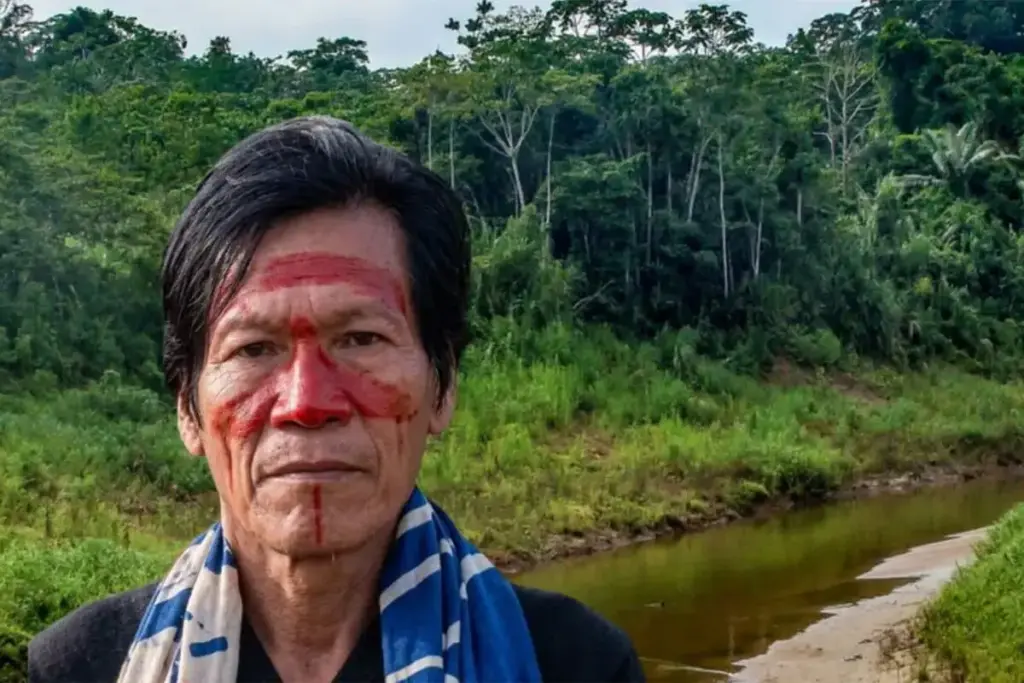
PUCAYALLI, PERU — The rugged, remote canopies of the Peruvian Amazon have claimed yet another defender of Indigenous land and sovereignty. On Sunday, Américo Pascuala Tumisha, a prominent leader of the Ashéninka people and coordinator of the Onconashari Indigenous community’s territorial surveillance committee, was shot and killed during a routine patrol. Pascuala encountered unauthorized individuals illegally extracting copaiba oil within the ancestral boundaries of the Onconashari community in the Ucayali region, sparking a confrontation that ended in his tragic execution-style murder.
Pascuala’s death is not an isolated incident; rather, it is a glaring symptom of a systemic governance failure in the Peruvian Amazon, where illegal resource extraction, rampant logging, drug trafficking, and land grabbing operate with near-total impunity. Indigenous leaders who step forward to protect their ancestral territories face constant, mortal threats while receiving little to no substantive backing from the state.
According to data compiled by the Regional Organization AIDESEP Ucayali (ORAU) and international human rights monitors like Global Witness, Pascuala’s murder places him among dozens of Indigenous land defenders systematically silenced in Peru over the past decade. Despite state-backed mechanisms designed to protect human rights defenders, Indigenous organizations emphasize that these protocols remain underfunded, bureaucratic, and wholly ineffective in remote regions. As Peru’s Public Prosecutor’s Office launches an investigation into the killing, Indigenous communities and international observers are left asking a haunting question: How many more lives must be sacrificed before the government halts the bloodshed in the rainforest?
Detailed Chronology of the Killing and the Onconashari Incursions
To understand the circumstances surrounding the death of Américo Pascuala Tumisha, one must trace the timeline of escalating tensions within the Onconashari community and the adjacent Murunahua Indigenous Reserve—a federally protected buffer zone established explicitly to safeguard vulnerable Indigenous peoples living in voluntary isolation or initial contact.
The Fatal Confrontation
On Sunday, Pascuala was performing his duties as the coordinator of the Onconashari Forest Surveillance and Control Committee. Armed with community-granted authority to safeguard the rainforest, monitor wildlife, and deter illegal encroachments, Pascuala and fellow patrollers swept through deep jungle territory. During the patrol, they encountered outsiders allegedly siphoning valuable copaiba oil from trees without authorization.
An argument ensued as Pascuala confronted the trespassers over the illegal exploitation of community resources. The confrontation quickly turned fatal when one of the intruders drew a firearm and shot Pascuala dead. The perpetrators fled deep into the dense jungle, evading immediate capture. Pascuala’s assassination robbed the community of a dedicated steward who had previously served as its chief and had dedicated years of his life to defending the forest.
Years of Unheeded Warnings
The incursions that led to Pascuala’s murder were neither sudden nor unforeseen. Illicit copaiba extraction in the Onconashari sector has been systematically documented since at least 2020. A comprehensive 2023 report published by the Peruvian nonprofit Derecho, Ambiente y Recursos Naturales (DAR) revealed that individuals hailing from the nearby community of Nueva Luz de Arara had been routinely breaching Onconashari boundaries and crossing into the Murunahua Indigenous Reserve.
Driven by the economic pressures of the COVID-19 pandemic—during which traditional cash flows collapsed and urban buyers from Pucallpa began aggressively scouring the Yurúa basin for alternative commodities—illegal copaiba tapping escalated sharply. Valued for its therapeutic properties in traditional medicine and lucrative commercial applications, copaiba oil became a magnet for opportunistic extractors willing to violate Indigenous rights and environmental laws.
When Onconashari residents initially challenged these intruders, they were met with direct intimidation and death threats. Recognizing the escalating danger, community authorities escalated the issue, filing formal complaints with their Indigenous federation, the Ministry of Culture, and the National Police. These appeals led to sporadic joint patrols in late 2022, but the state presence proved fleeting, leaving the community vulnerable once the patrols departed.
Institutional Recognition and Abandonment
Recognizing the desperate need for legal standing to protect their borders, the Ucayali regional government formally recognized Onconashari’s Forest Surveillance and Control Committee in August 2025. This accreditation granted committee members formal authority to patrol their territory, intercept illegal loggers, and alert state authorities to environmental crimes.
At the time of the committee’s recognition, Robinson Pascual, then the community’s chief, underscored the critical nature of their work: "It is important to take care of our territory because sometimes our neighbors do not respect the boundaries. With this recognition, we will be better able to protect it."
Tragically, official recognition did not translate into physical security. AIDESEP confirmed that Américo Pascuala had repeatedly warned state authorities about armed outsiders infiltrating community lands in the months leading up to his murder. Yet, these alerts fell on deaf ears; the state offered neither emergency response nor protective measures, leaving Pascuala and his committee to face heavily armed criminal networks entirely unprotected.
Supporting Context & Metrics: A Crisis of Impunity in Peru
Américo Pascuala Tumisha’s assassination underscores a broader, deeply entrenched human rights crisis unfolding across the Peruvian Amazon. Peru has steadily emerged as one of the most dangerous nations in the world for environmental and land defenders.
The Escalating Death Toll
- Global Witness Data: Records maintained by Global Witness indicate that more than 60 environmental and land defenders have been murdered in Peru since 2012.
- AIDESEP Early-Warning System: Data compiled by AIDESEP’s internal monitoring networks reveal that at least 38 Indigenous defenders were assassinated in the Peruvian Amazon between 2014 and 2026 alone.
This reign of terror features high-profile casualties that have shocked the international community:

- The Saweto Murders (2014): Four Asháninka leaders—including Jorge Ríos Pérez, Leoncio Quinticama Meléndez, Francisco Pinedo, and Edwin Chota—were brutally murdered in the Alto Tamaya-Saweto community in Ucayali for organizing against illegal loggers. Their killers walked free for years due to prosecutorial inertia.
- The Murder of Quinto Inuma Alvarado (2023): A prominent Kichwa leader in the San Martín region, Inuma was assassinated after repeatedly denouncing illegal logging networks and logging mafias operating in his territory.
In a stark reminder of the sluggish pace of justice, a Peruvian court handed down sentences ranging from 15 to 35 years to four men involved in Inuma’s murder on Monday—coincidentally just one day after Pascuala was gunned down. While families of victims welcomed the rare convictions, legal advocates note that such rulings come far too late and rarely serve as an effective deterrent against the powerful criminal syndicates driving Amazonian destruction.
Official Statements and Institutional Failures
The murder of Américo Pascuala has ignited intense fury and grief among Indigenous federations, who are demanding an immediate restructuring of how the Peruvian state approaches human rights protections in remote regions.
Condemnation from AIDESEP
Prominent Indigenous leaders have pulled no punches in assigning blame to the Peruvian government for its institutional negligence. Miguel Guimaraes, Vice President of AIDESEP, delivered a searing critique of the state’s flagship protection initiative: the Intersectoral Mechanism for the Protection of Human Rights Defenders, managed under the Ministry of Justice and Human Rights.
"Despite efforts to confront illicit activities, Indigenous leaders continue to be killed," Guimaraes stated forcefully. "The intersectoral mechanism does not have enough funding. Paper cannot stop a bullet; concrete action is needed on the ground to protect defenders."
Indigenous leaders point out that while the mechanism exists on paper, it relies heavily on bureaucratic paperwork, delayed risk-assessments, and Lima-centric committees that are utterly disconnected from the volatile realities of remote Amazonian outposts like Onconashari. When defenders request urgent intervention, they are routinely met with administrative delays, logistical hurdles, and a complete absence of local police logistics.
The Response from the State
In the wake of Pascuala’s death, Peru’s Public Prosecutor’s Office announced that an official investigation has been opened. Police units have been tasked with identifying the suspects involved in the copaiba extraction clash. However, past performance suggests that tracking down heavily armed criminal elements deep within the Yurúa basin will be an uphill battle, often hampered by police corruption, lack of river transport, and fear of retaliation.
The Ashéninka People: Guardians of a Fragile Ecosystem
To fully comprehend the loss of Américo Pascuala Tumisha, one must understand the cultural and historical weight of the community he belonged to.
The Ashéninka are an Arawak-speaking Indigenous people with traditional territories spanning across Peru’s Ucayali, Pasco, Junín, and Huánuco regions, as well as across the international border into Acre, Brazil. According to estimates from Peru’s Ministry of Culture, approximately 15,300 people reside within officially recognized Ashéninka communities, including settlements hugging the banks of the Yurúa River. When viewed alongside their closely related linguistic and cultural kin, the Asháninka, the broader population reaches an estimated 120,000 individuals.
For generations, the Ashéninka have acted as the primary stewards of some of the most biodiverse, carbon-rich tropical forests on Earth. Their traditional lifestyle is intrinsically tied to the health of the canopy, rivers, and wildlife. However, as global demand for timber, gold, agricultural land, and botanical extracts like copaiba oil surges, Indigenous territories have increasingly found themselves on the front lines of an undeclared resource war.
Copaiba oil—harvested by boring into the trunk of Copaifera trees—is prized for its anti-inflammatory properties in traditional Amazonian medicine and is increasingly exported for use in global cosmetic and pharmaceutical products. When unregulated commercial syndicates muscle into Indigenous lands to extract these resources, they not only violate territorial sovereignty but also destabilize fragile ecosystems that rely on sustainable harvesting practices.
Future Outlook: A Critical Crossroads for the Peruvian Amazon
The assassination of Américo Pascuala Tumisha serves as an urgent wake-up call for the international community, environmental NGOs, and the Peruvian government. The ongoing slaughter of Indigenous guardians is tearing apart the social fabric of Amazonian communities and accelerating the degradation of the world’s most critical carbon sink.
Moving forward, experts and Indigenous federations agree that several critical steps must be taken immediately to prevent further bloodshed:
- Substantial Financing of Protection Mechanisms: The Peruvian government must allocate dedicated, emergency funding to the Intersectoral Mechanism for the Protection of Human Rights Defenders, ensuring rapid-response capabilities, satellite communication devices, and armed escorts for threatened leaders.
- Decentralization of Law Enforcement: Establishing permanent riverine police posts and environmental prosecutor offices in high-risk border regions like Yurúa and Ucayali to project state authority and deter illegal extraction syndicates.
- Expedited Land Titling: Granting full legal land titles and expanded buffer zones to Indigenous communities and isolated reserves, eliminating the legal ambiguities that criminal networks exploit.
- Supply Chain Accountability: Cracking down on illegal commodities—including illegally harvested timber, gold, and botanical oils—by tracing supply chains back to urban hubs like Pucallpa and holding international buyers accountable.
Until the Peruvian state matches its rhetorical commitments with genuine, boots-on-the-ground enforcement and structural reforms, the guardians of the Amazon will remain sitting ducks in a lawless frontier. Américo Pascuala Tumisha gave his life protecting the ancient trees of Onconashari; honoring his memory will require nothing short of a complete overhaul of how Peru protects those who defend the future of our planet.
Cite this article: Butler, R. A. (2026). Tragedy in the Rainforest: The Assassination of Ashéninka Leader Américo Pascuala Tumisha Exposes the Deadly Impunity Plaguing the Peruvian Amazon. Mongabay Conservation News. DOI: https://doi.org/10.66709/news-327333