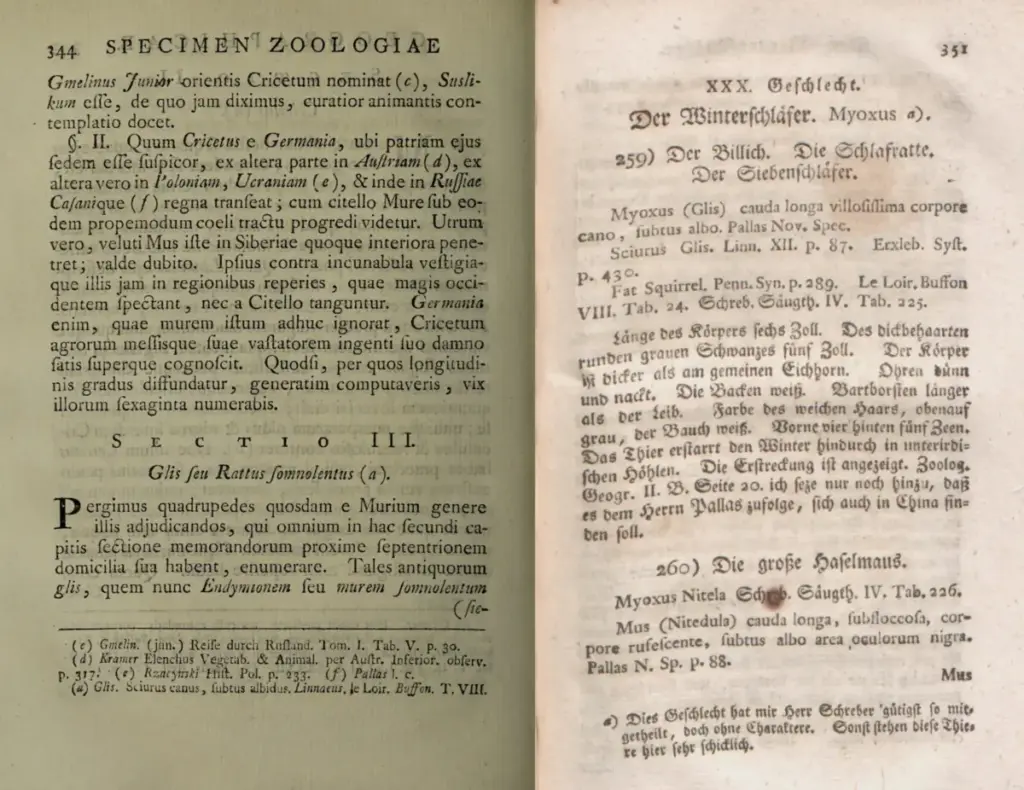
In the sprawling landscape of natural history literature, rare book acquisitions are rarely just about age, binding, or aesthetics. They are often artifacts of institutional detective work, structural turning points in scientific methodology, and historical windows into how humanity has mapped the living world. Such is the case with a remarkable recent acquisition by the Field Museum’s Marie Louise Rosenthal Library: Eberhard August Wilhelm von Zimmermann’s three-volume zoological magnum opus, Geographische Geschichte des Menschen, und der allgemein verbreiteten vierfüßigen Thiere, nebst einer hieher gehörigen Zoologischen Weltcharte, published between 1778 and 1783.
Acquired through a specialized rare book fund, this seminal work on biogeography represents far more than a collector’s triumph. It sits at the epicentre of a fascinating administrative and scientific tug-of-war involving the International Commission on Zoological Nomenclature (ICZN) and key historical figures from the Field Museum itself. Featuring one of the earliest known world maps of zoological distribution—informed heavily by the Pacific voyages of Captain James Cook—Zimmermann’s German edition marks the delicate, volatile transition of biology from descriptive natural philosophy into rigorous, standardized binomial nomenclature.
Today, thanks to the collaborative preservation efforts of institutions worldwide and the digital infrastructure of the Biodiversity Heritage Library (BHL), this historical pivot point has been rescued from obscurity. By uniting Zimmermann’s rejected Latin precursor (Specimen zoologiae geographicae, 1777), his approved 1778–1783 German expansion, and the official 1954 ICZN ruling that separated them, researchers, historians, and modern biologists can now trace the evolving standards of scientific taxonomy across centuries. This acquisition underscores the core mission of the BHL during its 20th-anniversary celebration: ensuring that foundational texts of biodiversity remain accessible, living documents that continue to yield historical insight long after their ink has dried.
Detailed Chronology: From Enlightenment Cartography to 20th-Century Rulings
To understand the weight of Zimmermann’s work, one must trace a historical timeline that spans over two centuries of scientific debate, global exploration, and regulatory evolution.
1777: The First Attempt and Methodological Pitfalls
In 1777, the German geographer, zoologist, and mathematician Eberhard August Wilhelm von Zimmermann published Specimen zoologiae geographicae, quadrupedum domicilia et migrationes sistens. Written in Latin—the traditional scholarly language of the era—the work aimed to categorize and map the global distribution of four-footed animals (quadruped mammals). However, the publication suffered from a fatal taxonomic flaw: Zimmermann failed to consistently apply Carl Linnaeus’s revolutionary system of binomial nomenclature (the two-part naming system using genus and species). Instead, he relied on an inconsistent mix of generic labels and descriptive phrases. For instance, where modern taxonomy demands a strict binomial, Zimmermann might refer to a dormouse as Glis seu Rattus somnolentus.
1778–1783: The Definitive German Expansion
Recognizing the structural shortcomings of his earlier Latin text, Zimmermann set out to completely revise, expand, and refine his thesis. Released over a five-year period in three comprehensive volumes, Geographische Geschichte des Menschen, und der allgemein verbreiteten vierfüßigen Thiere represented a massive leap forward. Crucially, this German edition embraced binomial nomenclature with far greater consistency, introducing several enduring scientific names still attributed to Zimmermann today—including Cervus muntjak (the muntjac deer), Canis zerda (now Vulpes zerda, the fennec fox), and Lutra minima (now recognized as Chironectes minimus, the water opossum).
Accompanied by a groundbreaking fold-out map titled Tabula Mundi Geographico Zoologica sistens Quadrupedes hucusque notos sedibus suis adscriptos edidit, the work integrated the latest geographical discoveries of the era. Drawing heavily upon logs and reports brought back by Captain James Cook and his crew from the HMS Endeavour and subsequent voyages, the map accurately rendered the newly "discovered" Sandwich Islands (Hawaii), refined the western coastline of North America, and noted the Seychelles east of mainland Africa.
Mid-20th Century: The ICZN Intervention and Field Museum Involvement
By the mid-20th century, as modern zoologists sought to stabilize the global catalog of species names, anomalies in foundational texts like Zimmermann’s required formal legal review by the International Commission on Zoological Nomenclature (ICZN).
The journey toward Opinion 257, issued in 1954, was driven by international correspondence. Records show that Francis Hemming, Secretary of the ICZN, actively consulted with prominent zoologists at the Field Museum of Natural History in Chicago. Wilfred H. Osgood forcefully advocated for the formal recognition of Zimmermann’s 1778–1783 Geographische Geschichte, a position strongly supported by Philip Hershkovitz, then Curator of Mammals at the Field Museum.
1954: Opinion 257 and the Official Register
In 1954, the ICZN formally handed down its decision. The Commission ruled that Zimmermann’s 1777 Latin volume (Specimen zoologiae geographicae) failed to meet the rigorous criteria of Article 25 of the Règles internationales de la nomenclature zoologique. Consequently, it was placed on the Official Index of Rejected and Invalid Works in Zoological Nomenclature.
Conversely, the Commission validated Zimmermann’s 1778–1783 Geographische Geschichte, confirming that it successfully applied binomial naming conventions and officially inscribed it on the Official List of Works Approved as Available for Zoological Nomenclature. This administrative ruling preserved a critical historical bedrock for mammalian biogeography while safeguarding modern taxonomy from linguistic ambiguities.
The Modern Digital Era: BHL at 20
Fast forward to the present day. As the Biodiversity Heritage Library celebrates two decades of open-access digital preservation, staff at the Field Museum’s Marie Louise Rosenthal Library identified the rare, multi-volume German edition of Geographische Geschichte on the antiquarian market. Recognizing its deep institutional ties, historical rarity, and absence from complete digital repositories, the library secured the volumes. Today, both the rejected 1777 Latin precursor and the validated 1778–1783 German masterwork—alongside the ICZN’s landmark 1954 rulings—live side-by-side within the BHL digital ecosystem.
Supporting Context & Metrics
Evaluating the significance of historical scientific literature requires examining both quantitative institutional metrics and qualitative shifts in scientific philosophy.
Key Zoological Taxa Introduced by Zimmermann (1778–1783)
Cervus muntjak: Commonly known as the muntjak or barking deer, establishing a baseline for South and Southeast Asian cervid distribution.
Canis zerda (now Vulpes zerda): The iconic fennec fox of the Sahara, illuminating North African mammalian geography.
Lutra minima (now Chironectes minimus): The yapok or water opossum, the only truly aquatic marsupial, expanding Neotropical biogeographical awareness.
Cartographic Evolution: The Tabula Mundi Geographico Zoologica
The fold-out map packaged within Zimmermann’s work stands as a monumental achievement in thematic cartography. Rather than merely outlining political borders, Zimmermann plotted the names of quadrupeds directly over their estimated native geographic ranges.
North America: Notations for Castor (beaver) and Bison span northern latitudes.
Asia: Tigris clearly marks the apex predator’s historical distribution.
Australia (New Holland): Incorporates the Kanguro (kangaroo), an animal first introduced to European science through the observations of botanist Daniel Solander aboard Cook’s HMS Endeavour.
Institutional Engagement and Rare Book Evaluation Metrics
When the Field Museum library staff consider acquiring a rare text, they run it through a rigorous multi-tier evaluation framework:
Scope Alignment: Does the text fall squarely within natural history and mammalian biogeography?
Scientific Value: Does it introduce new taxonomic names, foundational theories, or critical historical corrections?
Institutional Scarcity: How many global institutions hold physical copies, and how widely distributed is the text?
Digital Availability: Is the work already digitized and accessible via the Biodiversity Heritage Library, or does acquisition bridge a critical gap in the global scientific record?
Official Statements and Archival Insights
The intricate interplay between 18th-century taxonomy and 20th-century administrative law is best understood through the historical record preserved by the ICZN and the Field Museum.
The formal statement of the case leading to Opinion 257 notes:
"The Commission’s ruling stemmed in part from correspondence between Francis Hemming, Secretary of the Commission, and Wilfred H. Osgood of the Field Museum, who advocated for the recognition of Geographische Geschichte. Hemming also consulted Philip Hershkovitz, then Curator of Mammals at the Field Museum, who supported Osgood’s position."
This transatlantic dialogue underscores how deeply American institutions influenced the codification of global biological nomenclature. By stepping forward to defend the validity of Zimmermann’s German edition, Field Museum curators ensured that historical continuity in mammalian naming conventions was preserved without sacrificing modern taxonomic rigor.
Reflecting on the completion of this archival puzzle, project coordinators emphasize the unexpected longevity of scientific literature:
"As the 1954 ICZN opinion suggests, a work published in the 18th century can continue to have a life in the scientific record and be actively reassessed centuries later. Having access to both this three-volume edition and the rejected 1777 title, alongside the International Commission on Zoological Nomenclature’s ruling, provides a compelling case study in the development of zoological nomenclature…"
Future Outlook: Preserving the Living Scientific Record
The integration of Zimmermann’s Geographische Geschichte into the Biodiversity Heritage Library is far more than a nostalgic nod to Enlightenment-era science; it is a vital step toward securing the future integrity of biodiversity research.
As taxonomy faces new frontiers—from genetic sequencing and phylogenetic modeling to AI-driven species identification—the historical bedrock upon which binomial names were built remains essential. When modern systematists investigate the provenance of a species epithet, they cannot rely solely on contemporary databases; they must be able to trace nomenclature back to its original historical context. By making rare, fragile, and historically contested texts openly accessible to researchers across the globe, the BHL bridges the gap between historical library collections and cutting-edge ecological science.
Furthermore, this acquisition highlights the indispensable role of physical rare book rooms working in tandem with digital preservation networks. Without the dedicated rare book fund at the Field Museum’s Marie Louise Rosenthal Library, physical volumes like Zimmermann’s 1778–1783 masterpiece might languish unseen in private markets. By bringing them into the public domain through BHL, institutions ensure that the history of science remains transparent, collaborative, and perpetually open to rediscovery.
As the Biodiversity Heritage Library marks its 20th anniversary, stories like the rescue and digitization of Zimmermann’s biogeographical milestone serve as a powerful reminder: the history of science is never truly finished. Centuries-old debates over Latin syntax, taxonomic validity, and global mapping continue to inform how we understand, categorize, and protect the natural world today.