

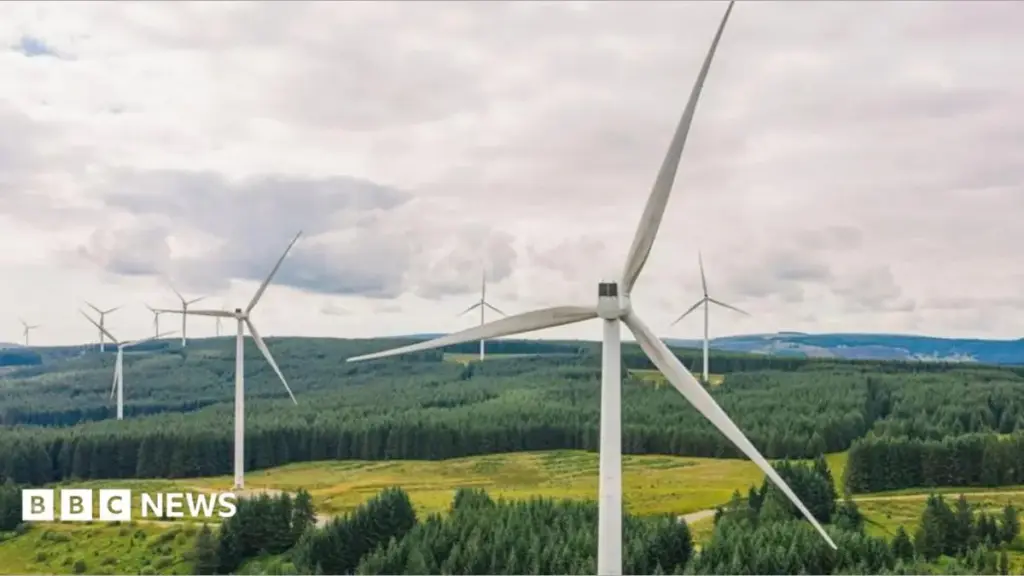
Executive Overview
In a bold strategic pivot designed to reshape the economic and environmental landscape of the nation, the Plaid Cymru-led Welsh government has launched a nationwide public consultation on proposals to establish a comprehensive, state-owned renewable energy company. This ambitious initiative aims to harness Wales’s vast natural resources—ranging from high-altitude onshore winds and solar arrays to potential marine and offshore projects—to build a cleaner, cheaper, and domestically owned energy ecosystem.
The proposed entity would consolidate existing state-backed green initiatives, most notably the onshore developer Trydan Gwyrdd Cymru (TGC) and Ynni Cymru, creating a unified powerhouse tasked with developing, owning, and operating renewable generation assets. By driving forward large-scale green infrastructure and empowering local communities with direct equity stakes, the Welsh government hopes to lower long-term household and industrial energy bills. However, the proposal arrives amid fierce political debate. While ministers in Cardiff argue that the initiative is essential to preventing a repeat of the historical exploitation of Wales’s coal wealth during the Industrial Revolution, opposition parties—including the Welsh Conservatives and Reform—have fiercely criticized the plan, questioning its economic efficacy and arguing that Wales requires immediate grid upgrades and industrial support rather than another layer of state bureaucracy.
Detailed Chronology and Structural Evolution
The journey toward a consolidated Welsh public energy company has evolved over several years through a series of incremental policy developments, legislative shifts, and strategic mergers.
- The Genesis of State-Backed Renewables: The foundational step for the current proposals was laid with the creation of Trydan Gwyrdd Cymru (TGC), a wholly-owned Welsh government developer specifically mandated to build, own, and operate onshore wind and solar farms on publicly owned land. TGC initiated several high-profile developments, including proposed wind farms at Carreg Wen near Aberdare and Glyn Cothi in Carmarthenshire.
- Expanding Localized Generation: Parallel to TGC’s development of commercial-scale assets, the Welsh government established Ynni Cymru, an initiative dedicated to expanding locally owned renewable energy generation and supporting smart local energy systems. Alongside the government’s dedicated energy service, these entities operated as distinct pillars within the Welsh energy landscape.
- The Plaid Cymru Election Pledge: During the 2026 election campaign, Plaid Cymru elevated energy policy to the forefront of the political debate by promising that any approved renewable energy projects would be legally mandated to offer local communities a tangible share of their profits. This populist pledge was balanced by contentious debates over grid transmission infrastructure, with Plaid advocating strongly for the undergrounding of electricity cables and the use of wooden poles rather than industrial pylons.
- The Consolidation Proposal: In the wake of these political developments, the Welsh government announced a major structural overhaul. Ministers proposed merging TGC, Ynni Cymru, and the existing government energy service into a single, cohesive corporate entity.
- The Launch of Public Consultation: The government formally opened a public consultation inviting citizens, businesses, and industry stakeholders to shape the operational framework of the new company. The consultation specifically addresses branding—debating whether to retain the Trydan Gwyrdd Cymru moniker or transition to the Ynni Cymru name—and explores mechanisms to establish a Welsh Energy Wealth Fund.
Supporting Context, Mechanics, and Strategic Metrics
To fully understand the implications of the Welsh government’s proposals, it is necessary to examine how the new company will function, its operational boundaries, and its relationship with the broader UK energy market.
Scope of Operations and Economic Intent
The consultation document clarifies that the new entity will not function as a traditional retail energy supplier. It will not directly replace existing energy companies that supply electricity and gas to households, nor will it directly set household utility tariffs. Instead, its primary objective is structural and foundational: to "help Wales reduce energy costs over time by developing and owning renewable energy assets" and to invest heavily in smart local energy systems.
By operating as an asset owner, the company can enter into direct corporate Power Purchase Agreements (PPAs) with large local energy users and industrial manufacturers. Proponents argue this mechanism will help insulate Welsh businesses from the extreme volatility of international fossil fuel markets, thereby stabilizing operational costs and safeguarding manufacturing jobs.
Expanding Beyond Onshore Wind
While TGC’s initial portfolio has focused heavily on onshore wind and solar installations on public estate land, the new consolidated company’s remit is expected to broaden significantly. The consultation paper outlines potential expansions into:
- Offshore Wind: Leveraging Wales’s extensive coastline and high wind yields in the Irish Sea and Bristol Channel.
- Marine Energy: Harnessing tidal stream and wave power technologies, areas where Welsh engineering institutions hold recognized technical expertise.
- Nuclear Energy: Exploring potential equity stakes or collaborative frameworks in advanced nuclear development, complementing the UK’s broader atomic energy strategy.
Differentiation from Great British Energy
A critical point of clarification in the government’s documentation is that the proposed Welsh energy company will operate entirely separate from Great British Energy (GB Energy), the publicly owned clean energy company established by the UK government in 2024. While both entities share a broad ideological commitment to expanding state-backed renewables, the Welsh company is tailored specifically to devolved legislative competencies, regional economic priorities, and community wealth-building strategies within Wales.
The Welsh Energy Wealth Fund
To ensure that the financial rewards of the green transition are felt locally, the consultation floats the establishment of a Welsh Energy Wealth Fund. This mechanism is designed to channel revenues generated by state-owned renewable assets directly into two critical areas:
- Providing targeted financial support to the most vulnerable households struggling with fuel poverty across Wales.
- Investing directly in the host communities where major energy infrastructure projects are constructed, mitigating the visual and physical impact of development with tangible local prosperity.
Official Statements and Political Polarization
The unveiling of the consultation has exposed deep ideological fractures within the Senedd, highlighting divergent views on how Wales should navigate the global energy transition.
The Government Perspective: Enterprise Minister Adam Price
Defending the proposals in an interview on BBC Radio Wales Breakfast, Enterprise Minister Adam Price framed the initiative through a historical and economic lens. He articulated a vision of energy democracy, stating:
"Our vision for the future of the energy system in Wales is one in which it’s clean, it’s cheap and it’s owned by us."
Price emphasized that the consolidation of disparate state agencies into a single corporate structure is vital to achieving operational efficiency and market impact:
"We are bringing the different elements together to create a single company that, if you like, has the range of expertise and the sort of critical mass of resources and knowledge to make a real difference."
Drawing a direct parallel to the Industrial Revolution, Price warned against repeating historical injustices:
"Wales was an energy giant at the Industrial Revolution with coal, but unfortunately we didn’t see the benefit of that being derived largely by our own people. We don’t want to make the same mistake with the huge potential that Wales has in this new energy revolution with renewable energy."
While acknowledging that ultimate regulatory levers over the energy grid remain under UK government jurisdiction at Westminster, Price insisted that a state-owned producer could leverage local procurement and bilateral contracts to secure lower electricity prices for Welsh consumers.
Opposition Backlash: Conservative and Reform Critiques
The plans have met with sharp condemnation from opposition parties, who argue that the Welsh government is prioritizing ideological state intervention over practical economic relief.
Janet Finch-Saunders, the Welsh Conservative energy spokesperson, delivered a scathing critique of the government’s priorities:
"While thousands of well-paid manufacturing jobs are being lost, the Welsh government’s answer is another state-owned company and yet more wind turbines and solar farms across the Welsh countryside. Wales needs cheap, reliable energy to keep factories open, businesses competitive and household bills down."
Echoing these sentiments, Jason O’Connell, shadow cabinet minister for economy and transport, questioned the timing and focus of the initiative:
"Welsh families are already paying some of the highest energy bills in the UK, yet Plaid wants to build a publicly owned energy company instead of focusing on getting bills down. Wales has enormous energy potential. We need better grid connectivity, as Wales currently experiences huge costs and massive delays when connecting to the existing network due to outdated infrastructure and supply chain shortages."
Critics point out that regardless of generation capacity, Wales’s path to affordable energy is severely bottlenecked by antiquated transmission networks, transformer shortages, and long queue times for grid connection—issues that they argue a generation company alone cannot solve.
Future Outlook: Challenges and Next Steps
As the public consultation period moves forward, the Plaid Cymru-led Welsh government faces a complex path toward the realization of its national energy company.
- Navigating the Consultation Feedback: Ministers must carefully review public and industry submissions regarding the corporate structure, branding (TGC versus Ynni Cymru), and community equity models to ensure broad buy-in.
- Addressing Grid Constraints: To satisfy critics, the administration will need to demonstrate how the new company will coordinate with National Grid ESO and distribution network operators (DNOs) to overcome severe grid connection backlogs and infrastructure bottlenecks.
- Legislative and Financial Realities: Establishing a robust portfolio of wind, solar, and marine assets will require substantial capital expenditure, strategic partnerships with private investors, and rigorous environmental impact assessments.
Ultimately, whether the proposed national energy company becomes a transformative engine for Welsh economic renewal or stalls amidst political gridlock and infrastructure delays will depend heavily on the administration’s execution over the coming legislative term. The public consultation marks the first major step in what promises to be a defining debate over the future ownership and cost of energy in Wales.



