By Investigative News Desk
In partnership with Grist and Verite News
Executive Overview
Less than two years after opening its valves along the Mississippi River, the Plaquemines Liquefied Natural Gas (LNG) terminal is hurtling toward a multibillion-dollar expansion. Propelled by the Trump administration’s newly enacted "national energy emergency" framework, the facility’s developer—Virginia-based Venture Global—is bypassing standard regulatory hurdles designed to protect vulnerable ecosystems.
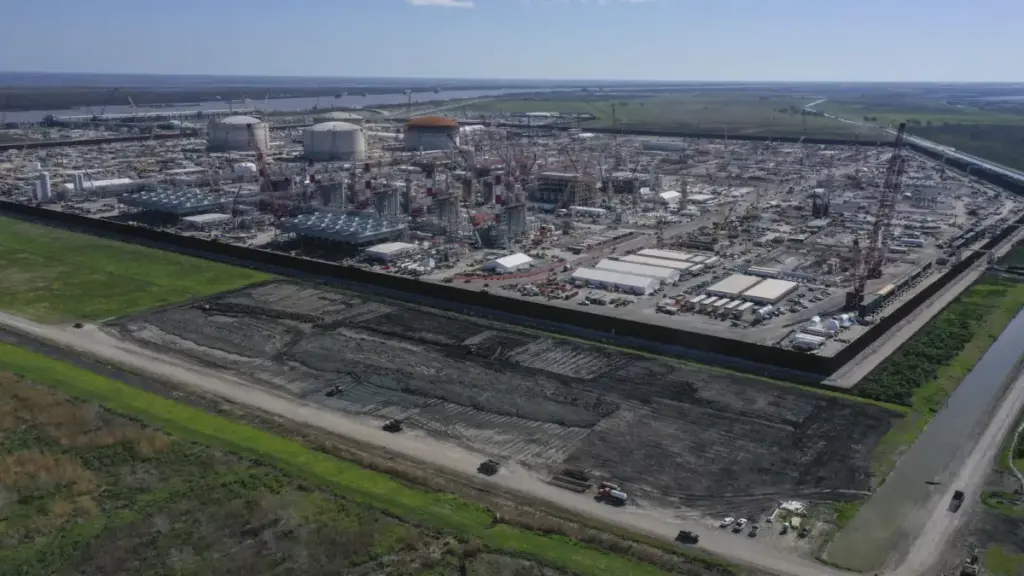
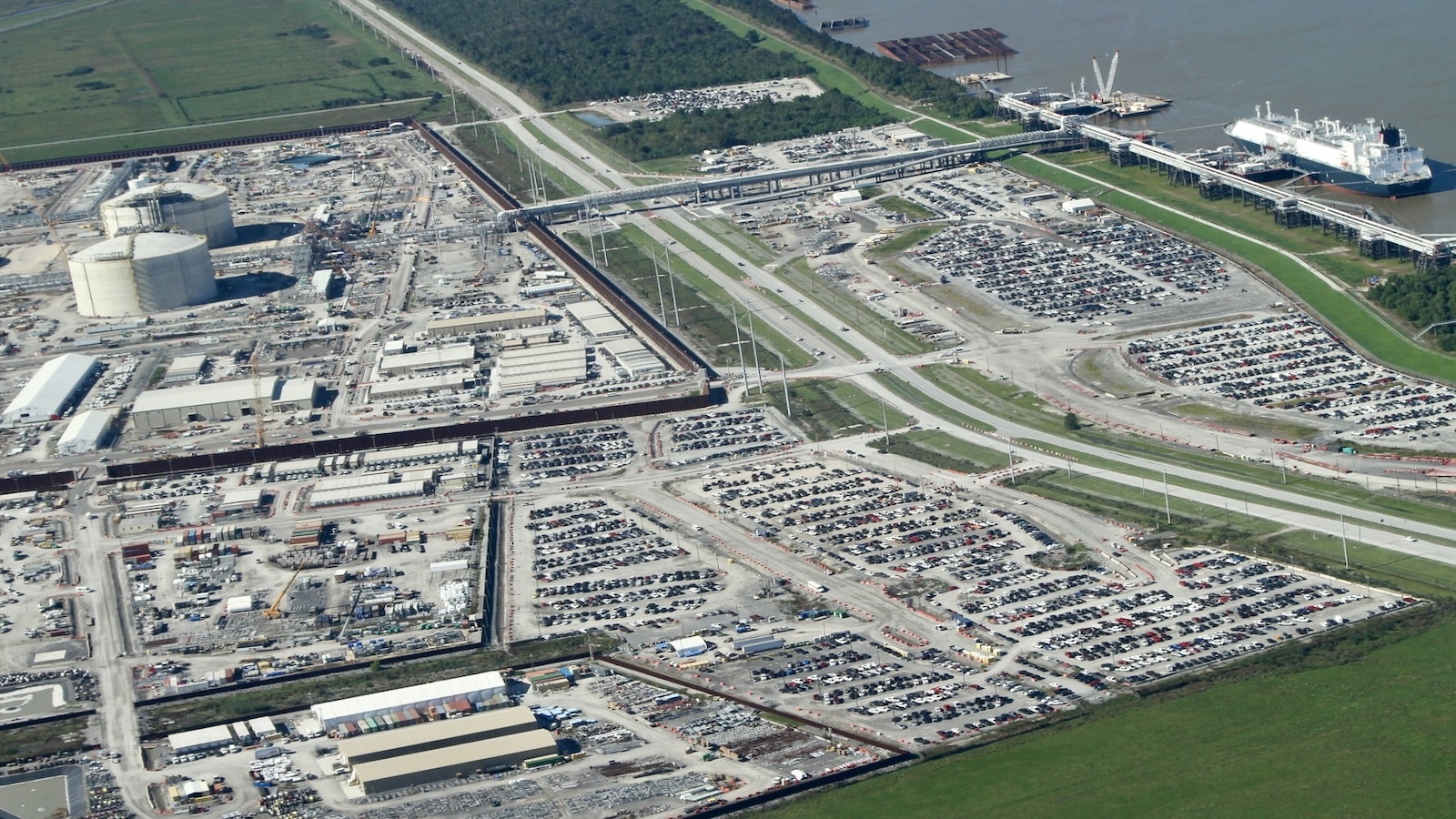
Earlier this summer, the U.S. Army Corps of Engineers granted Plaquemines LNG fast-tracked permitting under a sweeping federal directive designed to prioritize energy infrastructure over conventional environmental reviews. By compressing the public comment window from the standard 30 days down to just 10, federal agencies have cleared a frictionless path for an $18 billion footprint expansion. If finalized, the project will more than double the facility’s size, bloating its footprint from nearly 590 acres to roughly 1,220 acres along the riverbanks in central Plaquemines Parish, about 25 miles south of New Orleans.
According to Venture Global, this brownfield project will crown Plaquemines LNG as the largest liquefied natural gas export terminal in North America. However, environmental scientists, community advocates, and watchdogs warn of severe collateral damage. The expedited review sidelines critical oversight concerning dredging, in-water construction, and marshland destruction in a coastal zone already suffering from catastrophic land loss.
By the Army Corps’ own conservative projections, the massive expansion will permanently damage or destroy up to 470 acres of vital wetlands and river bottoms. Critics argue that accelerating fossil fuel infrastructure in a sinking, storm-battered delta is an exercise in ecological self-sabotage—accelerating the very forces that are erasing Louisiana’s coastline from the map.
Detailed Chronology: From Pasture to Industrial Super-Hub
The transformation of Plaquemines Parish from a rural stretch of marsh and pasture into an industrial titan has occurred at breakneck speed, defying decades-old bureaucratic norms.
The Genesis and Early Construction
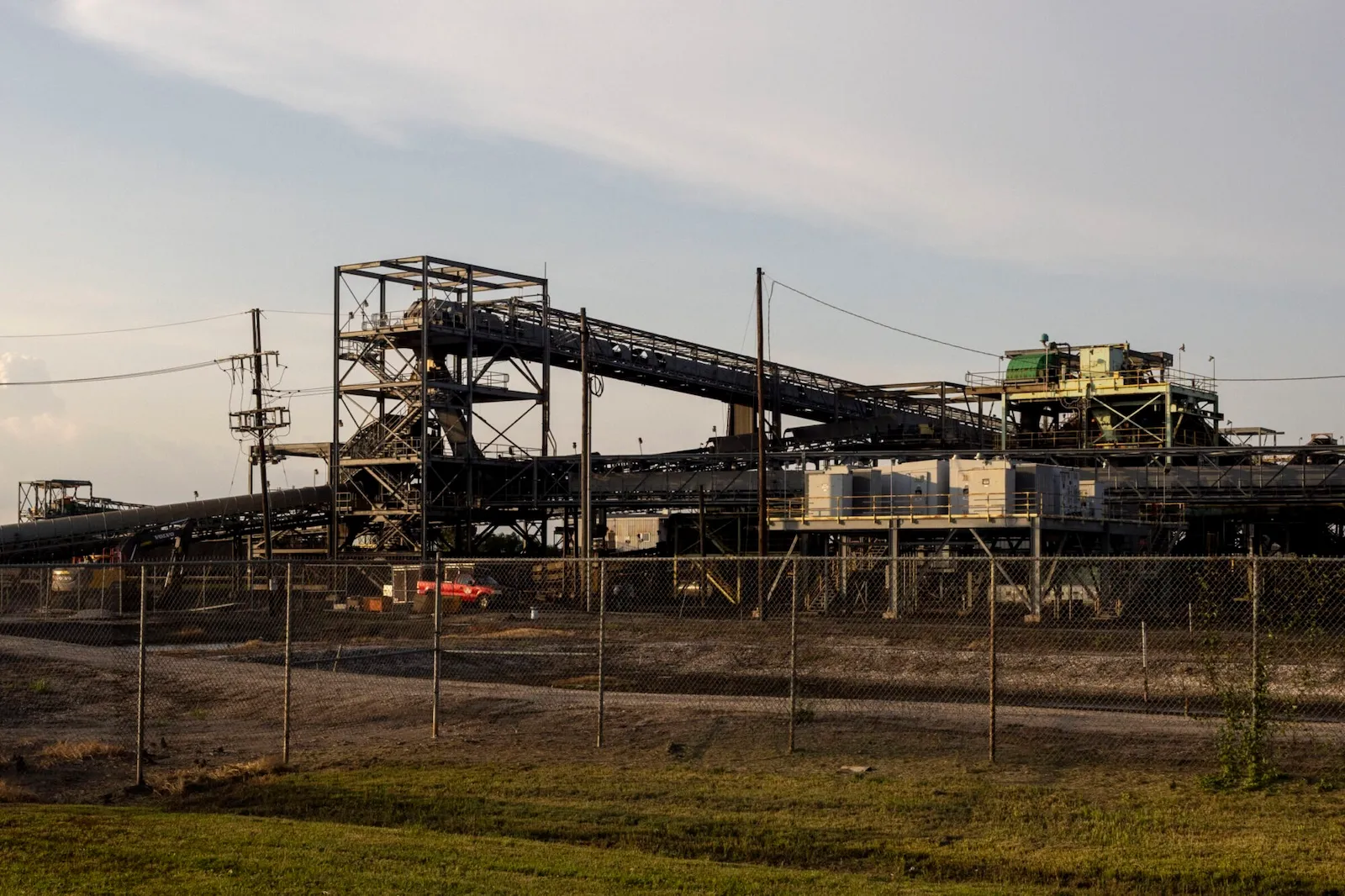
The trajectory of the site shifted dramatically in the late 2010s and early 2020s, when Venture Global secured regulatory approvals to construct a massive export facility in Port Sulphur, Louisiana. What was characterized by congressional leaders as an empty cow pasture rapidly morphed into a sprawling industrial landscape defined by 1.3 miles of river frontage, three deep-water ship berths, dual gas-fired power plants, and nearly 30 miles of dedicated natural gas pipeline.
By late 2024 and early 2025, the facility was operational, churning out super-chilled gas for international export. In April 2026, U.S. House Majority Leader Steve Scalise (R-La.) toured the sprawling site, marveling at its speed of development. “This was a cow pasture four or five years ago,” Scalise told reporters during a media event. “Now it’s the most modern, the most efficient, the largest LNG export facility in the world.”
The National Energy Emergency Declaration
The defining pivot for the current expansion occurred when President Donald Trump invoked executive powers to declare a national energy emergency. Aimed at ensuring a “reliable, diversified, and affordable supply of energy” for the U.S. military and broader economy, the declaration activated a streamlined regulatory bypass.
In early 2025, the U.S. Army Corps of Engineers published a list targeting more than 600 specific energy projects—ranging from interstate pipelines and electrical power plants to massive LNG export terminals—eligible to bypass standard environmental reviews mandated by the Clean Water Act.
The Fast-Tracked Expansion
Seizing upon this emergency framework, Venture Global formally pursued a massive brownfield expansion of Plaquemines LNG in March 2025. Bypassing the rigorous, multi-year scrutiny typically applied to major industrial buildouts, the Army Corps granted the project fast-tracked status in the summer of 2026.
By compressing the public comment period to an unprecedented 10 days, federal regulators effectively silenced community opposition and muffled expert testimony. The green light paves the way for construction crews to begin dredging and filling hundreds of acres of fragile marshlands, setting a dangerous precedent for industrial expansion across the Gulf South.
Supporting Context & Metrics: A Sinking Coast and a Booming Industry
To understand the high stakes of the Plaquemines LNG expansion, one must examine the perilous environmental reality of coastal Louisiana alongside the explosive growth of the American export economy.
Louisiana’s Vanishing Coastline
Plaquemines Parish is ground zero for America’s coastal erosion crisis. Over the past 60 years, the parish has lost more than 250 square miles of land to a lethal combination of subsidence (land sinking), sea-level rise, and aggressive shoreline erosion.
The crisis is worsening. According to projections from the Louisiana Coastal Protection and Restoration Authority (CPRA), another 300 square miles—representing roughly half of the parish’s remaining landmass—could completely disappear over the next 50 years. On a statewide scale, the statistics are staggering: since the early 1900s, nearly 2,000 square miles of Louisiana have vanished into the Gulf of Mexico, an area roughly equivalent to the entire state of Delaware.
The National LNG Boom
Plaquemines LNG is far from an isolated phenomenon. It is the newest jewel in a burgeoning crown of fossil fuel export hubs stretching across the Gulf Coast, sitting alongside sister facilities like Sabine Pass, Cameron LNG, and Calcasieu Pass LNG (also owned by Venture Global).
Data from the U.S. Energy Information Administration (EIA) highlights an unprecedented industry boom, with more than 30 LNG export terminals currently under construction, approved, or proposed across the United States. Liquefied natural gas is natural gas that has been super-cooled to approximately -260 degrees Fahrenheit (-162 degrees Celsius), shrinking its volume 600 times to facilitate maritime shipping overseas.
International demand has skyrocketed as European and Asian nations seek alternatives to pipeline gas and coal. Last year alone, Plaquemines LNG exported 833 billion cubic feet of natural gas. The vast majority of this fuel was shipped across the Atlantic to European markets, with Germany receiving the single largest share at 19 percent, according to EIA trade data.
Carbon Footprint and Industrial Emissions
Despite its economic output, Plaquemines LNG is one of the most carbon-intensive industrial facilities operating in the American South. According to company environmental records and state filings, the terminal is permitted to release approximately 8.1 million tons of carbon dioxide and other greenhouse gases annually.
To contextualize this volume, 8.1 million tons of greenhouse gases are equivalent to the annual tailpipe emissions of roughly 1.7 million typical gasoline-powered passenger vehicles. Within the state of Louisiana, only one industrial facility—an ammonia plant owned by CF Industries, which released 10.4 million tons in the latest available EPA greenhouse gas inventory—surpasses Plaquemines LNG in total emissions.
With the proposed expansion increasing production capacity from 1.4 trillion cubic feet of gas per year to an estimated 2.3 trillion, federal filings indicate that the scaled-up facility will produce at least 9 million tons of greenhouse gases annually. While Venture Global has floated plans to deploy carbon capture and sequestration (CCS) technology to inject a portion of these emissions deep underground, independent researchers remain skeptical of the technology’s long-term efficacy and scale.
Official Statements and Counter-Perspectives
The collision between national economic policy, corporate expansion, and local ecological survival has sparked fierce debate among policymakers, industry advocates, and environmental scientists.
Proponents: Energy Dominance and Domestic Security
Supporters of the fast-tracked permitting process argue that increasing export capacity is vital for geopolitical stability, macroeconomic growth, and job creation in Louisiana. Proponents maintain that supplying American natural gas to allied European nations weakens the economic leverage of adversarial states like Russia while cementing U.S. energy dominance.
During his spring 2026 inspection of the Port Sulphur terminal, Representative Steve Scalise emphasized the transformative nature of the infrastructure. He praised the transition from vacant land to a high-tech export powerhouse, positioning the facility as a marvel of modern engineering that bolsters domestic supply chains and drives local employment. Furthermore, the Trump administration’s rationale for the emergency declaration rests on the assertion that expanding domestic infrastructure is indispensable for maintaining a secure and affordable energy matrix.
Critics: The Paradox of "Domestic Security" and Coastal Destruction
Environmental watchdogs and energy analysts aggressively challenge the administration’s logic. They point out a glaring contradiction: how can exporting record amounts of domestic natural gas to foreign buyers enhance national energy independence and lower local consumer prices?
“It’s hard to see how expanding an LNG export terminal is going to help domestic energy independence and reliability,” said Griffin Bird, a research analyst with the Environmental Integrity Project.
Local conservationists echo these sentiments, focusing intensely on the immediate physical threats posed to the Mississippi River delta. Matt Rota, senior policy director for the New Orleans-based environmental group Healthy Gulf, lambasted the decision to bypass environmental reviews.
“Louisiana is already dealing with a coastal crisis,” Rota said. “Destroying 400 more acres in Plaquemines Parish is ridiculous. I don’t know how many acres they have left, but it’s not that much.”
Rota emphasized that the massive carbon footprint generated by the terminal—both during domestic processing and subsequent overseas combustion—drives global climate change. In turn, a warming planet accelerates sea-level rise and intensifies the catastrophic hurricanes that batter the Louisiana coast, directly undermining the structural integrity of Plaquemines Parish.
“Burning more natural gas means we lose Plaquemines Parish even faster,” Rota warned.
Future Outlook: A Precedent for Regulatory Rollbacks
As the U.S. Army Corps of Engineers moves toward formal finalization of the Plaquemines LNG expansion permits, the implications extend far beyond the borders of Port Sulphur.
The deployment of the "national energy emergency" framework serves as a stress-test for federal environmental statutes. By curtailing public comment periods and compressing ecological evaluations under the guise of emergency executive authority, the federal government has opened a wide procedural lane for heavy industry. If successful, the Plaquemines expansion could become the blueprint for fast-tracking dozens of other contested fossil fuel projects across the United States.
For the residents, fishermen, and indigenous communities of Plaquemines Parish, however, the future looks increasingly precarious. Wedged between the encroaching waters of the Gulf of Mexico and the expanding steel-and-pipe architecture of the global energy trade, the local ecosystem faces an uphill battle for survival.
As industrial titans scale up operations under shortened timelines and minimized public oversight, the fundamental question remains: how much of Louisiana’s fragile coast can be sacrificed in the name of international energy dominance before the landscape disappears entirely?