

Executive Overview
The electric vehicle (EV) revolution has reached a pivotal juncture. While the industry spent its first decade focused primarily on chemistry—fighting to lower the cost of lithium-ion cells and packing more kilowatt-hours into skateboard platforms—the next frontier is all about microscopic efficiency. Automakers are no longer just asking how much energy they can store, but how wisely they can spend it.
Enter Texas Instruments (TI) and its unassuming yet revolutionary breakthrough: the TMCS2100-Q1 multiaxial coreless Hall-effect current sensor. Designed specifically for the high-stress environment of an EV traction inverter, this millimeter-scale component promises to squeeze extra miles of driving range out of existing battery packs while simultaneously taming motor noise and delivering butter-smooth acceleration.
For years, the design of EV powertrains has been dictated by engineering compromises. To achieve precise power delivery, manufacturers relied on bulky, heavy magnetic-core sensors. To save space and weight, they turned to lightweight coreless alternatives, only to suffer from calibration drift caused by vehicle vibrations. TI’s TMCS2100-Q1 shatters this paradigm. By tracking magnetic fields simultaneously across both horizontal and vertical axes, the sensor boasts an unprecedented immunity to mechanical interference.
This deep dive explores the mechanics of TI’s new sensor, the physics of EV traction inverters, and how micro-innovations at the semiconductor level are rewriting the playbook for modern electric mobility.
Detailed Chronology: The Evolution of EV Powertrain Sensing
To understand why the TMCS2100-Q1 represents a quantum leap forward, it is helpful to trace the evolution of current-sensing technology inside electric vehicles.
The Era of Bulk: Magnetic-Core Solutions
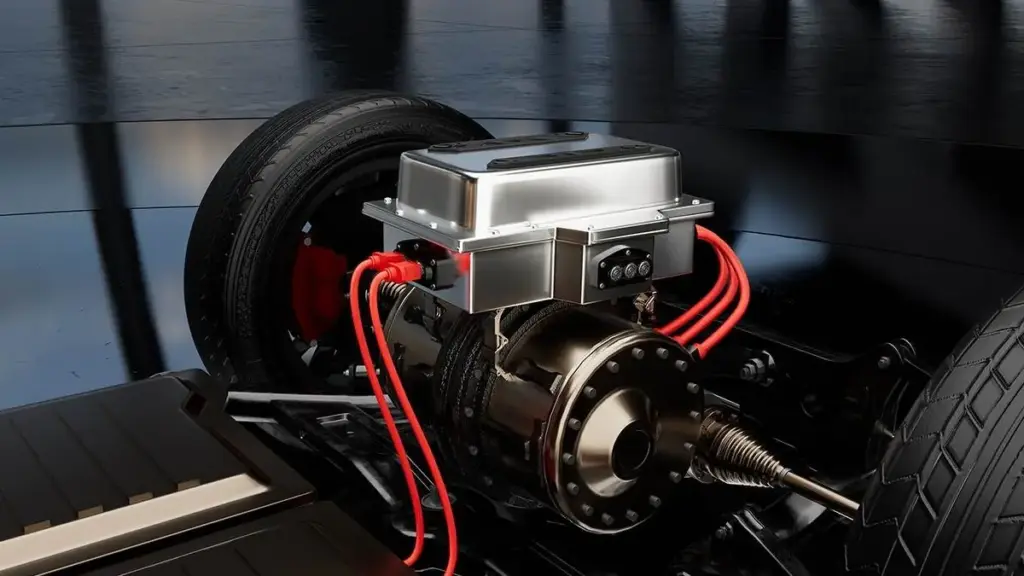
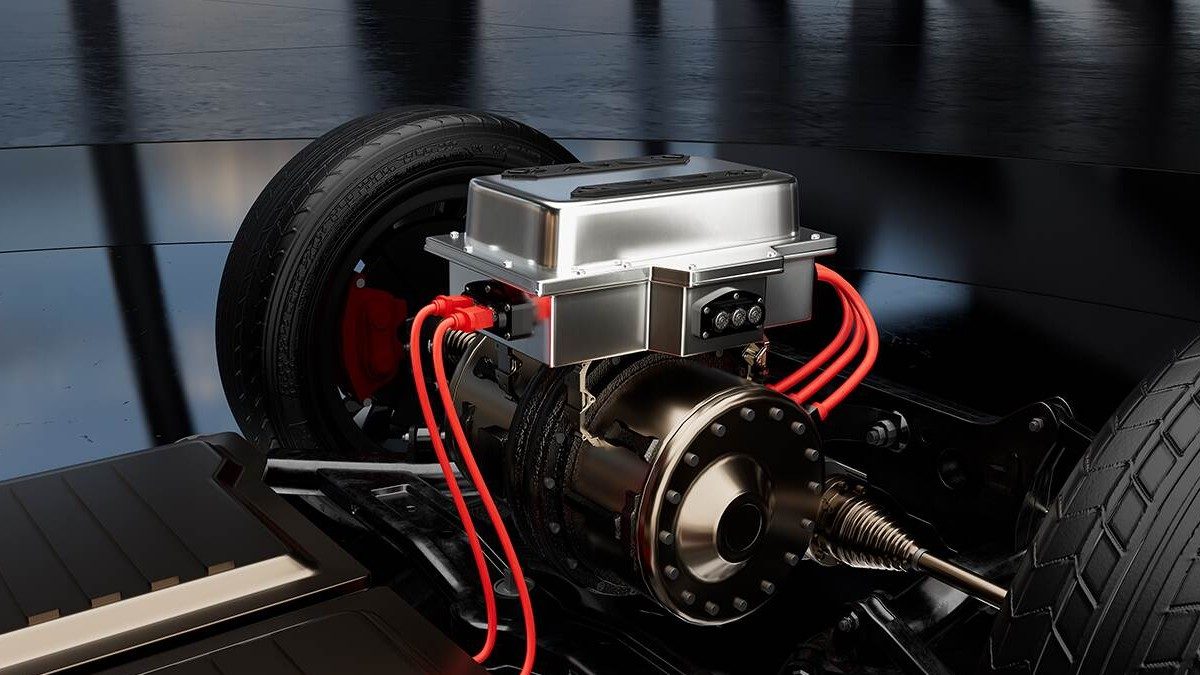
In the infancy of modern commercial EVs, the priority of the powertrain was basic functionality and reliability. Traction inverters—the heavy-duty brain-and-muscle units responsible for converting direct current (DC) from the battery into alternating current (AC) for the electric motor—relied almost exclusively on closed-loop or open-loop magnetic-core current transducers.
These traditional sensors utilized a physical magnetic core (often a ferrite or laminated metal ring) wrapped around the conductor. While highly accurate, these devices came with severe drawbacks:
- Mass and Volume: They added precious weight to the vehicle and consumed valuable physical real estate inside the inverter housing.
- Thermal Limitations: Under heavy, continuous loads, the magnetic cores could saturate, leading to distorted readings and thermal management complications.
The Shift Toward Coreless Sensors
As automakers shifted toward high-performance, lightweight architectures—accelerated by the industry-wide transition to 800-volt electrical systems—the demand to shrink every component inside the powertrain intensified. This led to the adoption of coreless Hall-effect sensors.
By eliminating the heavy magnetic core, engineers could mount tiny semiconductor chips directly onto printed circuit boards (PCBs) near the high-current busbars. However, this introduced a new headache: vibrations.
An EV powertrain is subjected to constant mechanical stress, high-frequency motor ripple, and road impacts. When a coreless sensor shifts by even a fraction of a millimeter relative to the conductor, its single-axis magnetic reading skews violently. This calibration error trickles down into the inverter’s control loop, triggering micro-fluctuations in power delivery.

The Multiaxial Breakthrough
Texas Instruments’ introduction of the TMCS2100-Q1 marks the definitive resolution of the coreless compromise. By deploying simultaneous multiaxial sensing—capturing magnetic flux in more than one direction—TI engineers found a way to mathematically subtract the errors introduced by physical displacement. Even as micro-vibrations rattle the chassis, the sensor’s internal logic adjusts in real-time, maintaining a level of accuracy previously reserved for laboratory-grade equipment.
Supporting Context & Metrics: Decoding the Technology
To fully appreciate the impact of the TMCS2100-Q1, one must examine the metrics that govern modern EV power electronics.
The Inverter’s Dilemma: What is Torque Ripple?
To the driver, an electric vehicle is prized for its instantaneous, seamless surge of power. But beneath the floorboards, orchestrating that power is a high-speed balancing act.
The traction inverter switches electricity on and off hundreds of thousands of times per second using wide-bandgap semiconductors like Silicon Carbide (SiC). To do this cleanly, the inverter needs a real-time, ultra-precise reading of the current coursing through the system.
If the current sensor misreads by even a fraction of a percent due to noise or vibration, the inverter miscalculates the switching profile. This results in torque ripple—microscopic, high-frequency oscillations in the rotational force applied to the motor. Torque ripple manifests in the cabin as subtle mechanical vibration and audible whine, while simultaneously wasting energy as parasitic heat in the stator windings.

By the Numbers: TI’s Performance Metrics
Texas Instruments has released compelling data regarding the capabilities of the TMCS2100-Q1:
- 20x Accuracy Leap: The sensor is reportedly 20 times more accurate than traditional single-direction coreless sensors operating under identical vibrational duress.
- Sub-1% Error Margin: Even when physical displacement shifts the sensor by 0.4 millimeters—an eternity at the microscopic level—the measurement error remains below 1%.
- 800V Readiness: Designed with high-voltage architectures in mind, the sensor thrives in environments where power densities are maximized, and thermal margins are razor-thin.
+-----------------------------------------------------------------+
|                  TRADITIONAL VS. TI MULTIAXIAL                  |
+-----------------------------------------------------------------+
| Metric                   | Legacy Coreless  | TI TMCS2100-Q1    |
+--------------------------+------------------+-------------------+
| Resistance to Vibration  | Poor (Drift)     | High (Compensated)|
| Measurement Error (0.4mm)| > 5% - 10%       | < 1%              |
| Relative Accuracy        | Baseline (1x)    | 20x Improvement   |
| Form Factor              | Compact/Unstable | Compact/Stable    |
+-----------------------------------------------------------------+
Official Statements and Industry Perspective
While component-level announcements from semiconductor giants like Texas Instruments rarely capture mainstream headlines the way a flashy new vehicle launch does, industry insiders recognize that the war for EV supremacy is won in the microscopic details.
"In the high-voltage ecosystem of modern electric vehicles, efficiency is no longer about a single breakthrough; it is the cumulative result of a thousand micro-optimizations," notes an independent powertrain consultant. "When you tighten the feedback loop inside the inverter, you unlock cleaner electrical sine waves. Cleaner sine waves mean less thermal waste, quieter operation, and ultimately, more miles per charge."
Texas Instruments frames the TMCS2100-Q1 not merely as a sensor, but as an enabler for system-level miniaturization. By providing ultra-reliable data from a smaller footprint, TI allows tier-one suppliers to design lighter, more compact traction inverter boxes. In the world of EV engineering, shedding grams at the component level cascades into shedding kilograms at the vehicle level, further compounding range benefits.
Future Outlook: The Cumulative Nature of EV Innovation
Will plugging a TMCS2100-Q1 into your next-generation EV immediately add 30 miles of range? The short answer is no.

The real-world impact of advanced components is inherently systemic. An EV’s range is a delicate equation involving aerodynamic drag, rolling resistance, battery chemistry, thermal management efficiency, and inverter switching losses. No single semiconductor can single-handedly transform an inefficient vehicle into a coast-to-coast cruiser.
However, the transition toward multiaxial coreless sensing points to where the EV industry is heading. As consumer expectations mature, the focus is shifting from raw specs—such as 0-60 mph times—to refinement: NVH (Noise, Vibration, and Harshness) reduction, real-world highway efficiency, and long-term powertrain durability.
As automakers race to roll out next-generation platforms featuring advanced SiC inverters and 800V+ charging architectures, the components hiding quietly inside the powertrain will dictate which brands pull ahead. Texas Instruments’ latest offering proves that in the modern electric vehicle landscape, the smallest innovations often carry the heaviest load.



