Executive Overview
For generations, humanity has treated the global ocean through a lens of infinite extraction and bottomless assimilation. It has served simultaneously as a boundless larder and an inescapable sink for the refuse of human civilization. Yet, behind this cultural facade of limitless abundance lies a sobering, lived reality: the systematic degradation of marine ecosystems across the planet.
This transformation is not merely a theoretical construct debated in academic journals or climate models; it is a profound historical shift witnessed firsthand by those who have spent a lifetime tethered to the sea. From the lush, crystalline seagrass meadows of Florida’s Mosquito Lagoon to the plastic-choked archipelagos of Indonesia and the algae-smothered anchorages of the Grenadines, the degradation of the marine world is sweeping, systemic, and accelerating.
However, a chronicle of the ocean cannot be written solely in the ink of loss. Alongside widespread overfishing, habitat destruction, and chemical pollution runs a counter-narrative of breathtaking resilience. The ocean possesses an innate, almost miraculous capacity for regeneration when relieved of anthropogenic pressure. Protected fisheries rebound, decimated marine mammal populations return from the brink of extinction, and coastal ecosystems stitch themselves back together with astonishing speed.
This duality—between the devastating velocity of human impact and the inspiring velocity of natural recovery—forms the core of modern conservation philosophy. Championed globally by legendary oceanographer Dr. Sylvia Earle and organizations like Mission Blue, the path forward relies on strategic protection through "Hope Spots"—critical marine habitats shielded from exploitation—coupled with a radical awakening in public consciousness. To save the ocean, humanity must transition from viewing the sea as a resource to be consumed to recognizing it as the life-support system of the planet.
Detailed Chronology: A Lifelong Odyssey with the Sea
The Golden Age of Coastlines
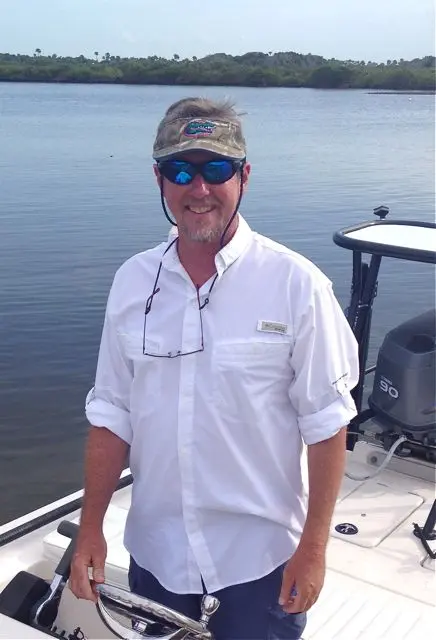
The relationship between humanity and the ocean often begins in moments of quiet intimacy during childhood. For Bob Wallace, whose reflections form the bedrock of this account, that journey began decades ago at a modest summer home nestled along the east coast of Florida. Long before the era of modern mass urbanization, the coastline was a living, breathing laboratory.
Days were spent immersed in the rhythms of the tides: swimming through the Atlantic surf, casting fishing lines alongside his father, and walking miles of sun-drenched beaches to collect an eclectic mosaic of seashells. These were not merely recreational pastimes; they were immersive lessons in marine ecology. Young hands plucked crabs from the surf line for evening meals, watched in reverent silence as endangered sea turtles hauled themselves ashore to excavate nests, and scooped drifting masses of Sargassum seaweed into buckets to marvel at the microscopic universe of juvenile fish, crabs, and invertebrates thriving within its golden fronds.
Crucially, this early immersion was elevated by proximity to scientific rigor. Through his father’s close friendship with the preeminent head of marine biology at the University of Florida, Wallace was granted a window into the professional study of the sea far beyond the typical childhood experience. This foundational exposure culminated in a degree in zoology from the University of Florida, where his academic path crossed with the legendary conservationist and herpetologist Dr. Archie Carr, cementing a lifelong devotion to the preservation of natural habitats.
The Great Unraveling
To watch the ocean over the span of a lifetime is to bear witness to a slow-motion catastrophe. As decades passed, the vibrant coastal ecosystems of Wallace’s youth began to fray at the edges.
In the Florida Keys, once-thriving thickets of staghorn coral—architectural marvels of the underwater landscape that provided shelter to myriad reef species—began to bleach, wither, and die. In Mosquito Lagoon near Cape Canaveral, waters that were once transparent down to the sandy bottom grew turbid and choked as lush, subterranean seagrass meadows vanished under the weight of nutrient runoff and coastal development.
The fisheries told an equally tragic story. Offshore angling expeditions targeting pelagic predators such as king mackerel, yellowfin tuna, mahi-mahi, and deep-water grouper yielded a fraction of the bounty common during mid-century excursions. Similar declines were documented across the azure waters of the Bahamas, where complex reef ecosystems grew eerily quiet as large predatory fish were systematically fished out.
A Global Crisis
The erosion of marine health is not confined to the southeastern United States; it is an omnipresent planetary phenomenon. Recent expeditions underscore the borderless nature of ecological collapse.
A three-month journey through Indonesia revealed a distressing aquatic landscape where the volume of floating and shoreline plastic waste defies comprehension—choking coral polyps, entangling marine life, and transforming remote tropical shores into synthetic landfills. A subsequent sailing voyage through the Windward Islands of the Grenadines exposed coral reefs smothered in thick, noxious mats of macroalgae around popular cruising anchorages, while local fishermen were reduced to harvesting undersized, juvenile snapper just to secure a daily meal.
From the collapsing cod stocks of the North Atlantic and the depletion of Pacific salmon to the overharvesting of Alaskan king crab and Peruvian anchovies, the global commercial fishing enterprise operates on a chilling maxim: humans rarely halt extraction until the target species is commercially, if not biologically, extinct.
Supporting Context & Metrics: The Science of Decline and Recovery
Quantifying the Anthropogenic Footprint
The observations of naturalists and fishermen are rigorously backed by empirical data compiled by international marine scientists. According to the Food and Agriculture Organization (FAO) of the United Nations, more than 30% of the world’s assessed marine fish stocks are currently fished at biologically unsustainable levels, while roughly 60% are maximally fished.
Parallel to overfishing is the crisis of marine pollution. The United Nations Environment Programme (UNEP) estimates that upwards of 11 million metric tons of plastic enter the ocean annually—a figure projected to triple by 2040 if systemic waste management and production practices remain unchanged. This anthropogenic deluge forms vast oceanic garbage patches, degrades into microscopic microplastics that infiltrate the deepest marine trenches, and enters the human food chain via commercial seafood consumption.
Habitat destruction compounds these stressors. Coral reefs, which support approximately 25% of all marine life while covering less than 0.1% of the ocean floor, have suffered catastrophic mortality events over the past four decades due to marine heatwaves driven by climate change, coastal dredging, and agricultural runoff. Without immediate, concerted intervention, scientists project the functional collapse of the world’s coral reef ecosystems by the middle of this century.
The Mathematics of Resilience
Yet, amidst these sobering metrics lies an equally powerful mathematical truth: the ocean heals rapidly when given the space to do so.
Data from marine protected areas (MPAs) worldwide demonstrate that strictly enforced "no-take" zones can double or even triple the biomass of marine life within their boundaries in less than a decade. The recovery is not limited to invertebrates or small fish; apex predators and migratory species exhibit rapid demographic rebounds when direct anthropogenic mortality is curtailed.
The ecological response to regional management policies offers clear validation of this principle. When the state of Florida enacted strict regulatory limits on commercial gill-net fishing for mullet, the resulting environmental rebound was swift and unmistakable. Depleted populations of target gamefish—such as redfish, snook, and tarpon—that rely on juvenile mullet for sustenance experienced a dramatic resurgence. Concurrently, populations of dependent avian predators, including ospreys and brown pelicans, saw their breeding success rates climb in tandem with the recovering fish stocks.
On a global scale, the trajectory of marine mammal conservation provides perhaps the most potent proof of concept. Whales that were hunted to the precipice of biological extinction during the industrial whaling eras—including humpback, blue, and gray whales—are demonstrating remarkable demographic recoveries in numerous basins across the globe following the implementation of international moratoria. Nature, when freed from the relentless pressure of human extraction, possesses an astonishing, self-healing vitality.
Official Statements & Conservation Philosophy: The Mission Blue Vision
Recognizing both the depths of marine degradation and the proven efficacy of conservation, global leaders are rallying around actionable frameworks designed to reverse the tide. At the forefront of this movement is world-renowned oceanographer, National Geographic Explorer-in-Residence, and founder of Mission Blue, Dr. Sylvia Earle.
"The ocean is the cornerstone of Earth’s life support system," Dr. Earle has frequently emphasized. "We must begin to see the sea not as an inexhaustible pantry and sewer, but as our life support system. What we do to the ocean, we do to ourselves."
Mission Blue operationalizes this philosophy through the establishment of Hope Spots—special, carefully delineated areas of the ocean that are scientifically identified as being critical to the health of the marine environment. These sites encompass vibrant coral reefs, vital spawning grounds, critical deep-sea trenches, and crucial migratory corridors. By building grassroots advocacy, mobilizing financial resources, and engaging local communities and governments, Mission Blue works to secure formal legal protection for these regions.
Conservationists intimately familiar with the initiative view it as an indispensable blueprint for planetary survival.
"The only way to save sea life is to protect key areas," notes Bob Wallace, reflecting on his advocacy work with the organization. "To me, Mission Blue represents one of the most powerful ways on our planet to accomplish this imperative work. It brings together the kind of conservation vision, scientific understanding, advocacy, and public engagement the ocean urgently needs. But protecting places is only part of the challenge. We also have to help people understand why those places matter."
This philosophy underscores a critical realization: marine sanctuaries cannot survive in a vacuum. Legal designations require the active, informed consent and stewardship of the human populations living adjacent to them. Conservation must bridge the gap between ecological science and human culture.
Future Outlook: Awareness, Education, and the Power of the Individual
Navigating the Modern Information Landscape
As human society grows increasingly urbanized—with more than half of the global population now residing in cities—the psychological distance between humanity and the natural world has widened exponentially. For the average urban citizen, the ocean is reduced to a vacation destination, a distant blue expanse on a map, or a distant backdrop in digital media.
In the modern era, environmental conservation is forced to compete for attention within an unyielding, high-velocity stream of targeted advertisements, algorithmic entertainment, and endless digital noise. If marine advocacy is to succeed, it cannot remain siloed within academic institutions or specialized environmental publications. It must penetrate the mainstream cultural conversation.
People need direct, actionable pathways to understand not only the scale of the crisis unfolding beneath the waves, but also the tangible ways they can contribute to global remediation. Public awareness is the catalyst that transforms passive observers into active participants.
The Collective Power of the Individual
A common psychological barrier in environmentalism is the paralyzing belief that an individual’s actions are too insignificant to alter the trajectory of a planetary crisis. How can one person hope to stem the tide of global plastic pollution, industrial overfishing, or ocean acidification?
Dr. Sylvia Earle’s life and legacy provide a definitive answer to this doubt. Through sheer dedication, scientific clarity, and relentless advocacy, a single individual has galvanized millions, shifting global policy and inspiring the creation of hundreds of marine protected areas worldwide. Earle’s work demonstrates that human agency is a potent force capable of bending the arc of history.
Every citizen has the opportunity to embody this agency. As Wallace observes, drawing on a vivid marine analogy, an individual within a conservation movement is much like a single member of a massive school of fish:
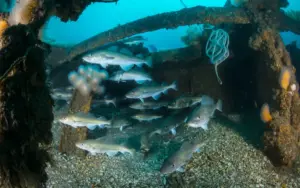
"Every one of us has this opportunity and ability, even if it is only being part of the greater effort. One member of the school of fish, so to speak. It all starts with awareness and changing our own perception. Each of us, in our own way, can help others learn—our children, our friends, our associates. This is the network and the belief that can change the world."
The Road Ahead
The stewardship of the global ocean over the coming decades will define the quality of human life on Earth for centuries to come. The choice before humanity is stark, yet mathematically and ecologically straightforward. We can continue down the path of unchecked exploitation, watching as complex marine ecosystems collapse into sterile, algae-dominated wastelands. Or we can choose the path of active restoration—scaling up the designation of Hope Spots, enforcing sustainable fisheries management, curbing plastic pollution at the source, and reawakening our innate cultural reverence for the sea.
The ocean has shown, time and time again, that it is ready to recover if humanity simply steps back and gives nature a chance. The remaining question is whether our global society possesses the collective will to seize that chance before the blue heart of our planet stops beating.