

Published: October 2, 2026
Author/Source: WasteDive Reporting (Enriched & Expanded Coverage)
Executive Overview
In a significant development for the domestic clean energy economy, the American Battery Technology Company (ABTC) has successfully secured a specialized export permit allowing the continued operation of its critical mineral recycling facility. The regulatory greenlight comes at a precarious juncture for the United States’ clean tech infrastructure: while the collection of spent electric vehicle (EV) batteries, consumer electronics, and massive energy storage systems is surging ahead of schedule, domestic downstream refining capacity has lagged behind.
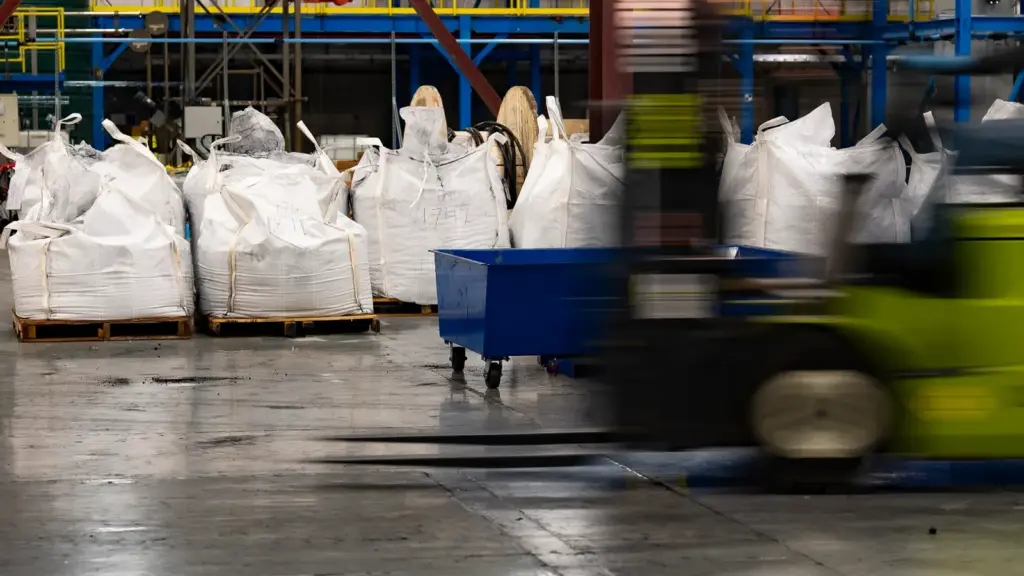
This operational bottleneck has created a logistical friction point for recyclers. Much of ABTC’s processing yields "black mass"—a high-value, intermediate material composed of shredded lithium-ion battery scrap containing critical cathode components such as lithium, cobalt, nickel, and manganese. Under recent federal mandates designed to curb foreign dependency, strict restrictions have been placed on the movement of recoverable critical minerals and materials (CMMs) out of the United States.
However, ABTC’s newly minted Department of Commerce export license proves that regulatory frameworks are accommodating operational realities. By securing access to carefully managed export channels, ABTC can maintain continuous facility throughput, generate revenue, and sustain its infrastructure expansion while the domestic refining gap steadily closes. This comprehensive overview explores the geopolitical stakes of the black-mass ban, ABTC’s operational mechanics, government backing through Department of Energy (DOE) grants, and the broader race to secure critical mineral independence.
Detailed Chronology: The Road to the Black-Mass Export License
The events leading up to ABTC’s regulatory approval reflect a fast-moving, high-stakes policy environment governed by national security priorities, shifting industrial supply chains, and aggressive federal oversight.
The Legislative and Regulatory Backdrop
For years, geopolitical analysts and federal lawmakers have raised alarms regarding the United States’ heavy reliance on foreign supply chains for critical minerals. With China currently dominating the global market for refined lithium, cobalt, and graphite, Washington has increasingly treated these materials through the lens of national security.
On August 6, 2026, these concerns materialized into a strict federal directive under the Defense Production Act (DPAS). The federal register notice accompanying the black-mass ban explicitly stated that "the inadequate supply of [critical minerals and materials] poses an increasing risk to our national defense and security," necessitating an immediate export ban to "take immediate action to secure the supply of recoverable CMMs."
While the overarching objective of the order is to keep critical resources onshore to build a robust domestic battery ecosystem, it inadvertently threatened to choke operations for recyclers who produce black mass faster than domestic refineries can chemically separate and purify it into battery-grade materials.
ABTC’s Strategic Application Process
Recognizing the imminent operational risk posed by a blanket ban, ABTC joined a select group of advanced recycling pioneers seeking formal exemptions and specialized licenses. The regulatory framework built into the CMM export restrictions allows for exceptions under specific conditions:
- The Return Loop: Materials are shipped outside the country for processing or refining with the legally binding intent that the finished, refined products will be returned to the United States.
- Undue Hardship: Companies can demonstrate that an immediate export block would inflict catastrophic financial or operational harm, threatening the viability of foundational domestic recycling infrastructure.
- Supply Preservation: Scenarios where temporarily permitting structured exports prevents domestic feedstock bottlenecks and ultimately supports long-term domestic supply growth.
ABTC successfully navigated these stringent criteria. By demonstrating that its international processing partnerships serve as a temporary bridge while domestic capacity scales up, the company secured the vital license from the Department of Commerce. This administrative win validates ABTC’s operational reliability and safeguards its business model against sudden supply chain shocks.
Supporting Context & Metrics: Feedstock Dynamics and the Refining Gap
To understand the weight of ABTC’s recent licensing victory, one must examine the operational realities of modern lithium-ion recycling facilities and the sheer volume of waste entering the recovery pipeline.
Feeding the Green Transition: Sources of Battery Scrap
ABTC’s flagship critical mineral recycling facility in Nevada processes vast quantities of end-of-life battery materials sourced from diverse commercial and industrial sectors. The plant’s feedstock arrives from multiple channels:
- Electric Vehicle (EV) Fleets: As early-generation EVs reach the end of their operational life, their massive battery packs require specialized decommissioning and recycling.
- Energy Storage Systems (BESS): A rapidly expanding segment of ABTC’s feedstock comes from large-scale battery energy storage systems that previously supported commercial data centers, artificial intelligence (AI) infrastructure, and renewable energy grids.
- Consumer Electronics: Discarded laptops, smartphones, and power tools supply a steady baseline of lithium-ion scrap.
Once these batteries arrive at the Nevada facility, they undergo rigorous sorting, mechanical shredding, and physical separation. The resulting product is black mass—a concentrated, powdery mixture containing high concentrations of transition metals.
The Refining Chokepoint
The fundamental market imbalance highlighted by ABTC is straightforward: collection and shredding capacity currently outpace downstream hydrometallurgical refining capacity.

While the U.S. has made massive strides in establishing front-end collection networks and mechanical recycling plants, building multi-million-dollar chemical refining complexes takes years of engineering, environmental permitting, and construction. Without the ability to export excess black mass to established, allied refining markets during this transition period, domestic facilities would face severe inventory stockpiling, storage safety constraints, and potential production shutdowns. ABTC’s export license bridges this exact temporal gap.
Official Statements and Industry Perspectives
The announcement of the export license has drawn praise from corporate leadership and highlighted the collaborative posture between innovative clean-tech firms and federal regulators.
ABTC CEO Ryan Melsert emphasized the validation that comes with the Department of Commerce’s decision.
"The Department of Commerce’s decision to give ABTC a black mass export license shows that the company has proved its reliability, and strengthens the company’s market position," Melsert stated.
He added that the organization is deeply "grateful for this license and continued support from the U.S. government for the sales of our domestic critical mineral products."
Industry analysts note that securing this license while simultaneously advancing construction on a separate commercial-scale lithium hydroxide refinery positions ABTC as an integrated player across the entire battery lifecycle. Rather than being trapped by regulatory red tape, the company has successfully leveraged federal frameworks to maintain financial health while keeping its long-term domestic manufacturing goals on track.
Future Outlook: Building a Fully Domestic Circular Economy
Looking ahead, ABTC’s strategic roadmap points toward complete vertical integration, reducing reliance on temporary export channels altogether.

The Push for Domestic Hydrometallurgical Refining
The ultimate goal for ABTC—and federal industrial policy at large—is to ensure that every stage of battery recycling, from raw scrap to battery-grade lithium, nickel, and cobalt, happens within U.S. borders. ABTC is actively deploying funds to build out a commercial-scale lithium hydroxide refinery in Nevada. This facility is heavily backed by non-dilutive federal capital, most notably a reinstated $57 million grant from the U.S. Department of Energy (DOE).
As these domestic refining facilities come online over the next several years, the necessity for black mass export channels will naturally diminish. The refined materials produced domestically will feed directly into gigafactories powering American-made electric vehicles and grid-scale storage systems, closing the loop on the domestic battery supply chain.
National Security and Global Competitiveness
The broader implications of ABTC’s regulatory milestone extend far beyond corporate balance sheets. By proving that U.S. regulatory bodies can balance stringent national security export controls with the commercial needs of emerging recycling companies, Washington is signaling a pragmatic approach to industrial policy.
As geopolitical tensions persist and the global demand for electrification skyrockets, the success of companies like ABTC will serve as a bellwether for the Western world’s ability to decouple from foreign mineral monopolies. Through a combination of aggressive federal grant funding, targeted trade exceptions, and private-sector operational execution, the United States is steadily laying the groundwork for a secure, resilient, and fully circular critical mineral economy.



