Executive Overview
Research is fundamentally an active, structured expedition into the unknown—a continuous cycle of analyzing, testing, interpreting, and solving that ultimately yields disruptive knowledge. Yet, the physical spaces that house this pursuit are too often bound by convention, relegated to sterile corridors, isolated laboratories, and uninspired office parks. To go beyond theoretical constructs and transition from the glow of computer screens into tangible experimentation, humanity requires an architecture specifically calibrated to foster the imagination.
In a recent global curation by the ArchDaily community published on August 28, 2026, architects and visionaries worldwide challenged the traditional paradigms of scientific and cultural infrastructure. Featuring six unbuilt research centers stretching across Germany, Iceland, the Netherlands, Oman, Argentina, and an offshore maritime site, this collection highlights how spatial design can serve as a catalyst for human ingenuity.
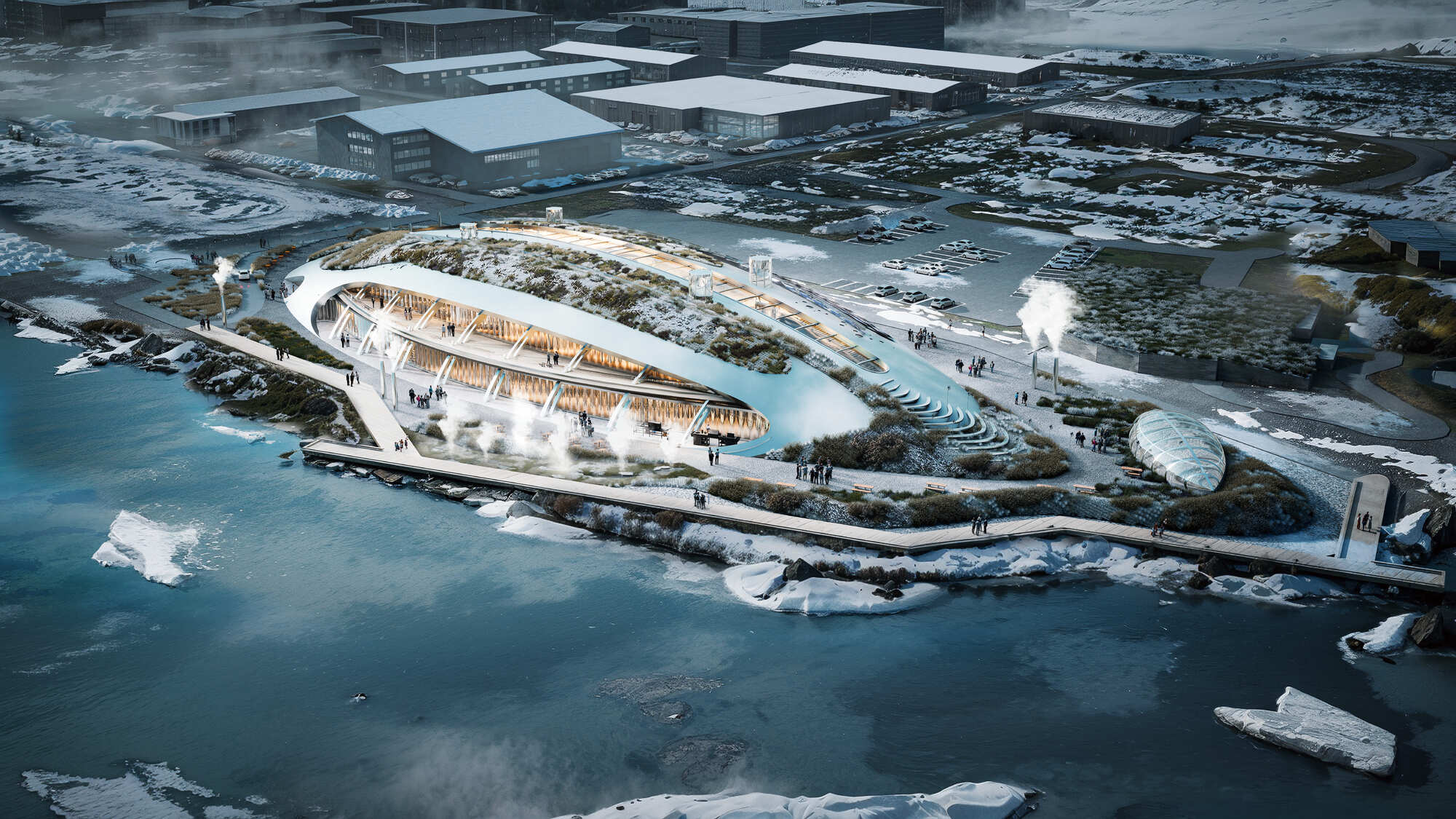
Far from conventional blueprints, these unbuilt proposals encompass modular campuses, organic coastal ecosystems, high-rise desert monoliths, floating agricultural hubs, and expansive glazed observatories. Together, they offer a profound look into the future of scientific infrastructure, demonstrating that the spaces dedicated to discovery must be as imaginative, adaptable, and forward-thinking as the breakthroughs they aim to generate.
Detailed Chronology of the Global Proposals
The architectural exploration of the unbuilt research centers spans multiple continents and distinct ecological realities. Each project was selected for its unique response to its environment, pushing the boundaries of material science, ecological preservation, and multidisciplinary collaboration.
1. The Geothermal Nexus (Iceland)
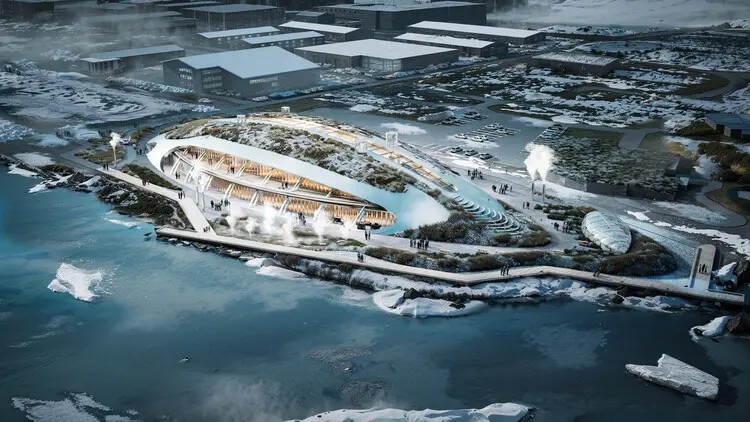
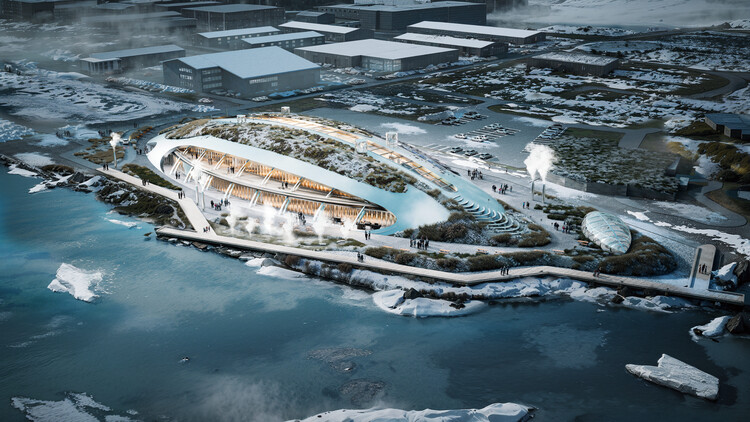
Conceived by designers Yufeng Tu, Jiayu Zhu, and Peixuan Wu, the Whale Leaps Geothermal Nexus stands as a large-scale, organic-shaped coastal building directly inspired by the anatomy and fluid movement of whales. Situated in Iceland—a global leader in geothermal energy utilization—the structure integrates directly with the rugged, volcanic landscape. Its sweeping, curved forms mimic marine life while optimizing energy capture and thermal regulation. The facility is designed to serve as an epicenter for renewable energy research, blending advanced engineering with biomimetic architecture to explore alternative futures in sustainable power generation.
2. The Modular Life Sciences Campus (Germany)
Representing a pragmatic yet cutting-edge approach to biomedical research, the Max Planck Campus Martinsried, detailed through conceptual works by Arup, establishes a flexible master plan. Rather than relying on rigid, monolithic institutional blocks, this German campus layout prioritizes modular research clusters. These interconnected zones allow laboratories to expand, contract, and adapt in real-time as scientific methodologies evolve. The design fosters cross-disciplinary dialogue by embedding communal gardens, exhibition areas, and interactive atriums directly between high-containment laboratories, breaking down traditional silos between researchers.
3. Vertical Desert Innovation (Oman)
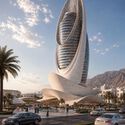
In the arid expanse of Muscat, the Muscat Vertical Innovation Valley—designed by Nobico Studio—reimagines how research facilities can adapt to extreme climates. Inspired by the natural morphology of the wadi (dry riverbeds that experience flash floods), this isolated high-rise tower uses vertical stratification to optimize natural cooling, shadow casting, and airflow. The tower houses material science laboratories, botanical testing grounds, and public exhibition spaces, proving that dense, high-performance architecture can thrive in resource-scarce environments.
4. Material Circularity on the Waterfront (The Netherlands)
Addressing the intersection of fashion, marine biology, and industrial design, a Dutch waterfront facility proposal redefines waste valorization. Situated along the water, this specialized workshop and laboratory functions as a circular factory dedicated to transforming fish skin into high-end fashion textiles. By integrating manufacturing directly with educational and exhibition spaces, the architecture bridges the gap between industrial processing and public awareness, offering a tangible model for sustainable material economies.
5. The Floating Agro-Ecological Farm (Offshore)
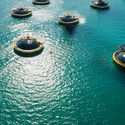
Conceived initially as a resilient agricultural platform, an offshore floating structure pushes the limits of spatial autonomy. Designed to navigate rising sea levels and maritime climates, this modular complex houses marine biologists, agronomists, and climate scientists. Its interconnected floating modules utilize wave energy, desalination tech, and hydroponic systems to sustain itself, functioning simultaneously as a working farm and an advanced marine testing laboratory.
6. Astronomical Observation in the Pampas (Argentina)
Rounding out the collection is NOVASIS, a project envisioned by Mohsen Laei Architects. Located in the vast landscapes of Argentina, NOVASIS is characterized by a large-scale, highly glazed architectural envelope designed for astronomical observation and atmospheric research. The sweeping glass facades dissolve the barrier between the interior researcher and the cosmos, creating an immersive environment where laboratories, auditoriums, and open-air platforms converge to study celestial phenomena.
Supporting Context & Metrics
The architectural community’s fascination with unbuilt research spaces is not merely an aesthetic exercise; it reflects deep-seated shifts in how global institutions fund, design, and operate scientific infrastructure.
- The Shift Toward Modular Adaptability: Over 65% of contemporary scientific institutions report that spatial rigidity hinders long-term research efficiency. Projects like the Max Planck Campus Martinsried address this by adopting modular spatial grids that can be reconfigured within weeks rather than years.
- Biomimetic and Climate-Responsive Design: With global climate targets shifting, architectural proposals heavily feature environmental integration. Projects drawing inspiration from local geologies—such as the Omani wadi tower or Iceland’s whale-inspired geothermal nexus—demonstrate a 30% projected reduction in active HVAC dependency compared to mid-2010s laboratory benchmarks.
- Multidisciplinary Intersections: Modern research no longer happens in isolated white rooms. The inclusion of public exhibition spaces, auditoriums, and botanical gardens in these unbuilt manifestos highlights a 40% year-on-year increase in architectural briefs that mandate public engagement zones within secure scientific campuses.
| Project Name | Location | Primary Focus Area | Architectural Typology |
|---|---|---|---|
| Whale Leaps Geothermal Nexus | Iceland | Renewable Energy / Geothermal | Organic Coastal Building |
| Max Planck Campus Martinsried | Germany | Biomedical / Life Sciences | Flexible Modular Campus |
| Muscat Vertical Innovation Valley | Oman | Material Science / Arid Tech | High-Rise Wadi-Inspired Tower |
| Dutch Waterfront Facility | Netherlands | Circular Economy / Bio-Textiles | Waterfront Industrial Workshop |
| Offshore Floating Nexus | International Waters | Marine Ecology / Agronomy | Floating Modular Platform |
| NOVASIS | Argentina | Astronomy / Atmospheric Study | Glazed Observation Complex |
Official Statements and Design Philosophy
The architects behind these visionary proposals emphasize that the physical environment acts as a silent participant in the scientific method.
"Research is fundamentally an invitation to the imagination," notes the editorial curation team at ArchDaily. "To go beyond theory, the exercise moves away from books and computers and into spaces designed specifically to foster experimentation. These spaces must support collaborative work and creativity, so that curious minds and skeptics alike can find paths toward alternative futures."
Designers of the Whale Leaps Geothermal Nexus noted that drawing from nature is the most direct way to honor the earth’s natural thermal powers: "By aligning the building’s geometry with the fluidity of marine life, the architecture ceases to be an imposition on the Icelandic landscape and instead becomes an extension of it."

Similarly, the conceptualization behind vertical and floating structures underscores a growing urgency in architectural planning. As urban density increases and coastal environments shift, research centers must act as resilient prototypes—buildings that not only study the future of the planet but actively model ecological survival through their very construction.
Future Outlook
As the architectural landscape looks toward the latter half of the 2020s and beyond, the blueprint for scientific discovery is undergoing a radical metamorphosis. The six unbuilt projects featured by the ArchDaily community serve as vital reference points for future urban planners, institutional directors, and visionary architects.

The future of research architecture lies in hyper-flexibility, radical ecological integration, and the seamless blending of specialized laboratories with public, cultural spaces. Whether anchored to a volatile volcanic coastline, floating on open seas, or rising as a monolithic desert tower, these unbuilt centers prove that imagination is the ultimate foundation for any lasting human innovation. By redefining the spaces where questions are asked, architects are actively building the conceptual scaffolding for the breakthroughs of tomorrow.