Coastal cities and towns around the globe have long grappled with a spatial paradox: the very bodies of water that birthed their economies and cultural identities are frequently severed from daily civic life by the intrusions of the automobile. Parking lots, congested vehicular arteries, and meager pedestrian strips have historically functioned as hard barriers between historic municipalities and their waterfronts. Comillas, a picturesque coastal town renowned for its rich architectural heritage, was no exception. For generations, its magnificent stretch of coastline was largely marginalized, dominated by an oversized asphalt parking lot and an uncomfortably narrow sidewalk that offered little invitation to linger, stroll, or contemplate the marine horizon.
Enter the collaborative design team of Hector Navarro + ARKHITEKTON, whose recent intervention—the Comillas Waterfront Promenade—has radically rewritten the spatial narrative of this coastal enclave. Curated and brought to public prominence by architectural voices like Valentina Díaz, the project is far more than a routine municipal cosmetic upgrade. It is a profound act of urban reclamation. By eradicating the asphalt expanse and replacing it with a fluid, human-centric public realm, the architects have successfully transformed a neglected transit and storage zone into a vibrant, continuous civic theater.
Photographed with striking clarity by the architectural photography duo imagensubliminal (Rocío R. Rivas and Miguel de Guzmán), the newly minted promenade showcases a masterclass in coastal landscape architecture. It bridges the historic townscape with the raw, dynamic energy of the sea. This project report explores the multifaceted layers of the Comillas Waterfront Promenade, examining the urban planning challenges, the design philosophies of Hector Navarro and ARKHITEKTON, the structural and material execution, and the enduring implications for municipal waterfront developments worldwide.
Detailed Chronology: From Parking Lot to Pedestrian Haven
The genesis of the Comillas Waterfront Promenade project lies in a growing recognition by local stakeholders and urban planners that the town’s prime coastal real estate was suffering from infrastructural obsolescence. For decades, the waterfront interface was defined by a utilitarian compromise: a sweeping parking lot that prioritized vehicular storage over human experience, flanked by a cramped sidewalk that forced pedestrians into single file while denying them a comfortable connection to the maritime landscape.
Phase I: Diagnosis and Urban Disconnection
Before the intervention, the site was characterized by stark fragmentation. While Comillas boasted a celebrated architectural legacy—attracting visitors with its modernist masterpieces and historic quarters—the arrival at the sea was anticlimactic. Visitors and residents navigating toward the coast were met with a sea of parked cars, exhaust, and an inhospitable microclimate battered by coastal winds without adequate shelter or seating.
Municipal leaders, recognizing the untapped potential of this coastal edge, initiated a master planning framework to rethink the zone. The core objective was clear: to transition away from car-dominated coastal typologies and reinstate the pedestrian as the primary user of the public realm. The commission was awarded to Hector Navarro and ARKHITEKTON, practices known for their context-sensitive approaches and rigorous interrogation of public space.
Phase II: Conceptualization and Design Development
The architectural team initiated the design process with a sweeping premise: rather than merely "refurbishing" or "patching" the existing walkway, they would invent a completely new seafront. This distinction is critical. A refurbishment implies a cosmetic update to what was already there—a wider rail, a fresh coat of paint, or updated paving stones over the old footprint. A completely new seafront, however, meant completely reorganizing the topography, recalibrating the relationship between land and water, and stitching the coastal edge directly into the town’s broader pedestrian network.
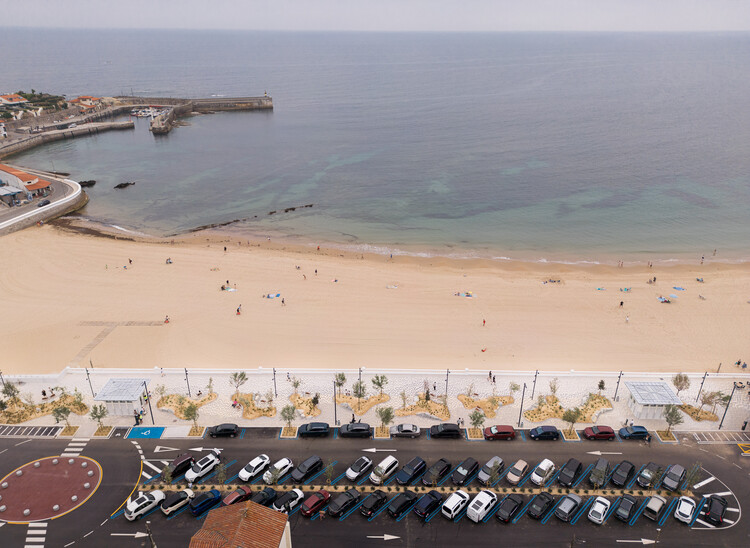
The design team stripped away the parking lot entirely, liberating acres of coastal territory from vehicular dominance. In its place, they devised a multi-tiered public promenade that scales down toward the ocean, utilizing levels, textures, and native planting to manage the transition from the hardscape of the town to the soft, shifting boundaries of the marine ecosystem.
Phase III: Execution, Materiality, and Integration
Construction required a delicate balancing act. Working directly on a dynamic marine waterfront demands rigorous engineering to withstand saltwater corrosion, high winds, and tidal surges, while simultaneously maintaining a delicate aesthetic that honors the natural beauty of the coastline.
Hector Navarro + ARKHITEKTON opted for a material palette that bridges the organic and the man-made. Weather-resistant structural elements, tactile paving materials that invite barefoot exploration or leisurely strolls, and carefully calibrated seating areas were woven into the spatial fabric. The project was officially completed and presented to the public, instantly altering how locals and tourists inhabit the coastal fringe of Comillas.
Supporting Context & Metrics: Decoding the Intervention
To fully appreciate the scale and ambition of the Comillas Waterfront Promenade, one must examine the spatial metrics and the broader urban design strategies employed by Hector Navarro + ARKHITEKTON.
Spatial Reallocation and Metrics
From Vehicular to Civic: The project reclaimed thousands of square meters previously dedicated to vehicular parking and vehicular maneuvering space, converting them entirely into pedestrian and non-motorized transit zones.
Dimensional Shifts: The previous condition featured a constrained sidewalk—often less than 1.5 meters wide in critical areas—paired with a sprawling asphalt surface. The new promenade expands the pedestrian envelope exponentially, creating dynamic plazas, viewing platforms, and wide, flowing pathways that can effortlessly accommodate large crowds during peak summer seasons without feeling congested.
Topographical Integration: Rather than imposing a flat, monolithic slab along the coast, the design engages with the natural topography of the shoreline. Multi-level terracing ensures that every visitor, whether seated near the upper promenade or walking closer to the water’s edge, enjoys unobstructed views of the horizon.
The visual documentation by imagensubliminal highlights the interplay of light, shadow, and materiality that defines the promenade throughout the day. In the early morning hours, low-angled coastal light rakes across the textured surfaces of the paving and wooden detailing, casting rhythmic shadows that emphasize the rhythm of the design. By dusk, integrated subtle lighting schemes transform the promenade into a safe, glowing ribbon that traces the contour of the land, encouraging evening strolls (paseos) deeply rooted in Spanish coastal culture.
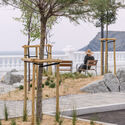
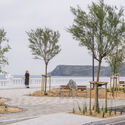
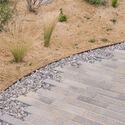
The choice of materials reflects a deep respect for sustainability and longevity. Timber elements weather gracefully under the elements, acquiring a silvery patina that mirrors the sea spray and driftwood found along the shore. Hardscape paving materials are selected for their thermal comfort and slip resistance, ensuring year-round usability regardless of weather conditions.
Official Statements and Design Philosophy
In their project notes, the architects at Hector Navarro + ARKHITEKTON elaborated on the philosophical underpinnings of the transformation:
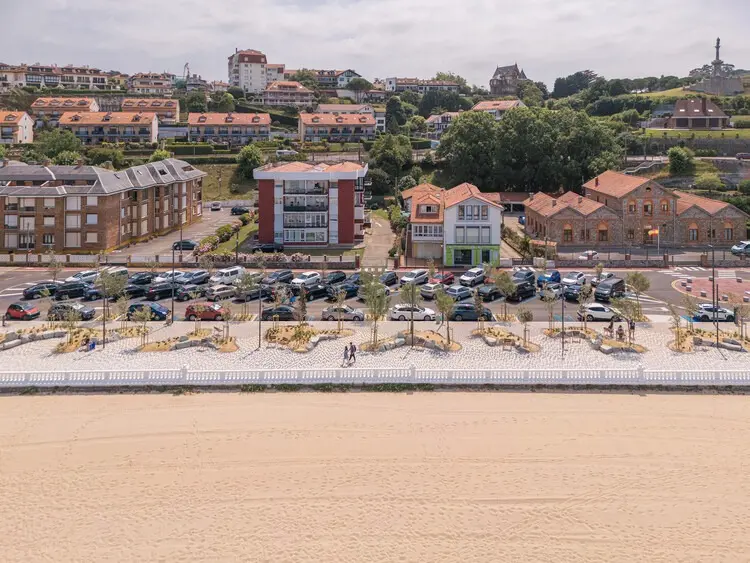
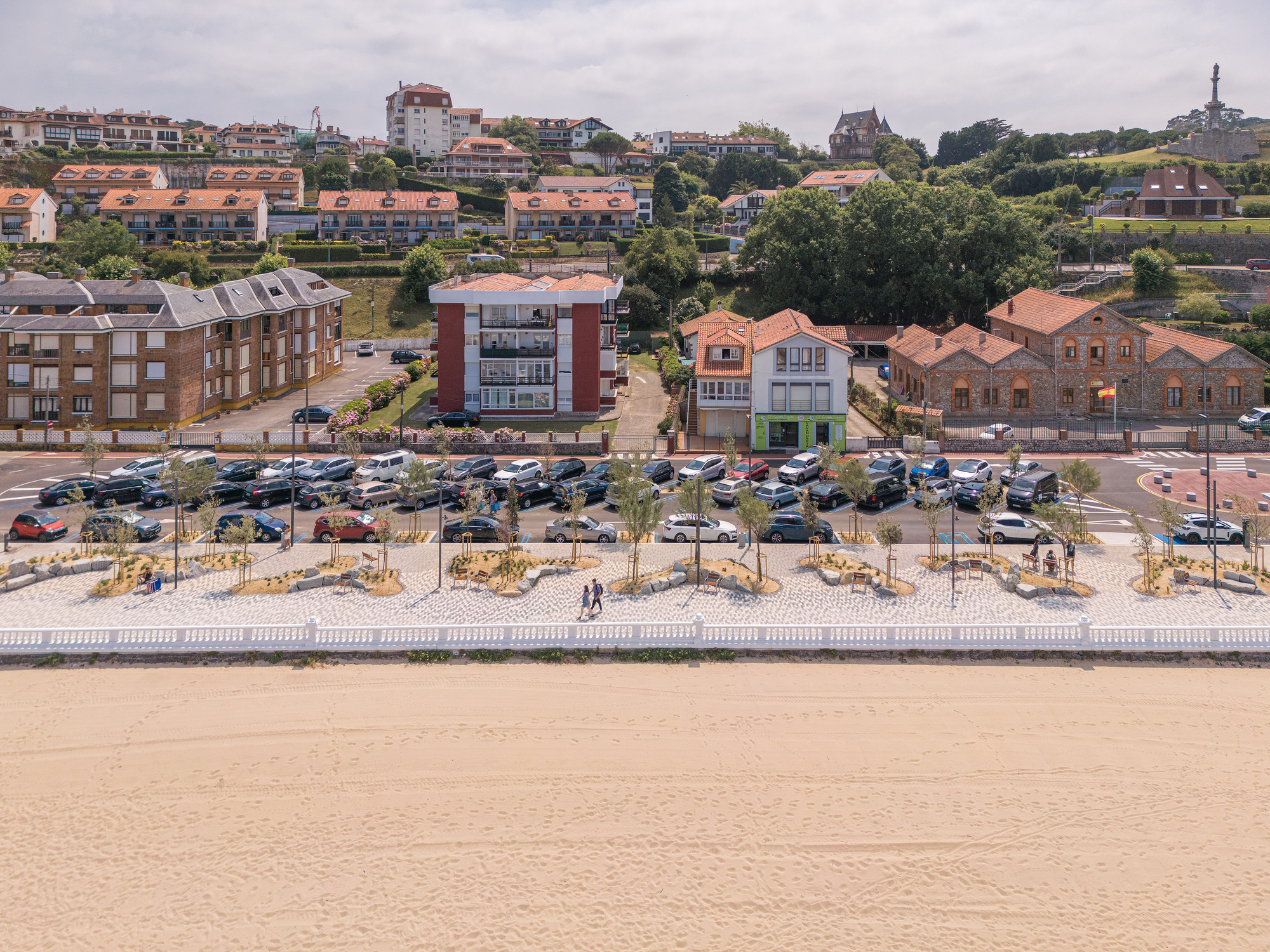
"The intervention transforms an area previously occupied by a narrow sidewalk and a large parking lot into a new public space for Comillas. Rather than refurbishing an existing promenade, the project creates a new seafront, reclaiming an exceptional stretch of coastline for pedestrians and incorporating it into the town’s network of public spaces."
This philosophy challenges the conventional car-first paradigm that dominated mid-to-late 20th-century coastal planning. By viewing the waterfront not as a parking utility or a leftover margin, but as the primary civic drawing room of the town, the architects have elevated the status of public space in Comillas.
Curator Valentina Díaz emphasized the project’s ability to act as a connective tissue. In contemporary urban design, successful interventions do not exist in a vacuum; they must anchor themselves to existing urban patterns. The Comillas Waterfront Promenade succeeds precisely because it does not stop at the edge of the water. Instead, it acts as a dynamic terminus and a launching pad, seamlessly feeding pedestrian movement back into the historic alleys, squares, and architectural landmarks of the town center.
Future Outlook: The Paradigm of Post-Automotive Coastlines
As coastal municipalities worldwide face the mounting pressures of climate change, rising sea levels, and the imperative to decarbonize urban life, projects like the Comillas Waterfront Promenade serve as critical case studies for the future of urban design.
Environmental Resilience and Adaptation
Reclaiming asphalt parking lots adjacent to the ocean is not merely an aesthetic victory; it is an environmental necessity. Impermeable surfaces like parking lots exacerbate urban runoff, carrying pollutants directly into marine ecosystems. By replacing vast swathes of asphalt with porous paving systems, native coastal vegetation, and bioswales where applicable, projects of this nature enhance the climate resilience of the shoreline. They create a softer, more adaptive buffer against storm surges and tidal action compared to rigid, deteriorating concrete seawalls.
Economic and Social Revitalization
The economic implications for Comillas are profound. By prioritizing the pedestrian experience, the town has enhanced its appeal as a high-quality cultural and tourist destination. Visitors are encouraged to disembark from their vehicles further inland or arrive via public transit, spending more time on foot exploring local commerce, dining establishments, and cultural heritage sites. The promenade becomes a stage for community life—hosting local festivals, impromptu gatherings, and quiet moments of contemplation alike.
Replicability and Global Relevance
The collaborative work of Hector Navarro and ARKHITEKTON offers a replicable model for hundreds of small-to-medium-sized coastal towns across Europe and beyond. Many historic settlements possess breathtaking coastlines that remain compromised by legacy transportation planning. Comillas demonstrates that subtraction can be more powerful than addition: by removing the car, the town unlocked the true value of its landscape.
In conclusion, the Comillas Waterfront Promenade stands as a triumphant testament to the power of human-centric architecture. Through bold vision, meticulous material selection, and an uncompromising commitment to public space, Hector Navarro + ARKHITEKTON have redefined what a coastal edge can be. They have given Comillas back its sea, ensuring that the town’s waterfront remains a vibrant, welcoming, and resilient civic asset for generations to come.