Executive Overview
The landscape of European transportation underwent a seismic shift in early 2026, driven by a convergence of economic recalibration, government incentive renewals, and a volatile geopolitical climate. According to comprehensive new registration data released by market analysts New Automotive and E-Mobility Europe, battery-electric vehicle (BEV) registrations across 14 key European Union and European Free Trade Association (EFTA) markets skyrocketed by 51% in March 2026 compared to the same period in the previous year.
This dramatic spike resulted in more than 224,000 newly registered battery-electric cars in March alone, pushing BEVs to capture a formidable 22% share of all new car sales across those monitored markets, and maintaining an estimated 21.2% market share within the broader European Union.
While climate targets and decreasing battery costs have historically served as the primary growth engines for the electric vehicle transition, the March 2026 figures highlight a distinct paradigm shift. Heightened conflict in the Middle East has placed Europe’s heavy reliance on imported fossil fuels back under intense scrutiny. Consequently, the mass migration toward electromobility is no longer viewed strictly through an environmental lens; it has firmly cemented itself as a vital pillar of continental energy security and macroeconomic resilience.
With more than half a million new electric vehicles hitting European roads in the first quarter of 2026 alone—marking a staggering 33.5% year-over-year increase—the transition has officially entered an irreversible, high-velocity phase.
Detailed Chronology of the 2026 Surge
To understand the sudden velocity of Europe’s EV adoption, it is necessary to examine the trajectory leading into the spring of 2026. The groundwork for this record-breaking March was laid across several critical phases over the preceding fifteen months.
Late 2025: Market Correction and Policy Resets
As 2025 drew to a close, the European EV market experienced uneven growth. While pioneering nations like Norway continued to operate in a league of their own, major economic engines such as Germany faced a temporary slowdown following the abrupt phased withdrawal of legacy purchase subsidies in late 2023 and 2024. Italy and Poland lagged behind, with domestic BEV market shares lingering in the single digits.
However, recognizing the strategic imperative of domestic manufacturing and climate compliance, major European governments began recalibrating their support mechanisms. New, targeted incentives—such as France’s ambitious social leasing framework and Germany’s structured re-engagement policies—began to take root.
January – February 2026: Early Momentum
The opening weeks of 2026 signaled an immediate rebound. Cumulative EU registrations for January and February demonstrated robust double-digit growth, outperforming conservative forecasts set by legacy automotive analysts. Fleet operators, increasingly pressured by corporate sustainability mandates and fluctuating fuel expenditures, began accelerating their transition timelines.
At the same time, growing tensions in the Middle East began to exert upward pressure on global crude oil prices. This macroeconomic vulnerability exposed the Achilles’ heel of Europe’s transport sector, which has historically relied on foreign energy imports to keep its combustion-engine fleet moving.
March 2026: The Inflection Point
March 2026 shattered previous delivery and registration expectations. Surging past historical benchmarks, the 14 tracked European markets recorded a 51% year-on-year increase in BEV registrations.
What made March particularly notable was the breadth of the surge. It was not localized to Scandinavian eco-frontrunners; rather, it manifested strongly across Europe’s largest and traditionally slower-moving industrial economies. Germany rebounded with vigor, France solidified its leadership position through innovative leasing models, and Mediterranean markets like Italy experienced unprecedented month-over-month acceleration. By the end of the first quarter, Europe had officially surpassed the milestone of 500,000 new electric vehicle registrations, marking a definitive turning point in the continent’s automotive history.
Supporting Context & Metrics: A Pan-European Breakdown
A granular examination of the data reveals that the 2026 EV surge is characterized by broad, continental participation. The days of Norway single-handedly carrying European EV statistics are officially in the past, though the Nordic region continues to set an aspirational global standard.
The Major Economies: Germany, France, Italy, Spain, and Poland
Europe’s top five economic powerhouses—Germany, France, Spain, Italy, and Poland—all recorded extraordinary year-to-date BEV growth rates exceeding 40%.
- France: Retaining its crown as the volume leader among major European markets, France reported that fully electric vehicles accounted for a remarkable 28% of all new car sales in March. Driven heavily by the government’s popular social leasing scheme—which provides low-income households access to affordable EVs—France’s year-to-date growth rate surged close to 50%.
- Germany: Following a period of market adjustment in 2025, Germany staged a powerful comeback. Supported by newly calibrated market incentives and aggressive discounting by major domestic automakers, approximately one in every four new cars registered in the country during March was fully electric. This momentum drove a 42% year-to-date increase.
- Italy: Long considered a laggard in the European EV race with a market share hovering around a stagnant 5% at the close of 2025, Italy emerged as one of the standout success stories of March 2026. Domestic BEV market share climbed sharply to 8.6%, accompanied by an impressive 65% surge in year-to-date registrations.
- Spain and Poland: Both nations demonstrated that the EV transition is no longer restricted to Northern and Western Europe. Double-digit monthly market share gains and consistent 40%+ year-to-date growth metrics highlight a fundamental shift in consumer preferences and charging infrastructure availability in Southern and Eastern Europe.
The Nordic Benchmark: Norway, Denmark, and Finland
While the major economies are scaling rapidly, the Nordic countries continue to demonstrate what a mature, fully electrified transport sector looks like.

- Norway: Continuing to outpace the rest of the world, Norway recorded a staggering 98.4% fully electric share of new car registrations in March 2026. The internal combustion engine is now virtually extinct in the nation’s new car market.
- Denmark: Proving that Norway’s success is replicable under the right policy framework, Denmark reported that 76.6% of all new vehicle sales in March went fully electric.
- Finland: Rounding out the Nordic vanguard, Finland approached a major milestone of its own, with nearly 50% of new car registrations consisting of battery-electric vehicles during the month.
Official Statements and Expert Analysis
Industry leaders and policy analysts have been quick to contextualize the profound implications of the March 2026 data, emphasizing that the automotive sector is undergoing a structural realignment driven by geopolitics as much as environmental policy.
Chris Heron, Secretary-General of E-Mobility Europe, pointed directly to the intersection of transport and geopolitical vulnerability in his official remarks on the data:
"March’s surge in electric car sales is one of Europe’s biggest recent gains in energy security, in a month when oil dependence has become a real vulnerability. Across the EU’s major markets, EV sales are growing at rates above 40%, marking a clear step change, not statistical noise. That translates into half a million electric cars registered so far this year, cutting roughly 2 million barrels of oil demand annually."
Echoing these sentiments, Ben Nelmes, CEO of New Automotive, underscored how consumer behavior and fleet management strategies are permanently shifting away from fossil fuel dependency:
"Every electric vehicle registered means Europe is less reliant on imported oil. At a time when energy security has moved to the top of the political agenda, the EV transition is delivering real and measurable resilience. The pace of change we’re now seeing across major European markets—including countries like Italy and Poland that were slower to start—suggests the transition has entered a new phase."
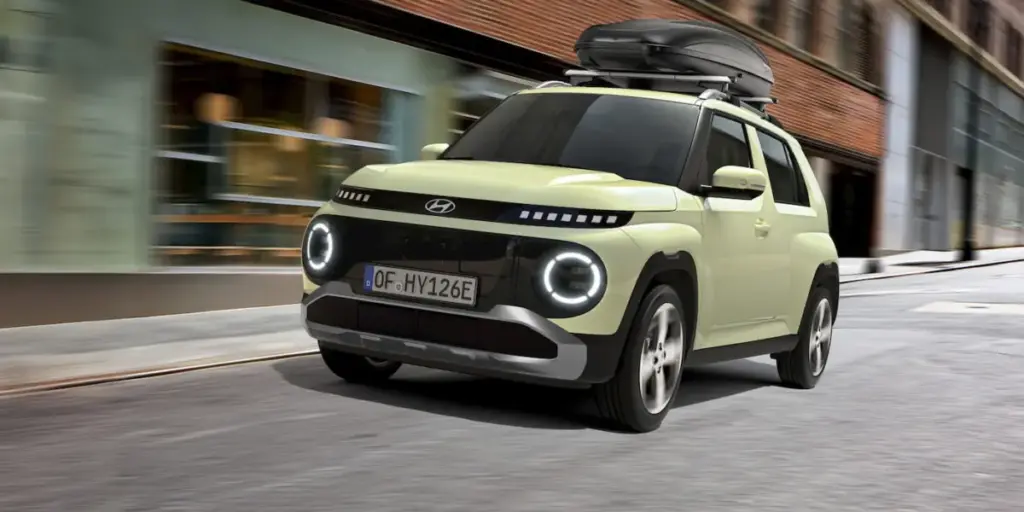
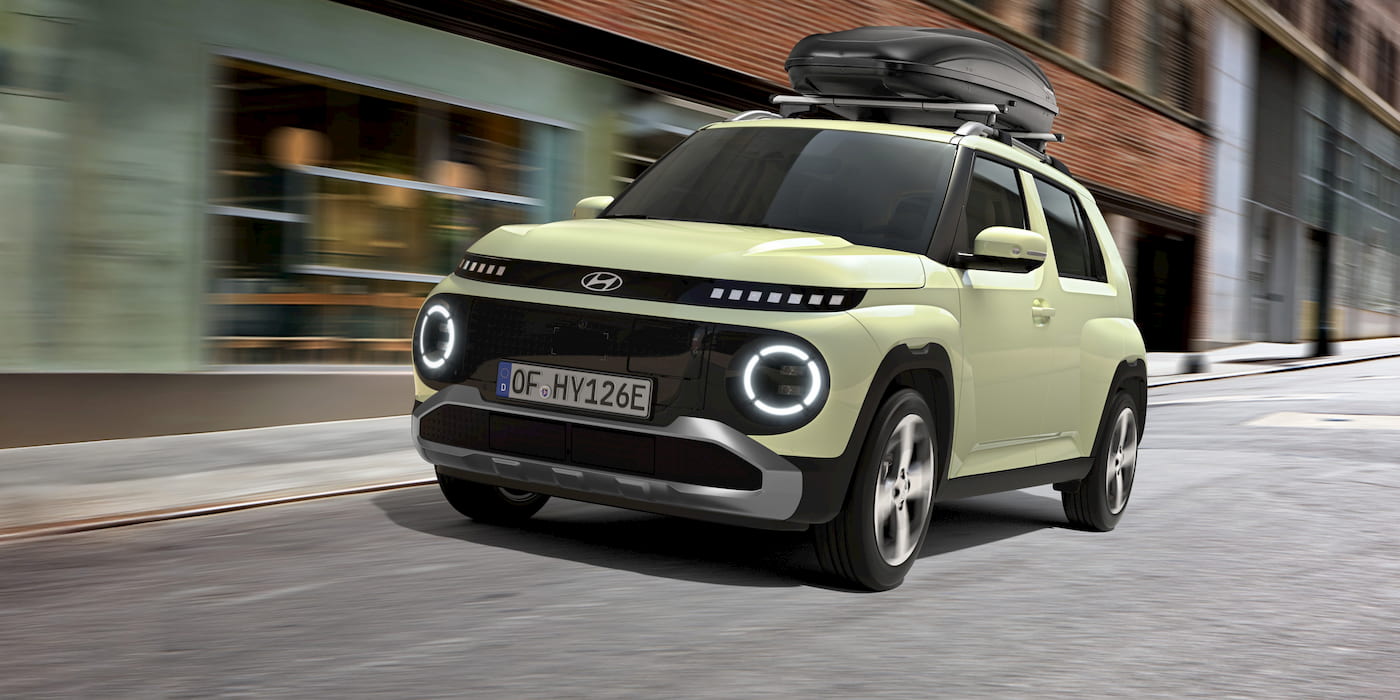
Analysts note that the psychological barrier to EV adoption has fundamentally eroded. With expanding public charging networks, longer real-world driving ranges, and the introduction of more affordable compact electric SUVs—such as Hyundai’s widely discussed Inster EV and competing models from European and Chinese manufacturers—consumers no longer view EVs as a compromise.
Future Outlook: What Lies Ahead for the Rest of 2026 and Beyond
As Europe moves past the first quarter of 2026, the trajectory of the electric vehicle market points toward continued, accelerated expansion. Several key variables will shape the remainder of the year and dictate whether the continent can maintain or exceed its current growth velocity.

1. The Geopolitical Energy Equation
As long as instability persists in the Middle East and global oil markets remain prone to sudden price shocks, European policymakers will face mounting pressure to accelerate domestic electrification. Transport accounts for the lion’s share of oil consumption across the continent; therefore, every additional percentage point of EV market share directly translates to diminished strategic leverage for oil-producing cartels. Expect energy security rhetoric to feature even more prominently in upcoming European Commission transport directives.
2. The Democratization of the EV Market
The historic critique of the electric vehicle transition has been its reliance on affluent early adopters capable of purchasing premium-priced models. However, 2026 is proving to be the year of the affordable EV. With automakers rolling out sub-€25,000 battery-electric models across mass-market segments, working-class families and small-to-medium enterprise (SME) fleets are entering the market in droves. Schemes like France’s social leasing program serve as blueprints that other nations are eager to replicate.
3. Infrastructure Maturation and Grid Resilience
Naturally, rapid fleet electrification places new demands on European electrical grids. Throughout the remainder of 2026, utility providers and municipal governments will be tasked with accelerating smart-charging infrastructure, vehicle-to-grid (V2G) capabilities, and ultra-fast charging corridors along trans-European transport networks. The ability of the grid to absorb millions of new vehicles smoothly will be a critical metric for long-term success.
Conclusion
The 51% surge in European EV sales in March 2026 is far more than a cyclical bounce or a temporary statistical anomaly. It is the visible manifestation of a continent actively engineering its own energy independence. By shedding its historic addiction to imported oil through the rapid adoption of battery-electric vehicles, Europe is proving that the green transition is not only an environmental imperative, but an indispensable shield for modern economic and geopolitical stability. If current consumer and fleet momentum holds, the remainder of 2026 will redraw the map of global transportation even faster than anticipated.