Executive Overview
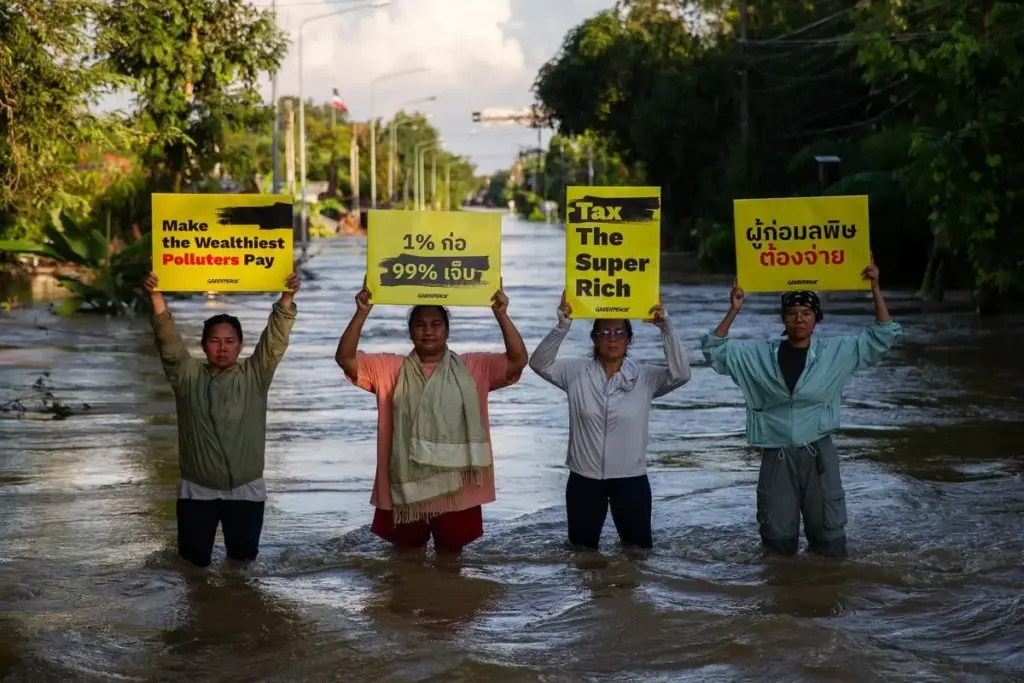
As financial leaders, delegates, and technocrats from across the globe descend upon Bangkok, Thailand, for the high-stakes annual meetings of the International Monetary Fund (IMF) and the World Bank, the host nation finds itself submerged. Widespread, devastating floods are currently displacing communities, ravaging infrastructure, and destroying livelihoods across the country. This stark juxtaposition—sterile, air-conditioned conference halls debating macroeconomic policy while citizens wade through waist-deep, climate-induced floodwaters—encapsulates the profound moral and structural failure of the contemporary global financial system.
For decades, the architecture of international finance has operated on a foundational premise that insulates corporate polluters and ultra-high-net-worth individuals from the true costs of their economic activities. While ordinary citizens in the Global South bear the brunt of climate devastation through destroyed homes, decimated crop yields, and spiraling public debts, the wealthiest contributors to global heating continue to amass record profits. They pay virtually nothing for the ecological destruction they leave in their wake.
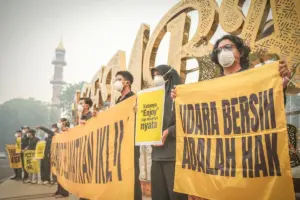
Amidst this backdrop, environmental organizations, trade unions, and civil society coalitions have converged in Bangkok to demand an immediate and radical overhaul of global economic policies. Prominent among them is Greenpeace, alongside over 200 civil society organizations, trade unions, and grassroots climate movements from across Asia, Africa, and Latin America. These groups are participating in the International People’s Assembly at the Ambassador Hotel Bangkok to challenge the status quo.
The core demand echoing through the assembly and outside the gates of the IMF-World Bank meetings is clear and unambiguous: international financial institutions and national governments must abandon regressive fiscal austerity measures and instead institute robust taxes on the world’s wealthiest polluters. By holding carbon-intensive industries and ultra-rich investors financially accountable for the climate crisis, governments can unlock the trillions of dollars urgently required for climate mitigation, adaptation, and loss and damage. Furthermore, advocates are pushing for strong international frameworks, such as a UN Tax Convention, to close sweeping loopholes that drain national treasuries and perpetuate global inequality.
Detailed Chronology: The Convergence in Bangkok and the Reality on the Ground
The timing of the IMF and World Bank annual meetings in Bangkok has thrown a harsh spotlight on the glaring disconnect between elite financial governance and the lived realities of climate-vulnerable populations.
The Backdrop: Thailand Under Water
In the weeks leading up to the summit, torrential monsoon rains, exacerbated by changing weather patterns linked to global warming, triggered severe flooding across vast swathes of Thailand. Urban centers and rural agricultural heartlands alike have been inundated. Families have watched generations of savings wash away as homes are submerged, local businesses go under, and public infrastructure collapses.
For the average Thai citizen, recovery does not come from corporate handouts or insurance payouts; it requires dipping into strained public coffers—taxpayer money diverted from education, healthcare, and social welfare to fund disaster relief. This cycle of destruction and recovery forms the operational definition of "climate debt": a profound inequality where those who have contributed the least to global greenhouse gas emissions are forced to pay the highest price for survival, while the architects of the crisis walk away untouched.
The Institutional Disconnect
Inside the conference venues, discussions often remain trapped within traditional neoliberal paradigms. Historically, the IMF and the World Bank have prescribed structural adjustment programs, fiscal austerity, and debt-repayment prioritization to developing nations facing economic stress. Critics argue that these orthodox policies effectively strip governments of the fiscal space needed to build resilient infrastructure, transition to renewable energy, and protect vulnerable populations from extreme weather events.
Rather than confronting the structural drivers of the crisis—such as fossil fuel extraction and unbridled carbon investments by the ultra-wealthy—international financial institutions have frequently offered lukewarm recommendations that fail to secure the necessary capital for climate action. The convergence in Bangkok has therefore become a focal point of resistance, where marginalized communities and their representatives are demanding that global financial architects address the root causes of economic and environmental instability.
The International People’s Assembly
Running parallel to the official summits, the International People’s Assembly—convened from October 12–13 at the Ambassador Hotel Bangkok—has brought together a powerful coalition of more than 200 civil society organizations, trade unions, and climate justice networks. Representing frontline communities across Asia, Africa, and Latin America, the assembly serves as a democratic counter-weight to the closed-door negotiations of the IMF and World Bank.
Delegates at the assembly are coordinating strategies to challenge corporate impunity, resist the imposition of austerity measures, and advance concrete proposals for systemic tax justice. By uniting voices from regions suffering the most severe impacts of ecological collapse, the assembly has amplified the call for a global financial reset that prioritizes human well-being and environmental preservation over corporate profit margins.
Supporting Context and Metrics: The Trillion-Dollar Climate Debt of Extreme Wealth
To understand the urgency of the demands coming out of Bangkok, one must examine the staggering financial metrics that quantify the nexus between extreme wealth and global heating. The climate crisis is not merely an environmental accident; it is largely driven by investment decisions made by an infinitesimal fraction of the global population.
The Carbon Footprint of the Ultra-Rich
According to comprehensive research by organizations like Greenpeace, the world’s richest 0.01% wield disproportionate influence over carbon-intensive industries through their massive equity holdings, private jets, mega-yachts, and sprawling portfolios in fossil fuels, heavy manufacturing, and deforestation-linked supply chains.
In the single year of 2022, investments by this ultra-wealthy elite in carbon-intensive sectors were directly associated with an estimated US$992 billion in climate-related costs incurred globally. To put this figure into perspective, $992 billion is virtually identical to the estimated global climate finance requirements frequently cited by international bodies to fund mitigation and adaptation in the Global South. In essence, the damage caused by the investments of a tiny group of ultra-rich individuals equals the total shortfall of global climate funds needed to protect billions of people.
The Illusion of Scarcity and the Failure of Austerity
Governments across the developing world are repeatedly told by international lenders that there is "no money" in national budgets to fund green transitions, healthcare upgrades, or robust social safety nets. Consequently, these nations are pushed into cycles of high-interest debt borrowing and painful domestic austerity.
However, advocates point out that the money does exist—it is simply hoarded in offshore tax havens, protected by complex legal loopholes, and funneled into speculative carbon-heavy assets. By failing to tax high-net-worth individuals and corporate polluters, governments are actively subsidizing the destruction of the planet.
Closing these loopholes and introducing progressive wealth and carbon taxes would unlock trillions of dollars in domestic revenue. This newfound fiscal space would allow developing and developed nations alike to fund comprehensive climate action without plunging vulnerable populations further into debt.
Official Statements and Perspectives
The mobilization in Bangkok has drawn sharp, articulate critiques from frontline environmental leaders and project coordinators who are witnessing the human toll of climate inaction firsthand.
Pichmol Rugrod: The Human Cost in Thailand
Pichmol Rugrod, Plastic-Free Future project lead at Greenpeace Thailand, laid bare the direct connection between national suffering and global financial architectures:
"The floods affecting communities across Thailand show how the costs of a changing crisis are increasingly being borne by ordinary people — through damaged homes, lost income and livelihoods, and public money needed for recovery. This is what climate debt looks like in people’s lives. Those who have contributed the least should not continue to pay the highest price, while the wealthiest polluters continue to profit and pay nothing. As global financial leaders meet in Bangkok, taxing the wealthiest polluters must be identified as part of the solution, with the revenues used to support affected communities and fund climate action."
Rugrod’s assessment emphasizes that disaster recovery should not be financed by the backs of disaster victims or through public debt. Instead, fiscal policy must be leveraged to redirect funds from the accounts of corporate polluters back into the communities they have harmed.
Gerance Mutwol: Challenging Institutional Priorities in Africa
Echoing these sentiments from a continental perspective, Gerance Mutwol, Fair Share project lead at Greenpeace Africa, highlighted the systemic failures of international financial institutions:
"As the climate crisis worsens, policy responses are falling far short of the urgent need for funding for mitigation, adaptation and loss and damage. It is outrageous that ultra-wealthy polluters continue to profit from investments in and ownership of highly polluting industries driving the climate crisis, while international financial institutions continue to put debt repayments and fiscal austerity ahead of protecting communities.
To fund a fair and resilient future for generations to come, governments must be able to redesign tax systems so they benefit the majority, not just the wealthiest. Governments must support a strong UN Tax Convention to close tax loopholes that drain national budgets, protect countries’ taxing rights and ensure tax systems support sustainable development goals and not work against them."
Mutwol’s comments underscore the reality that climate justice cannot be achieved without addressing the broader architecture of global finance, which currently prioritizes balance sheets over human lives.
Future Outlook: The Road to the UN Tax Convention and Systemic Reform
As the Bangkok meetings conclude and delegates look toward future diplomatic milestones, the campaign for tax justice and climate accountability is shifting to international legislative arenas. The primary vehicle for this transformation is the emerging global framework governing international taxation.
The Battleground of Global Tax Rules: The UN Tax Convention
For decades, global tax rules have largely been dictated by exclusive clubs like the Organisation for Economic Co-operation and Development (OECD), where wealthy nations hold outsized influence and consensus-based decision-making often paralyzes meaningful reform.
In stark contrast, momentum is building behind the UN Framework Convention on International Tax Cooperation (often referred to as the Global Tax Treaty). This initiative represents the first genuinely inclusive forum for delivering fair global tax rules. Under the UN framework, every country has an equal vote, and decisions are determined by a democratic majority rather than a restrictive consensus that allows single nations to veto progress.
The stakes for the upcoming negotiations could not be higher. The next crucial round of negotiations—known as INC-6—is scheduled to take place in Nairobi, Kenya, from November 30 to December 12. Civil society organizations and environmental campaigners are urging all national governments to commit fully to this process.
Key Demands for a Sustainable Future
Greenpeace International, alongside its global partners in the International People’s Assembly, has outlined a clear roadmap for international financial reform. To secure a fair, green, and resilient future, global leaders must enact the following structural changes:
- Tax High-Net-Worth Individuals and Corporate Polluters: Move beyond recommendations for regressive austerity and implement direct, progressive taxes on extreme wealth and the super-profits of fossil fuel corporations and other carbon-intensive industries.
- Unlock Climate Finance: Utilize revenues generated from polluter taxes to establish reliable, predictable funding streams for climate mitigation, adaptation, and loss and damage in vulnerable nations, effectively honoring historical climate debts.
- Champion the UN Tax Convention: Governments must throw their political weight behind the UN Framework Convention on International Tax Cooperation at the upcoming INC-6 negotiations in Nairobi. This will close cross-border tax evasion loopholes, protect developing countries’ sovereign taxing rights, and end harmful tax practices that drain billions from national budgets.
- Resignify Global Financial Institutions: Compel the IMF, the World Bank, and other multilateral lenders to abandon structural adjustment policies that demand harmful fiscal austerity and debt-servicing prioritization over social and environmental protection.
Conclusion
The images of flooded streets in Bangkok set against the backdrop of elite international summits serve as a powerful reminder of what is at stake. The climate crisis is accelerating, and the financial resources required to combat it are locked away in the bank accounts of the world’s wealthiest polluters.
The convergence of grassroots movements, trade unions, and civil society organizations in Thailand signals a growing, unified resistance against economic injustice. By fundamentally restructuring global tax systems—holding polluters financially accountable and empowering nations through inclusive UN-led frameworks—the global community still has a path toward a just and sustainable future. However, the window for meaningful action is closing rapidly, and the demand that the wealthy pay for the damage they have wrought has never been more urgent.