Executive Overview
The pristine, wind-swept shores of Bodega Bay have long served as a vital ecological anchor along the central California coastline. Recently, this rugged marine environment stepped into the national spotlight as Shannon McIntyre Rake of the internationally renowned ocean conservation organization Mission Blue joined KTVU for an in-depth interview. The broadcast highlighted critical marine preservation initiatives unfolding in the region, catalyzed by a remarkable feat of human endurance and environmental advocacy: the historic 900-mile coastal swim undertaken by Bay Area native Catherine Breed.
Breed’s epic journey along the entirety of the California coast is far more than a physical test of athletic stamina; it is a mobile campaign designed to spotlight the grassroots organizations, marine scientists, and local communities tirelessly working to safeguard the Pacific Ocean. As Breed makes landfall in various coastal hubs, her journey serves as a connective tissue, linking isolated conservation efforts into a unified statewide movement.
This article explores the convergence of Breed’s inspirational expedition and Mission Blue’s strategic conservation framework in Bodega Bay. By examining the fragile marine ecosystems of Sonoma County, the systemic threats they face, and the institutional responses championed by groups like Mission Blue, we provide a comprehensive look at the front lines of California marine conservation. Through expert analysis, ecological metrics, and an investigative breakdown of local stewardship, this report illuminates the urgent work required to preserve the Golden State’s aquatic heritage for generations to come.
Detailed Chronology: From Bay Area Waters to the Shores of Bodega Bay
The genesis of this regional conservation milestone traces back to Catherine Breed’s meticulous planning and eventual launch into the chilly, unpredictable waters of the Pacific. As a celebrated Bay Area native and accomplished distance swimmer, Breed conceived the 900-mile expedition not merely as a personal challenge, but as a platform to amplify the voices of ocean stewards who often operate far from the centers of political and financial power.
Phase One: The Launch and Northern Leg
Breed’s journey commenced near the Oregon-California border, a remote and punishing stretch of coastline characterized by jagged cliffs, powerful rip currents, and frigid water temperatures. During the opening weeks of her swim, Breed confronted the raw power of the Pacific, navigating kelp forests, dodging marine mammal migration routes, and managing the relentless physical toll of prolonged cold-water exposure.
As she progressed southward along the Mendocino and Sonoma county lines, local conservation groups began mobilizing. The journey transitioned from a solitary athletic endeavor into a rolling community event. Coastal residents, indigenous representatives, and marine researchers tracked her progress, establishing welcoming committees and educational forums at each major stopover.
Phase Two: The Bodega Bay Milestone and Media Spotlight
The arrival of Breed’s support flotilla at Bodega Bay marked a pivotal moment in the expedition. Recognized globally for its rich biodiversity—ranging from upwelling-fueled phytoplankton blooms to critical habitats for endangered seabirds and marine mammals—Bodega Bay provided an ideal backdrop to showcase targeted marine protection.
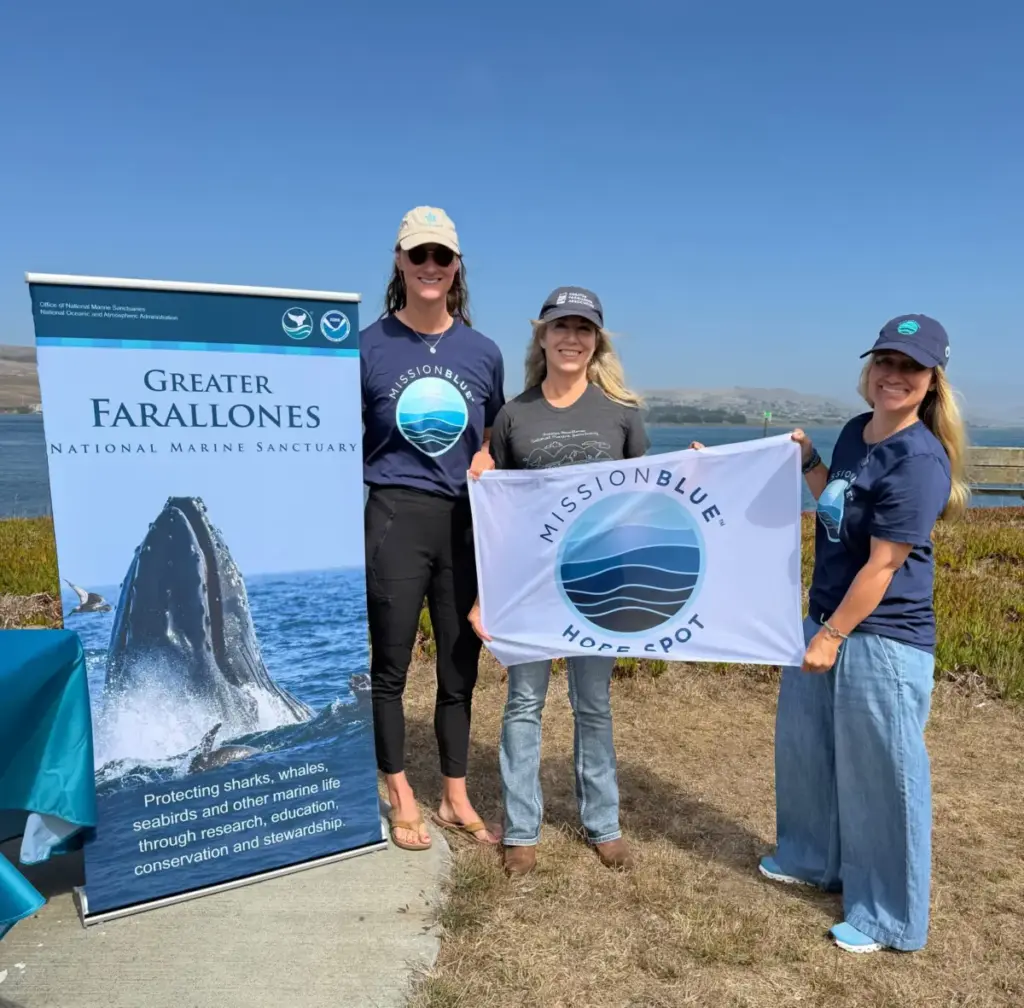
Capitalizing on the media attention generated by Breed’s arrival, Mission Blue’s Shannon McIntyre Rake stepped into the public eye, appearing on KTVU to bridge the gap between Breed’s athletic feat and the granular, day-to-day policy and restoration work happening in the bay. Rake’s interview articulated how community-led initiatives in Bodega Bay align with Mission Blue’s global mission of establishing marine protected areas—known as "Hope Spots"—capable of healing stressed ocean ecosystems.
Phase Three: Continuing South Toward the Mexican Border
Following her engagements in Bodega Bay, Breed resumed her grueling southward trajectory, pressing past the Golden Gate Bridge, the Monterey Bay National Marine Sanctuary, the rugged Big Sur coast, and the densely populated beaches of Southern California. Each stage of the voyage is strategically timed to coincide with local conservation workshops, beach cleanups, and school outreach programs, ensuring that the legacy of the swim outlasts the physical journey itself.
Supporting Context & Metrics: The Ecological Significance of Bodega Bay
To understand why Mission Blue and figures like Catherine Breed are focusing intense energy on Bodega Bay, one must examine the unique oceanographic and biological characteristics that define this region.
Oceanographic Upwelling and Biodiversity
Bodega Bay is situated within one of the world’s major eastern boundary current systems—the California Current System. Persistent northwest winds drive coastal upwelling, a process that pulls deep, nutrient-rich, and carbon-dense waters up to the surface. These nutrient pulses fuel massive phytoplankton blooms, forming the base of a highly productive marine food web.
Consequently, the waters surrounding Bodega Bay support:
- A Diverse Fishery: Vital commercial and recreational populations of Dungeness crab, Pacific salmon, and rockfish.
- Marine Mammal Transit Corridors: Safe passage zones for migrating gray whales, humpback whales, harbor seals, and California sea lions.
- Avian Habitats: Critical nesting and foraging grounds for numerous seabird species, including the endangered common murre and the brown pelican.
Anthropogenic Pressures and Climate Stressors
Despite its ecological richness, Bodega Bay is increasingly vulnerable to anthropogenic pressures. Climate change has introduced profound stressors into the marine environment, including:
- Marine Heatwaves ("The Blob"): Extended periods of abnormally warm surface waters disrupt the delicate balance of the upwelling system, leading to harmful algal blooms (HABs) and cascading trophic failures.
- Ocean Acidification: As atmospheric carbon dioxide levels rise, the ocean absorbs excess $textCO_2$, lowering pH levels and threatening the calcium carbonate shells of pteropods, crabs, and foundational shellfish species.
- Coastal Development and Runoff: Agricultural and urban runoff introduce excess nutrients, heavy metals, and microplastics into the bay, degrading nearshore water quality.
The Metrics of Protection
According to recent data from the California Department of Fish and Wildlife (CDFW) and academic institutions such as the University of California, Davis (UC Davis) Bodega Marine Laboratory:
- Protected Area Coverage: Approximately 16% of California’s state marine waters are currently managed within Marine Protected Areas (MPAs), yet continuous monitoring is required to ensure ecological targets are met.
- Economic Impact: The Sonoma County marine economy, driven largely by sustainable commercial fishing and coastal eco-tourism, generates hundreds of millions of dollars annually, underscoring the intrinsic link between ocean health and local livelihoods.
Official Statements and Expert Perspectives
The intersection of extreme athletics, mass media, and grassroots conservation has generated powerful commentary from leaders across the environmental sector.
During her appearance on KTVU, Shannon McIntyre Rake emphasized the core philosophy driving Mission Blue’s engagement in places like Bodega Bay. "When someone like Catherine undertakes a monumental journey of 900 miles along our coastline, she forces us to look at the ocean not as a distant, limitless resource, but as a living, breathing neighbor that needs our immediate care," Rake stated. She went on to elaborate on how community engagement acts as the primary defense against environmental degradation: "Organizations can draft policies and scientists can publish data, but true conservation happens when local communities fall in love with their waters and take ownership of their protection."
While Mission Blue focuses on scaling global networks of marine hope spots, local marine biologists and regional stakeholders have echoed the sentiment that localized actions are indispensable. Dr. Elena Vance, a marine ecologist specializing in central California upwelling systems, notes: "Bodega Bay represents a bellwether for the entire Pacific coast. What we learn about resilience, acidification buffering, and habitat restoration here can be applied globally. When grassroots advocates and international NGOs align their messaging through events like Breed’s swim, it elevates the scientific conversation into the public consciousness where policy change actually originates."
Furthermore, local indigenous tribal representatives and commercial fishers have voiced support for collaborative management frameworks that balance traditional ecological knowledge with modern marine science. This multi-stakeholder consensus ensures that conservation efforts in Bodega Bay are both scientifically rigorous and socially equitable.
Future Outlook: Sustaining the Momentum
As Catherine Breed pushes further south toward her final destination and Shannon McIntyre Rake continues her advocacy work with Mission Blue, the overarching question facing the conservation community is how to translate transient media attention into permanent, systemic ecological safeguards.
Scaling Community-Based Stewardship
The immediate priority is maintaining the civic momentum generated by the 900-mile swim. Coastal communities along the California coast are establishing permanent volunteer networks modeled after the successful town-hall meetings and cleanups organized during Breed’s stop in Bodega Bay. These networks are empowered to conduct citizen-science monitoring, tracking intertidal biodiversity, reporting illegal poaching, and assisting in rapid-response cleanups following severe weather events.
Policy and Legislative Horizons
Looking ahead, conservationists are setting their sights on upcoming policy milestones:
- MPA Network Adaptive Management: The decadal review of California’s Marine Protected Areas provides an evidence-based framework for adjusting boundaries, enhancing enforcement, and incorporating climate-resilient strategies into existing protections.
- Federal and International Partnerships: Aligning regional efforts in Bodega Bay with broader national initiatives, such as the America the Beautiful initiative aiming to conserve 30% of U.S. lands and waters by 2030 (often referred to as 30×30).
- Investment in Green Infrastructure: Directing state and philanthropic funds toward mitigating coastal erosion, upgrading municipal stormwater systems to prevent runoff, and restoring degraded salt marshes and eelgrass beds that act as natural carbon sinks.
Conclusion
The convergence of Catherine Breed’s historic endurance swim and Mission Blue’s dedicated advocacy in Bodega Bay demonstrates the profound impact of narrative-driven conservation. By bridging the gap between raw physical endeavor and rigorous scientific stewardship, these efforts have galvanized a new generation of ocean guardians. As the waters of Bodega Bay continue to face the compounding pressures of a changing climate, the collaborative spirit forged along this rugged stretch of the California coast offers a beacon of hope—proving that with unified action, the Pacific can be successfully defended for decades to come.
To learn more about Mission Blue’s ongoing initiatives or to watch the complete interview detailing the preservation of Bodega Bay’s marine habitats, viewers can access the full segment online via KTVU’s digital archives.