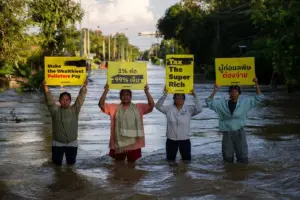
For over half a century, visual documentation has served as the bedrock of environmental activism. Long before the era of algorithmic feeds and viral social media campaigns, Greenpeace recognized that bearing witness through a camera lens could alter the trajectory of policy, corporate accountability, and public consciousness. Capturing environmental destruction in real time strips away the abstract nature of climate statistics, laying bare the tangible toll of industrial exploitation.
This week’s dispatch from the front lines of global environmental defense spans multiple continents, uniting disparate crises under a singular, overarching narrative: the accelerating degradation of Earth’s ecosystems driven by fossil fuels, agricultural runoff, and systemic policy failures. From the dark waters of the Black Sea to the shriveling banks of the Rhine, and from the scorched pine plantations of Brandenburg to the sweltering rail platforms of the Netherlands, Greenpeace’s latest photographic archive captures a planet under severe duress—and the relentless mobilization of those fighting to protect it.
Executive Overview
The past week has delivered a striking cross-section of the ongoing planetary crisis, documented through the uncompromising lens of environmental photojournalism. Across Europe, activists and researchers have mobilized to expose the interconnected threats of geopolitical energy dependencies, agricultural pollution, and the cascading impacts of extreme weather.
Key developments highlighted in this week’s global briefing include:
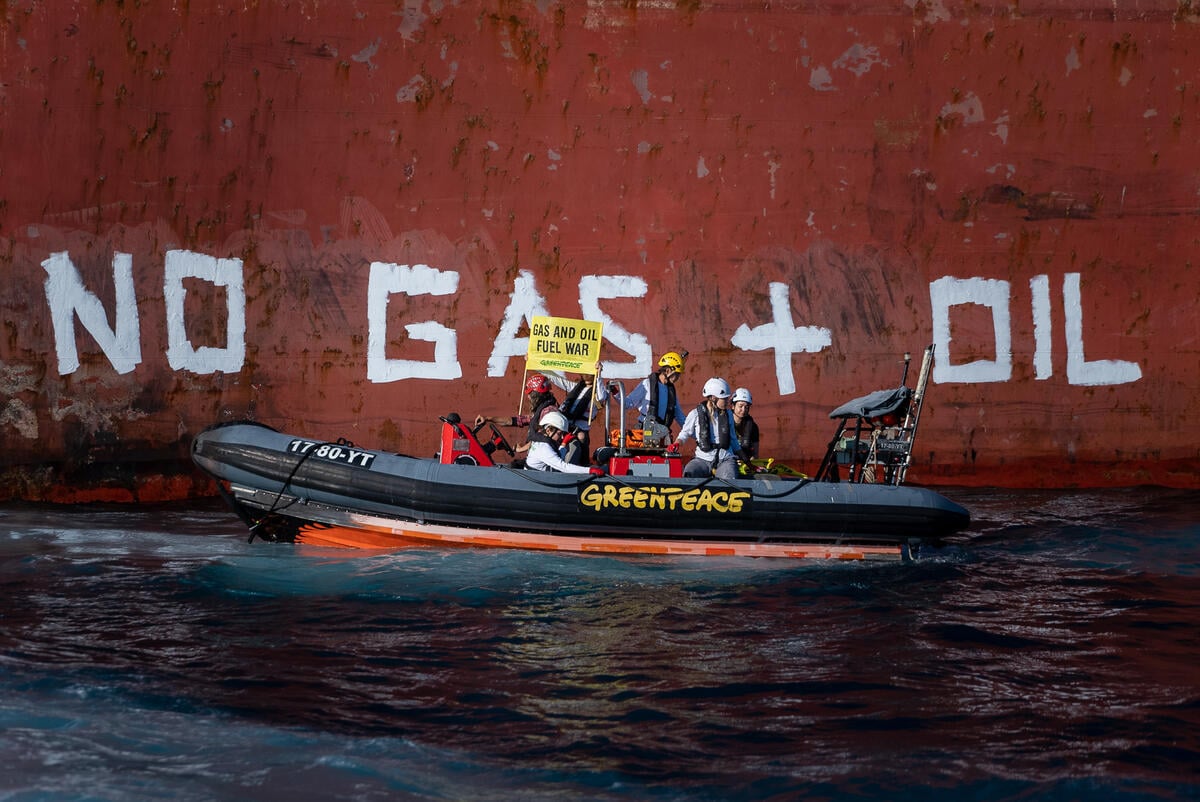
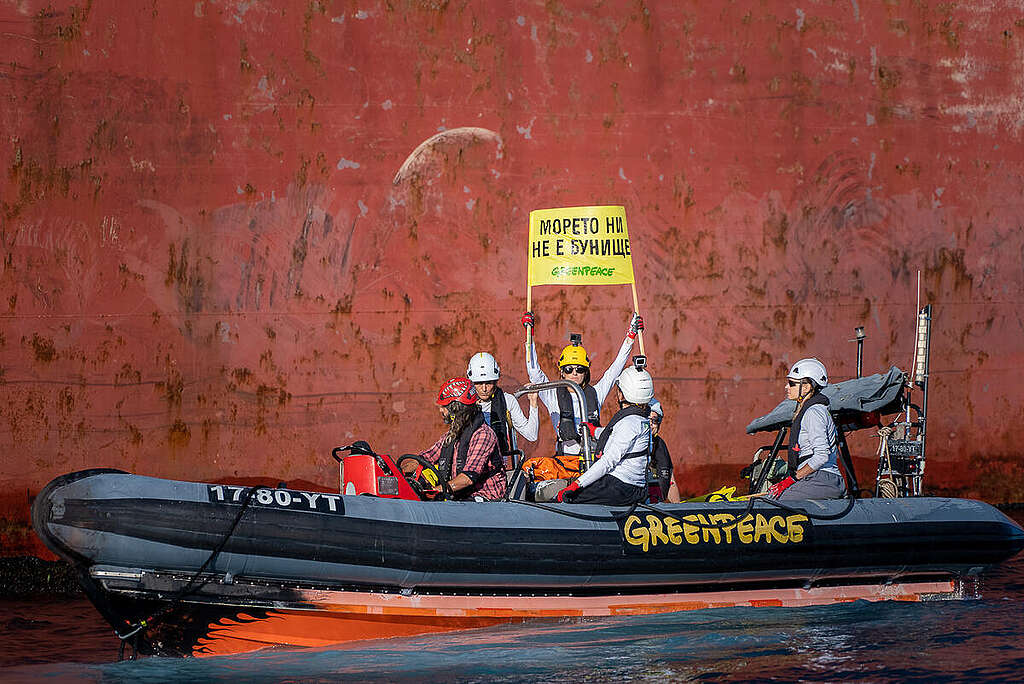
The Black Sea Protest: Activists from five nations boarded and branded an abandoned shadow-fleet oil tanker off the coast of Burgas, Bulgaria, sending a direct message against the illicit fossil fuel trade that bankrolls international conflict and devastates marine environments.
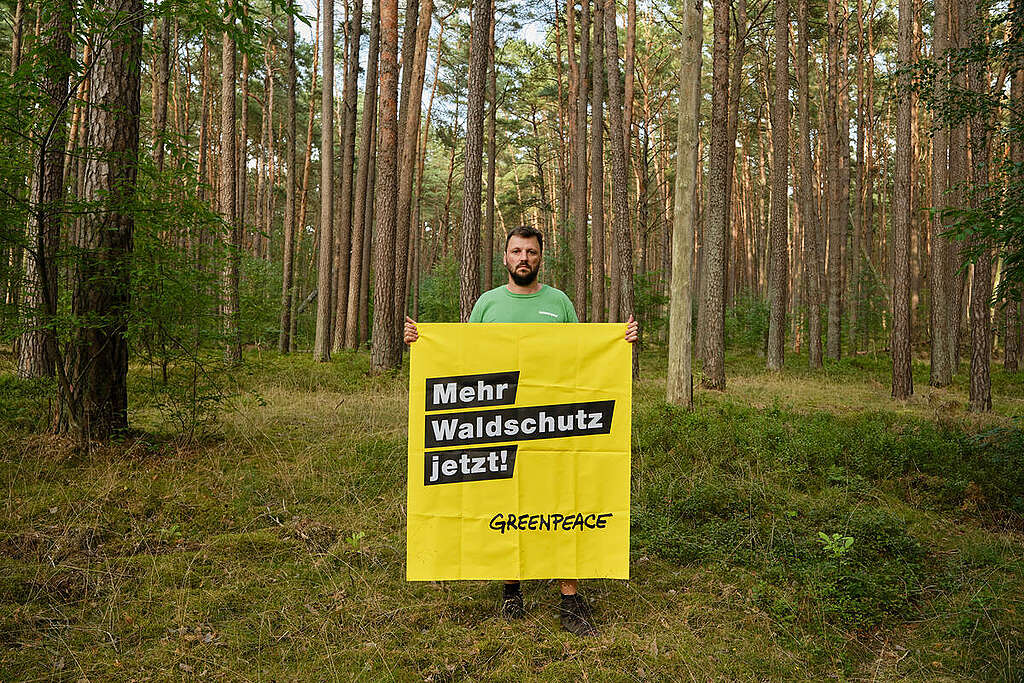
Forest Vulnerability in Germany: Field assessments in Reiersdorf, Brandenburg, exposed the catastrophic wildfire risks inherent in monoculture pine forestry, contrasting them sharply with the climate-resilient properties of structurally diverse mixed forests.
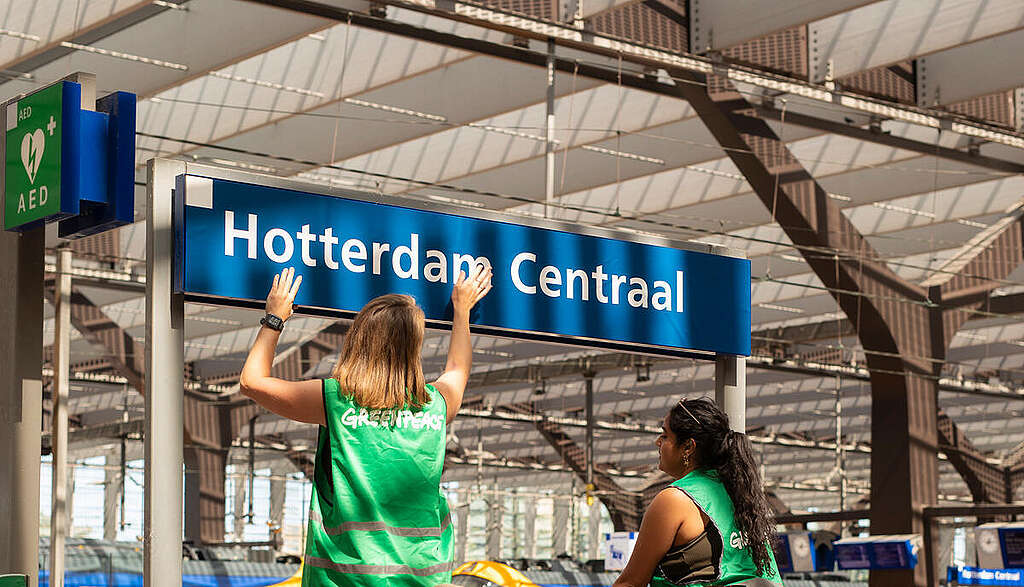
Satirical Heatwave Mobilization in the Netherlands: As temperatures smashed historical norms, Greenpeace Netherlands executed a high-visibility intervention by renaming major railway stations to reflect the boiling reality of the climate crisis, rallying citizens ahead of the upcoming National Climate March.
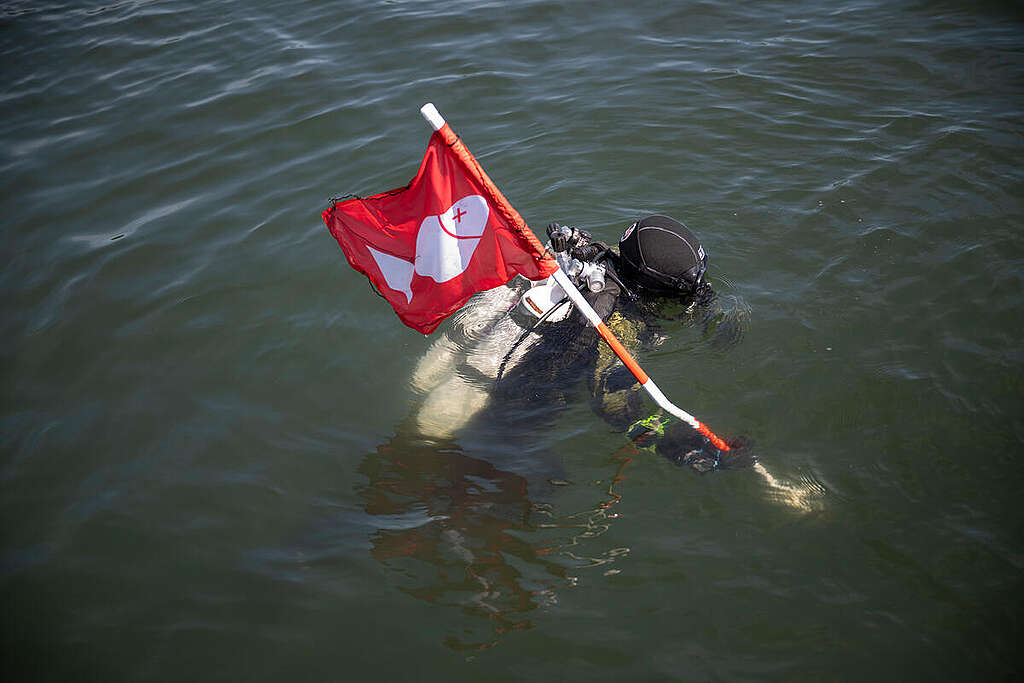
Aquatic Suffocation in Denmark: Greenpeace Nordic launched an intensive expedition into Danish fjords to document the creeping catastrophe of oxygen depletion, linking coastal dead zones directly to decades of unmitigated nitrogen runoff from industrial pork production.
Hydrological Stress on the Rhine: In Cologne, Germany, plunging water levels along the historic Rhine River underscored the severe socio-economic and ecological tolls of ongoing continental droughts.
Together, these actions form a comprehensive snapshot of a pivotal moment in environmental history, where civil disobedience and rigorous scientific documentation converge to demand systemic transformation.
Detailed Chronology: A Week of Global Action
1. The Black Sea: Targeting the Russian Shadow Fleet (Bulgaria)
The week’s most striking maritime action unfolded off the coast of Burgas, Bulgaria, where an international coalition of Greenpeace activists from five distinct countries united to confront a symbol of illicit fossil fuel profiteering. The target was the "Kairos," an abandoned tanker identified as part of the clandestine "shadow fleet" utilized to bypass international sanctions, transport Russian oil, and obscure the origins and destinations of carbon-intensive cargo.
Scaling the decaying superstructure of the vessel, the activists painted a stark, unmissable message across its weathered hull: "NO GAS + OIL."
This direct action was designed to draw international scrutiny to the toxic dependencies that continue to anchor Europe’s energy infrastructure to volatile, corrupt, and environmentally ruinous markets. Beyond funding geopolitical conflicts, these shadow-fleet vessels represent an environmental catastrophe waiting to happen. Operating with minimal oversight, substandard maintenance, and lacking adequate insurance, aging tankers like the Kairos pose an imminent existential threat to marine life, delicate coastal ecosystems, and local communities dependent on the Black Sea for their livelihoods.
2. Brandenburg’s Pine Monocultures: A Ticking Time Bomb (Germany)
Shifting inland to the forested landscapes of Reiersdorf in Brandenburg, Greenpeace’s field researchers turned their focus toward Germany’s forestry management paradigms. Amidst escalating global temperatures and increasingly volatile summers, the region’s vast pine monocultures have emerged as critical ecological liabilities.
During a guided forest site visit, activists and forestry experts demonstrated the extreme wildfire vulnerability baked into uniform pine stands. Planted largely for rapid commercial timber yield, these artificial forests lack the complex ecological architecture required to withstand prolonged heat and drought.
In stark contrast, the expedition highlighted the natural resilience of structurally diverse mixed forests. By preserving deadwood and fostering a rich multi-layered canopy and understory, these naturalized ecosystems retain soil moisture, lower ground temperatures, and naturally suppress the rapid spread of wildfires. The intervention served as a vital educational platform, urging regional and national authorities to pivot away from vulnerable timber farming and embrace ecological forest restoration.
3. Satire and Urgency on the Rails: The Dutch Heatwave Campaign (Netherlands)
As a relentless heatwave pushed temperatures soaring well above 30°C and shattered historical records for tropical days, Greenpeace Netherlands launched a creative, high-impact campaign that captured the imagination of commuters and media alike. Recognizing that extreme weather events are rapidly mutating from statistical anomalies into the terrifying baseline of our climate reality, activists took over the signage of several major transit hubs.
Across the country, commuters were greeted by startlingly accurate new station monikers:
Rotterdam Centraal became “Hotterdam Centraal”
Amsterdam Centraal was rebranded as “Amsterwarm Centraal”
Hilversum Media Park transformed into “Grillversum Media Park”
‘s-Hertogenbosch was cheekily altered to “Smelthogenbosch”
This tongue-in-cheek urban intervention carried a deadly serious message. By forcing everyday citizens to confront the tangible discomforts of an overheating nation, the campaign directly connected urban heat islands and extreme temperatures to fossil fuel combustion. Furthermore, the action served as an urgent mobilizing tool, driving public awareness and attendance ahead of the massive Climate March scheduled in Amsterdam.
4. Unmasking Aquatic Dead Zones in Danish Waters (Denmark)
While urban centers sweltered under heatwaves, an equally alarming crisis was unfolding beneath the surface of Denmark’s coastal ecosystems. Greenpeace Nordic launched a rigorous marine expedition to document the devastating spread of oxygen depletion—hypoxia—across Danish fjords, lakes, and coastal belts.
Centering their operations around Vejle Fjord, researchers deployed scientific equipment to measure the catastrophic impacts of nitrogen pollution. The investigation traced the root cause of the crisis directly to decades of intensive industrial pig farming. Runoff laden with massive volumes of livestock manure, heavily applied to agricultural fields, eventually leaches into watershed systems.
This excess nutrient loading triggers massive algal blooms, which subsequently die and decompose, devouring dissolved oxygen in the water column. The resulting anoxic "dead zones" have effectively turned vibrant coastal waters into marine graveyards, choking fish populations and sounding a blaring red alarm for the future of Denmark’s aquatic biodiversity.
5. The Shrinking Rhine: Visualizing the Continental Drought (Germany)
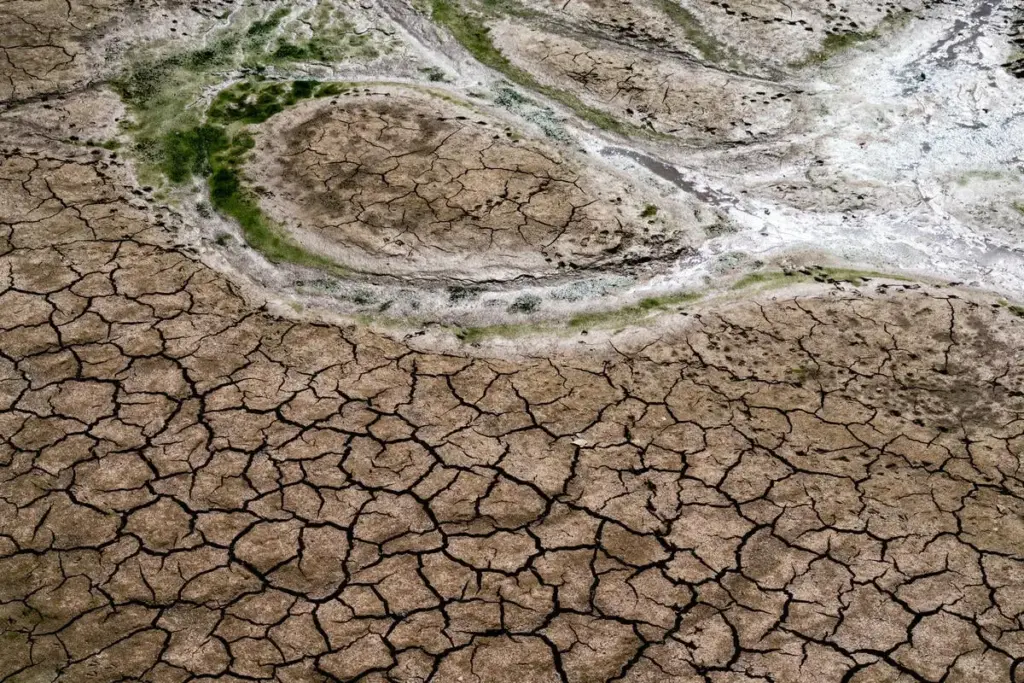
Concluding the week’s visual ledger, photojournalist Bernd Lauter captured the chilling reality of continental hydrological stress along the River Rhine in Cologne, Germany. The images reveal stark expanses of exposed riverbed, pilings, and severely shrunken channels—a direct symptom of compounding droughts and depleted alpine snowpacks upstream.
The dwindling waters of the Rhine are far more than a scenic tragedy; they represent a critical systemic bottleneck for Central Europe. As a vital commercial artery, the river’s low water levels severely disrupt freight transport, forcing cargo vessels to travel partially unloaded, crippling supply chains, and cascading economic stress across industrial sectors. Concurrently, shrinking river volumes elevate water temperatures, threatening aquatic species and compounding the stress on municipal and agricultural water supplies.
Supporting Context & Metrics
To fully grasp the gravity of the events documented by Greenpeace this week, one must examine the broader metrics governing these converging crises:
The Shadow Fleet Phenomenon: According to maritime intelligence estimates, the global "shadow fleet" transporting sanctioned oil has expanded exponentially, now comprising hundreds of aging vessels operating without standard western maritime insurance. These ships represent an unquantified ticking ecological time bomb in enclosed and semi-enclosed bodies of water like the Black Sea.
Forest Vulnerability Metrics: In regions like Brandenburg, sandy soils combined with vast swaths of contiguous pine monocultures have created extreme wildfire hazard ratings. Climate models project that central European forests will face increasingly severe moisture deficits, making the transition to mixed deciduous and coniferous forests an urgent imperative for carbon sequestration and fire prevention.
The Scale of Agricultural Runoff: Denmark remains one of the world’s largest pork exporters relative to its population size, generating millions of tons of animal manure annually. Scientific monitoring confirms that despite successive national action plans, nitrogen loads entering Danish marine environments continue to exceed safe ecological thresholds, severely compromising the European Union’s biodiversity and water framework directives.
European Heat and Drought Trends: Climate data consistently demonstrates that Europe is warming at roughly twice the global average rate. The proliferation of "tropical days"—defined as days where temperatures exceed 30°C—has drastically accelerated urban heat island effects, placing unprecedented strain on public health infrastructure, energy grids, and hydrological systems like the Rhine.
Official Statements and Institutional Responses
While Greenpeace’s field interventions are designed to bypass bureaucratic complacency through direct visual evidence, they are underpinned by rigorous policy demands directed at regional and international decision-makers.
In the wake of the Burgas tanker action, Greenpeace representatives reiterated their call for a total, enforceable blockade against the shadow fleet, demanding that littoral states in the Black Sea and the European Union implement stringent maritime inspections, mandatory liability insurance verifications, and aggressive sanctions enforcement to choke off the financial lifelines fueling illegal energy trade.
Regarding the Danish aquatic crisis, Greenpeace Nordic’s marine biologists and campaign coordinators have intensified calls for a legally binding agricultural reform package. They argue that voluntary measures have failed entirely, and that the Danish government must implement mandatory reductions in livestock density and radically lower the permitted application thresholds for nitrogen fertilizers to give coastal ecosystems a fighting chance at recovery.
Ahead of the Amsterdam Climate March, Dutch organizers issued a unified manifesto supported by the station-renaming stunt:
"The extreme weather we are experiencing this summer is not a fluke; it is the calculated cost of governmental inaction and fossil fuel addiction. As our cities turn into heat traps and our railways bear the brunt of climate breakdown, we demand that politicians step up with decisive, legally binding policies to phase out fossil energy once and for all. The time for half-measures has expired."
Similarly, German forestry and water resource coalitions have amplified Greenpeace’s warnings regarding the Rhine and Brandenburg ecosystems, calling for a radical overhaul of national climate adaptation strategies that prioritizes long-term ecological resilience over short-term industrial and agricultural yields.
Future Outlook: The Road Ahead
As the summer of 2026 unfolds, the images captured by Greenpeace serve as both a stark warning and an urgent call to action. The juxtaposition of burning pine forests in Germany, anoxic marine deserts in Denmark, a shriveling Rhine, boiling rail platforms in the Netherlands, and clandestine oil tankers in the Black Sea underscores a fundamental truth: the ecological crises of our time are deeply interconnected.
They cannot be solved in isolation through localized mitigation alone. They require a systemic, global decoupling from the fossil fuel economy, a radical transformation of industrial agriculture, and a paradigm shift in how humanity manages and respects natural ecosystems.
Looking forward, the upcoming autumn mobilization— anchored by major demonstrations such as the Climate March in Amsterdam—will test the political will of European leaders. Will they heed the visual testimony of scientists and activists on the front lines, or will they continue to manage decline while the planet burns and suffocates?
For Greenpeace and its global network of supporters, the mission remains unchanged. Through the unyielding power of photojournalism, direct action, and uncompromising scientific truth, they will continue to hold power to account, ensuring that the realities of environmental injustice cannot be swept away, ignored, or hidden in the shadows.
To explore the complete, high-resolution archive of these actions and access thousands of additional visual records documenting the global fight for environmental justice, please visit the official Greenpeace Media Library.