Executive Overview
As the International Monetary Fund (IMF) and the World Bank convene their high-level annual meetings in Bangkok, Thailand, the city and its surrounding regions serve as a striking, tragic backdrop for a global economic crisis. Submerged streets, ruined agricultural yields, and displaced families tell the immediate story of local flooding. Yet, beneath the rising waters lies a much larger systemic failure: a global financial architecture that consistently shields the world’s wealthiest polluters from bearing the financial consequences of ecological collapse.
While ordinary citizens in the Global South and across developing nations shoulder the compounding costs of climate-induced disasters—losing their homes, livelihoods, and public infrastructure—fossil fuel conglomerates and ultra-high-net-worth investors continue to extract vast profits from carbon-intensive industries. This glaring asymmetry has brought environmental activists, civil society organizations, trade unions, and climate coalitions to Bangkok for the International Peoples’ Assembly.
Representing over 200 organizations from across Asia, Africa, and Latin America, these delegates are delivering a unified message to global financial leaders: the traditional playbook of fiscal austerity and debt-repayment prioritization is morally bankrupt and economically unviable. To fund the monumental transition toward climate mitigation, adaptation, and loss-and-damage recovery, international financial institutions and national governments must fundamentally redesign global tax systems. At the core of this transformation is an urgent, non-negotiable demand: tax the ultra-wealthy polluters, close structural tax loopholes, and support a strong United Nations Tax Convention to reclaim the funds owed to the planet and its people.
Detailed Chronology and Convergence in Bangkok
The convergence of global financial elites and grassroots resistance in the Thai capital sets the stage for a critical geopolitical confrontation over the future of international finance and climate justice.
The Backdrop: Thailand Under Water
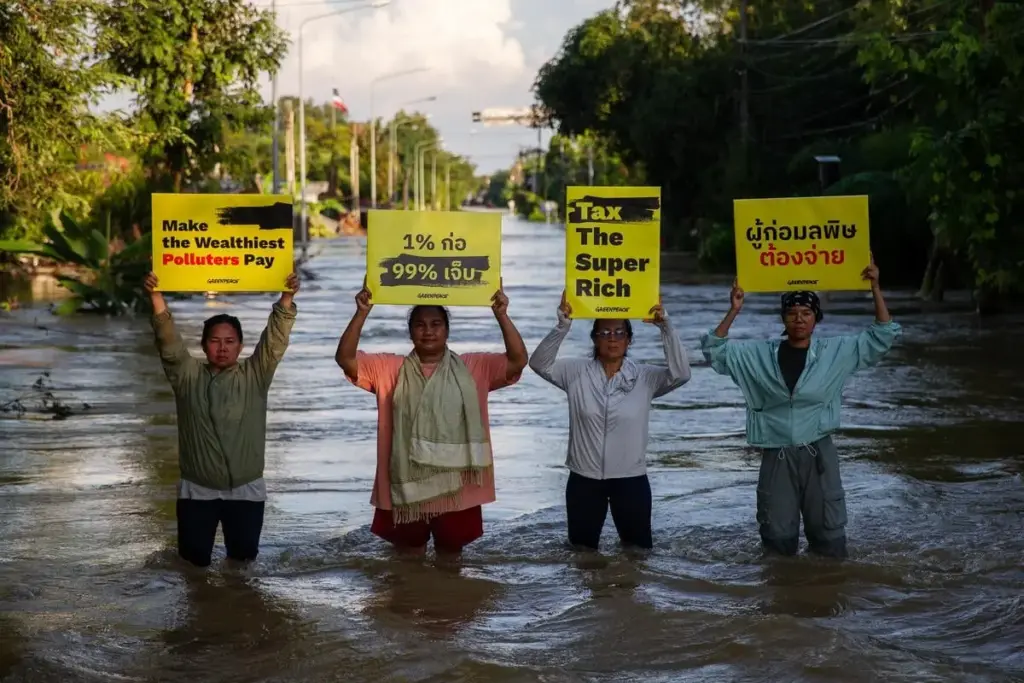
As delegates in tailored suits step into the air-conditioned convention halls of Bangkok for the IMF and World Bank meetings, millions of Thai citizens are navigating the brutal realities of severe flooding. The inundations are not isolated anomalies; they are symptoms of a rapidly destabilizing climate system that disproportionately impacts urban centers and rural agricultural belts alike. Homes are submerged, small businesses are wiped out overnight, and national budgets are routinely diverted from healthcare and education toward emergency disaster response.
This localized catastrophe mirrors a broader global trend. The immediate economic shock absorbed by Thai communities epitomizes what environmental economists term "climate debt"—the unacknowledged and unpaid liabilities accumulated by historical and contemporary high-emitting entities. While local populations pay with their homes and livelihoods, the corporate entities and elite portfolios driving global greenhouse gas emissions continue to generate record quarterly profits.
The International Peoples’ Assembly Takes the Floor
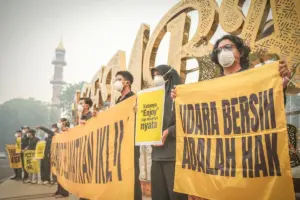
Running parallel to the official IMF and World Bank proceedings, the International Peoples’ Assembly convened from October 12–13 at the Ambassador Hotel Bangkok. Bringing together more than 200 civil society organizations, trade unions, and grassroots climate coalitions from the Global South, the Assembly serves as a counter-summit and a platform for structural resistance.
Delegates from Africa, Asia, and Latin America have utilized the platform to expose how international financial institutions (IFIs)—principally the IMF and the World Bank—perpetuate cycles of debt and poverty. By conditioning emergency loans and development assistance on harsh fiscal austerity measures, these institutions routinely force developing nations to slash public spending on environmental protection, social safety nets, and climate resilience. The Assembly has galvanized a united front, demanding an immediate pivot away from austerity and toward redistributive, climate-responsive fiscal policies.
Supporting Context & Metrics: The Anatomy of Climate Debt
To understand the urgency of the demands echoing through the halls of the Bangkok assemblies, one must examine the staggering financial metrics that define modern climate inequality.
The $992 Billion Footprint of Extreme Wealth
The concentration of capital in the hands of a microscopic fraction of the global population is directly correlated with environmental degradation. According to recent findings published by Greenpeace, in 2022 alone, the investments made by the world’s richest 0.01% in carbon-intensive industries were linked to an estimated $992 billion in climate-related damages and costs incurred globally.
To put this figure into perspective, $992 billion is roughly comparable to the total annual global climate finance requirements frequently debated—and routinely underfunded—at international climate summits like COP. This means that a tiny cadre of ultra-wealthy investors generates an environmental debt equal to the entire world’s official climate financing deficit simply through their carbon-heavy portfolios.
Despite this, these individuals and the corporations they back pay virtually nothing to remediate the destruction. Traditional tax regimes heavily tax labor and consumption while routinely exempting capital gains, wealth accumulation, and carbon-intensive corporate profits.
The Structural Failure of Global Tax Rules
For decades, global tax policymaking has been dominated by the Organisation for Economic Co-operation and Development (OECD)—a club of predominantly wealthy nations whose rules have historically favored multinational corporations and tax havens. This framework has enabled systemic capital flight, robbing developing nations in Africa, Asia, and Latin America of billions of dollars in potential public revenue annually.
When countries face climate disasters, they are frequently forced to borrow heavily from international capital markets or institutions like the IMF, plunging them deeper into sovereign debt crises. They are trapped in a vicious cycle: impoverished by illicit financial flows and tax avoidance, squeezed by structural adjustment policies, and battered by climate shocks for which they bear minimal historical responsibility.
Official Statements and Leadership Insights
The mobilization in Bangkok has drawn sharp, authoritative critiques from leading environmental and social justice advocates across the Global South.
Pichmol Rugrod: The Human Cost of Climate Debt
Pichmol Rugrod, Plastic-Free Future project lead for Greenpeace Thailand, emphasized the immediate, lived reality of climate injustice unfolding in her home country:
"The floods affecting communities across Thailand show how the costs of a changing climate are increasingly being borne by ordinary people — through damaged homes, lost income and livelihoods, and public money needed for recovery. This is what climate debt looks like in people’s lives. Those who have contributed the least should not continue to pay the highest price, while the wealthiest polluters continue to profit and pay nothing. As global financial leaders meet in Bangkok, taxing the wealthiest polluters must be identified as part of the solution, with the revenues used to support affected communities and fund climate action."
Gerance Mutwol: Dismantling Austerity and Redesigning Tax Systems
Echoing these sentiments from a continental perspective, Gerance Mutwol, Fair Share project lead for Greenpeace Africa, directed his critique squarely at the policy orthodoxies of the World Bank and IMF:
"As the climate crisis worsens, policy responses are falling far short of the urgent need for funding for mitigation, adaptation and loss and damage. It is outrageous that ultra-wealthy polluters continue to profit from investments in and ownership of highly polluting industries driving the climate crisis, while international financial institutions continue to put debt repayments and fiscal austerity ahead of protecting communities."
"To fund a fair and resilient future for generations to come, governments must be able to redesign tax systems so they benefit the majority, not just the wealthiest. Governments must support a strong UN Tax Convention to close tax loopholes that drain national budgets, protect countries’ taxing rights and ensure tax systems support sustainable development goals and not work against them."
The Greenpeace International Mandate
Greenpeace International has formally called upon the leadership of the IMF and the World Bank to abandon their decades-long addiction to structural austerity recommendations. Instead, the organization demands that these institutions actively champion the taxation of high-net-worth individuals and corporate polluters—particularly fossil fuel giants. By unlocking these vast untapped revenue streams, developing and developed nations alike can secure the fiscal space necessary to fund aggressive decarbonization and climate adaptation strategies.
Future Outlook: The Road to the UN Tax Convention and Beyond
As the Bangkok meetings conclude, the epicenter of the global fight for climate and fiscal justice shifts decisively toward upcoming multilateral milestones.
The Promise of the UN Framework Convention on International Tax Cooperation
The primary legislative vehicle for achieving global tax equity is the UN Framework Convention on International Tax Cooperation (often referred to as the Global Tax Treaty). Unlike the OECD-led processes, the UN forum offers a genuinely inclusive arena where every nation holds an equal vote, and decisions are reached through majority consensus rather than veto-bound gridlock.
This structural shift is vital for shifting power away from historical tax havens and industrialized G7 economies, giving nations in the Global South the sovereign right to protect their tax bases and collect what is rightfully theirs.
The Critical Milestone: INC-6 in Nairobi
The momentum generated in Bangkok feeds directly into the next major diplomatic battleground: the upcoming round of negotiations (INC-6), scheduled to take place in Nairobi, Kenya, from November 30 to December 12.
At INC-6, governments will face intense pressure from civil society coalitions, labor unions, and developing nation blocs to finalize a robust framework that:
- Closes cross-border tax loopholes that drain national treasuries of vital public funds.
- Establishes binding global standards for wealth and excess-profit taxes, specifically targeting carbon-intensive industries.
- Protects national taxing rights, ensuring that developing nations can tax multinational operations within their borders without fear of economic retaliation or investor-state dispute settlements.
- Directs revenues toward a green transition, funding localized loss-and-damage mechanisms, renewable energy infrastructure, and robust public social safety nets.
Conclusion
The simultaneous flooding of Bangkok and the gathering of elite international financiers inside its conference centers encapsulate the central contradiction of the twenty-first century: an economic elite profiting from planetary destruction while the world’s working majority absorbs the physical and financial blowback.
Yet, as the voices from the International Peoples’ Assembly demonstrate, the architecture of impunity is being actively challenged. By reframing wealth accumulation as climate debt and demanding binding international tax rules through the United Nations, global civil society is mapping out an unavoidable path forward. If the IMF, the World Bank, and national governments wish to survive the cascading crises of the coming decades, they must listen to the streets of Bangkok and the plains of Nairobi: the bill has come due, and it is time to make the ultra-wealthy polluters pay.