Executive Overview
In a historic and desperate move reflecting the escalating pressures of global climate change, the French government has officially temporarily relaxed the stringent production rules governing some of the nation’s most revered and protected agricultural products. Driven by a severe summer drought that drastically depleted pastures and withered feed crops across large swathes of the country, agricultural authorities have granted critical dispensations to makers of iconic cheeses, fine ciders, sparkling wines, and specialized meats.
At the heart of this regulatory pivot are the cherished Appellation d’Origine Protégée (AOP)—and its French equivalent, Appellation d’Origine Contrôlée (AOC)—designations. These rigorous certifications are designed to protect the integrity, local heritage, and distinct characteristics of regional foodstuffs by strictly mandating where and how they must be produced. Traditionally, these rules dictate that dairy herds must graze predominantly on local flora and consume feed sourced strictly from tightly defined geographic zones to preserve the unique gustatory profile attributed to the local terroir—the complex interplay of soil, topography, climate, and human tradition.
However, the severe meteorological anomalies of the summer, characterized by prolonged heatwaves and sparse rainfall, have rendered compliance with these traditional mandates virtually impossible for many producers. With pastures turned to dust and local feed reserves depleted, farmers faced the grim prospect of culling their herds or abandoning their historical practices entirely. In response, government decrees published on Wednesday officially greenlit temporary exemptions for the mountainous strongholds of eastern France, paving the way for similar waivers across multiple regions and product categories.
While these emergency interventions offer a vital lifeline to rural economies facing unprecedented environmental stress, they simultaneously open a Pandora’s box of questions regarding the future of European food regulation. As extreme weather events transition from statistical outliers to an entrenched ecological reality, the foundational premise of terroir faces an existential challenge. This article provides a comprehensive examination of the recent regulatory changes, the historical and economic weight of France’s protectionist food systems, the specific adjustments granted to legendary regional products, and the long-term implications for a culinary heritage clashing with a rapidly warming world.
Detailed Chronology of the Regulatory Crisis
The road to the recent governmental decrees was paved by months of mounting agricultural distress as meteorological stations across France recorded alarming precipitation deficits and record-breaking temperatures through the spring and summer months.
The Escalating Summer Crisis
By mid-summer, the cumulative effects of the drought had pushed rural infrastructure to a breaking point. Pastures in key agricultural zones—particularly in the mountainous regions of the Alps, the Jura, and the Massif Central—resembled arid badlands rather than the lush, green grazing grounds required by AOP specifications. Milk yields began to plummet as dairy cows suffered from heat stress and malnutrition. Farmers found themselves trapped in a regulatory Catch-22: strictly adhere to the traditional rules requiring local forage and face catastrophic economic ruin and animal welfare crises, or violate the sacred charters of their appellations and risk losing their certifications.
Throughout August and September, agricultural syndicates and regional producer unions engaged in frantic behind-the-scenes lobbying with the National Institute for Origin and Quality (INAO), the public body charged with overseeing France’s labels of origin. Producers warned that without immediate intervention, the continuity of centuries-old cheese-making traditions would be shattered.
The Legislative Breakthrough
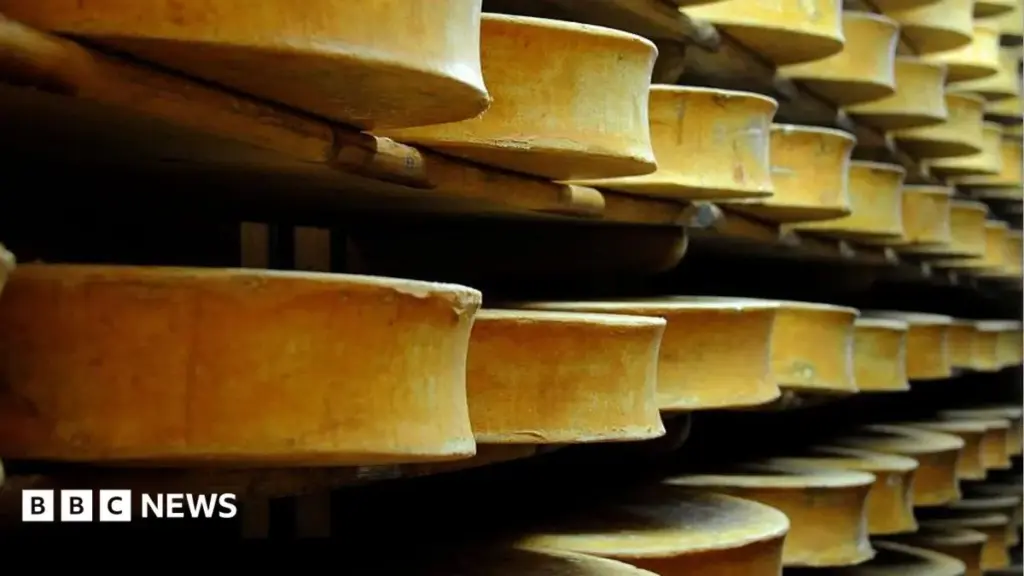
The first tangible relief arrived on Wednesday with the publication of official government decrees granting temporary dispensations to manufacturers of three titan cheeses of the eastern mountains: Abondance, Beaufort, and Comté. These legal instruments established the framework for emergency exemptions, allowing producers to deviate from strict geographic sourcing rules for animal feed.
Recognizing that the crisis was not isolated to the eastern ranges, the INAO quickly moved to expand these protections. Officials confirmed that a second wave of waivers was imminent, targeting a wider array of protected foods whose production cycles are deeply vulnerable to forage shortages. By late September, the list of beneficiaries had expanded to encompass structural pillars of French gastronomy, including Cantal, Bleu d’Auvergne, Fourme d’Ambert, Bleu du Vercors-Sassenage, Reblochon, and the delicate ewe’s milk cheese Rocamadour.
Beyond the dairy sector, the INAO’s emergency oversight committee approved temporary modifications for horticultural and viticultural products. Producers of specific regional ciders and Calvados from Normandy, Crémant d’Alsace sparkling wines, Poitou-Charentes lamb, and the prized Reine-Claude (Greengage) plums were all incorporated into the widening net of climate-induced regulatory relief.
Crucially, these measures are permitted under both French and European Union legal frameworks, which explicitly provide for "derogations" during periods of exceptional weather and natural disasters. A historical precedent for these actions was set during the punishing dry summer of 2022, which had previously forced authorities to implement similar, albeit less sweeping, flexibilities. However, agricultural experts note that the frequency and severity of these interventions are accelerating at an alarming pace.
Supporting Context & Metrics: The Anatomy of Terroir and the 2026 Drought
To fully understand the gravity of the INAO’s decisions, one must examine the socio-economic and cultural architecture of France’s designation system, as well as the quantitative reality of the environmental shocks currently testing it.
The Economic and Cultural Weight of AOP/AOC Labels
Certificates of origin are far more than mere marketing tools; they represent a legal pact between producers, the state, and the consumer. By guaranteeing that a wheel of Comté or a bottle of Calvados was produced using strictly defined methods within a precise geographic boundary, these labels allow farmers and artisans to command a premium price in domestic and international markets.
This premium is vital for the survival of rural economies in marginal agricultural zones where mass-production is impossible due to topography or climate. The concept of terroir asserts that the taste, texture, and quality of a foodstuff are inextricably bound to its place of origin—that the minerality of Jura soil, the specific grasses of Alpine meadows, and the inherited wisdom of generations of cheesemakers coalesce into a singular culinary expression that cannot be replicated anywhere else on Earth.
Quantifying the Crisis: The Anatomy of the Drought
The INAO has formally categorized the meteorological conditions as a "historic" drought, a designation backed by stark environmental metrics. Rainfall deficits in key agricultural regions exceeded 60% compared to historical averages over a three-month rolling window, while sustained heatwaves pushed evapotranspiration rates to maximum levels.
The impact on livestock feed was immediate and catastrophic:
- Abondance Production Parameters: Under normal regulatory conditions, makers of Abondance cheese in the Alps must ensure that their dairy herds derive at least 50% of their nutritional intake directly from local pastured grass. Under the new emergency decree, this requirement has been slashed by more than two-thirds, allowing producers to reduce pastured grass consumption to a mere 15%. Furthermore, farmers are legally permitted to import forage from outside their traditional zone and introduce supplementary feedstuffs.
- Comté Sourcing Adjustments: In the rugged terrain of the Jura mountains, dairy herds traditionally rely heavily on local green maize to maintain milk production and quality. The 2026 decrees authorize Comté producers to entirely replace local green maize with imported maize sourced from outside the designated AOP territory.
- Systemic Forage Deficits: Across the board, herds slated for milk production designated for Cantal, Reblochon, and other protected cheeses are consuming hay and silage hauled in from hundreds of kilometers away—a logistical and financial burden that directly undermines the local self-sufficiency model upon which the AOP system was built.
Official Statements and Stakeholder Perspectives
The implementation of these emergency waivers has triggered a complex debate among government regulators, agricultural syndicates, consumer advocates, and environmental scientists.
The Regulatory Perspective: Pragmatism over Dogma
Speaking on condition of anonymity, an official within the INAO emphasized that the decisions were made with a heavy heart but represented the only logical path forward to prevent absolute structural collapse in the affected sectors.
"The AOP system is the crown jewel of French agriculture, and we do not alter its rules lightly," the official stated. "However, rigidity in the face of an existential environmental crisis is not a defense of tradition; it is a recipe for destruction. Our primary duty is to ensure the survival of our farmers and the continuity of our agricultural enterprises. By offering these temporary, highly controlled flexibilities, we protect the producers today so they can return to traditional methods tomorrow—provided the climate permits."
Producer Reactions: Relief Tempered by Anxiety
Among farmers and cheesemakers, the government’s intervention has been met with a mixture of profound relief and deep-seated anxiety.
Jean-Luc Mercier, a third-generation Comté producer in the Jura region, described the summer as the most stressful period in his family’s farming history. "We watched our fields turn to ash by July. Without the authorization to bring in maize from outside, we would have had to liquidate half our herd. These rules saved our farm," Mercier said.
However, Mercier and his peers are acutely aware of the potential trade-offs. The introduction of non-local feed inevitably alters the metabolic input of the dairy cows, raising difficult questions about the sensory continuity of the final product. "We take immense pride in the fact that our cheese tastes of our mountains," Mercier added. "When you feed cows imported forage, you are altering the equation. We can only hope the consumer understands that this was an emergency measure to keep the tradition alive, not a permanent change in our recipe."
Consumer and Market Watchdogs
Food critics and market analysts are closely monitoring how these changes will manifest on store shelves. While the immediate focus has been on preventing supply chain shortages, experts point out that consumers paying top-euro for AOP-certified items expect an uncompromising standard of authenticity.
Nutritional and culinary researchers note that it will be fascinating—and perhaps alarming—to observe whether these adjustments lead to any detectable variations in the organoleptic properties (taste, aroma, texture, and color) of the cheeses, or if they trigger pricing volatility. Thus far, retail prices have remained relatively stable due to subsidized emergency logistics, but the long-term economic toll of importing feed from distant regions remains a looming threat to farm gate margins.
Future Outlook: The Twilight of Terroir?
As the immediate emergency of the summer drought recedes into the autumn cleanup, agricultural economists and climate scientists are stepping back to evaluate the broader, long-term implications of these regulatory dispensations. The core question facing France—and by extension the broader European Union’s robust geographical indication (GI) framework—is whether traditional food systems can survive in a permanently destabilized climate.
The Slippery Slope of "Temporary" Waivers
The most pressing concern among purists is that "temporary" measures run the risk of becoming permanent fixtures of agricultural policy as climate change intensifies. The 2022 drought required emergency interventions; the 2026 drought required even more sweeping dispensations. If severe summer droughts recur every two to three years—a scenario projected by numerous climatological models—the concept of a static, unyielding terroir becomes mathematically and ecologically untenable.
If farmers must routinely import feed from hundreds of kilometers away to keep their herds alive, the foundational premise that a cheese is exclusively the product of its hyper-local environment is eroded. Critics argue that repeatedly bending the rules threatens to devalue the AOP/AOC label itself, blurring the line between mass-produced industrial foodstuffs and artisanal heritage products.
Adaptation Strategies for the Agricultural Horizon
In response to these existential threats, agricultural researchers and progressive farming syndicates are already looking beyond temporary legislative fixes, exploring structural adaptations to future-proof French agriculture:
- Drought-Resilient Pasture Management: Agronomists are experimenting with new seed mixtures, introducing deep-rooting perennial grasses and heat-resistant legumes that can survive prolonged dry spells without artificial irrigation.
- Agroforestry Initiatives: Planting strategic tree cover across pastures to reduce soil evaporation, lower ambient temperatures for grazing herds, and protect delicate topsoils from wind and water erosion.
- Water Infrastructure Investment: Upgrading regional water retention systems and modernizing agricultural irrigation networks to ensure critical crops—such as green maize and alfalfa—can survive dry summers without depleting local aquifers.
- Appellation Boundary Evolution: In the most radical long-term scenarios, experts suggest that regulatory bodies may eventually need to redraw the geographic boundaries of AOP zones altogether, following cooler microclimates up into higher mountain elevations or northward as traditional low-altitude regions become too arid.
Conclusion
The emergency relaxation of France’s cheese and wine production rules is much more than a routine bureaucratic adjustment; it is a flashing warning light on the dashboard of global agriculture. It highlights the brutal friction point where centuries-old human traditions collide with twenty-first-century climate reality.
For now, the government’s pragmatic intervention has successfully rescued iconic producers from immediate ruin, preserving the livelihoods of rural communities and the immediate availability of the world’s most celebrated cheeses. Yet, the underlying challenge remains unresolved. As the climate continues to push the boundaries of historical weather patterns, France and the global culinary community must grapple with a sobering reality: preserving the spirit of terroir in a warming world will require not just bending the rules, but fundamentally reimagining how we cultivate, protect, and sustain our agricultural heritage for generations to come.