

Executive Overview
Australians have long prided themselves on an outdoor lifestyle deeply connected to nature, yet behind closed doors, a quieter ritual dominates daily life: an intense, often resource-heavy devotion to hot water. From lengthy, high-pressure morning routines to frequent, multi-shower days, domestic water habits are emerging as a major economic and environmental pressure point. According to a landmark national survey by the Water Conservancy, approximately 15% of Australians indulge in four or more showers a day, while nearly a third patronize the bathroom tap at least twice daily.
While these figures highlight a culturally ingrained standard of personal hygiene and comfort, they carry profound consequences. Water heating is currently the largest single source of greenhouse gas emissions within the average Australian home and ranks as the second-largest consumer of total household energy. With annual utility bills climbing well past $1,000 for homes reliant on legacy gas systems, the humble hot water heater has transitioned from a background appliance into a front-line battleground for cost-of-living relief and net-zero commitments.
Experts warn that households are missing out on thousands of dollars in potential savings due to a lack of awareness, inefficient fixtures, and panic-driven replacements when old systems fail. However, a combination of behavioral shifts, high-efficiency shower fixtures, and a systematic transition to heat pumps paired with rooftop solar could slash household energy and water expenses by up to 72%. As energy networks shift and federal and state governments ramp up targeted electrification incentives, the path toward a water-smart, financially resilient household has never been clearer—provided consumers are willing to rethink what it means to get into hot water.
Detailed Chronology: The Evolution of Australian Domestic Energy and Water Use
To understand how Australian households arrived at their current level of utility consumption, it is necessary to examine how residential building standards, energy pricing, and domestic technology have evolved over the past several decades.
The Era of Abundance (Late 20th Century)
For decades, Australia’s domestic infrastructure was built on an assumption of resource abundance and cheap fossil fuels. Coal-fired electricity and heavily subsidized natural gas fueled the rapid expansion of suburban housing developments. During this period, standard hot water systems relied on direct electrical resistance or continuous-flow natural gas. Little attention was paid to the volume of water consumed per minute, resulting in showerhead designs that prioritized brute-force flow rates—often exceeding 25 to 50 liters per minute—over efficiency. Homes were designed with the expectation that utility costs would remain a minor line item in the family budget.
The Millennium Drought and Early Conservation Policies (2000s–2010s)
The paradigm shifted abruptly with the onset of the Millennium Drought, which gripped much of Australia throughout the 2000s. Municipalities introduced strict water restrictions, compelling state governments and water authorities to overhaul plumbing codes. The introduction of the Water Efficiency Labelling and Standards (WELS) scheme in 2005 marked a critical turning point, establishing star ratings for showers, taps, and toilets. Consumers were introduced to water-saving fixtures for the first time, laying the groundwork for a cultural shift in how water scarcity was perceived, even if energy consumption linked to water heating lagged behind in public consciousness.
The Rise of Rooftop Solar and the Electrification Movement (2015–Present)
In the last decade, the mass adoption of residential rooftop solar panels transformed millions of Australian rooftops into localized power stations. Initially driven by lucrative feed-in tariffs, the focus quickly shifted toward "self-consumption"—using solar-generated electricity on-site rather than exporting it to the grid for meager financial returns. Concurrently, climate policy and soaring gas prices turned public attention toward home electrification. Researchers and energy consultants began identifying the hot water tank not merely as a passive appliance, but as a thermal battery capable of storing excess solar energy. Today, modern heat-pump technology and smart-grid integration represent the vanguard of a new era, positioning the hot water system as the cornerstone of the modern, low-emission Australian home.
Supporting Context & Metrics: Unpacking the Numbers
The scale of water and energy consumption associated with domestic hot water use reveals stark inefficiencies across the Australian housing stock.
The Anatomy of a Shower
Data from the Water Conservancy’s Turning off the tap: Inside Australia’s water-smart habits report highlights startling patterns in daily hygiene routines:
- High-Frequency Users: 15% of the population takes four or more showers daily.
- Frequent Users: Nearly 33% shower at least twice a day.
- Duration: The majority of showers last five minutes or longer, with 20% of the population lingering between 10 and 15 minutes.
- Volume: A single 15-minute shower can send up to 135 liters of treated water directly down the drain.
When multiplied across millions of households, these volumes place immense strain on municipal water treatment plants and energy grids alike. Water heating dominates household energy profiles, followed closely by baths, laundry cycles, and kitchen operations.
Financial Impacts and Geographical Disparities
Water and energy bills are dictated by a complex interplay of geographic location, local council tariffs, household size, and appliance age. According to researchers at the University of Technology Sydney, annual hot water costs frequently exceed $1,000 per household for properties tethered to traditional gas infrastructure.
Conversely, upgrading to high-efficiency, electric technologies can reduce those expenses by 72%. When integrated with rooftop solar installations, the operational cost of heating water can approach near-zero levels, insulating households from wholesale energy market volatility.
Official Statements & Expert Insights
Industry leaders, sustainability advocates, and engineering consultants agree that overhauling domestic water habits requires a two-pronged approach: immediate behavioral modifications paired with long-term technological upgrades.
The Low-Hanging Fruit: Fixtures and Flow Rates
Tim Forcey, an independent energy consultant and author of My Efficient Electric Home Handbook, emphasizes that upgrading physical hardware offers immediate relief without sacrificing comfort.
"I’ve been in homes where there might be a shower head using 25 liters a minute, and I’ve even measured as much as 50—it’s like standing under some sort of fire hydrant," Forcey observes. "These days you can have a nice shower with a shower head that’s using eight liters a minute, or maybe even four or less."
Forcey points to engineering solutions such as Methven’s Kiri Satinjet as examples of fixtures that maintain tactile luxury while drastically reducing water volume. For budget-conscious consumers, government-subsidized programs and aftermarket flow-restriction devices costing only a few dollars can achieve similar reductions.

Behavioral changes also yield compounding benefits. Rachael Wilkinson, a senior adviser at the Energy Efficiency Council, notes that minor adjustments across the board accumulate significant savings:
"Using cold water for washing clothes, washing your hands with cold water where practical, and keeping showers a little shorter can all help reduce hot water consumption."
Field trials conducted by the University of Queensland further demonstrate that modern shower timers utilizing traffic-light visual cues can successfully nudge families—particularly those with young children—toward shorter, four-minute showers, cutting indoor water use by 25% and energy consumption by up to 15%.
Beyond the bathroom, Helen Oakey, chief executive of sustainability advocacy group Renew, highlights the kitchen as another area ripe for optimization:
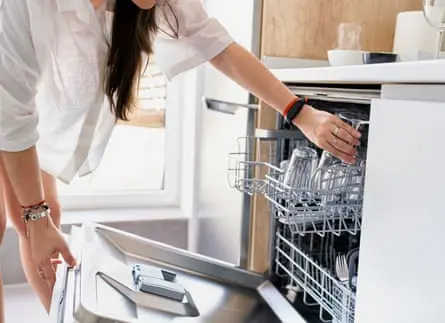
"Modern dishwashers can be more efficient on water and energy than hand washing in the sink—but you should make sure it’s stacked full before running it."
The Heat Pump Revolution
While behavioral adjustments help, energy experts argue that the most profound transformation occurs when households swap out fossil-fuel-reliant units for hot water heat pumps.
"Hot water heat pumps are also such an easy swap to make, there’s no behaviour change needed—you turn on the tap or shower and hot water comes out—it’s just costing you much less!" explains Lloyd Heathfield, solar and electrification programs lead at Yarra Energy Foundation. "A heat pump hot water system works much like a reverse-cycle air conditioner. Instead of creating heat directly, it collects heat from the surrounding air and transfers it into a tank of water."
Elaborating on the economic efficiency of these systems, Forcey notes that while heat pumps require electricity to run internal compressors and fans, their operational efficiency is unmatched:
"You can heat with a hot water heat pump for a third of the cost of using gas, and even a quarter or a fifth of the cost of using electric resistive hot water systems."
Future Outlook: Planning Ahead to Avoid the Midnight Breakdown
Despite the clear economic and environmental advantages of transitioning to efficient electric hot water systems, a major cultural hurdle remains: reactive purchasing behavior.
According to Helen Oakey, panic is the enemy of sustainability. When an old water heater ruptures—frequently occurring at the most inconvenient times, such as Christmas Eve—homeowners often default to replacing "like with like" in a frantic rush, thereby locking themselves into another decade of high energy bills and forfeiting potential government rebates.
Furthermore, homes connected to gas solely for hot water continue to incur daily network supply charges simply by maintaining the connection. Eliminating these dead-weight fees by transitioning entirely to an all-electric setup yields structural savings long before factoring in energy consumption.
Navigating Rebates and Digital Tools
To assist consumers in navigating the transition away from gas, federal and state governments have introduced robust subsidy frameworks. Specialized online planning utilities—such as Rewiring Australia’s Electric Saul calculator and the Victorian government’s Easy Electric SEC portal—allow homeowners to model projected financial savings and identify regional rebates before an emergency strikes.
Ultimately, experts urge Australian households to view their hot water systems not as disposable appliances, but as critical infrastructure investments. By auditing showerhead flow rates, embracing heat-pump technology, and synchronizing heating cycles with rooftop solar generation, consumers can reclaim control over their utility bills while easing the burden on municipal water reserves and the national energy grid.
As Forcey summarizes the urgency of proactive planning:
"Chances are it’s going to fail on Christmas Eve, or it’s going to fail when you’re standing in the shower. It’s difficult to make a sensible decision when you are cold, wet and naked."



