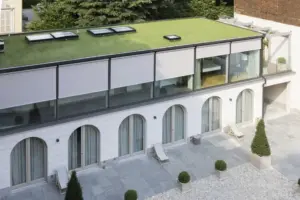
Amid the rapid, sweeping urban and economic transformations reshaping modern Uzbekistan, a quiet yet profound architectural revolution is taking place. At the vanguard of this movement is ARC Architects, an innovative practice founded in 2017 by architect Bobir Klichev. Emerging from the historic and culturally rich architectural community of Bukhara—and maintaining dual offices in both Bukhara and the capital city of Tashkent—the studio has carved out a distinct niche by marrying contemporary minimalism with deep-rooted ethnic and regional references.
Rather than succumbing to pastiche or thoughtlessly replicating the surface aesthetics of historical Uzbek architecture, ARC Architects engages in a rigorous intellectual and spatial exercise. They seek to understand how centuries-old heritage can be authentically reinterpreted for the demands of the 21st century. Their portfolio, which includes notable projects such as the Mercure Bukhara Old Town Hotel, the Kanishka Start Store, the SUZANI by Madina Kasimbaeva Museum, and private residential ventures like Country House KK-1234, demonstrates a rare ability to bridge the gap between historical memory and physical matter.
This in-depth feature explores the philosophy, evolution, and spatial strategies of ARC Architects, shedding light on how they navigate Uzbekistan’s complex architectural identity—a tapestry woven from ancient Silk Road heritage, Soviet-era modernism, and contemporary globalization.
Detailed Chronology: The Evolution of ARC Architects
To fully comprehend the design ethos of ARC Architects, one must trace the studio’s trajectory from its inception in the ancient city of Bukhara to its current status as a nationally recognized practice operating across the cultural and political hubs of Uzbekistan.
2017: Genesis in the Shadow of History
Founded by Bobir Klichev in 2017, ARC Architects was born within a city that wears its history on every street corner. Bukhara, a UNESCO World Heritage site, is renowned for its intact medieval urban fabric, characterized by monumental madrasas, intricate brickwork, domed bazaars, and introverted residential courtyards.
Klichev and his early collaborators recognized that establishing a modern architectural practice in such a context presented a unique set of challenges and responsibilities. The local architectural community was heavily anchored in preservationism, yet the city was undeniably growing and demanding new typologies—commercial spaces, hospitality venues, and contemporary residences—that could serve a transitioning economy. ARC Architects positioned itself at this exact intersection: dedicated to respecting the past while fiercely committed to contemporary architectural expression.
2018–2020: Defining a Contextual Vocabulary
During its formative years, the studio focused on smaller-scale commercial and retail interventions, allowing the team to refine a material palette that balanced raw minimalism with tactile, local craftsmanship. Projects from this era tested the limits of how traditional Uzbek textures—such as sun-baked brick, patterned plaster, and timber screens (panjara)—could be translated into clean, modern lines.
By experimenting with light, shadow, and spatial compression and release, the firm began to articulate a design language that felt entirely native to Central Asia yet entirely global in its minimalist rigor. This period also marked the expansion of the firm’s operational footprint, leading to the establishment of their secondary office in Tashkent, Uzbekistan’s sprawling, modernist-infused capital.
2021–2024: Scaling Up and Typological Diversification
As the firm matured, its commissions grew in scale and complexity. Moving beyond boutique retail spaces, ARC Architects began tackling hospitality and cultural architecture. Projects like the Mercure Bukhara Old Town Hotel allowed the studio to test its theories on a much larger urban and functional scale, negotiating the delicate boundaries between historic preservation zones and modern tourist infrastructure.
Concurrently, museum and cultural projects, such as the SUZANI by Madina Kasimbaeva Museum, provided platforms to explore indigenous textile arts and craft traditions through spatial design. These buildings acted as physical archives where memory, materiality, and exhibition design merged seamlessly.
2025–Present: A Mature Voice in Central Asian Modernism
Today, ARC Architects stands as a leading voice in contemporary Central Asian architecture. With an established presence in both Bukhara and Tashkent, the firm navigates the dual realities of Uzbekistan: the ancient, human-scaled, introspective urbanism of the Silk Road oases, and the monumental, grid-like, grid-breaking modernism of the Soviet era. Their ongoing work continues to challenge architects across the region to look beyond imported Western or East Asian tropes and instead discover inspiration in the layered, resilient material culture of Central Asia.
Supporting Context & Metrics: The Architectural Ecosystem of Uzbekistan
To understand the weight of ARC Architects’ work, one must examine the broader historical and physical environment in which they operate. Uzbekistan’s architectural landscape is defined by three major layers: the ancient Silk Road heritage, the mid-20th-century Soviet modernization, and the contemporary post-independence development boom.
For centuries, cities like Samarkand, Khiva, and Bukhara served as the beating hearts of international trade, intellectual exchange, and Islamic architecture. The built environment of these historic centers was shaped not only by aesthetic ideals but by harsh climatic realities—scorching summers with intense solar radiation and cold, biting winters.
Key urban and architectural typologies included:
The Inner Courtyard (Hovli): Serving as the private oasis of the family home, the courtyard provided natural ventilation, acoustic isolation, and microclimate regulation.
Narrow, Shaded Street Networks (Ko‘cha): Designed to create wind tunnels and cast deep shadows, keeping pedestrians cool during peak desert temperatures.
Load-Bearing Brick and Massive Walls: Providing high thermal mass that absorbed heat during the day and radiated it slowly during cool desert nights.
ARC Architects frequently draws upon these passive design strategies, translating ancestral vernacular knowledge into contemporary spatial configurations. Rather than relying entirely on energy-intensive mechanical climate control, their residential and hospitality designs reintroduce the spirit of the courtyard, deep overhangs, and perforated screens that filter harsh sunlight while maintaining airflow.
Navigating the Legacy of Soviet Modernism
In addition to ancient heritage, Uzbekistan—particularly Tashkent—harbors a remarkable collection of Soviet Modernist architecture constructed following the devastating 1966 earthquake. Buildings from this era feature a unique hybrid of modernist concrete forms and traditional Central Asian decorative motifs (such as ceramic tiles, geometric brise-soleils, and motifs derived from Suzani embroidery).
While many post-independence developments across Central Asia have threatened or erased these modernist layers, firms like ARC Architects recognize the value of this hybrid heritage. Their work exists in constant dialogue with both the pre-Islamic/Islamic past and the mid-century structural experimentations of the Soviet era, viewing history not as isolated epochs, but as a continuous, overlapping continuum.
Official Statements & Design Philosophy
The theoretical underpinnings of ARC Architects can be unpacked through the studio’s core manifestos regarding materiality, memory, and spatial autonomy.
Reinterpreting Heritage Without Pastiche
In statements regarding their design methodology, the studio has consistently rejected the temptation to create superficial replicas of historical monuments. Bobir Klichev and his team argue that true respect for heritage lies in critical reinterpretation rather than literal imitation.
"Architecture in Uzbekistan cannot simply look backward, nor can it wipe the slate clean and adopt placeless global glass boxes," design discussions from the studio suggest. "Our task is to extract the spatial DNA of our ancestors—how they handled light, privacy, community, and climate—and translate those principles into the tectonic language of today."
The Dialogue Between Memory and Matter
The title of the studio’s recent body of work—Between Memory and Matter—encapsulates their fundamental dualism.
Memory represents the intangible cultural heritage, collective urban psychology, historical narratives, and traditional ways of dwelling unique to Central Asia.
Matter represents the physical reality of construction: concrete, raw brick, steel, glass, and local plaster.
By grounding intangible cultural memory into heavy, tactile, honest material expression, ARC Architects crafts spaces that feel permanent yet profoundly modern. Their buildings do not shout for attention through flamboyant geometries; instead, they whisper through proportion, shadow play, and material integrity.
Key Projects Spotlight
To understand how these philosophies manifest in the built environment, one can examine several landmark projects by ARC Architects:
1. Mercure Bukhara Old Town Hotel
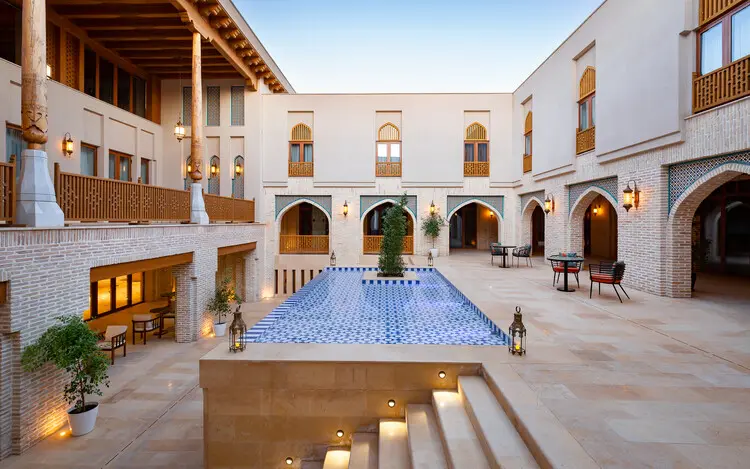
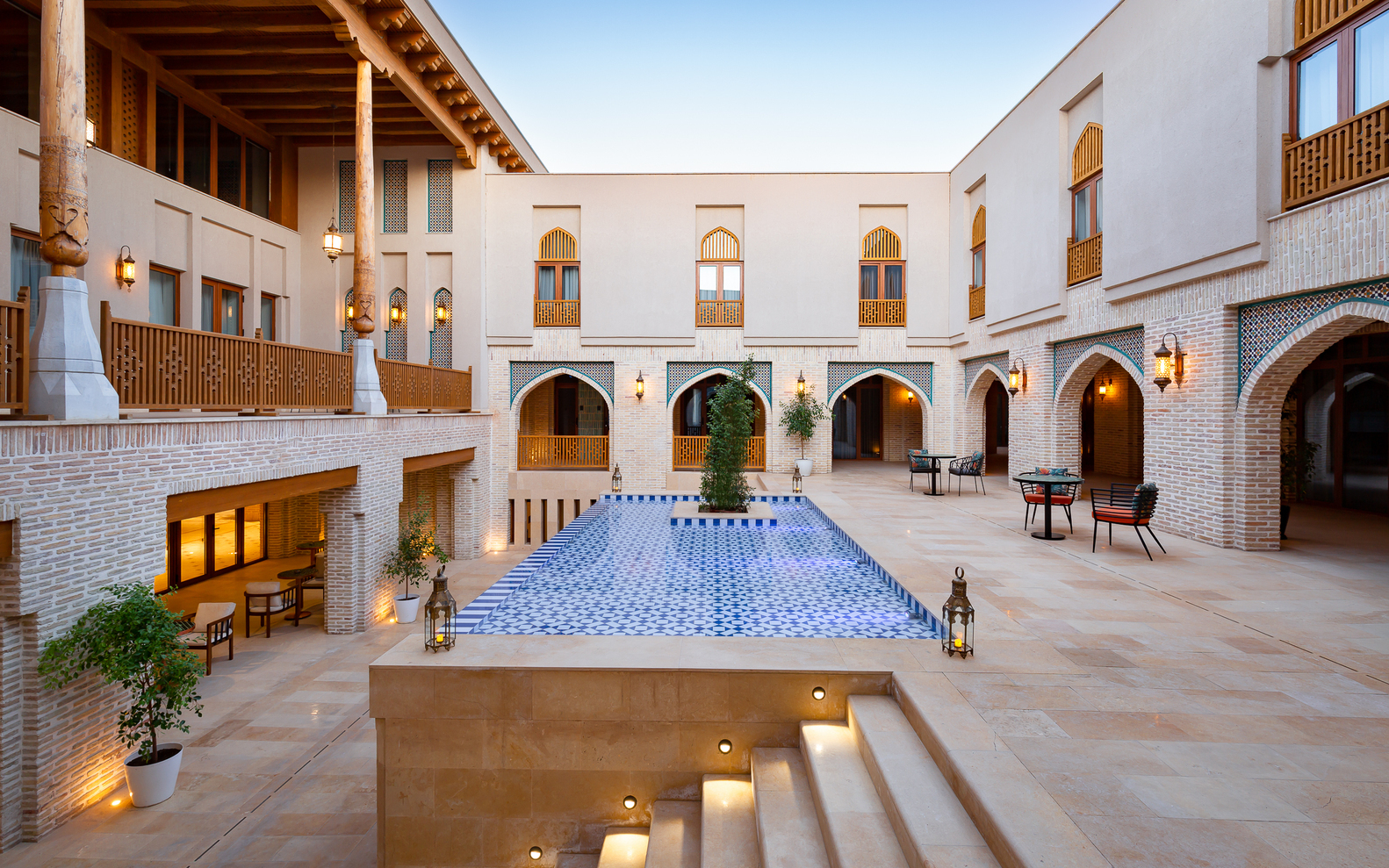
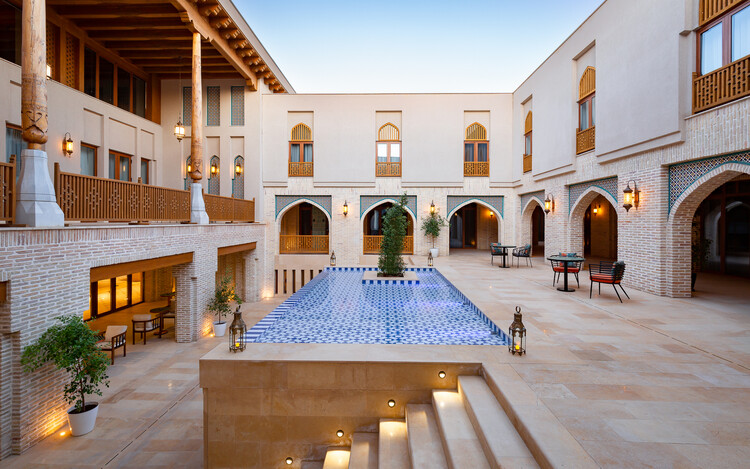
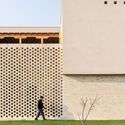
Located in the historic heart of Bukhara, this hospitality project required an extraordinarily delicate touch. Rather than imposing a foreign corporate hotel typology onto the medieval cityscape, ARC Architects designed a structure that respects the scale, color palette, and rhythmic massing of the surrounding old town. The hotel integrates traditional courtyard typologies and local brickwork textures, ensuring that international travelers experience a modern luxury that is undeniably anchored in Bukharan vernacular culture.
2. SUZANI by Madina Kasimbaeva Museum
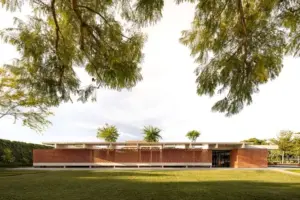
Dedicated to the preservation and celebration of traditional Uzbek embroidery (suzani), this museum project required a spatial framework that would allow intricate textile art to take center stage. ARC Architects utilized clean, minimalist white and neutral interior surfaces acting as a quiet canvas, allowing the vibrant reds, golds, and deep indigos of the historic textiles to resonate powerfully within the space. The architecture steps back, serving as a respectful vessel for cultural preservation.
3. Kanishka Start Store
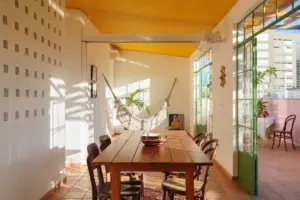
A testament to the firm’s versatility across scales, the Kanishka Start Store demonstrates how retail design can break away from sterile commercialism. By employing raw industrial finishes balanced with warm, localized material touches, the store creates an immersive spatial experience that elevates the retail journey into a cultural encounter.
4. Country House KK-1234
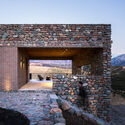
This private residential project explores the potential of contemporary domestic architecture in Uzbekistan. Reimagining the traditional introverted courtyard house for a contemporary family, Country House KK-1234 balances complete privacy from the outside world with sweeping, light-filled internal connections to nature, water elements, and landscaped gardens.
Future Outlook: The Road Ahead for Central Asian Architecture
As Uzbekistan continues to open its economy, modernize its infrastructure, and welcome a surge in international tourism and investment, the role of architects becomes increasingly critical. The risk of generic, placeless globalization—characterized by mirrored glass towers and placeless suburban sprawl—looms large over Tashkent, Samarkand, and Bukhara.
In this climate, practices like ARC Architects provide a vital counter-narrative. By demonstrating that contemporary design can be deeply local, environmentally responsive, and intellectually rigorous, they are setting a new benchmark for Central Asian architecture.
Looking forward, the studio aims to expand its research-driven approach to larger urban planning initiatives, exploring how historical density and community-centric urban fabrics can inform the sustainable growth of modern Uzbek cities. As they continue to navigate the tension between memory and matter, ARC Architects is not merely designing buildings; they are actively authoring the next chapter of Uzbekistan’s rich, enduring architectural story.