By the Investigative Desk
Published in partnership with environmental data analysts and carbon market specialists.
Executive Overview
Microsoft’s appetite for carbon removal far outstrips that of any other corporate entity in the global marketplace. According to comprehensive data from carbon market analytics provider CDR.fyi, the technology giant has purchased an astonishing five times more carbon removal credits than the next ten largest corporate buyers combined. This unmatched market footprint has positioned Microsoft not merely as a participant, but as a principal architect of the evolving voluntary carbon removal market.
Beyond its sheer financial volume, Microsoft has earned a reputation for open-sourcing its internal learnings, sharing methodological frameworks, and aggressively collaborating on standardization for an industry long plagued by transparency issues. In its most recent strategic disclosure, the corporation outlined the precise operational, ecological, and economic motivations that led it to contract just over 6 million removal credits across four distinct portfolios. These projects span diverse ecosystems and industrial methodologies, including forestry, regenerative agriculture, and bioenergy with carbon capture and storage (BECCS).
However, this massive accumulation of removal assets unfolds against a backdrop of intense corporate scrutiny. While Microsoft races to establish rigorous guardrails against market fraud—such as implementing dynamic baselines, advanced monitoring technologies, and strict biomass sourcing rules—its internal emissions continue to surge. Driven by the explosive global buildout of data centers required to power artificial intelligence and hyper-scale cloud infrastructure, Microsoft’s overall greenhouse gas emissions jumped 25% in a single recent reporting cycle.
This deep-dive investigation examines the core takeaways from Microsoft’s latest carbon procurement strategy, analyzes how the company is attempting to rewrite the playbook on market integrity, and evaluates whether these multi-million-ton investments will ultimately be enough to secure its 2030 goal of becoming a net-negative carbon enterprise.
Detailed Chronology: How Microsoft Shaped the Modern Carbon Market
To understand Microsoft’s current standing as the undisputed titan of corporate carbon removal, it is necessary to trace the chronology of its climate commitments over the past half-decade.
- January 2020: Microsoft makes a watershed corporate climate pledge, announcing its target to become carbon-negative by 2030. The company vows not only to neutralize its direct and indirect emissions but to systematically remove historical emissions dating back to its founding in 1975 by the year 2050.
- 2021–2022: Recognizing that the existing voluntary carbon market (VCM) lacks the permanence, measurement rigor, and volume required for its multi-decade goals, Microsoft pivots from passive purchasing to active market-making. It issues Requests for Proposals (RFPs), signaling to project developers that it is willing to pay premium prices for high-quality, permanent removals.
- 2023: As scandals rock the broader voluntary carbon market—exposing inflated baselines and "phantom credits" in nature-based portfolios—Microsoft intensifies its focus on methodological transparency. It begins publishing detailed white papers and collaborating with scientific bodies like Carbon Direct to establish robust verification standards.
- 2024: The company expands its technological and nature-based portfolio dramatically. Major contracts are secured, including a 1-million-credit agreement with Ørsted for the Avedøre Power Station BECCS project near Copenhagen, and a 2.9-million-credit deal with Indigo Carbon focused on regenerative soil practices.
- 2025–Present: Microsoft reveals it has contracted for an unprecedented 45 million tons of total removals to support its long-term trajectory. Yet, the parallel explosion of generative AI workloads causes its operational emissions to spike by 25%, complicating the straightforward math of its 2030 climate equation.
Supporting Context & Metrics: Deconstructing Microsoft’s Methodological Guardrails
Several of the scandals that have roiled carbon markets in recent years have been linked to fundamental problems with baselines—theoretical estimates of what would have happened if a specific climate project had never existed. Developers use these baselines to calculate the quantity of credits they are permitted to issue and sell.
In a traditional reforestation project, for example, the baseline depends in part on the extent to which a specific tract of land would naturally absorb carbon in the absence of human intervention. If baselines are unrealistically low, projects can issue far more credits than the environment actually captures, rendering the associated corporate climate claims mathematically invalid.
To systematically eliminate these vulnerabilities, Microsoft’s recent procurement strategy leans heavily into advanced verification protocols, dynamic accounting models, and stringent supply chain guardrails.
1. The Implementation of Dynamic Baselines
To avoid static and easily manipulated baseline projections, the nature-based solutions highlighted in Microsoft’s recent disclosures deploy "dynamic baselines" that are continuously updated over time.
- Case Study (Brazil): In a major reforestation project managed by developer Mombak in Brazil, the baseline is not locked in at the time of project initiation. Instead, developers adjust the baseline dynamically by continuously monitoring control areas that are representative of pre-project ecological and climatic conditions.
- Case Study (Sustainable Timber): For commercial forestry and sustainable timber initiatives, Microsoft mandates dynamic baselines that actively track shifting macroeconomic policy, regional land-use pressures, and evolving market conditions to ensure that carbon credits reflect genuine, addition-driven storage.
2. "Measure and Model" Verification Frameworks
Another historical flaw in carbon project execution is the "black box" syndrome: buyers purchase credits with little to no visibility into what is actually occurring on the ground. Earlier this year, investigative reporting by Bloomberg into carbon projects in China revealed numerous instances of projects that were entirely unbuilt, or lacking the basic emissions-control hardware they claimed to be operating.
To counteract this informational asymmetry, modern developers must deploy a sophisticated suite of empirical technologies.
- Regenerative Agriculture: Through its contract for 2.9 million credits with Indigo Carbon—a developer working to help farmers implement soil health practices such as cover cropping and reduced tillage—Microsoft relies on a "measure and model" approach. This methodology cross-references physical soil core samples with advanced biogeochemical computer modeling and rigorous third-party verification.
- Aerial and Satellite Surveillance: In its Brazilian forestry investments with Mombak, developer teams utilize high-resolution drone fleets and satellite remote sensing to survey canopy health, biomass accumulation, and soil integrity in real time.
3. Selective Sourcing and Industrial Biomass Guardrails
Industrial removals that rely on biomass—such as Bioenergy with Carbon Capture and Storage (BECCS)—carry inherent ecological risks. If not managed with extreme care, the demand for biomass can incentivize destructive practices, such as clear-cutting ancient forests or converting native grasslands into industrial energy crop plantations, thereby negating the climate benefits of capturing the resulting emissions.
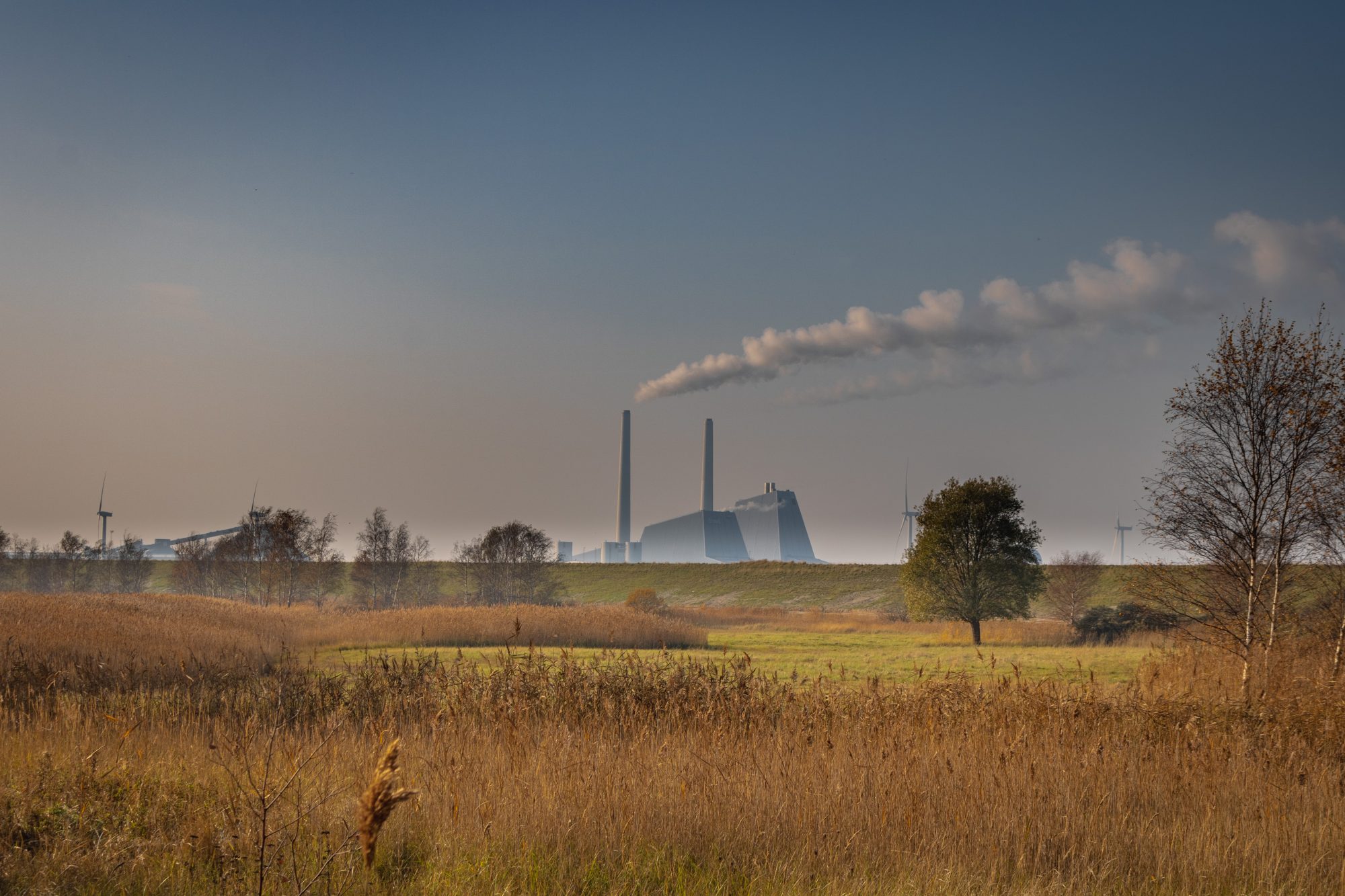
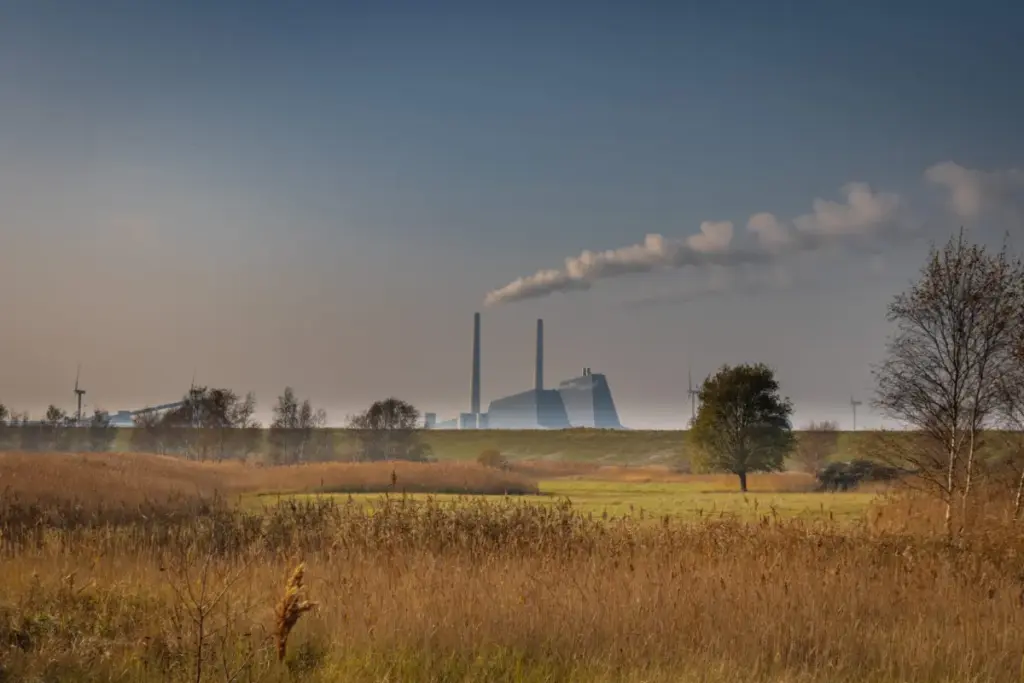
In 2024, Microsoft contracted for 1 million removal credits from the Avedøre Power Station near Copenhagen. The facility burns agricultural crop residues rather than virgin timber, and the resulting emissions are captured and permanently sequestered deep underground via equipment installed by energy firm Ørsted.
To ensure this model is scalable and safe, Microsoft ensured that the Danish regulations governing the project align closely with the sustainable biomass sourcing guidelines published by carbon management firm Carbon Direct—guidelines developed with direct technical backing and financial support from the tech giant itself.
Official Statements and Industry Discourse
The tension between corporate climate ambition and the harsh operational realities of the digital economy has sparked intense debate among environmental scientists, tech executives, and market analysts.
"We cannot scale what we cannot measure, and we cannot trust what we cannot verify," noted representatives from Microsoft’s Energy and Sustainability team in recent technical white papers outlining their procurement criteria. "Our goal in sharing these operational learnings is to lift the entire carbon removal ecosystem, establishing a gold standard for transparency that protects both buyers and host communities."
Independent market analysts have praised Microsoft’s willingness to openly discuss the imperfections of its portfolio. Jim Giles, Vice President and Editor-at-Large at Trellis Group, points out that the corporation’s aggressive market posture is driving much-needed structural evolution:
"Microsoft is effectively acting as the central bank of the voluntary carbon market. By demanding dynamic baselines and rigorous measure-and-model verification, they are forcing project developers to abandon the opaque, low-integrity practices of the past. However, the sheer velocity of their internal emissions growth illustrates that carbon purchasing can never be a substitute for direct operational decarbonization."
Carbon market watchdogs emphasize that while Microsoft’s procurement standards represent a massive leap forward, the lack of uniform global regulation still leaves room for systemic discrepancies. Organizations like Carbon Direct stress that corporate buyers must remain vigilant, treating carbon credits as a complementary tool for hard-to-abate emissions rather than a license to expand fossil-fuel-reliant operations unchecked.
Future Outlook: Will Microsoft Hit Its 2030 Net-Negative Goal?
In its 2024 and 2025 corporate sustainability reports, Microsoft explicitly estimated that it would need to retire close to 6 million carbon removal credits in the year 2030 to achieve its overarching corporate goal of becoming fully carbon-negative.
According to its latest comprehensive sustainability disclosure published in July, that foundational goal remains officially unchanged. Furthermore, the company noted that it has contracted for an extraordinary 45 million cumulative tons of removals over future delivery windows to support this trajectory.
However, the path forward is riddled with unprecedented headwinds:
- The AI Emissions Surge: In the exact same reporting cycles where its carbon removal contracts expanded, Microsoft’s absolute greenhouse gas emissions jumped by 25%. This surge was driven by an unprecedented capital expenditure cycle aimed at constructing massive, power-hungry data centers to support generative artificial intelligence and cloud computing products.
- The Moving Mathematical Target: Because the company’s baseline emissions have risen significantly faster than initially projected, the actual volume of credits required to achieve net-negative status by 2030 is almost certainly far greater than the original 6-million-credit estimate. Notably, an updated numeric calculation reconciling this expanded emissions footprint with its 2030 target was conspicuously absent from the most recent sustainability report.
- Supply Chain Bottlenecks: Even with Microsoft’s immense balance sheet, the physical infrastructure required to scale permanent carbon removal—ranging from direct air capture (DAC) facilities to large-scale geological storage hubs—is maturing at a slower rate than corporate demand.
Conclusion
Microsoft’s carbon strategy is a study in corporate paradox. On one hand, the company is serving as an enlightened market maker, funding high-integrity projects, establishing rigorous baseline standards, and pioneering transparency in an industry desperately in need of reform. On the other hand, its core business operations are expanding into energy-intensive domains that threaten to outpace even its heroic carbon removal acquisitions.
As the 2030 deadline fast approaches, Microsoft’s ultimate climate success will depend not only on the sophistication of its carbon credit portfolio, but on its ability to fundamentally decouple artificial intelligence growth from fossil-fuel-dependent power grids. Until that decoupling occurs, the tech giant will find itself engaged in a high-stakes race against its own digital footprint.