Executive Overview
The United States green energy sector absorbed another profound shock in September, as private enterprises collectively scrapped or drastically scaled back nearly $1.6 billion worth of major factory and clean energy infrastructure projects. According to the latest monthly market analysis published by E2 (Environmental Entrepreneurs) and the Clean Economy Tracker, this single-month contraction pushes the cumulative total for private-sector project cancellations past the $24 billion threshold for the year.
The casualties are not merely spreadsheet losses; they represent thousands of high-tech manufacturing jobs, localized economic stimulation, and a foundational blow to America’s geopolitical competitiveness in the burgeoning green economy. From electric vehicle (EV) assembly lines in the Midwest to advanced battery manufacturing plants in the South, the clean energy pipeline is experiencing unprecedented friction. Compounding these private pullbacks, federal backing has simultaneously retreated, with the U.S. Department of Energy (DOE) pulling the plug on nearly $8 billion in funding across more than 200 federally supported projects nationwide.
Paradoxically, geospatial and political analyses reveal a striking irony: Republican-led districts, which ostensibly align with the political currents scaling back these federal initiatives, have borne the heaviest economic brunt. As capital retreats overseas and the U.S. risks ceding its leadership role in industries of the future, industry stakeholders, labor unions, and policy analysts are sounding the alarm over what they view as a self-inflicted industrial slowdown.
Detailed Chronology: The Anatomy of September’s Pullbacks
The month of September marked a dark inflection point for America’s industrial transition. Four monumental battery, energy storage, and electric vehicle production facilities spread across Kansas, Michigan, North Carolina, and Tennessee were formally abandoned or significantly downsized, erasing over 3,000 direct green-collar jobs in a span of thirty days.
The General Motors Realignment
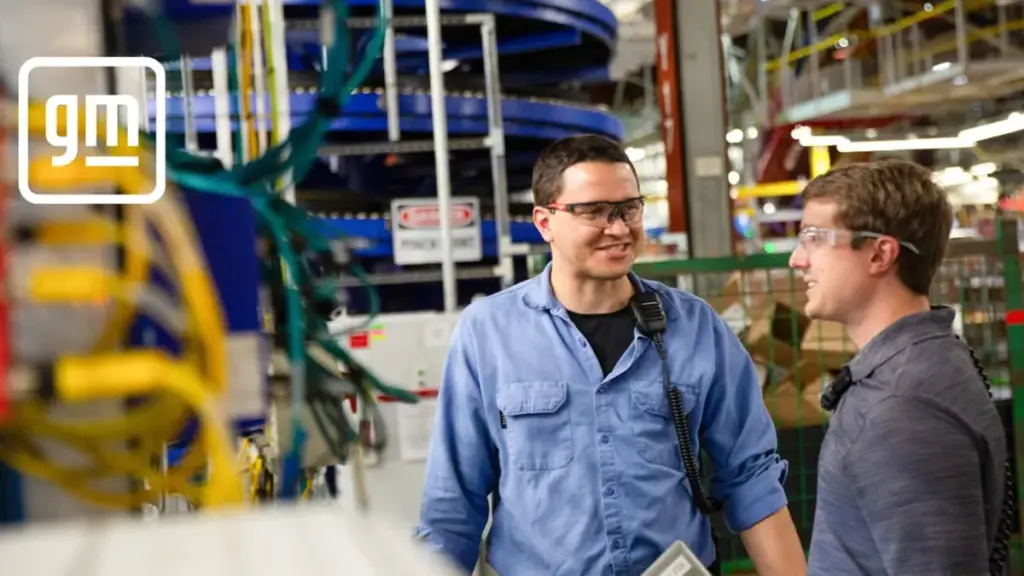
General Motors, once viewed as an aggressive pacesetter in the legacy automaker race to electrify, accelerated its strategic retreat by reducing operations across two key EV production lines situated in Tennessee and Kansas. The retrenchment resulted in the immediate elimination of 1,600 jobs. This move reflects a broader industry-wide recalibration as automakers grapple with slower-than-projected consumer adoption curves, shifting regulatory frameworks, and compressed profit margins on early-generation EV architectures.
Natron Energy’s Double Blow
The impact on the domestic energy storage supply chain was equally severe. Sodium-ion battery pioneer Natron Energy announced the abrupt closure of its freshly established $40 million manufacturing plant in Michigan, resulting in 150 layoffs. Simultaneously, the company pulled out of plans to construct a massive $40 million—subsequently corrected in market analysis tracking to a $1.4 billion—megafactory in North Carolina. That single canceled facility would have injected 1,000 high-paying clean tech manufacturing jobs into the regional economy, serving as a pillar for the state’s burgeoning green corridor.

When aggregated, September’s bloodletting brought the total number of private clean energy jobs wiped out in 2025 alone to nearly 21,000. These cancellations are particularly disruptive because advanced manufacturing plants cannot simply be paused; the specialized equipment, localized supply chains, and trained engineering talent take years to assemble, and their sudden dispersal leaves deep scars in local communities.
Supporting Context & Metrics: The Broad Economic Toll
To fully comprehend the gravity of the September figures, one must examine the broader trajectory of clean energy investments since the passage of landmark federal legislation in August 2022.
The Post-2022 Boom and Subsequent Correction
In the wake of federal clean energy tax credits and legislative incentives introduced under the Biden administration, the United States witnessed a historic manufacturing renaissance. Across 42 states and Puerto Rico, corporations announced 415 major clean energy projects representing a staggering $135 billion in planned capital expenditure and an estimated 125,000 permanent, high-paying jobs.
However, market headwinds, shifting policy expectations, and macroeconomic pressures have eroded those gains. Out of those 415 initial announcements, 65 projects have now been formally canceled, closed, or significantly scaled back. The vulnerability of this pipeline is underscored by the timeline: 42 of those 65 failures occurred during the course of 2025 alone, coinciding with a shift in the federal political landscape and increased skepticism surrounding state-backed green incentives. These 2025 casualties alone have vaporized roughly $27 billion in private investments and approximately 30,000 jobs.
The Federal Funding Void
Compounding the private sector’s woes is a dramatic contraction in federal support. E2’s figures focus exclusively on private-sector capital movements, entirely omitting actions taken by the federal government. Yet, the U.S. Department of Energy’s recent cancellation of nearly $8 billion in funding for over 200 federally supported clean energy projects nationwide represents a parallel shockwave. When public seed money and grants evaporate, downstream private co-investments often collapse with them, creating a cascading effect across regional economies that rely on public-private partnerships to kickstart capital-intensive green initiatives.
The Political Geography of Loss
Perhaps one of the most compelling dimensions of the E2 and Clean Economy Tracker analysis is its breakdown of where these losses are landing geographically and politically.

Conventional wisdom might suggest that green energy rollbacks would disproportionately impact progressive, Democratic-leaning districts that traditionally champion environmental policies. However, the data paints an entirely different picture:
- Republican-led Congressional Districts: Have suffered the most severe financial and employment blows, losing over $12.4 billion in private-sector investments and nearly 15,000 jobs throughout 2025.
- Democratic-led Congressional Districts: Have experienced comparatively lower, though still substantial, losses totaling about $7.5 billion and roughly 5,000 jobs.
This geographic disparity highlights an ironic market dynamic: many of the rural and semi-urban districts that elected representatives hostile to federal green subsidies were simultaneously selected by multinational corporations as ideal, low-cost locations for massive battery plants and EV facilities. As those projects are now being shelved, the economic fallout is being felt most acutely in the heartland communities that could least afford the loss of tax base and employment opportunities.
Official Statements and Industry Perspectives
The policy and economic ramifications of these trends have elicited sharp reactions from industry advocates, labor organizations, and economic analysts alike.
Michael Timberlake of E2 did not mince words when assessing the broader implications of the September data release:
"The loss of these projects isn’t just a setback for clean energy — it’s a setback for America’s workers and competitiveness. For every canceled factory or downsized plant, many more projects aren’t even being announced at all as more capital flees and businesses look overseas to invest instead. That means fewer paychecks, less local investment, and fewer opportunities for US workers to lead in the industries of the future."
Timberlake’s warning touches on a foundational anxiety within the American industrial base: the risk of capital flight. In the global race for climate tech dominance, international competitors—most notably China and the European Union—are doubling down on state-backed industrial policies. If regulatory predictability and financial incentives wane in the United States, multinational conglomerates are increasingly willing to reallocate their balance sheets toward jurisdictions offering long-term stability.

Furthermore, labor representatives have expressed deep frustration over the human cost of these corporate pivots. Workers who enrolled in specialized training programs, moved across state lines, or transitioned out of fossil-fuel-dependent industries find themselves on the receiving end of sudden layoffs. The volatility shakes institutional trust and complicates efforts to build a resilient, domestic workforce capable of servicing advanced technological manufacturing.
Future Outlook: Silver Linings and the Horizon
Despite the pervasive gloom dominating the industrial landscape through the third quarter of 2025, the transition to a low-carbon economy has not ground to a complete halt. Pockets of resilience—and even growth—persist, driven by distinct macroeconomic forces.
The AI Infrastructure Boom
Even as traditional EV and consumer-facing battery sectors take a beating, September did register approximately $542 million in new clean energy investments. Intriguingly, these new capital allocations are heavily concentrated in specialized segments:
- EV and Solar Component Manufacturing: Specialized, high-margin supply chain components continue to attract venture and private equity backing.
- Grid Infrastructure Supporting AI Data Centers: The exponential power demands of artificial intelligence and large-scale data centers have forced tech giants and utility providers into aggressive procurement cycles for clean, reliable power. Grid modernization and localized zero-emission energy generation tied to data center campuses have effectively insulated certain clean energy subsections from broader market declines.
The End of an Era for Solar Incentives
As the broader market navigates these turbulent waters, localized consumer choices are also facing a critical deadline. Financial advisors and clean energy advocates are heavily promoting the impending expiration of the 30% federal residential solar tax credit at the close of 2025. Platforms like EnergySage report an influx of homeowners scrambling to lock in pre-vetted installations to capture the remaining credits before legislative changes take full effect.
Looking Ahead
The trajectory of the U.S. clean energy sector for the remainder of the decade hinges heavily on regulatory clarity and market stability. While the loss of $24 billion in private projects and $8 billion in federal grants throughout 2025 represents an undeniable structural setback, the foundational mechanics of the global energy transition remain intact.
Whether the United States can recover its competitive momentum or whether capital will permanently migrate to more predictable international markets remains the defining economic question of the decade. For now, American workers, municipal leaders, and industry executives are left waiting for a signal of stability in an increasingly unpredictable industrial sea.