In an era defined by rapid computational power, artificial intelligence, and global ecological urgency, modern biodiversity science relies as much on centuries-old parchment as it does on satellite telemetry and genomic sequencing. Recognizing that humanity’s collective knowledge of the natural world is cumulative, the prestigious Senckenberg Gesellschaft für Naturforschung officially joined the Biodiversity Heritage Library (BHL). This landmark integration links centuries of irreplaceable European natural history literature—including rare, foundational texts by pioneering entomologist Maria Sibylla Merian—directly into the world’s largest open-access digital repository for biodiversity literature.
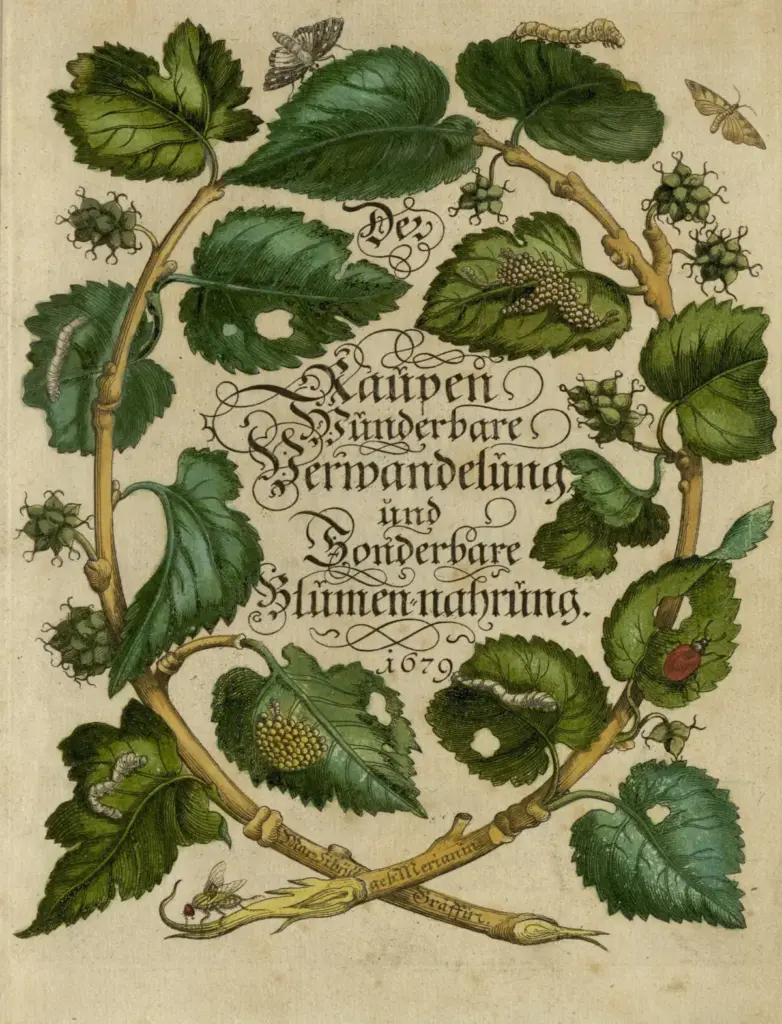
For nearly 350 years, works like Merian’s 1679 masterpiece, Der Raupen wunderbare Verwandelung, und sonderbare Blumennahrung (The Wonderful Metamorphosis and Strange Plant-Food of Caterpillars), have served as critical touchstones for species descriptions, ecological baselines, and taxonomic nomenclature. By contributing carefully curated, specialized library holdings from institutions distributed across Germany—including the world-renowned Senckenberg German Entomological Institute in Müncheberg—Senckenberg is doing far more than simply digitizing old books. This partnership transforms static historical publications into dynamic, machine-readable structured data.
Through semantic enrichment, text-mining technologies, and Linked Open Data (LOD) initiatives, historical legacies are systematically woven into modern scientific infrastructures. This integration directly empowers taxonomists, evolutionary biologists, and cutting-edge artificial intelligence systems to synthesize multi-century datasets. As global ecosystems face unprecedented threats from climate change and biodiversity loss, bridging the gap between archival heritage and modern bioinformatics is no longer optional; it is a critical scientific imperative.
Detailed Chronology: From Hand-Painted Plates to Global Knowledge Graphs
To understand the magnitude of Senckenberg’s integration into the Biodiversity Heritage Library, one must trace the winding trajectory of biodiversity documentation over the past three and a half centuries.
The Dawn of Metamorphic Science (1679)
In 1679, Frankfurt-born naturalist and artist Maria Sibylla Merian shattered contemporary scientific assumptions by publishing Der Raupen wunderbare Verwandelung. Long before the life cycles of insects were systematically understood, Merian combined meticulous, firsthand rearing and observation with breathtaking artistic illustration. She documented insects not as isolated specimens pinned in a drawer, but as living organisms inextricably linked to their specific host plants.
Published long before modern binomial nomenclature was established by Carl Linnaeus, Merian’s work set a gold standard for empirical biology. Today, her original editions—such as the precious copy preserved in the Library of the Senckenberg German Entomological Institute under call number B 877:1—remain vital parts of the permanent scientific record. They provide baseline descriptions against which modern species classifications are verified, corrected, and expanded.
The Evolution of the Biodiversity Heritage Library (2006–Present)
Fast forward to the 21st century: the scattered nature of rare literature hindered global scientific collaboration. Researchers often had to travel physically to specialized European or American archives to consult single historical volumes. This fragmentation began to shift dramatically with the founding of the Biodiversity Heritage Library.
Over the past decade and a half, BHL evolved from a pioneering digitization experiment into an indispensable pillar of global biodiversity infrastructure. Researchers, taxonomists, and data architects began utilizing BHL not merely as a digital bookshelf, but as a primary engine for integrative taxonomy. Within this ecosystem, experts like Dr. Jana Hoffmann—Vice President of the Consortium of European Taxonomic Facilities (CETAF) and leader of Senckenberg’s Entomology Information Center—have spent over fifteen years leveraging BHL to connect historical publications with modern taxonomic workflows.
Senckenberg’s Decentralized Legacy and BHL Integration (2026)
As one of Germany’s premier natural history research institutions, Senckenberg operates a decentralized network of specialized research libraries spanning Dresden, Görlitz, Müncheberg, and Weimar. Each site carries a distinct scientific lineage covering zoology, entomology, botany, geology, and paleontology.
In 2026, Senckenberg formalized its commitment to open science by joining BHL. Rather than attempting to duplicate materials already digitized globally, Senckenberg adopted an intentional curation strategy. The institution contributed its unique, highly specialized holdings—gaps in the global digital corpus—anchoring its deep German institutional heritage within a worldwide digital research framework. Today, an original Merian edition and plates from Georg Wolfgang Franz Panzer’s Deutschlands Insecten are no longer sequestered in physical stacks; they are active nodes in an international, interconnected knowledge web.
Supporting Context & Metrics: The Architecture of Modern Biodiversity Science
The integration of Senckenberg’s libraries into BHL highlights several crucial dimensions of modern scientific infrastructure, data science, and institutional stewardship.
The Power of Specialized Research Libraries
Natural history institutions are defined by their dual nature: they house physical specimen collections alongside the literature that describes them. Senckenberg’s library system exemplifies this synergy. For instance, the library of the Senckenberg German Entomological Institute in Müncheberg ranks among the largest entomological research libraries in Europe. It maintains a massive corpus of historical and contemporary literature that directly feeds ongoing taxonomic revisions, phylogenetic studies, and ecological assessments.
Facility / Node
Primary Research Focus
Geographic Location
Contribution to Global Infrastructure
Senckenberg Headquarters
General Zoology & Biodiversity
Frankfurt am Main, Germany
Historical linkage via Maria Sibylla Merian’s birthplace and institutional vision.
SDEI Library
Entomology & Arthropod Taxonomy
Müncheberg, Germany
One of Europe’s largest specialized entomological corpora; home to rare foundational texts.
Central digital clearinghouse connecting millions of pages of taxonomic literature.
From Static Text to Structured Data
For generations, historical literature was consumed linearly: a researcher opened a bound volume, read the Latin description of a beetle, and closed the book. Today, open-access frameworks like BHL, combined with advanced text-mining tools, semantic enrichment, and Linked Open Data (LOD) methodologies, have fundamentally altered this paradigm.
When historical texts are ingested into modern knowledge infrastructures, they undergo a metamorphosis of their own. Taxon names mentioned in 18th-century publications are automatically parsed, linked to global nomenclators (such as the Global Biodiversity Information Facility or ZooBank), and cross-referenced with physical specimen data stored in museum vaults.
Furthermore, recent advancements in artificial intelligence and machine-learning models (such as ChatGPT-assisted network visualizations applied to historical plates like Panzer’s Parnassius) allow researchers to generate complex knowledge graphs. These graphs link historical illustrations directly to genomic data, ecological trait databases, and modern geospatial distributions, providing a multi-dimensional view of biodiversity over time.
Official Statements and Institutional Vision
The integration of Senckenberg into the BHL network has drawn enthusiastic praise from institutional leaders across European science infrastructure, underscoring the strategic importance of open-access data sharing.
Emphasizing the dual value of preservation and strategic modernization, Dr. Lutz Kunzmann, Member of the Board of Directors at Senckenberg, remarked:
"Our libraries contain numerous specialized and historically developed collections of great relevance to international research. Their digitization and integration into BHL anchor them within a global research infrastructure and increase their visibility. At the same time, membership provides an important impulse for the strategic development of Senckenberg in the areas of digitization, networking, and international collaboration."
Adding her perspective as both a senior researcher and an infrastructure architect, Dr. Jana Hoffmann—Vice President of CETAF, head of Senckenberg’s Entomology Information Center, and co-editor-in-chief of Contributions to Entomology—emphasized the transformative nature of connected literature:
"Access to biodiversity literature is about more than preserving the past. Historical publications provide baselines that continue to anchor current research. This becomes particularly important in the context of biodiversity loss and environmental change, where researchers increasingly need to combine information across time, disciplines, and sources. When literature remains difficult to access, opportunities for comparison, synthesis, and reuse are lost. The real transformation begins when literature is no longer only read, but can also be connected, queried, and analyzed alongside collections, taxonomic names, and other biodiversity data."
Future Outlook: Empowering AI, Taxonomy, and Global Conservation
As the scientific community confronts the dual crises of accelerating global biodiversity loss and climate change, the demand for synthesized, verifiable data has never been higher. Researchers tracking shifting insect populations, migrating plant species, or disappearing forest ecosystems cannot rely solely on contemporary data points. They require historical baselines stretching back centuries to accurately measure anthropogenic impact against natural ecological fluctuations.
The partnership between Senckenberg and the Biodiversity Heritage Library paves the way for several critical advancements in the coming decade:
Enhanced AI and Text-Mining Applications: With clean, scientifically validated, and citable historical texts openly available via BHL, machine-learning models can ingest vast corpuses of legacy literature with minimal OCR error rates. This accelerates the automated extraction of ecological traits, historical species distributions, and overlooked taxonomic descriptions.
Strengthened Integrative Taxonomy: Modern taxonomy relies on the synthesis of morphology, genetics, and historical literature. By unifying Senckenberg’s entomological and paleontological archives with global digital platforms, taxonomists can more efficiently resolve complex nomenclature issues and describe new species with absolute historical rigor.
Decentralized Infrastructure Alignment: Senckenberg’s active participation in shared international standards encourages other European regional research libraries to modernize their digital pipelines. This prevents institutional data silos and ensures that localized archives contribute to global public goods.
Resilient Open Science Ecosystems: By embedding institutional heritage into collaborative global frameworks like BHL and CETAF, organizations insure their foundational data against localized physical degradation, ensuring that future generations of scientists, technologists, and conservationists retain uninterrupted access to humanity’s complete record of the natural world.
Ultimately, Maria Sibylla Merian’s hand-painted caterpillars of 1679 were never meant to remain trapped behind glass or locked within rare book vaults. Through visionary institutional partnerships like Senckenberg’s integration into the Biodiversity Heritage Library, those historical illustrations—and the centuries of scientific dialogue built upon them—will continue to fuel the technologies, analytical frameworks, and conservation strategies of tomorrow.