Across the rolling landscapes of Malawi and the broader East African region, a quiet dietary and ecological crisis has long simmered beneath the surface. Decades of rampant deforestation have systematically eroded the region’s rich tapestry of native flora, displacing vital biodiversity and robbing local communities of crucial micronutrients. For generations, wild, indigenous food-bearing trees—such as the sugary-sweet masuku plum (Uapaca kirkiana), the nutrient-dense marula (Sclerocarya birrea), and the legendary African baobab (Adansonia digitata)—served as natural cornerstones of human sustenance and ecosystem health.
Today, however, these foundational species face unprecedented scarcity. While mainstream tree-planting initiatives have proliferated in recent decades, they have historically favored fast-growing, non-native timber species over indigenous varieties. This oversight has left a glaring disconnect between environmental restoration efforts and the nutritional needs of local populations.
A paradigm shift is now underway. Groundbreaking research published in June in PNAS Nexus, spearheaded by University of Copenhagen postdoctoral fellow Emilie Vansant alongside regional agroecologists, reveals that reintroducing indigenous food trees into landscape restoration frameworks offers a dual-action solution: combating chronic malnutrition while restoring native biodiversity. By bridging the gap between rigorous scientific insight and the deeply rooted, empirical knowledge of local farmers, conservationists are spearheading a movement to rewrite the future of East African agriculture. Supported by newly developed, beautifully illustrated propagation guides and collaborative regional workshops, this initiative seeks to transition indigenous trees from the margins of forestry back to the center of community life.
Detailed Chronology: From Fieldwork to Foundational Frameworks
The journey toward recognizing and rehabilitating indigenous food trees began years prior to the publication of the recent findings, rooted deeply in the daily realities of Malawian households.
Phase I: Uncovering the Nutritional Link (Ph.D. Fieldwork)
During her doctoral research, Emilie Vansant conducted extensive household surveys across Malawi to evaluate how local forests and backyard trees influenced rural diets. Her investigations yielded a striking statistical correlation: women who regularly supplemented their families’ diets with foods harvested from native trees exhibited noticeably higher blood levels of critical micronutrients, including folate, zinc, and vitamin A. Crucially, Vansant observed that these same species naturally fostered resilient microclimates capable of supporting diverse native understory plants and local fauna. This intersection of human nutritional health and ecological integrity laid the intellectual groundwork for her subsequent work.
Phase II: The Scarcity Dilemma and the Knowledge Gap
Armed with data proving the health benefits of native species, Vansant turned her attention to agricultural implementation. When she consulted local farmers about scaling up the cultivation of native trees, she met a frustrating operational barrier. Farmers expressed an enthusiastic desire to plant more indigenous species but noted a severe lack of accessible, localized guidance. The only comprehensive reference manual available across the continent was an aging, generalized tree-planting guide published by the United Nations Food and Agriculture Organization (FAO) all the way back in 1993. Without species-specific data on seed viability, germination windows, and environmental tolerances, farmers viewed native trees as high-risk investments compared to predictable commercial timber.
Phase III: Collaborative Synthesis and the Illustrated Guide
Recognizing this critical bottleneck, Vansant collaborated with a multidisciplinary coalition of Malawian foresters, botanists, and agroecologists. Together, they developed a comprehensive, illustrated instruction manual dedicated entirely to planting, nurturing, and collecting seeds from edible indigenous East African tree species. Rather than focusing solely on fruit producers like the masuku plum, the guide encompasses versatile multi-use trees, such as the African custard-apple (Annona senegalensis)—whose flowers function as a spice and leaves double as a cooked vegetable—and the marula, prized for protein-rich kernels and nutrient-dense fruit.
Phase IV: Workshops and Regional Implementation
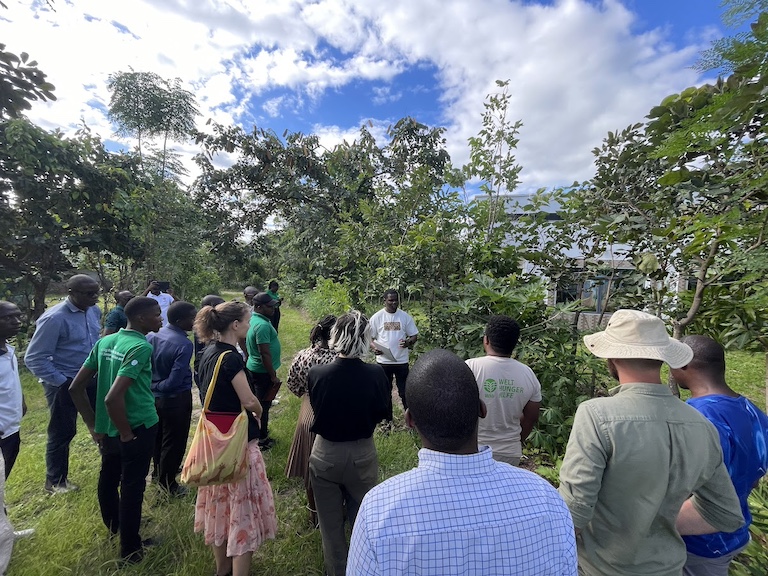
Earlier this year, this momentum culminated in a series of targeted workshops held in locations such as the Permaculture Paradise Institute in Lilongwe, Malawi. Bringing together some 40 agroecologists, government officials, and community leaders, the workshops served as a testing ground for the new guide. Participants utilized the manual to identify operational hurdles, discuss community-led scaling strategies, and establish peer-to-peer knowledge networks that continue to reverberate across the region today.
Supporting Context & Metrics: The Ecology and Economics of Native Species
To understand the urgency driving these restoration efforts, one must look closely at the species themselves and the alarming ecological metrics defining modern East Africa.
The Ecological and Nutritional Profile of Key Species
The Masuku Plum (Uapaca kirkiana): Widely distributed across Angola, the Democratic Republic of Congo, Zambia, Tanzania, Malawi, Mozambique, and Zimbabwe, this tree produces custardy, sweet-tart fruits that evoke a flavor profile halfway between a pear and a plum. When in season in Malawi, local demand skyrockets; as agroecologist Richard Swirah notes, people consume them everywhere—while traveling, bathing, and walking the streets—creating a thriving informal market where native fruits "sell like hot cakes."
The Marula (Sclerocarya birrea): Celebrated for exceptionally high concentrations of vitamin C and dietary protein, marula fruit is processed into juices, jellies, and oils. Its hard inner kernels are rich in protein and can be roasted or pressed into cooking oils, providing a dense, year-round caloric fallback for rural families.
The African Baobab (Adansonia digitata): A titan of the savanna, the baobab can live for millennia—with historical specimens surviving upwards of 2,400 years. A single mature fruit can house more than 150 seeds utilized for food, livestock feed, cosmetics, and medicinal applications, while its durable bark fibers yield traditional ropes and textiles.
Despite these biological and nutritional assets, non-native timber species continue to dominate commercial forestry. Fast-growing exotics offer predictable financial returns within short harvesting windows. Conversely, many indigenous trees exhibit slow early growth rates and specialized germination requirements. Their seeds maintain extremely narrow windows of biological viability, heightening the financial risk for cash-strapped smallholder farmers.
Furthermore, the lack of established processing infrastructure and formal commercial supply chains for native fruits means farmers often cannot capture the full economic value of their harvests. Without intentional market interventions, the time and labor investments required to nurture indigenous trees remain a formidable deterrent.
Official Statements & Expert Perspectives
The intersection of public health, forestry, and community agency has drawn commentary from leading researchers and conservation practitioners across the globe.
Emilie Vansant emphasizes that the initiative is not a zero-sum crusade against non-native trees, but rather a call for intentional synergy:
"Something important to highlight is that this work is not advocating for all introduced or all Indigenous trees, but for an integration—broadening the scope a bit to include these Indigenous tree species, because of their benefits for diets and biodiversity."
Vansant also expressed profound admiration for the holistic worldview held by rural Malawian farmers, contrasting it with the compartmentalized academic structures typical of Western institutions:
"When I did my PhD research, visiting households and doing these dietary surveys, I was just blown away by the amount of species I had never heard of, but also the uses that farmers had for each species. These farmers had an intimate knowledge of their direct environment, but also this intersection between ecological health and human health. It’s a given: that’s something they didn’t have to buy into."
Richard Swirah, an agroecologist with the Malawi chapter of WeForest, underscores the commercial potential waiting to be unlocked if financial backing matches community enthusiasm:
"What I am really looking for is funds to put much more effort into this, and upscale the promotion of indigenous trees on a larger scale, so that the communities can be self-reliant and benefit from the sales of these fruit trees… If we can start doing this now, we can do much more now from where we are. We will not stop: it is in my heart to be promoted."
Offering a global perspective on agroecology, Dr. Nils McCune, a researcher at the University of Vermont who has studied community-based agricultural projects in West Africa, cautions that market integration must be approached with stringent safeguards:
"The idea of generating an economic surplus, or generating an income stream, should somehow be tied to community control. Most economic textbooks only see one product looking at a coffee farm, for example, not the migratory birds and insects and other stuff that rely on it."
McCune points to successful community-managed baobab processing facilities in Ghana as a model, where every tier of revenue—from raw harvesting to final product packaging—remains under local stewardship, protecting communities from external exploitation.
Future Outlook: Scaling Restoration and Self-Reliance
The momentum generated by the initial workshops is already translating into grassroots action across East Africa. Botanists and government foresters in Malawi have begun utilizing the newly minted propagation guides to conduct grassroots training seminars on seed collection, storage, and processing. Meanwhile, educational initiatives led by organizations like the community-based nonprofit ButterflySpace are integrating native tree mapping into school curriculums, ensuring that the next generation grows up intimately familiar with the ecological heritage of their landscape.
At WeForest, Richard Swirah and his team are actively weaving indigenous fruit tree species into active reforestation patches alongside fast-growing timber buffers. By envisioning partnerships with local beverage producers—such as regional wineries and breweries seeking authentic native fruit flavor profiles—they are working to construct stable, localized commercial pipelines.
The path forward requires coordinated financial investment, institutional policy adjustments, and, above all, unwavering respect for community leadership. By transforming indigenous food trees from a dwindling wild resource into a cultivated pillar of agroforestry, East Africa is forging a resilient blueprint for ecological restoration—one that proves human health and environmental vitality are inextricably, beautifully bound together.