By André Habet | Conservation News & Investigations Published: August 2026
Executive Overview
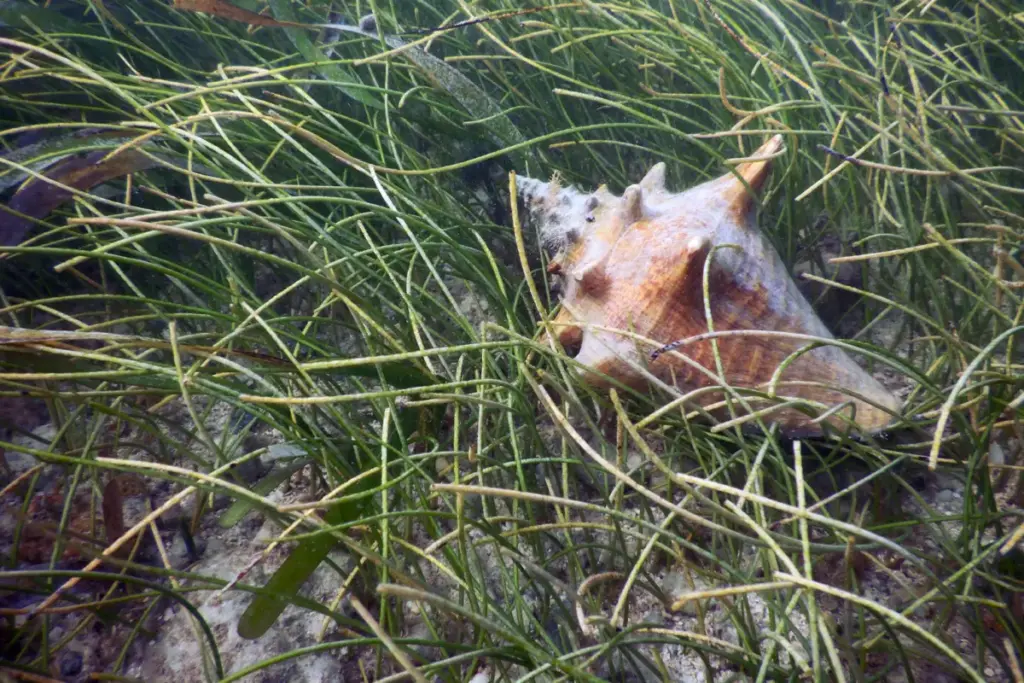
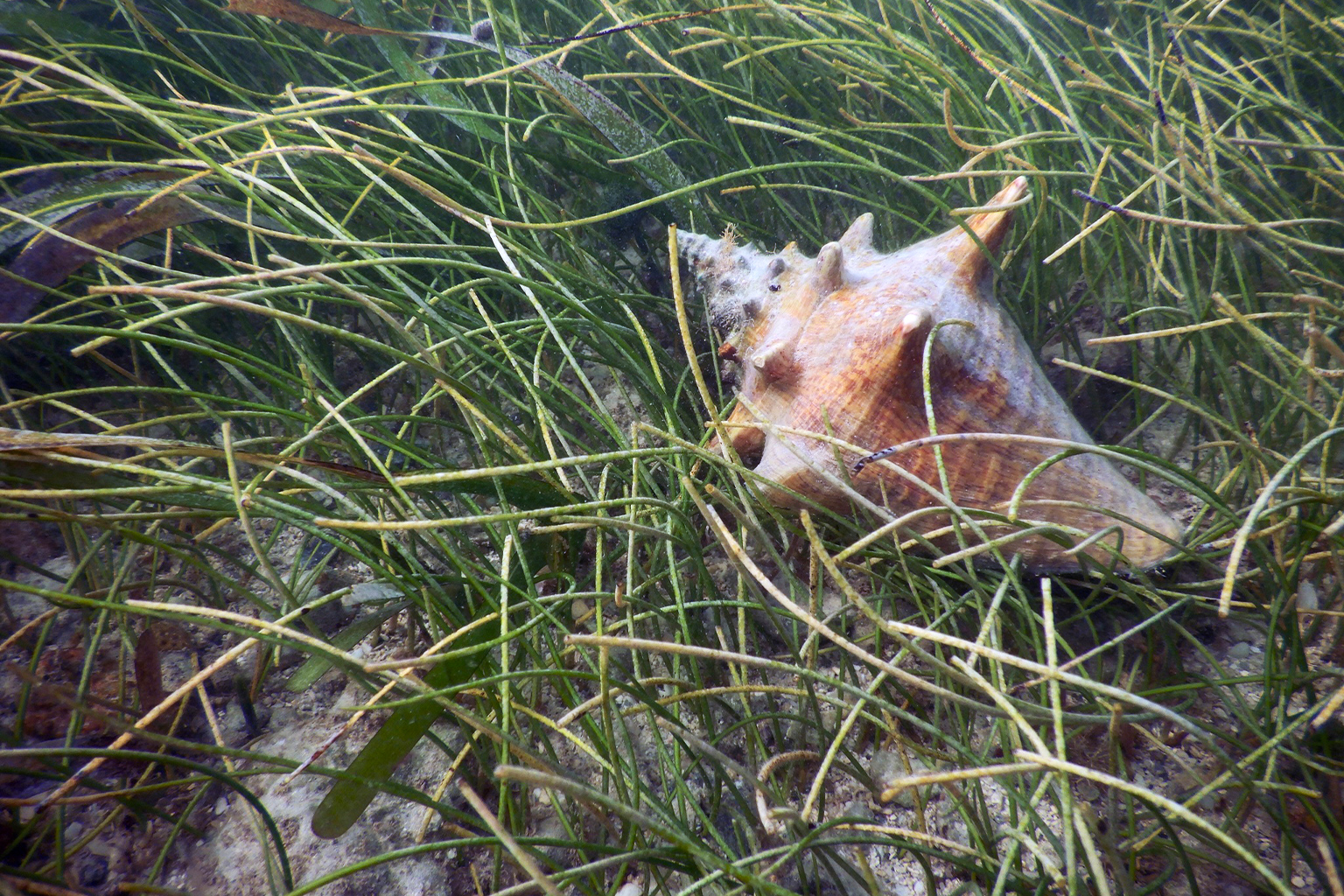
For generations, the turquoise shallows of the Caribbean Sea and the Gulf of Mexico echoed with a quiet, persistent bounty. Fishers could simply wade into knee-deep waters, reaching down to pull up armfuls of the iconic, pink-lipped, whorled shells of the queen conch (Aliger gigas). These magnificent marine snails were so abundant that they formed an economic and cultural cornerstone for coastal communities spanning dozens of islands and mainland nations.
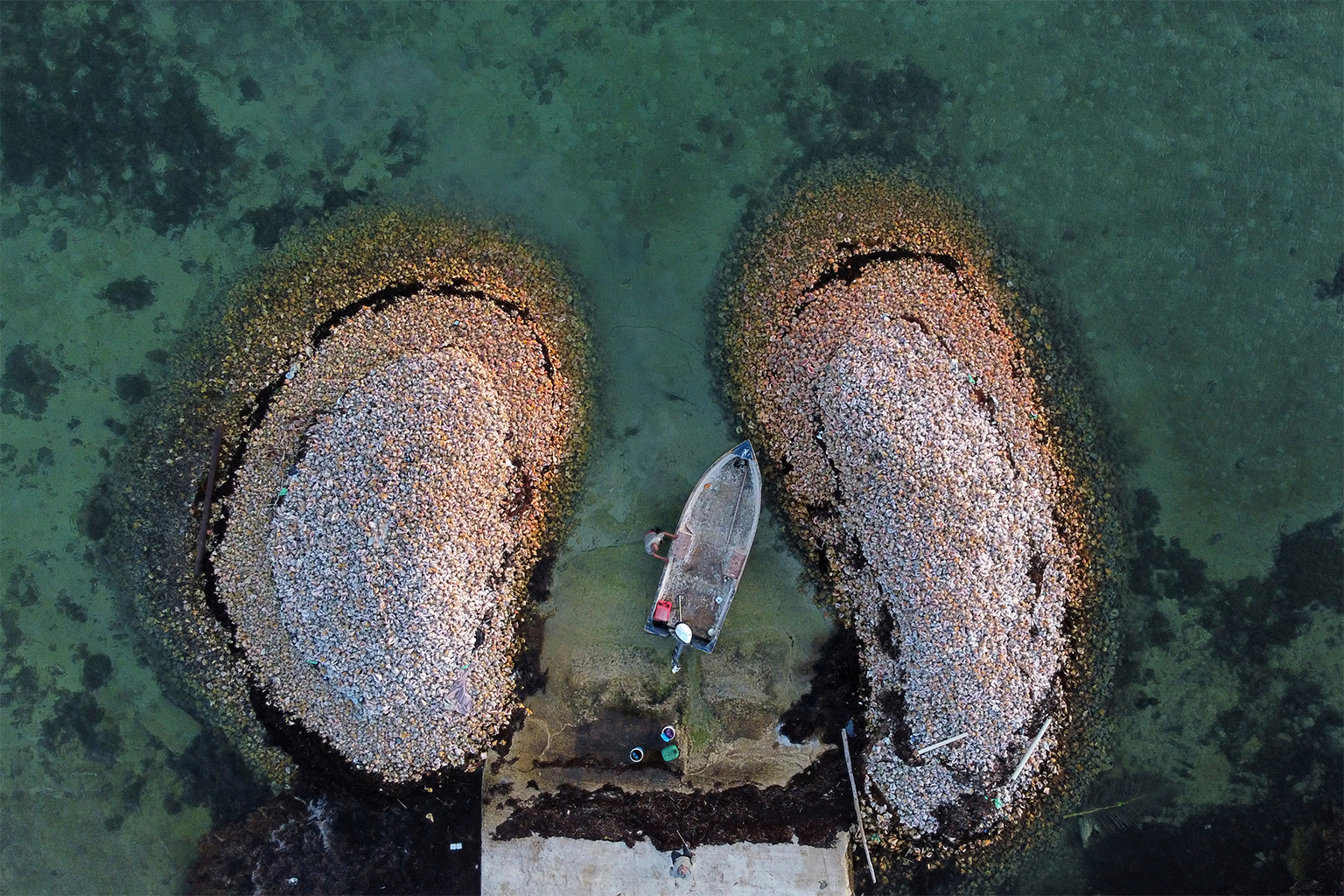
Today, that vibrant baseline has fundamentally fractured. Decades of escalating international demand for conch meat and ornamental shells have driven relentless overharvesting, pushing populations across the region into precipitous decline. Compounding this direct human pressure are silent, systemic threats: coastal habitat degradation, unrelenting marine pollution, and rapidly warming ocean waters driven by global climate change.
Despite international trade protections enacted under CITES (the Convention on International Trade in Endangered Species of Wild Fauna and Flora) in 1992, regional seasonal closures, outright national bans, and a landmark 2024 designation as a threatened species under the United States Endangered Species Act, the queen conch continues to slip toward the precipice. Natural mortality is staggeringly high, and precious few individuals survive the perilous journey from microscopic larvae to reproductive adults.
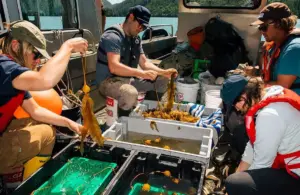
Enter an innovative, high-tech intervention: solar-powered mobile hatcheries. Spearheaded by the Queen Conch Lab (QCL)—affiliated with Florida Atlantic University’s (FAU) Harbor Branch Oceanographic Institute—these portable laboratories are being deployed directly into Caribbean fishing communities. Far more than simple aquaculture facilities, the 8-by-20-foot (2.4 by 6 meters) mobile labs serve as dual-purpose hubs. They shelter fragile conch larvae through their most vulnerable developmental stages while acting as dynamic community learning spaces.
Yet, as these floating and land-portable conservation tools gain momentum across the islands, a profound debate stirs within the marine science community. While leaders like QCL Director Megan Davis champion the labs as vital instruments for local education and hands-on restoration, other prominent biologists question whether aquaculture can truly scale up to rescue collapsing wild fisheries. As the first juveniles from these mobile labs hatch and prepare for wild release, the region stands at a critical crossroads between hopeful innovation and harsh ecological reality.
Detailed Chronology: From Abundance to Artificial Intervention
To understand the urgency driving the Queen Conch Lab’s mobile hatcheries, one must trace the timeline of exploitation and legislative response that has defined the species’ modern trajectory.
The Baseline of Abundance (Pre-20th Century to Mid-20th Century): Historically, queen conch populations were functionally limitless. Indigenous peoples and early European settlers utilized the animals extensively for sustenance and tools, yet localized populations remained resilient due to vast, undisturbed nursery habitats and low harvesting technology limits.
The Commercial Boom (1970s–1980s): As global tastes for seafood diversified and international shipping networks expanded, commercial fisheries for queen conch exploded. Markets in the United States and Europe created an insatiable demand. Within two decades, traditional free-diving techniques gave way to compressed-air hookah diving, allowing fishers to scour deeper waters where mature breeding adults had previously found refuge.
International Regulation (1992): Recognizing that the species was sliding toward commercial extinction in numerous jurisdictions, CITES placed the queen conch on Appendix II, regulating international trade and requiring exporting nations to prove that harvests were sustainable and non-detrimental to wild populations.
National Bans and Emergency Closures (2000s–2010s): As localized stocks collapsed—notably in parts of Florida, Bermuda, and sections of the wider Caribbean—governments stepped in with restrictive measures. Countries such as Colombia implemented permanent bans, while others instituted strict seasonal closures, minimum size limits, and bans on harvesting juvenile individuals with flared shells.
The U.S. Endangered Species Act Listing (2024): Citing continued overutilization and climate vulnerabilities, the U.S. government officially designated the queen conch as a threatened species under the Endangered Species Act, drawing global attention to the failure of existing regional management regimes to halt the slide.
The Mobile Hatchery Era (2022–Present): Moving away from static, expensive, and immovable land-based facilities, Dr. Megan Davis and the QCL conceptualized the mobile aquaculture lab. Designed for rapid deployment via shipping container and capable of being towed inland during severe hurricanes, these units began rolling out across the Caribbean. In June 2026, the eighth such mobile lab on Eleuthera, Bahamas, celebrated its inaugural hatch, aiming to produce up to 2,000 resilient juvenile conch annually.
Supporting Context & Metrics: The Perilous Journey of a Marine Snail
The biological life cycle of Aliger gigas is an intricate gauntlet, making natural recovery exceptionally difficult once adult breeding populations fall below critical density thresholds.
During the peak spawning season, an adult female queen conch can produce an extraordinary egg mass containing hundreds of thousands of individual eggs. Once fertilized, these eggs undergo a strict 21-day larval development cycle. The offspring hatch as tiny, free-swimming planktonic larvae known as veligers. For three weeks, they drift aimlessly on ocean currents, entirely at the mercy of marine hydrodynamic forces and pelagic predators.
[Spawning: Hundreds of Thousands of Eggs]
       │
       ▼ (21-Day Pelagic Drift)
[Veliger Stage: Planktonic Micro-Larvae]
       │
       ▼ (Metamorphosis Triggered by Seagrass Diatoms)
[Benthic Settlement: Crawling Juvenile Snail]
       │
       ▼ (8-9 cm Growth in Sand-Bottom Trays over 2 Months)
[Acclimation Pens: 1 Year of Protected Growth]
       │
       ▼
[Wild Nursery Release (Survival Odds: 1 in 4,000 to 10,000)]
When the veligers are ready to metamorphose, they settle onto the seafloor. This transition is chemically triggered by contact with diatoms living on seagrass blades—their preferred early-life food source. However, this is where the survival bottleneck narrows drastically.
According to a landmark 2022 study published in Reviews in Fisheries Science & Aquaculture, only one in 4,000 to 10,000 juvenile conch naturally survives to adulthood. The mortality drivers are relentless:
Intense Predation: Juvenile conch are targeted by a vast array of marine predators, including spiny lobsters, octopus, triggerfish, and eagle rays, which easily crush their thin juvenile shells.
Anthropogenic Fishing Pressure: Despite legal protections, illegal harvesting frequently targets undersized individuals before they have ever had a chance to reproduce (which typically occurs at 3 to 4 years of age, once their thick, flared shells are fully formed).
Habitat Disruption: Warming sea temperatures, ocean acidification, coastal runoff, and physical damage to shallow seagrass nurseries from boat anchors and storms continually degrade the habitats required for juvenile growth.
The QCL mobile hatcheries intervene directly in this high-mortality window. Fishers collect roughly 25% of a wild female’s egg mass, ensuring the remaining 75% is left undisturbed in the ocean. Back inside the temperature-controlled, solar-powered mobile lab, these eggs incubate safely. The hatched veligers are fed cultivated phytoplankton until metamorphosis, after which they are transferred to seagrass trays, sand-bottom growth trays, and ultimately protective acclimation pens at one year of age.
Official Statements and Perspectives
The deployment of mobile hatcheries has sparked robust dialogue among marine scientists, conservationists, and aquaculture practitioners regarding the exact role that human intervention should play in marine resource management.
Dr. Megan Davis, director of the Queen Conch Lab and research professor at FAU’s Harbor Branch Oceanographic Institute, emphasizes that the true power of the hatcheries lies in their holistic integration of community, science, and education:
"By bridging aquaculture, fishery, conservation and restoration all in one place [at the mobile hatchery], the local community gains an understanding of all the aspects needed for good management of the conch species. Sharing about the life cycle helps the community members know that a conch takes a long time to grow before it should be fished."
Davis notes that each 8-by-20-foot lab employs two to three local individuals—often trained from scratch with zero prior marine biology background—who manage the daily operations, feed the developing conch, and host educational tours for local schools. Furthermore, the laboratories are technologically adaptive. While primarily powered by onboard solar arrays, rising regional air and sea temperatures have required connecting the units to local power grids during peak summer months. This ensures uninterrupted operation of air-conditioning systems and specialized water chillers necessary to keep incoming seawater at optimal temperatures for larval survival.
Conversely, Andrew Kough—a research biologist at the Shedd Aquarium in Chicago and lead author of a 2025 review paper examining the efficacy of conch aquaculture for wild population restoration—offers a more cautionary viewpoint regarding direct fisheries replenishment:
"Aquaculture provides a great opportunity for education and community engagement. However, where that barrier seems to fall off is in the translation from taking that symbol and turning it into repopulation in the wild."
Kough points out that while peer-reviewed literature thoroughly documents the success of growing conch in controlled environments, no definitive empirical studies yet prove that releasing cultured juveniles can meaningfully reverse the decline of heavily depleted wild fisheries.
Acknowledging this scientific nuance, Davis remains optimistic that upcoming milestones—such as the scheduled release of several thousand juveniles from a stationary hatchery in Curaçao and upcoming protected-enclosure releases from the Jamaica mobile hatchery—will provide clearer data on post-release survival rates. Ultimately, Davis argues that even if restorative aquaculture outcomes remain under scientific evaluation, the cultural and educational return on investment is undeniable: the hatcheries prove to island communities that "there will always be a way to grow conch."
Future Outlook: A Regional Network and the Path Ahead
As the Queen Conch Lab expands its blueprint—with new mobile facilities planned or underway in Cataño (Puerto Rico), Fort Pierce (Florida), and Providenciales (Turks and Caicos Islands)—the vision is clear: create an interconnected regional network of grassroots, tech-enabled conservation outposts across the Caribbean.
The success of this network will likely depend on striking a delicate balance between two parallel tracks:
Strict Enforcement and Habitat Defense: No amount of hatchery production can offset the destruction of wild seagrass ecosystems or unchecked overfishing of mature breeding stock. Regulatory bodies must continue to enforce CITES restrictions, protect nursery habitats from climate degradation, and curb illegal harvesting.
Empowered Local Stewardship: By transforming local fishers and school children from passive consumers of a declining resource into active participants in aquaculture and monitoring, mobile hatcheries foster a deep cultural investment in the conch’s survival.
The iconic pink spiral of the queen conch is woven deep into the identity of Caribbean maritime heritage. Whether solar-powered mobile laboratories can bridge the gap between cultural preservation and biological recovery remains one of the most compelling marine conservation experiments of our time. As the first tiny snails from the Eleuthera lab take their tentative steps into wild acclimation pens, the region watches, waits, and hopes for a resurgence in the shallows.
References & Further Reading
CITES Secretariat & UNEP-WCMC. (2017). Appendices I, II and III. Convention on International Trade in Endangered Species of Wild Fauna and Flora.
Kough, A., et al. (2024). Queen conch aquaculture remains a conservation symbol and is not yet a fisheries solution. Oryx, 58(6), 700-709. DOI: 10.1017/S0030605324001443
Medley, P. Monitoring and managing queen conch fisheries: a manual. FAO Fisheries Technical Paper.
Rogers, L. A., et al. (2019). Shifting habitats expose fishing communities to risk under climate change. Nature Climate Change, 9(7), 512–516. DOI: 10.1038/s41558-019-0503-z
Stoner, A. W., & Appeldoorn, R. S. (2022). Synthesis of research on the reproductive biology of queen conch (Aliger gigas): toward the goals of sustainable fisheries and species conservation. Reviews in Fisheries Science & Aquaculture, 30, 346–390. DOI: 10.1080/23308249.2021.1968789
Stoner, A. W., Davis, M., & Kough, A. S. (2023). Relationships between Queen Conch Larval Biology and Recruitment, Connectivity, and Fishery Management. Reviews in Fisheries Science & Aquaculture, 31(4), 535–597. DOI: 10.1080/23308249.2023.2228905
Cite this article: André Habet (2026). Saving the Sea’s Pink Spiral: Can Solar-Powered Mobile Hatcheries and Community Action Save the Queen Conch? Conservation News & Investigations. DOI: https://doi.org/10.66709/news-326429