Executive Overview
In May 2026, the Colombian government enacted a landmark environmental decree, officially expanding the Acandí, Playón and Playona Wildlife Sanctuary by nearly 63,000 hectares. This monumental addition more than triples the size of the original protected zone, stretching its borders to encompass a total area exceeding 89,000 hectares. Crucially, this regulatory milestone extends formal national park protections to the offshore coral ecosystems of the Capurganá and Cabo Tiburón Hope Spot for the very first time in history.
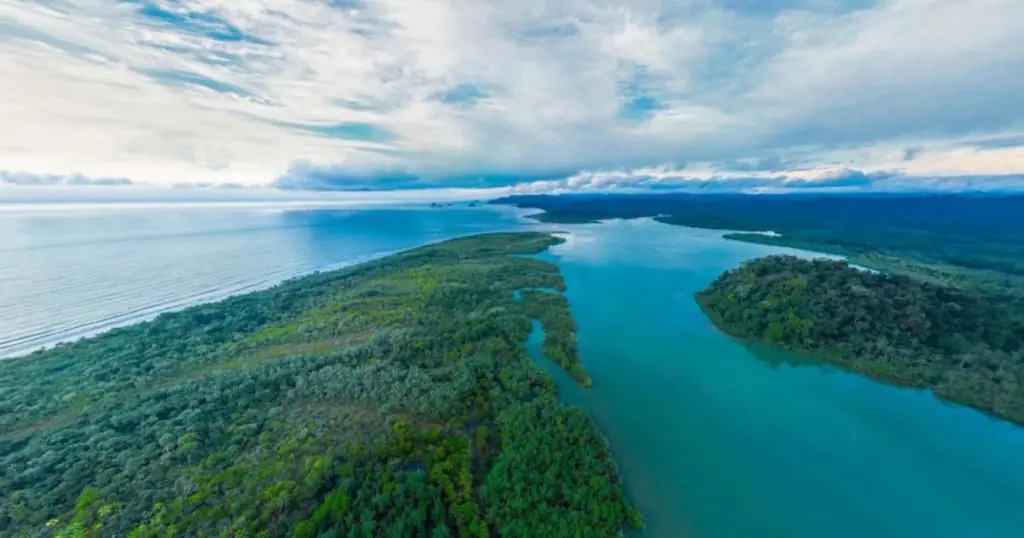
Nestled in the northern reaches of the Chocó department along the Caribbean Sea, this tropical marine frontier is recognized globally for its extraordinary biological wealth and resilience. The newly widened sanctuary creates an integrated, continuous refuge that safeguards vital nesting beaches alongside deep-sea coral habitats, pelagic migratory corridors, and artisanal fishing grounds.
This policy achievement is the culmination of nearly two decades of grassroots advocacy, rigorous citizen science, and cross-sector collaboration. Spearheaded by local leaders, community organizations, and conservation champions—most notably Nohora Galvis, Director of the International Coral Reef Observatory (ICRO) and a designated Mission Blue Hope Spot Champion—the initiative underscores the profound impact of community-led marine stewardship. Bolstered by international recognition, including the 2024 UNESCO Man and Biosphere designation for the Darién North of Chocó as a Marine Biosphere Reserve, this 2026 expansion marks the realization of a "triple protection" framework. It cements Colombia’s leadership in global marine biodiversity conservation and provides a replicable blueprint for how local environmental action can catalyze lasting national policy.
Detailed Chronology: A Decades-Long Journey to Marine Protection
The journey toward securing the ecological future of northern Chocó’s marine environment is a testament to the power of persistence. For over eighteen years, scientists, fishers, and local advocates have methodically built the scientific foundation and social consensus necessary to achieve comprehensive ocean governance.
2008–2015: Laying the Groundwork and Citizen Science
The modern conservation movement in the region began taking formal shape around 2008. Recognizing the immense vulnerability of local marine life—particularly endangered sea turtle populations and vulnerable coral reefs—community groups, regional organizations, and early researchers initiated long-term monitoring programs.
Unlike traditional top-down conservation models, this early phase relied heavily on citizen science. Local fishers, divers, and community members were trained to collect vital ecological data, tracking reef health indicators, fish stock recoveries, and sea turtle nesting metrics. This grassroots monitoring established an irreplaceable baseline of ecological data. It proved that despite anthropogenic pressures and climate stressors, the reefs of Capurganá and Cabo Tiburón exhibited remarkable resilience. These findings caught the attention of international organizations, laying the groundwork for broader organizational alliances, including a pivotal partnership with the local NGO Foundation ICRI Colombia.
2024: International Recognition and Biosphere Status
As local monitoring data continued to demonstrate the ecological significance of the region, the international community formally validated the area’s global importance. In 2024, the United Nations Educational, Scientific and Cultural Organization (UNESCO), through its Program on Man and the Biosphere (MAB), officially declared the Darién North of Chocó as a Marine Biosphere Reserve.
This prestigious designation placed the region on the global map, framing it as a critical landscape where sustainable human interaction and biodiversity conservation coexist. The MAB designation elevated the profile of the Chocó Caribbean coast, validating the decades of community-led monitoring and creating powerful diplomatic and political leverage for local advocates pushing for stricter national protections.
2026: The "Triple Protection" Realization and Sanctuary Expansion
The momentum culminated in May 2026 with the official decree expanding the Acandí, Playón and Playona Wildlife Sanctuary by approximately 63,000 hectares. This historic legal adjustment achieved what environmentalists term "triple protection":
- Recognition as a designated Mission Blue Hope Spot.
- Inclusion within the UNESCO Man and Biosphere Marine Reserve network.
- Formal incorporation into Colombia’s strict National Parks System with the massive offshore expansion.
By surging from roughly 26,000 hectares to over 89,000 hectares, the sanctuary closed a critical management gap. Historically, legal protections in the area were largely restricted to coastal strips utilized by nesting sea turtles. The 2026 expansion finally reached offshore, bringing the fragile, biodiverse coral reefs of the Capurganá and Cabo Tiburón Hope Spot under the umbrella of federal wildlife management and enforcement.
Supporting Context & Metrics: The Biological Treasures of Northern Chocó
To understand the profound significance of the 2026 sanctuary expansion, one must examine the extraordinary ecological dynamics of the Capurganá and Cabo Tiburón marine ecosystem. Located at the biological crossroads where Central and South America meet, this zone supports a dizzying array of marine and coastal species.
Resilient Coral Reef Ecosystems
The coral reefs situated within the Capurganá and Cabo Tiburón Hope Spot have long baffled and delighted marine biologists. In an era defined by global coral bleaching events, warming ocean temperatures, and ocean acidification driven by climate change, these reefs have demonstrated an inspiring degree of natural resilience.
Supported by localized upwelling currents, favorable hydrodynamic conditions, and proactive local management—such as the mitigation of destructive anchor drops and unregulated diving—these coral structures maintain robust structural complexity. They serve as nurseries for hundreds of reef fish species, protection barriers against coastal erosion, and foundational habitats for invertebrates.
A Sanctuary for Threatened Sea Turtles
Perhaps the most famous inhabitants of the Acandí, Playón and Playona region are its marine turtles. The coastal beaches and adjacent marine waters serve as critical nesting, foraging, and mating grounds for four distinct species of sea turtles, all of which face severe conservation threats globally:
- Leatherback Turtles (Dermochelys coriacea): The largest of all living reptiles, leatherbacks undertake trans-oceanic migrations to nest on the dark sands of northern Chocó. Long-term monitoring data managed by local observers have documented encouraging positive trends in leatherback nesting numbers, directly reflecting decades of community-led protection against poaching and nest disruption.
- Hawksbill Turtles (Eretmochelys imbricata): Critically endangered due to the illegal tortoiseshell trade, hawksbills rely heavily on the shallow coral reefs of the Hope Spot, where they feed primarily on sponges. Protecting these reefs is synonymous with protecting the hawksbill’s primary food source and shelter.
- Green Turtles (Chelonia mydas): Endangered green turtles utilize the coastal seagrass beds and shallow waters of the sanctuary for foraging, representing a vital link in nutrient cycling across the marine ecosystem.
- Loggerhead Turtles (Caretta caretta): Though less abundant than their leatherback and green turtle counterparts, loggerheads frequent the offshore waters of the Chocó Caribbean, utilizing the rich benthic habitats protected by the sanctuary’s new boundaries.
Fisheries Recovery and Socioeconomic Integration
The 2026 sanctuary expansion is not merely an environmental victory; it is a profound socio-economic triumph for local artisanal fishers. Years of scientific monitoring have documented a measurable recovery in artisanal fisheries within the managed zones. By safeguarding the coral reef nurseries and establishing no-take and restricted-use zones, fish stocks are being given the space to replenish naturally. This spillover effect ensures that local coastal communities, whose livelihoods have depended on the sea for generations, can enjoy sustainable, long-term fish yields rather than facing the collapse of depleted fisheries.
Official Statements and Local Leadership
At the absolute heart of this historic conservation milestone is a collaborative framework that bridges the gap between high-level government policy and grassroots community action.
Nohora Galvis and the International Coral Reef Observatory (ICRO)
The advocacy engine driving this expansion is led by Nohora Galvis, Director of the International Coral Reef Observatory (ICRO) and a recognized Mission Blue Hope Spot Champion. Galvis has spent years working on the frontlines of Colombian marine conservation, mediating between local fishers, recreational divers, academic scientists, indigenous community organizations, and government ministries.
Reflecting on the achievement, conservation advocates emphasize that Galvis and her team at ICRO were instrumental in building the undeniable body of scientific evidence required by the Colombian government to justify such a sweeping territorial expansion. By fostering trust within coastal communities and demonstrating that environmental protection enhances—rather than hinders—local livelihoods, Galvis helped construct a unified political momentum.
The Mission Blue Perspective
International marine conservation foundation Mission Blue, founded by legendary oceanographer Dr. Sylvia Earle, has championed the Capurganá and Cabo Tiburón Hope Spot since its inception. Mission Blue officials have repeatedly pointed to the Chocó region as a global benchmark for what Hope Spots are designed to catalyze:
- Elevating unsung local conservation leaders.
- Seamlessly integrating rigorous scientific research with community-led action.
- Translating a shared, grassroots vision for ocean protection into enforceable, lasting national policy.
In official statements celebrating the 2026 decree, Mission Blue underscored that this achievement shatters the cynical notion that local environmental actions are isolated drops in the bucket. Instead, it proves unequivocally that acting locally can generate ripples resulting in massive global impacts.
Future Outlook: Challenges and Opportunities Ahead
While the May 2026 expansion of the Acandí, Playón and Playona Wildlife Sanctuary is an extraordinary cause for celebration, conservationists, government officials, and local leaders are acutely aware that a legal decree is only the first step in effective ocean governance. The true work of conservation now shifts toward implementation, enforcement, and adaptive management.
Enforcement and Surveillance in Vast Waters
Expanding a protected area from roughly 26,000 to over 89,000 hectares exponentially increases the logistical footprint required for monitoring and enforcement. Protecting offshore coral reefs from illegal, unreported, and unregulated (IUU) fishing, destructive industrial practices, and unauthorized maritime traffic will require substantial investments in resources.
Moving forward, the Colombian government, in partnership with local organizations like ICRO and regional naval authorities, must scale up surveillance infrastructure. This will likely involve leveraging cutting-edge technology—such as satellite vessel monitoring systems (VMS), automated radar detection, and drone patrols—combined with community-based ranger programs that empower local fishers to act as stewards of their own waters.
Climate Resilience and Adaptive Management
Even resilient coral reefs are not entirely immune to the compounding crises of global climate change. Rising sea surface temperatures, intensified tropical storms, and shifting marine chemical balances pose continuous threats to the integrity of the Capurganá and Cabo Tiburón ecosystems.
Future management strategies within the expanded sanctuary must incorporate climate-smart planning. This includes establishing rapid-response protocols for coral bleaching events, continuously monitoring water quality parameters, and protecting climate-refugia areas where cooler upwelling currents provide a thermal buffer for sensitive marine species.
Sustainable Ecotourism and Economic Diversification
As the region gains international renown—bolstered by its status as a Mission Blue Hope Spot, a UNESCO Biosphere Reserve, and an expanded National Wildlife Sanctuary—it will inevitably attract increased interest from eco-tourists, divers, and nature enthusiasts.
Managing this influx responsibly will be critical. Sustainable ecotourism has the potential to generate alternative, highly lucrative revenue streams for local communities, reducing reliance on extractive industries like overfishing. However, unmanaged tourism can easily degrade the very fragile marine and coastal habitats that visitors come to experience. Developing strict carrying-capacity guidelines, certified eco-diving protocols, and community-led tourism cooperatives will be essential priorities for the upcoming decade.
A Global Blueprint for Marine Conservation
Ultimately, the story of northern Chocó offers a beacon of hope for the global marine conservation community. At a time when headlines are frequently dominated by ecological collapse, coral bleaching, and biodiversity loss, the expansion of the Acandí, Playón and Playona Wildlife Sanctuary demonstrates that the tide can be turned.
Through the persistent dedication of local champions like Nohora Galvis, the tireless efforts of organizations like ICRO and Mission Blue, and the willingness of national governments to listen to science and community voices, lasting systemic change is possible. The Caribbean waters of Colombia now stand as a living testament to the truth that grassroots passion, backed by solid science and political courage, can secure a thriving, resilient ocean for generations to come.