Executive Overview
As the international conservation community gears up for the 70th meeting of the International Whaling Commission (IWC)—slated to take place from September 27 to October 2—a fresh controversy has erupted over the shifting alliances of developing nations within global environmental governance bodies. Togo, a West African coastal republic, has drawn sharp criticism from regional and international wildlife protection groups after stepping forward as a co-sponsor for a contentious draft resolution aimed at reviewing and potentially relaxing commercial whaling quotas.
This move has placed Togo at odds not only with its West African neighbors but also with the broader consensus of the continent. Strikingly, Togo is the sole African nation supporting the measure, which was originally spearheaded by the Caribbean island nation of Antigua and Barbuda. Neither Togo nor Antigua and Barbuda engages in commercial whaling, making their political maneuvering on the global stage all the more perplexing to policy analysts and marine biologists alike.
In swift retaliation to Togo’s diplomatic alignment, the West and Central African Coalition for Whales—a prominent regional body that facilitates dialogue and harmonizes conservation policies among African nations—has issued a scathing public statement. The coalition is forcefully calling on governments across the continent to withdraw support from any initiatives that risk weakening historic international whale protections or laying the groundwork for a revival of commercial whaling.
This developing diplomatic rift underscores a broader, long-standing struggle within the IWC: the persistent ideological and political tug-of-war over marine mammal management, where developing coastal economies are frequently accused of being swayed by foreign financial influence, diplomatic lobbying, and historical patterns of "vote-buying" tied to foreign aid. As the countdown to IWC70 continues, the pressure is mounting on Lomé to clarify its position, reconsider its co-sponsorship, and realign its international voting record with its own domestic environmental legislation.
Detailed Chronology: The Road to IWC70 and Togo’s Controversial Turn
To fully grasp the gravity of Togo’s decision to back the Antigua and Barbuda-led proposal, one must understand the complex historical timeline of the International Whaling Commission and the decades-long efforts to protect vulnerable cetacean species.
The Historical Backdrop: The 1986 Moratorium
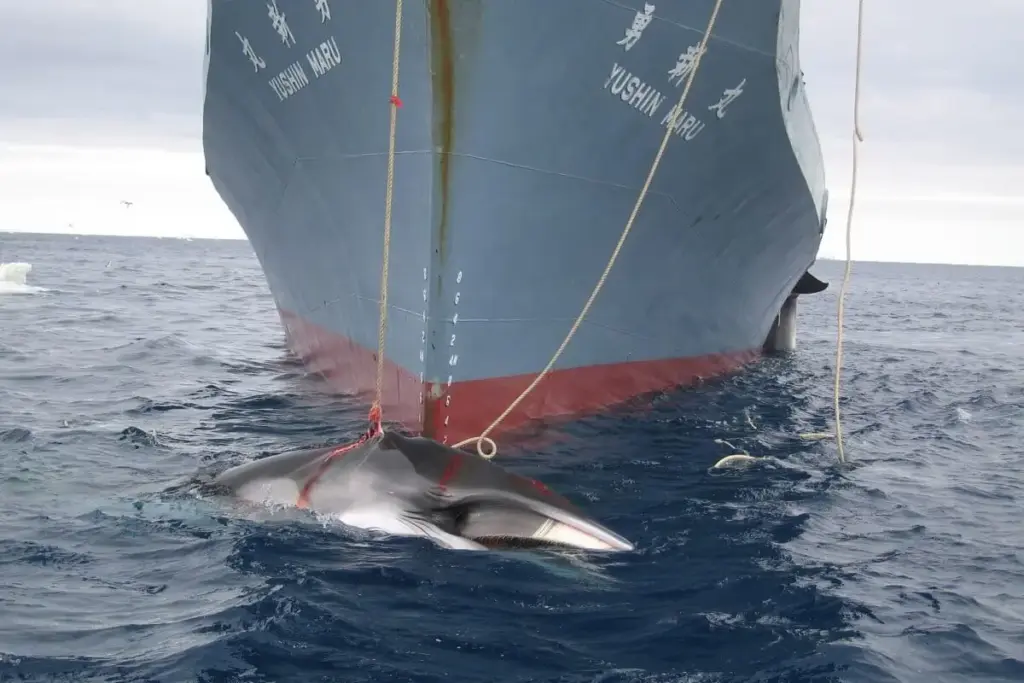
The modern architecture of global whale conservation rests heavily on a landmark decision made four decades ago. In 1986, the IWC global moratorium on the commercial exploitation of whales officially went into effect. Designed to rescue rapidly dwindling populations from the brink of extinction, the moratorium set catch limits for all commercial whale species to zero.
Despite this sweeping international ban, the practice of commercial whaling did not vanish entirely. A small, resolute bloc of nations—most notably Japan, Norway, and Iceland—found legal loopholes, issued formal objections, or utilized scientific research permits to continue hunting whales. Even as global sentiment shifted firmly in favor of conservation, these whaling nations engaged in aggressive diplomatic efforts to secure voting majorities within the IWC to overturn or weaken the zero-catch limit.
Historical African Alignments on Whaling
Togo’s recent pivot is not occurring in a historical vacuum. Over the years, various African nations have occasionally broken rank with regional conservation movements to support pro-whaling agendas at IWC plenaries. Countries such as Senegal, Guinea, and Côte d’Ivoire have previously endorsed proposals that sought to alter commercial catch limits.
Crucially, these same nations played a pivotal role in blocking the creation of the proposed South Atlantic Whale Sanctuary—a major conservation initiative first evaluated a quarter of a century ago that aimed to create a safe haven for cetaceans stretching between the territorial waters of Latin America and Africa. The recurring participation of developing African states in pro-whaling voting blocs has long been a source of frustration for environmental watchdogs, who argue that these nations have no domestic stake in whale hunting.
The Rise of the West and Central African Coalition for Whales
In response to these historical fractures and the growing recognition that African marine ecosystems require unified, regional stewardship, the West and Central African Coalition for Whales was formed. The coalition serves as a vital diplomatic and technical forum, helping governments harmonize their environmental policies and present a united front at international conventions like the IWC and CITES (the Convention on International Trade in Endangered Species of Wild Fauna and Flora).
When the draft resolution to review commercial whaling quotas was submitted for discussion ahead of the upcoming 70th meeting of the IWC, the coalition immediately recognized the threat it posed. While Antigua and Barbuda positioned itself as the lead sponsor of the text, Togo’s emergence as the sole African co-sponsor shattered the illusion of continental solidarity on marine mammal protection.
Supporting Context & Metrics: Economics, Ecology, and Domestic Contradictions
The decision by Togolese authorities to co-sponsor a pro-quota review resolution stands in stark, confounding contrast to both regional ecological realities and Togo’s own domestic legal framework.
The Socio-Economic Realities of West Africa
According to Colonel Abba Sonko, a respected Senegalese wildlife conservation expert and representative of Senegal’s CITES Management Authority, West African nations have zero economic or cultural ties to commercial whaling.
"The resolution is hard to reconcile with West and Central African priorities, where no country conducts commercial whaling and where the urgent issues are bycatch, habitat degradation and the protection of marine ecosystems," Colonel Sonko explained via email to environmental journalists.
Furthermore, coastal communities across West Africa do not rely on whale meat for food security or nutritional sustenance. On the contrary, the contemporary economic value of whales is inextricably tied to keeping them alive. Marine ecotourism—whale watching, coastal excursions, and marine-focused hospitality—generates substantial revenue for local economies, supporting thousands of jobs along the Atlantic coastline.
Ecologically, cetaceans are recognized as critical ecosystem engineers. Through processes often referred to as the "whale pump" and the "whale conveyor belt," whales circulate essential nutrients like iron and nitrogen from the deep ocean to the surface, stimulating phytoplankton blooms. These microscopic organisms absorb vast quantities of atmospheric carbon dioxide, meaning that healthy whale populations play a direct, measurable role in mitigating global climate change and maintaining ocean productivity.
Togo’s Domestic Hypocrisy: Protecting Whales at Home, Posing Abroad
Perhaps the most striking paradox of Togo’s international diplomacy is its stark divergence from its domestic environmental policies. On the home front, the Togolese government has recently taken commendable steps to safeguard marine mammals, formally listing several cetacean species as nationally recognized threatened species.
Among these are the Antarctic minke whale (Balaenoptera bonaerensis) and Bryde’s whale (Balaenoptera brydei). Ironically, these exact species remain the primary targets of ongoing commercial whaling operations managed by nations like Japan and Norway. By granting them strict legal protection within its own territorial waters while simultaneously backing international measures that could expand commercial quotas globally, Togo has exposed itself to severe charges of policy incoherence.

The Spectre of Foreign Influence and "Vote-Buying"
Why would a nation that protects whales domestically and possesses no domestic whaling industry co-sponsor a resolution favoring commercial whaling quotas?
While the Togolese government failed to respond to multiple media inquiries from Mongabay prior to publication, historical precedent offers a deeply concerning lens through which to view this diplomatic maneuvering. For decades, investigative reports and media exposés have documented how major whaling nations—most notably Japan—have utilized targeted foreign aid disbursements to influence the voting behavior of developing nations within the IWC.
As far back as the late 1990s and throughout the 2000s, diplomatic leaks and admissions revealed that development assistance packages, infrastructure funding, and agricultural grants were frequently leveraged to secure votes from landlocked or non-whaling developing countries—particularly in the Caribbean and Africa—ensuring a reliable voting bloc in favor of pro-whaling initiatives. Civil society groups fear that Togo’s recent alignment may be the modern manifestation of these same behind-the-scenes geopolitical pressures.
Official Statements and Civil Society Reactions
The international response to Togo’s diplomatic gamble has been swift, unified, and uncompromising. Environmental organizations, legal experts, and regional coalitions have raised the alarm, warning that even minor amendments to IWC quotas could open Pandora’s box for renewed industrial-scale whale slaughter.
The West and Central African Coalition for Whales Speaks Out
In their official public statement, the West and Central African Coalition for Whales did not mince words. The organization issued an urgent call to action for governments across the region:
"We call upon all African governments to remove support from initiatives that weaken international whale protections or revive commercial whaling," the coalition declared.
The statement emphasizes that West African nations must focus their limited resources and diplomatic capital on pressing regional crises. Rather than debating commercial quotas to appease foreign interests, African states should be channeling their efforts into mitigating the devastating impacts of artisanal and industrial bycatch, tackling marine plastic pollution, combating coastal habitat degradation, and enforcing existing laws against illegal, unreported, and unregulated (IUU) fishing.
Colonel Abba Sonko on the Stakes for Coastal Communities
Reinforcing the coalition’s stance, Colonel Abba Sonko highlighted the immense opportunity cost of Togo’s stance. He stressed that whales are infinitely more valuable to African coastal economies alive than dead.
"Whales are increasingly valuable alive: they support marine tourism and associated coastal livelihoods, while also playing important ecological roles that contribute to the productivity and resilience of healthy ocean ecosystems," Sonko stated. He added unequivocally that protecting marine mammals serves the long-term, sustainable economic interests of coastal communities in West Africa far better than any short-term diplomatic trade-offs.
Civil Society and Scientific Mobilization
The scientific community has rallied quickly behind the coalition’s leadership. Numerous marine biologists, independent researchers, and civil society leaders have added their signatures to the growing public statement condemning Togo’s co-sponsorship.
Activists note that public pressure is a critical tool in shifting governmental behavior ahead of major international summits. By shining a harsh spotlight on Lomé’s contradictory stance, civil society aims to force a diplomatic U-turn before the gavel falls at IWC70.
According to Colonel Sonko, the coalition has already escalated its diplomatic outreach, formally writing to the Togolese government to demand immediate clarification:
"We have formally asked the Togolese government to clarify its position, urging them to reconsider the co-sponsorship before IWC70."
Future Outlook: What to Watch at IWC70
As the diplomatic community prepares to converge for the 70th meeting of the International Whaling Commission, all eyes will be on the Togolese delegation. The upcoming summit is shaping up to be a contentious battleground where traditional conservation mandates clash directly with lingering pro-whaling ambitions and complex geopolitical alignments.
1. Will Togo Back Down?
The immediate question is whether internal domestic pressure, combined with regional diplomatic arm-twisting from the West and Central African Coalition for Whales, will convince Togo to withdraw its co-sponsorship of the Antigua and Barbuda resolution. Given that Togo has no domestic constituency for whaling and stands to suffer significant reputational damage among its African peers, a strategic withdrawal remains a distinct possibility if diplomatic costs outweigh perceived benefits.
2. The Integrity of the Global Moratorium
Beyond the immediate political fate of the resolution, the broader debate highlights the ongoing vulnerability of the 1986 global whaling moratorium. As pro-whaling nations continue to test the diplomatic waters by introducing proposals for quota reviews, monitoring systems, and managed catch limits, conservation groups must remain eternally vigilant. The erosion of the moratorium, even incrementally, could pave the way for a resurgence of commercial whaling fleets in the Southern Ocean and North Atlantic.
3. Strengthening African Environmental Solidarity
In the long term, this controversy serves as a crucial stress test for regional environmental governance in Africa. The ability of the West and Central African Coalition for Whales to successfully lobby one of its own member states demonstrates the growing maturity and organizational capacity of African civil society. Whether Togo ultimately reverses its stance or doubles down on its co-sponsorship, the episode has galvanized a renewed commitment across the continent to ensure that African nations speak with one unified voice—a voice rooted in ecological preservation, sustainable marine economies, and the absolute protection of the world’s remaining whale populations.