


By Grist & BPR News Partnership
Published: September 2026
Executive Overview
Wendell Berry, the towering figure of American letters, environmental philosophy, and agrarian stewardship, passed away last week at the age of 92. Operating out of his longtime farmhouse in Henry County, Kentucky, Berry lived a life of deliberate, radical consistency. He famously rejected modern conveniences like computers and smartphones, choosing instead to author more than 50 books of poetry, fiction, and essays with a simple pencil and paper.
Throughout a multi-decade career that spanned the roles of farmer, teacher, philosopher, and environmental activist, Berry offered a profound critique of industrial modernity. He rejected the rigid binaries of modern American politics, refusing to fit neatly into partisan boxes. Instead, he championed a localized, holistic approach to human existence—one rooted in reverence for the Earth, deep community ties, and the quiet, revolutionary labor of daily land stewardship.
His death marks the end of an era for the American environmental movement, leaving behind a legacy that continues to challenge generations of writers, farmers, policymakers, and citizens to rethink their relationship with the natural world.
Detailed Chronology: A Life Spent in Defiance and Devotion
To understand Wendell Berry is to understand a timeline built not on the frantic pacing of the digital age, but on the patient, seasonal rhythms of the Henry County farm he returned to and tended for decades.
- The Formative Years: Born in 1934 in Henry County, Kentucky, Berry grew up immersed in the agrarian traditions of the Ohio River valley. After earning his degrees from the University of Kentucky and spending time traveling and teaching—including a stint at Stanford University—Berry made the fateful decision in the mid-1960s to return home to Kentucky. He bought a small farm, determined to live off the land and write about the agrarian traditions vanishing beneath the wheels of industrial agriculture.
- 1972 — "Think Little": Amid the burgeoning environmental movement of the early 1970s, Berry published his seminal essay, Think Little. In it, he voiced a foundational skepticism toward purely political solutions to ecological collapse. He argued that public crises are merely reflections of private choices, setting the stage for a lifetime of advocating for localized, individual accountability.
- 1979 — First Civil Disobedience: Berry’s activism was never confined to the page. In 1979, he was arrested for the first time during a protest against a nuclear power plant in Indiana, signaling his willingness to put his body on the line to defend ecological integrity.
- 1987 — The Anti-Technology Stance: In an era when personal computers were beginning to transform modern workplaces, Berry published his scathing critique in Harper’s Magazine, “Why I am not Going to Buy a Computer.” While detractors branded him a Luddite, Berry viewed his refusal of digital technology as an essential defense of human dignity and a rejection of the alienation inherent in industrial production.
- 2011 — Direct Action Against Mountaintop Removal: Demonstrating that his activist fire remained unquenched into his late 70s, Berry was arrested during a sit-in inside the Kentucky state government offices to protest the destructive practice of mountaintop removal coal mining.
- The 2010s — Fossil Fuel Confrontations: Berry maintained an active presence in anti-coal campaigns throughout the decade. He participated in direct actions to block the gates of a coal-fired power plant in Washington, D.C., and made headlines by pulling his personal papers from the University of Kentucky after the institution accepted a $7 million donation from Alliance Coal.
- Late Life and Passing (2026): Up until his passing at age 92, Berry remained a guiding moral compass for those grappling with the climate crisis, leaving an indelible imprint on the American conscience.
Supporting Context & Metrics: The Philosophy of the "Mad Farmer"
Berry’s worldview was fundamentally at odds with the frantic, growth-obsessed logic of global capitalism. Where industrial society promised limitless progress and salvation through technology, Berry saw a slow-motion unraveling.
The Rejection of Industrial Alienation
When Berry penned “Why I am not Going to Buy a Computer” in 1987, critics were quick to dismiss him as an out-of-touch curmudgeon. However, cultural and environmental historians have increasingly recognized Berry’s stance as a modern iteration of the 19th-century Luddite movement—not a mindless rejection of all tools, but a deliberate resistance against technologies that sever the worker from the product of their labor and distance humanity from the natural world.
Jeffrey Bilbro, an English professor at Grove City College in Pennsylvania and the author of several books on Berry, notes that the writer understood the inescapable compromises of modern life.
"For an uncompromising person or a person of convictions, I think he recognized the need in a fallen world," Bilbro observed. "Our hands are all dirty, and we’re making these compromises, and it’s better to be honest about the necessity to do so and try to do what we can to live right, even if we can’t attain the purity that we might wish."
A Transpartisan Appeal
Berry’s politics defied categorization. He was deeply religious—though he famously described himself as a "bad weather church-goer" who preferred walking in the woods on bright Sunday mornings over sitting in a pew. He valued marriage and family as foundational pillars of community strength, yet he fiercely opposed government overreach into private moral lives.
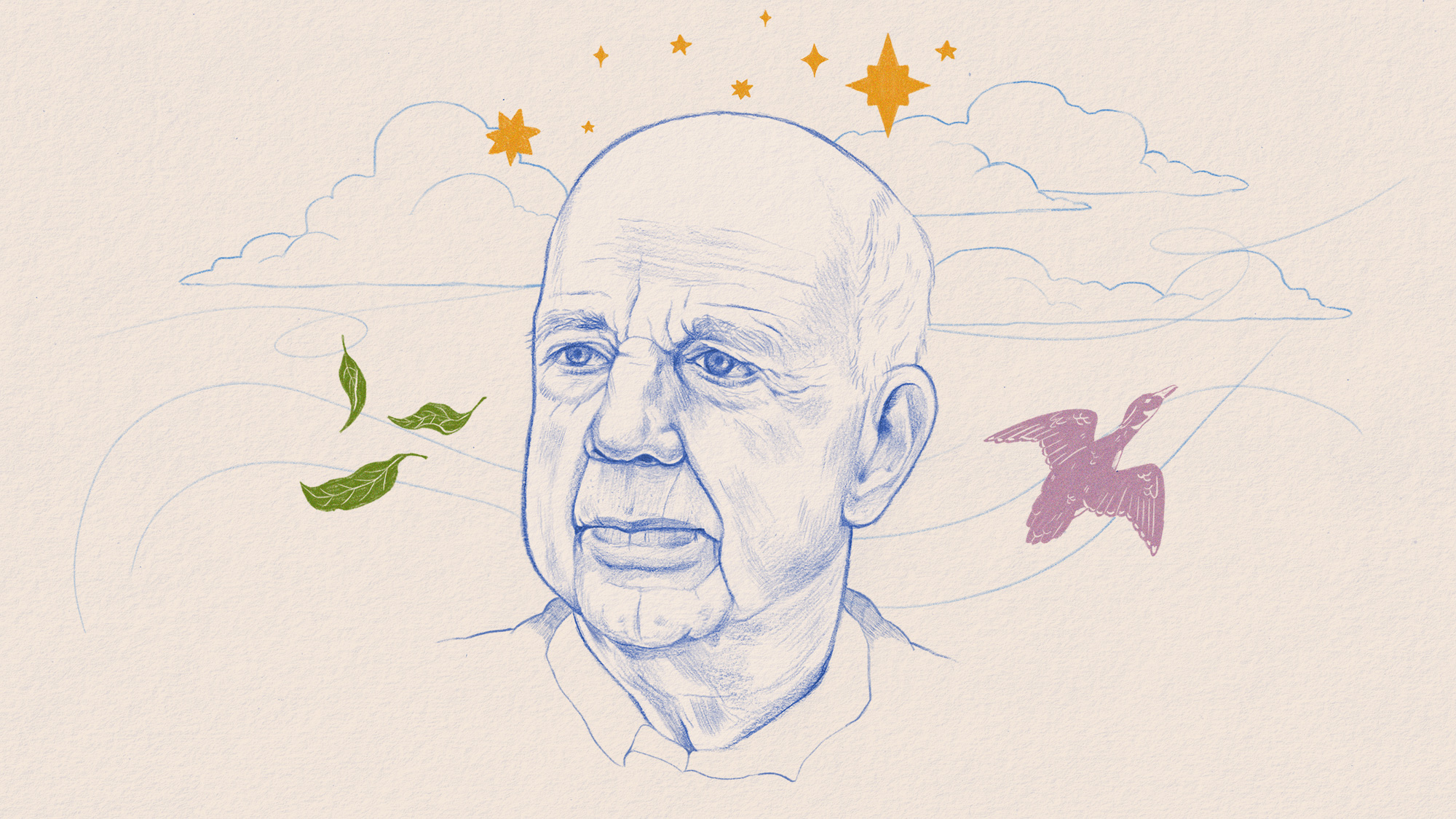
This independence gave Berry broad, cross-spectrum appeal. Conservatives drawn to his defense of traditional local communities and agrarian roots found common ground with progressives and environmentalists inspired by his uncompromising critique of corporate greed and ecological destruction. He abhorred dualisms—the false separations between humanity and nature, body and soul, or ideological adversaries. To Berry, these divisions were the root cause of the modern socio-ecological crisis.
Official Statements and Academic Reflections
The academic, literary, and environmental communities have poured forth tributes following Berry’s passing, reflecting on a man whose literary output was matched only by his moral clarity.
- Dr. Jeffrey Bilbro (Scholar and Biographer): Highlighted Berry’s paradoxical nature as an uncompromising moral voice who nonetheless understood human fallibility. Bilbro emphasized that Berry’s activism was driven not by utopian optimism, but by a sober recognition of duty: "The changes that are required are fundamental changes in the way we are living."
- Environmental and Agrarian Organizations: Across the country, groups inspired by Berry’s work—including the Berry Center in Henry County, Kentucky—reaffirmed their commitment to his vision of localized economies, healthy soil, and cultural memory. In statements released following his death, local food advocates credited Berry with laying the intellectual groundwork for the modern farm-to-table and regenerative agriculture movements.
- Literary Figures: Poets and essayists have pointed to Berry’s “Manifesto: Mad Farmer Liberation Front” as a timeless blueprint for endurance. Lines such as "Invest in the millennium. Plant sequoias. / Say that your main crop is the forest / that you did not plant" have been shared widely across social media by readers mourning his loss.
Future Outlook: The Seeds We Leave Behind
As the world confronts accelerating climate destabilization, political polarization, and technological alienation, Wendell Berry’s philosophy offers both a diagnostic tool and a roadmap for survival.
Berry rejected the apocalyptic fatalism common in modern environmental discourse. To him, nature operated in endless cycles of death and rebirth, unbound by linear trajectories of absolute doom or salvation. The environmental crisis, in Berry’s view, manifests locally as social decay and ecological degradation, and it can only be healed through localized, painstaking restoration.
In his poem “A Discipline,” Berry confronted the reality of systemic collapse head-on:
“it approaches / on every side, there is no other place / to turn.”
Yet he immediately countered this despair with an injunction to endurance:
“It is the time’s discipline to think / of the death of all living, and yet live.”
Berry believed that the strip-mined mountaintop where a citizen plants spruce, aspen, and wildflowers might not return to a lush forest until long after the planter is gone. Yet that temporal horizon—stretching far beyond human lifespans—is precisely what makes the labor meaningful.
In coming into relationship with a single handful of earth, Berry taught that an individual could begin to comprehend the vast, seemingly insurmountable challenges of a changing world. By tending a sprouted seedling in the ground, one learns a fundamental truth: human beings and the living Earth are inextricably bound. We are the soil, and the soil is us.



