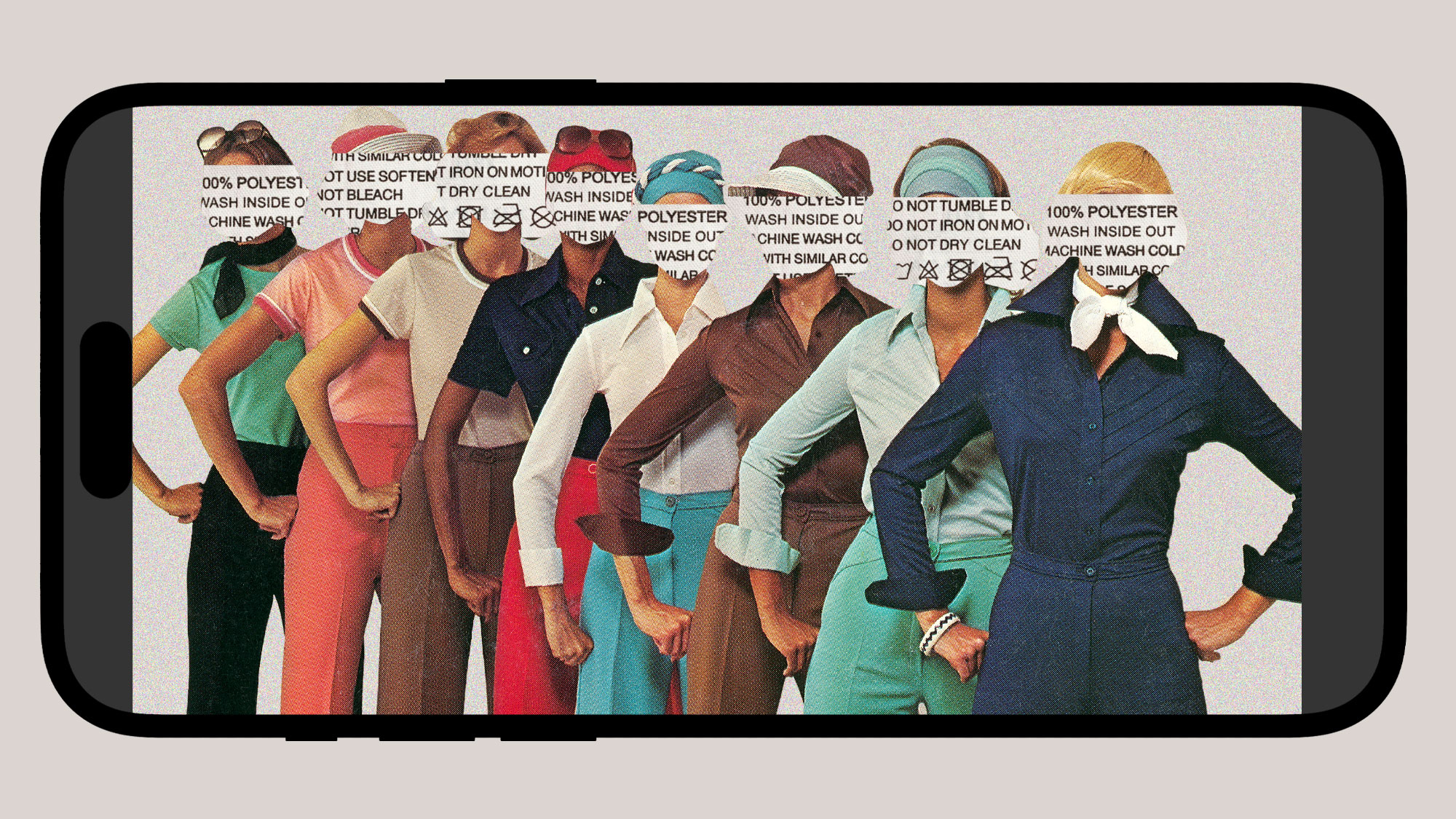
If you were to open the closet of an average citizen anywhere on Earth today, you would likely find that the single most ubiquitous textile material isn’t cotton, wool, or silk, but polyester. Spun from melted crude oil or recycled polyethylene terephthalate (PET) bottles and extruded into whisper-thin synthetic threads, polyester has woven itself into the very fabric of modern life. Yet, depending on who you ask—particularly on social media—wearing polyester is no longer merely a wardrobe choice; it is a profound moral, aesthetic, and cultural failing.
On platforms like TikTok and Instagram, "polyester" has morphed into a cutting-edge insult. Gen Z creators and influencers sling terms like "polyester lifestyle," "Polyester Prince," and "polyester jester" to skewer everything from soulless corporate optimization to cheap, inauthentic fast fashion. Videos mocking hyper-specific modern archetypes—such as an 18-year-old sipping artisanal coffee while a generative AI agent handles half his workload, only to field a sudden corporate trip to Europe—frequently culminate in biting commentary labeling the entire persona as fundamentally "polyester."
This cultural backlash against synthetic materials is sharp, venomous, and viral. However, as cultural historians and lexicographers point out, using "polyester" as a pejorative synonym for something cheap, tacky, or deeply inauthentic is not a novel invention of contemporary internet youth. It is a cyclical cultural panic that mirrors the anti-synthetic movements of the late 1970s and 1980s.
Beneath the surface of viral memes and superficial wellness trends lies a far more complicated reality. While critics rightly point out that synthetic garments shed microplastics, rely on fossil fuels, and are sometimes treated with contentious chemical finishes like PFAS, the dichotomy between "natural" and "synthetic" is deeply flawed. The production of natural fibers like cotton requires staggering volumes of water and arable land, carrying its own devastating ecological scars. Ultimately, fashion experts warn that the modern obsession with demonizing specific fabrics misses the forest for the trees: the core crisis of the modern textile industry is not just what our clothes are made of, but the sheer, unsustainable volume of what we buy.
Detailed Chronology: From Miracle Fabric to Cultural Pariah
To understand why polyester has become the internet’s favorite rhetorical weapon, one must trace its trajectory from an earth-shattering technological marvel to a symbol of tacky consumerism, and its subsequent resurrection and fall in the digital age.
The 1950s–1960s: The Era of "Plastic Fantastic"
It is difficult for modern consumers, accustomed to the tactile luxury of natural textiles, to imagine a time when polyester was heralded as the ultimate liberation. Introduced commercially in the mid-20th century, synthetic fabrics were marketed by massive chemical conglomerates as "miracle" textiles.
For post-war households, polyester offered unprecedented convenience. It was wrinkle-free, remarkably durable, quick-drying, and required little to no ironing—a massive selling point that promised to free generations of homemakers from domestic drudgery. This was the golden age of "plastic fantastic," when synthetic materials were celebrated as triumphs of human ingenuity over the limitations of nature. As petrochemical companies ramped up production and lowered manufacturing costs, polyester quickly outpaced traditional fibers like cotton, flooding the global market by the late 1960s.
The 1970s–1980s: From Treasure to Trash and the Rise of the First Backlash
As anthropologist Jane Schneider famously noted, the widespread saturation of cheap synthetics caused their cultural value to plummet rapidly from "treasure to trash."
The birth of the modern environmental movement on Earth Day in 1970 coincided with a growing public skepticism toward artificial materials. As the countercultural and hippie movements gained momentum, society yearned for a "back to nature" ethos that prized organic, unadulterated authenticity. During this period, the adjective "plastic" seamlessly expanded in colloquial English to describe people or behaviors that were superficial, hollow, or insincere.
By the end of the 1970s, the shiny, stiff, poorly breathable synthetic men’s suits that had once symbolized modern corporate success now felt hopelessly tacky and tasteless. Popular culture quickly codified this disdain. In 1981, cult filmmaker John Waters released his satirical comedy Polyester, which weaponized the fabric’s low-class, unsophisticated associations—starring a polyester-clad patriarch who owned an adult movie theater. As culture and history scholar Anneke Smelik observed in a landmark study on the history of textiles, "Polyester and pornography—the fabric could hardly sink lower."
The 2020s Resurgence: TikTok Slang and the Modern "Polyester Lifestyle"
Fast forward nearly half a century, and the anti-synthetic sentiment has roared back to life with renewed vigor, supercharged by the algorithmic velocity of social media.
Today’s influencers do not mince words. Popular creators with massive apparel brands routinely post viral rants warning followers that cheap polyester causes wearers to "sweat like a dog and smell like f***ing shit." Wellness influencers spanning both the political left and right sound the alarm over microplastic shedding and the health risks of per- and polyfluoroalkyl substances (PFAS) applied to fabrics for water- and stain-resistance.
Concurrently, internet culture has weaponized the fabric to mock contemporary anxieties. When TikTok users describe an over-optimized, corporate-drone existence as a "polyester lifestyle," or brand an influencer selling low-quality synthetic garments as the "Polyester Prince," they are tapping into a deeply ingrained cultural anxiety about authenticity in an increasingly digitized, mass-produced world.
Supporting Context & Metrics: The Environmental and Health Reality
While social media vitriol treats the distinction between natural and synthetic fibers as a clear-cut moral binary, empirical data from environmental scientists, economists, and textile historians paints a far more nuanced, uncomfortable picture.
The Environmental Trade-Offs: Petroleum vs. Arable Land
There is no clear environmental winner in the battle between synthetic and natural fibers. Both come with staggering ecological costs.
The Synthetic Footprint: Polyester is derived from petroleum, meaning its production directly contributes to greenhouse gas emissions and fossil fuel dependency. A recent report published by the Apparel Impact Institute revealed that global fashion sector emissions actually rose by 7.5 percent and 6.3 percent in consecutive recent years, driven largely by surging fiber production, particularly polyester. Furthermore, because polyester is exceptionally durable, discarded garments break down excruciatingly slowly, fragmenting into persistent microplastics that infiltrate marine and terrestrial ecosystems for generations.
The Natural Footprint: Conversely, natural fibers demand intensive environmental resources. Growing raw cotton requires massive amounts of land and water. It can take upwards of 700 gallons of water to produce a single cotton t-shirt. The catastrophic environmental mismanagement of the Aral Sea basin in Central Asia—once the fourth-largest lake in the world, now transformed into a massive toxic dry lakebed—was driven largely by intensive regional cotton irrigation.
Chemical Treatments and Health Concerns
Beyond carbon footprints and water usage, the chemical lifecycle of textiles deserves scrutiny. Modern consumers often assume that buying "natural" guarantees chemical purity. However, raw natural materials undergo intensive industrial chemical processes to transform into the soft fabrics worn against the skin.
Furthermore, synthetic athletic wear—which manufacturers heavily optimize for moisture-wicking properties—along with many conventional garments, are frequently treated with chemical finishes. Scientists are increasingly investigating the health implications of human exposure to toxic compounds like PFAS used during manufacturing to make textiles stain-repellent and waterproof.
The Consumer Psychology Trap
Perhaps the most insidious aspect of the "natural is inherently good" mindset is how it alters consumer behavior. The cultural perception that cotton or wool is inherently eco-friendly grants consumers a psychological hall pass. Shoppers routinely buy massive volumes of fast-fashion cotton garments, salving their environmental consciences with the internal justification: At least I’m not buying polyester.
As experts emphasize, this mindset ignores the overarching crisis of overconsumption. Whether a shirt is spun from crude oil or harvested from a cotton field, the underlying mechanics of fast fashion remain deeply destructive.
Official Statements and Expert Perspectives
Linguists, historians, and textile experts caution that contemporary internet discourse has stripped away all historical and industrial nuance, reducing a complex manufacturing debate into simplistic tribalism.
Kory Stamper, Lexicographer and Author:
"TikTokers just seem to be leaning into the ‘inauthentic’ and ‘low-quality’ edge of that meaning. The current social media discussion around polyester is a regression to the 1970s. It is so uninformed, and it leaves out all complexity. You know, it becomes very polarized—like, ‘natural is good, and artificial is not.’"
Stamper notes that while the Oxford English Dictionary documents pejorative uses of polyester dating back to 1979 ("A gleaming brazen polyester clown") and 1987 ("Clifton wears polyester suits and a polyester smile"), modern youth culture has simply sharpened the blade for the digital age.
Dr. Anneke Smelik, Emeritus Professor of Culture and History, Radboud University:
"The line between ‘synthetic’ fabrics and ‘natural’ ones like wool, silk, bamboo, and cotton is blurrier than you’d think. It’s not like rolls of cotton grow off the plant: The raw materials all undergo intense chemical processes in order to become the soft, huggable fabric we enjoy putting next to our skin."
Smelik emphasizes that demonizing specific fibers obscures the fundamental driver of the environmental crisis in fashion: volume.
"Fast fashion remains fast fashion, and that is a huge problem. There isn’t even an obvious winner from an environmental standpoint. The truth is that the most environmentally friendly solution is simply buying less and wearing the clothes you already have as long as you can."
Future Outlook: Beyond the Polyester Panic
As long as social media algorithms reward sharp, aestheticized cynicism, terms like "polyester jester" and "Polyester Prince" will continue to dominate feeds, shaping how younger generations conceptualize status, taste, and authenticity.
However, the fashion and textile industries face mounting regulatory and consumer pressure that extends far beyond internet memes. Governments in Europe and North America are beginning to clamp down on greenwashing, microplastic pollution, and the use of hazardous chemical treatments like PFAS in textile manufacturing. Concurrently, material scientists are investing heavily in bio-based synthetics, advanced chemical recycling technologies capable of infinitely breaking down PET bottles and garments without degrading polymer quality, and closed-loop manufacturing systems.
Ultimately, the cultural obsession with polyester serves as a cultural symptom of a deeper societal yearning: a desire for permanence, honesty, and ecological harmony in a world saturated by cheap, disposable goods. Yet, as historians and scientists remind us, true sustainability will not be achieved simply by purging our closets of plastic threads in favor of cotton fast-fashion haul items.
The most radical, sustainable fashion statement remains stubbornly un-viral: buying less, demanding durability, and cherishing the garments we already own, regardless of their molecular makeup.