

Executive Overview
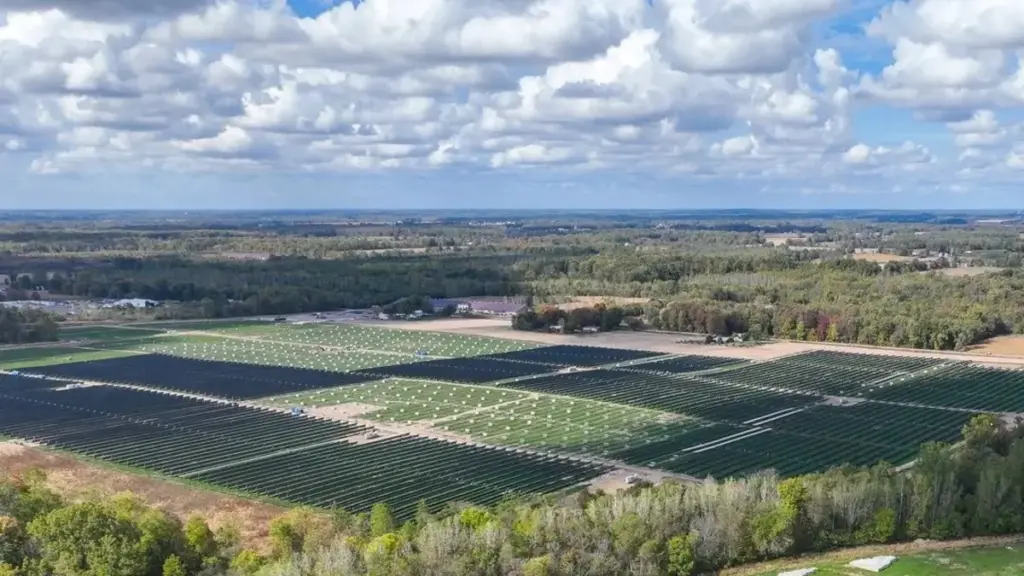
In a significant milestone for industrial decarbonization in the American Midwest, Detroit-based utility provider DTE Energy has officially completed construction on the Cold Creek Solar Park. Located near Coldwater, Michigan, this sprawling 100-megawatt (MW) photovoltaic installation represents a foundational step in a massive corporate clean energy procurement strategy. Funded entirely through a substantial $194 million capital investment by Ford Motor Company, the newly operational solar park is designed to inject thousands of megawatt-hours of clean, renewable electricity directly into the local grid, specifically allocated to power Ford’s historic home-state manufacturing facilities.
The Cold Creek facility is far more than just another regional solar farm; it is the physical manifestation of an ambitious corporate partnership forged years ago. By enrolling in DTE’s voluntary renewable energy program, CleanVision MIGreenPower, Ford has positioned itself at the vanguard of legacy automakers attempting to pivot away from fossil fuels while keeping domestic production hubs online. The 100 MW output generated at Cold Creek—capable of producing enough electricity to power roughly 23,000 to 25,000 typical Michigan households annually—serves as a direct pipeline of decarbonized energy for the assembly lines that build some of America’s most iconic vehicles.
However, the journey toward a completely green manufacturing footprint is fraught with logistical pivots and shifting timelines. While the completion of Cold Creek signals tangible progress, a closer examination of the partnership reveals a subtle yet notable delay in Ford’s ultimate domestic sustainability deadlines. Originally targeting a 2025 completion date for its 100% carbon-free Michigan assembly goal when the agreement was first inked in August 2022, the automaker’s updated timeline now points toward the end of 2027.
This comprehensive report dives deep into the mechanics of the Cold Creek Solar Park, analyzes the broader implications of Ford and DTE’s multi-megawatt agreement, weighs the socioeconomic impacts on local Michigan communities, and places these developments within the context of the global automotive industry’s race toward net-zero emissions.
Detailed Chronology: From Blueprint to Operational Reality
The realization of the Cold Creek Solar Park is the culmination of years of strategic planning, regulatory navigation, and heavy civil engineering. To understand the magnitude of the project, one must trace the timeline from its conceptual genesis to its current operational status.
The 2022 Watershed Agreement
The foundational architecture of the Cold Creek project was established in August 2022. At a high-profile press event, executives from DTE Energy and Ford Motor Company announced a landmark agreement under the CleanVision MIGreenPower banner. Under the terms of this deal, Ford agreed to purchase an unprecedented 650 megawatts of renewable energy from DTE. At the time, it stood as the largest renewable energy purchase ever made from a U.S. utility by a corporate customer.
This agreement was designed to fundamentally alter how Ford powers its Michigan footprint. The blueprint called for a mix of new wind and solar assets to be developed across the state, funded by corporate participants in the MIGreenPower program, which allows both residential and commercial customers to match their electricity consumption with locally generated renewables.
Breaking Ground: April 2025
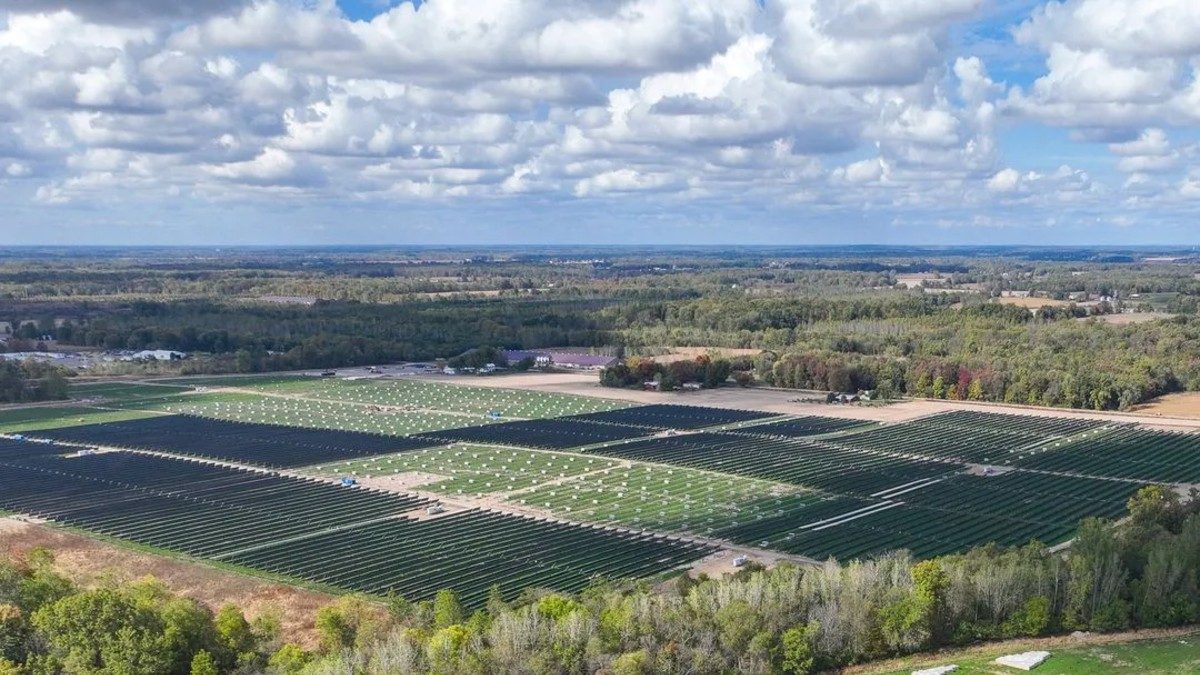
Following years of site acquisition, environmental impact assessments, engineering designs, and municipal approvals, physical construction on the Cold Creek Solar Park officially commenced in April 2025. Heavy machinery moved onto the rural acreage near Coldwater, Michigan, transforming agricultural and open tracts of land into a high-tech energy generation facility.
The construction phase involved the installation of hundreds of thousands of advanced photovoltaic panels, tracking systems designed to follow the sun’s trajectory for optimal energy capture, multi-megawatt inversion stations, and high-voltage interconnect infrastructure capable of tying the solar park seamlessly into DTE’s regional transmission grid. Despite supply chain hurdles and logistical complexities inherent to utility-scale renewable energy builds, project developers—including construction partners like Roncelli—kept the timeline on track, culminating in the official completion announcement in late 2026.
The Shifting Target: 2025 vs. 2027
Amidst the celebratory milestones of Cold Creek’s completion, a quiet adjustment to Ford’s timeline has drawn scrutiny from industry analysts. When the DTE-Ford partnership was unveiled in August 2022, both companies publicly communicated a hard target: Ford aimed to assemble every vehicle it manufactures in Michigan using the equivalent of 100% carbon-free electricity by the end of 2025.
However, in DTE’s latest official announcements regarding Cold Creek’s completion, that target has been officially shifted to the end of 2027. Neither DTE Energy nor Ford Motor Company has provided a detailed, public explanation for the two-year delay. Industry observers suggest that the adjustment likely stems from the sheer complexity of scaling grid infrastructure, potential delays in the subsequent phases of the broader 650 MW buildout, and the meticulous process of aligning continuous industrial manufacturing loads with intermittent renewable energy generation profiles.
Supporting Context & Metrics: The Scale of Cold Creek and Beyond
To fully appreciate the scope of the Cold Creek Solar Park, one must examine the hard metrics that define its output, its financial backing, and its place in Ford’s global decarbonization matrix.
Financial and Generation Metrics
- Total Project Cost: $194 million, funded through Ford’s corporate enrollment in DTE’s CleanVision MIGreenPower program.
- Nameplate Capacity: 100 megawatts (MW) of clean solar generation.
- Household Equivalency: Generates enough electricity to power approximately 23,000 to 25,000 average Michigan homes annually.
- Broader Commitment: Cold Creek is merely the first major milestone of a larger 650 MW renewable energy procurement agreement secured by Ford through DTE.
Socioeconomic and Community Impact
Utility-scale solar installations of this magnitude do not exist in a vacuum; they interact directly with the rural economies that host them. DTE Energy has consistently emphasized that projects built under the MIGreenPower umbrella provide substantial economic ripples throughout host communities, though specific, localized datasets for Cold Creek alone remain tightly managed.
When the broader 650 MW framework was initially announced in 2022, DTE estimated that the construction phase of these cumulative solar and wind arrays would generate roughly 250 temporary, high-paying construction jobs alongside approximately 10 permanent operations and maintenance positions. Furthermore, the influx of capital and rising property values associated with utility-scale clean energy parks translate into significant tax revenues for local municipalities.
Local governments often leverage these tax windfalls to fund vital public services:
- Infrastructure Upgrades: Paving, repairing, and expanding rural roads to accommodate heavy agricultural and industrial traffic.
- Educational Support: Bolstering school district budgets for technology, supplies, and facility modernizations.
- Public Safety: Enhancing funding for local libraries, sheriff departments, and volunteer fire rescue units.
Ford’s Global Sustainability Roadmap
The Cold Creek Solar Park is a localized tactical maneuver within a global strategic war chest. Ford’s participation in DTE’s program directly supports the automaker’s phased environmental targets:
- State Level: Transitioning to 100% carbon-free electricity for all Michigan-based manufacturing facilities by the end of 2027.
- Global Level: Achieving 100% carbon-free electricity across all global manufacturing facilities by 2035.
- Ultimate Goal: Reaching absolute carbon neutrality across its entire global footprint—encompassing vehicles, manufacturing facilities, and the expansive corporate supply chain—no later than 2050.
Official Statements and Industry Perspectives
The partnership between a legacy industrial titan like Ford Motor Company and a major regional utility like DTE Energy underscores a broader paradigm shift in how heavy industry approaches energy procurement.
In statements accompanying the rollout of the CleanVision MIGreenPower initiative and subsequent project completions, leadership from both organizations has framed the alliance as a model for regional economic and environmental collaboration.
"Our partnership with DTE Energy is a testament to what can be achieved when heavy industry and progressive utilities work hand-in-hand toward a common environmental goal," representatives for Ford have frequently noted. "Securing localized, carbon-free energy isn’t just about meeting corporate ESG [Environmental, Social, and Governance] metrics; it’s about future-proofing our domestic manufacturing operations and ensuring that the vehicles driving the American economy are built using the cleanest power possible."
DTE Energy has similarly championed the program as a primary engine for Michigan’s clean energy transition. By allowing corporate giants to underwrite the massive capital expenditures required for utility-scale solar and wind farms, DTE can accelerate its decarbonization schedule without placing an undue financial burden on residential ratepayers.
Energy analysts monitoring the Midwest power market note that programs like MIGreenPower are becoming the gold standard for corporate decarbonization. In regions where natural gas and legacy coal infrastructure have historically dominated the energy mix, corporate-backed renewables serve as the primary catalyst for driving new green capacity onto the grid. Without the guaranteed long-term off-take agreements from corporate heavyweights like Ford, projects of Cold Creek’s financial and physical scale would face significantly higher financing hurdles.

Future Outlook: The Road to 2027 and Beyond
As the dust settles on the newly completed Cold Creek Solar Park, attention immediately pivots to the horizon. The completion of this 100 MW installation is only the opening salvo in a much larger campaign. Because Cold Creek represents just a fraction of the total 650 MW commitment Ford made under its 2022 agreement with DTE, Michigan residents can expect a continuous pipeline of additional solar and wind park announcements in the coming years.
Challenges on the Horizon
Despite the optimistic trajectory, several challenges lie ahead for both DTE and Ford as they race toward the revised 2027 deadline:
- Grid Interconnection Backlogs: Across the United States, regional transmission organizations (RTOs) are grappling with unprecedented queues of renewable energy projects waiting to be studied and connected to the high-voltage grid. Streamlining these interconnection processes will be vital for future phases of Ford’s procurement plan.
- Land Use and Zoning Friction: Rural communities are increasingly pushing back against the sprawling footprint of utility-scale solar farms. Balancing agricultural preservation with clean energy expansion will require sophisticated community engagement and land-use planning.
- Supply Chain Volatility: Global fluctuations in photovoltaic module components, inverter technologies, and raw materials (such as polysilicon, silver, and copper) continue to pose cost and scheduling risks for upcoming utility builds.
The Ultimate Destination
Despite these hurdles, the momentum behind Michigan’s clean energy transition is palpable. The Cold Creek Solar Park stands as concrete proof that heavy manufacturing and renewable energy can successfully merge.
As the remaining tranches of Ford’s 650 MW procurement agreement break ground and come online over the next several years, the assembly lines producing Ford’s next-generation electric and internal combustion vehicles will increasingly draw their lifeblood from Michigan skies. For Ford, DTE Energy, and the state of Michigan, Cold Creek is not merely a destination, but the launching pad for a fully decarbonized industrial future.



