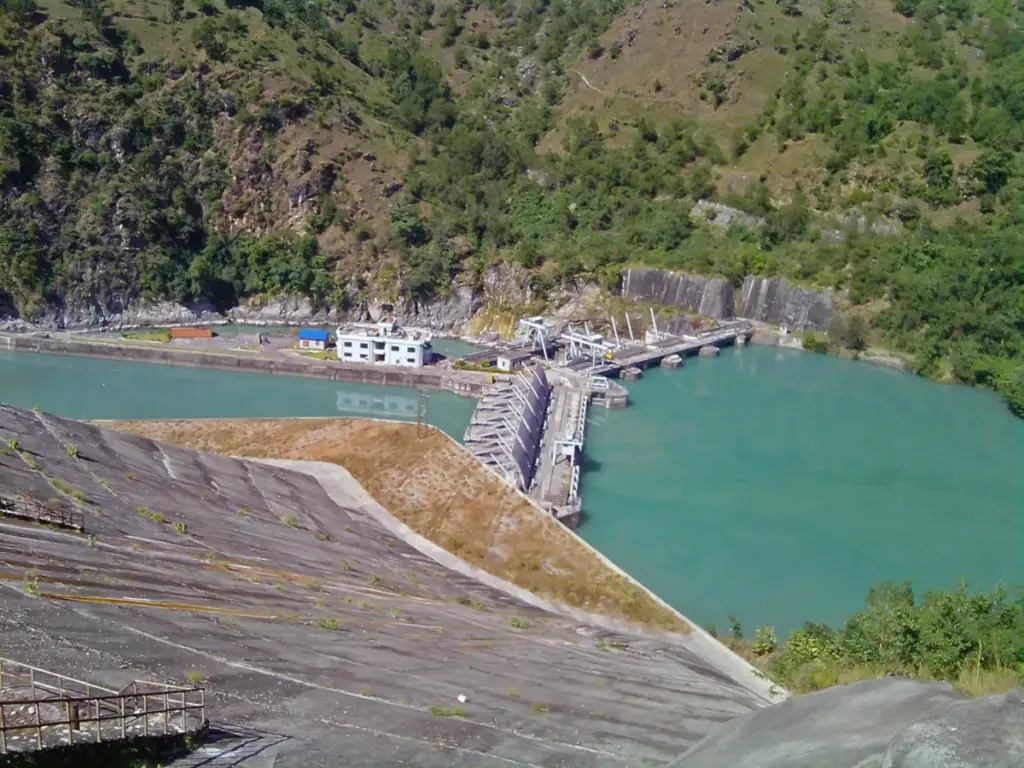
KATHMANDU — For decades, the vertical geography of the Himalayas has been framed by policymakers not merely as a topographical challenge, but as an economic engine. Nepal’s long-held national development strategy has relied on a singular promise: harnessing the raw, kinetic power of its thousands of snow-fed rivers to fuel domestic industrialization and transform the land into a regional clean-energy powerhouse.
That foundational strategy has now met a devastating reckoning. On August 26, a series of catastrophic flash floods originating near the Nepal-China border tore through river basins, knocking out roughly 10% of the country’s installed national grid capacity in a matter of hours. The disaster has instantly transformed a technical debate over civil engineering standards into an existential policy crisis. As the country counts its mounting economic losses and struggles to locate hundreds of missing workers, energy planners, economists, and climate scientists are being forced to ask an uncomfortable question: Can Nepal’s export-driven, hydropower-centric model survive an era of runaway global heating and increasingly volatile Himalayan weather?
Executive Overview
The late-August flash floods caught the Himalayan nation off-guard with a ferocity described by veteran energy authorities as a "once-in-a-century event." Striking the fragile watersheds of snow-fed rivers—most notably the Trishuli basin—the wall of water, debris, and glacial slurry obliterated decades-old infrastructure, crippled active power generation, and paralyzed under-construction mega-projects.
The immediate fallout has severed critical transmission lines, threatened the nation’s hard-won status as a net electricity exporter, and triggered an intense debate over climate resilience, basin-wide planning, and energy diversification. While state utilities have scrambled to restore basic urban power supplies, the structural scars left by the disaster run deep. The catastrophe threatens to derail Nepal’s ambitious carbon-neutrality targets, inflate future consumer electricity tariffs, and force a hard look at the wisdom of packing dozens of heavy engineering projects into tightly constrained, high-risk Himalayan river corridors.
Detailed Chronology and Immediate Impacts of the August 26 Disaster
The crisis unfolded in the predawn hours of August 26, when unseasonal and intense precipitation—compounded by potential cascading failures and high-altitude snowmelt along the northern borderlands—triggered unprecedented flash floods. The raging torrents surged down the Trishuli and neighboring river valleys, transforming tranquil waterways into violent channels of mud, boulders, and debris.
Official data compiled from government and industry sources paint a grim picture of the immediate devastation:
Generation Capacity Crippled: A combined operational capacity of 281 megawatts (MW) was knocked offline instantly. This included utility-scale generation plants as well as operational solar installations directly in the flood path.
Legacy Infrastructure Wiped Out: Among the casualties was the historic Devighat Hydroelectric Plant. Commissioned 42 years ago as one of the nation’s pioneering hydroelectric facilities, the 14.1-MW plant was completely obliterated. Downstream, a 25-MW solar power plant was severely inundated and choked with silt.
Transmission Hubs Destroyed: A major transmission line hub situated along the banks of the Trishuli River was washed away, isolating an additional 150 MW of functional generation capacity from the national grid system.
Pipeline Devastation: Four major under-construction projects, accounting for a combined capacity of 700 MW, suffered catastrophic structural damage.
Human Toll: The human dimension of the disaster remains deeply distressing. According to the latest press statements issued by the Independent Power Producers Association of Nepal (IPPAN), as many as 983 engineers and laborers working inside hydropower tunnels or residential quarters near powerhouses are listed as out of contact. While government administrative tallies have formally verified 639 missing persons tied to the project sites, rescue operations remain severely hampered by impassable terrain, washed-out highways, and residual flooding.
Economic losses are preliminarily estimated in the hundreds of billions of Nepali rupees, with federal agencies yet to provide a definitive timeline for when the severely affected generation facilities can safely resume operations.
Supporting Context & Metrics: The Fragile Geometry of Himalayan Energy
To understand the magnitude of the August disaster, one must examine Nepal’s macro-energy strategy. With a technically and economically feasible hydropower potential estimated at roughly 43,000 MW, successive administrations have pursued an ambitious roadmap.
Under the Energy Development Roadmap, Nepal aimed to balance domestic energy poverty while generating a massive surplus. By 2035, the nation planned to export 15,000 MW of hydroelectricity to neighboring India and Bangladesh—thereby narrowing its persistent trade deficit—while simultaneously consuming 13,500 MW domestically. This export-heavy vision was bolstered by aggressive national climate pledges under Nepal’s Long-term Strategy for Net-zero Emissions, which targets:
Electrifying 25% of all household kitchens by 2030.
Converting 30% of industrial boilers to electric power by 2030.
Transitioning 90% of new passenger vehicle sales to electric mobility by 2030.
Reaching 100% electrification of heavy iron and steel smelting furnaces by 2035.
Expanding total national grid demand to 14,300 MW under advanced climate-action scenarios by the end of the decade.
Yet, this grand architectural vision has always rested on fragile underlying assumptions. According to the Department of Electricity Development, historical project designs across the country have historically relied on restricted water discharge data spanning just 20 to 30 years. As global temperatures rise and the Hindu Kush Himalaya region warms at rates well above the global average, glacial lakes are swelling, permafrost is thawing, and extreme precipitation events are rendering historical hydrological baselines obsolete.
Furthermore, the concentration of infrastructure has created acute regional vulnerabilities. In the Trishuli River basin alone, more than 30 hydropower projects are either currently operational or in various stages of construction. Environmental economists argue that this haphazard, project-by-project licensing model—conducted without holistic, basin-wide Cumulative Impact Assessments (CIAs) regarding glacial lake outburst floods (GLOFs) and debris flows—created an inevitable recipe for disaster.
Official Statements and Industry Perspectives
As rescue teams comb through the muddy wreckage of powerhouses and access tunnels, the nation’s energy sector is sharply divided over the path forward.
The State Response and Operational Continuity
The state-owned Nepal Electricity Authority (NEA) has adopted a defensively calm posture. Agency officials note that electricity supply was successfully restored to the majority of affected urban and semi-urban centers within 48 hours of the disaster. NEA representatives declined to comment on the long-term macroeconomic impacts of the flood, emphasizing that immediate search-and-rescue operations inside trapped tunnels remain their absolute operational priority.
The Engineering Debate: Surface vs. Underground
A clear physical pattern emerged from the rubble: powerhouses built directly on the surface, along with riverbed dams and desanders, bore the brunt of the destruction. Conversely, newer installations featuring deep underground powerhouses and subterranean desanders weathered the extreme hydraulic pressures with significantly less structural damage.
Kulman Ghising, who directed the NEA for nearly eight years before serving as energy minister, characterized the August 26 event as a stark warning.
"We need to design plants resilient to floods and, most importantly, adopt early warning systems as well as robust emergency evacuation measures, and make longer access tunnels to the powerhouse to save it from floodwater," Ghising stated.
Shailendra Guragain, former president of IPPAN, echoed this assessment, noting that traditional surface-level designs were historically engineered with short-term capital savings rather than long-term climatic resilience in mind.
Weighing in from a regulatory perspective, Mohan Das Manandhar, chair of the Nepal Energy Foundation (NEF), argued in a recent industry publication that developers can no longer afford to build simply "away from the river." Instead, they must engineer for maximum credible floods and cascading hazards. Industry experts, including Bibek Kandel, advisor to the Ministry of Energy, Water Resources and Irrigation, estimate that integrating these heightened safety margins will increase baseline project construction costs by 10 to 12%.
Future Outlook: A Policy Crossroads
The catastrophic flooding has forced a profound re-evaluation of Nepal’s energy future, splitting experts into two distinct philosophical camps.
The Case for Re-evaluating Export and Diversifying the Energy Mix
Shree Raj Shakya, head of the Center for Energy Studies at Tribhuvan University’s Institute of Engineering, contends that the physical vulnerabilities exposed by snow-fed river floods demand an immediate, pragmatic pivot away from aggressive electricity export targets.
"The need of the hour is to put the strategy of electricity for domestic consumption in a more pragmatic way rather than aiming to export it, because there is no alternative to the generation of hydroelectricity in the country amid rising prices of fossil fuel," Shakya warned.
He cautions that the disaster will inevitably pinch power supplies during the upcoming winter season, threatening to delay national net-zero milestones. Shakya also points to a shifting economic reality: even as domestic generation costs spike due to required engineering upgrades, wholesale electricity prices in neighboring India have experienced downward pressure, introducing severe market risks to Nepal’s export model.
To buffer against these shocks, Shakya and other analysts advocate for scaling up solar power. Currently accounting for less than 3% of total generation, solar energy could be aggressively expanded to capture up to 20% of the national energy mix. With photovoltaic hardware costs plummeting and battery storage technologies maturing, daytime solar generation could satisfy heavy load demands while allowing hydro operators to conserve water reserves in reservoirs for peak morning and evening hours. Furthermore, solar installations carry vastly lower systemic risks from catastrophic Himalayan flash floods.
The Defense of the Export Model
Conversely, experts like Manandhar maintain that cross-border electricity trade remains indispensable. Exporting surplus summer generation allows Nepal to balance its seasonal supply-demand gaps and finance its broader infrastructure development. In this view, domestic consumption should be prioritized within the existing export-oriented framework rather than abandoning the model altogether.
However, the financial mechanics of recovery will be punishing. Ram Prasad Dhital, chairman of the Electricity Regulatory Commission (ERC), noted that the 10-to-12% hike in structural construction costs will ultimately have to be absorbed by someone. Dhital has proposed establishing a dedicated loss-and-damage fund for the hydropower sector to finance post-disaster recovery. This added financial burden arrives directly on the heels of a newly implemented 5% value-added tax on domestic household electricity consumers, compounding cost-of-living pressures for ordinary citizens.
Conclusion: Balancing Ambition with Himalayan Realities
For a brief, triumphant window in the previous fiscal year ending mid-July, Nepal celebrated a historic milestone: it achieved net-exporter status in power trade with India and Bangladesh, banking roughly 18.75 billion rupees ($142 million) in net revenue.
The August 26 disaster has brutally tested that hard-earned triumph. While the country currently sits in its high-flow generation season, the true test of the national grid will arrive in the winter months. As glacial-fed river flows naturally contract and peak heating demands surge, the offline generation capacity caused by the floods will likely force Nepal to temporarily reverse course and import electricity from India to keep its lights on.
Ultimately, the floodwaters have laid bare a fundamental truth of the 21st-century Anthropocene: infrastructure built in the shadow of the world’s highest mountains can no longer be planned using the hydrological certainties of the past. Whether Nepal chooses to slow its export ambitions, mandate underground engineering upgrades, or rapidly integrate low-risk solar and storage arrays into its grid, one reality remains non-negotiable. The country’s economic and ecological future depends entirely on whether its policymakers can build a modern energy system tough enough to withstand the volatile, warming pulse of the Himalayas.