

Executive Overview
For decades, international climate policy has relied on a foundational framework: regulated carbon markets designed to curb industrial pollution. By setting strict governmental caps on greenhouse gases and permitting companies to buy and sell emissions allowances, these compliance markets generate immediate financial incentives for polluters to locate the most cost-effective pathways toward decarbonization.
Yet, a glaring blind spot persists across nearly all of these mandatory regulatory schemes. While factories, power plants, and transportation sectors face aggressive oversight, the natural world has been largely omitted. Nature—our planet’s most potent engine for both carbon storage and carbon release—operates outside the calculus of mandatory cap-and-trade programs.
This exclusion persists despite overwhelming scientific consensus that preventing widespread deforestation, mitigating catastrophic wildfires, and restoring degraded landscapes represent some of the most efficient methods to lower atmospheric carbon. To address this gap, economists and environmental advocates are pushing to integrate nature into mandatory compliance markets.
In a wide-ranging interview, Mark Mann, managing editor of Corporate Knights, sat down with Chris Costello, chief economist at the Environmental Defense Fund (EDF), to dissect the immense opportunities and substantial risks of bringing nature into the regulated carbon architecture. Their conversation illuminates a transformative thesis: if designed with rigorous compliance architecture, integrating nature could radically lower the costs of climate action while multiplying the volume of global carbon reductions.
Detailed Chronology: The Evolution of Carbon Markets and the Nature Blind Spot
The Mechanics of Compliance Versus Voluntary Markets
To understand the current debate surrounding carbon pricing, one must first trace the distinction between the two primary architectures governing carbon transactions globally.
- Compliance Markets: Operating at national or regional levels, these mandatory systems establish absolute caps on total carbon emissions, predominantly targeting industrial sectors. Roughly 50 to 60 such markets exist worldwide. Governments ratchet these caps downward annually, driving systemic progress toward long-term targets like Canada’s net-zero by 2050 mandate. Within these frameworks, polluters trade allowances. A factory seeking to expand operations must purchase allowances from a cleaner competitor that has innovated below its legal limit. This flexibility ensures that emission reductions are achieved through the most economically efficient mechanisms available.
- Voluntary Markets: Unlike compliance markets, voluntary markets operate without government-mandated caps. They function through individual corporate or private contracts. While they have fostered innovation and channeled early-stage funding to conservation initiatives, voluntary markets have frequently suffered from severe integrity scandals, greenwashing accusations, and methodological flaws.
The Missing Piece: Why Nature Was Left Out
Barring New Zealand, virtually all of the world’s 60-plus carbon compliance markets exclude natural ecosystems. While voluntary carbon markets have ventured into nature-based projects—such as localized tree-planting or avoided deforestation contracts—they have lacked the overarching, jurisdiction-wide measurement caps that give compliance markets their regulatory teeth.
According to Costello, this historical omission is the single greatest missed opportunity in climate policy. While industrial markets target the obvious smokestacks of coal-fired power plants and steel mills, they ignore the massive carbon fluxes flowing directly out of the Earth’s ecosystems.
Supporting Context & Metrics: Nature as a Global Smokestack
The scale of global emissions presents a sobering mathematical challenge. Human-driven net emissions total approximately 53 gigatons (billion tons) annually. Achieving global net-zero goals requires compressing that 53-gigaton figure to absolute zero.
The Industrial Versus Natural Balance Sheet
Currently, all compliance markets combined achieve annual emission reductions on the order of one to two gigatons. While these regulated markets are successfully driving energy transitions within industrialized nations, their pace and scale remain insufficient to match the urgency of the climate crisis.
Nature, however, offers staggering potential. According to EDF models, properly integrating nature into compliance markets could yield eight to 14 gigatons per year of carbon mitigation at a relatively low cost. Nature-based solutions, if correctly structured, could dwarf everything currently achieved in industrial sectors.
Rethinking the Natural Smokestack
To understand why nature matters on a balance-sheet level, society must abandon the misconception that ecosystems are merely passive backdrops. Nature functions as an active emissions source—a literal smokestack:
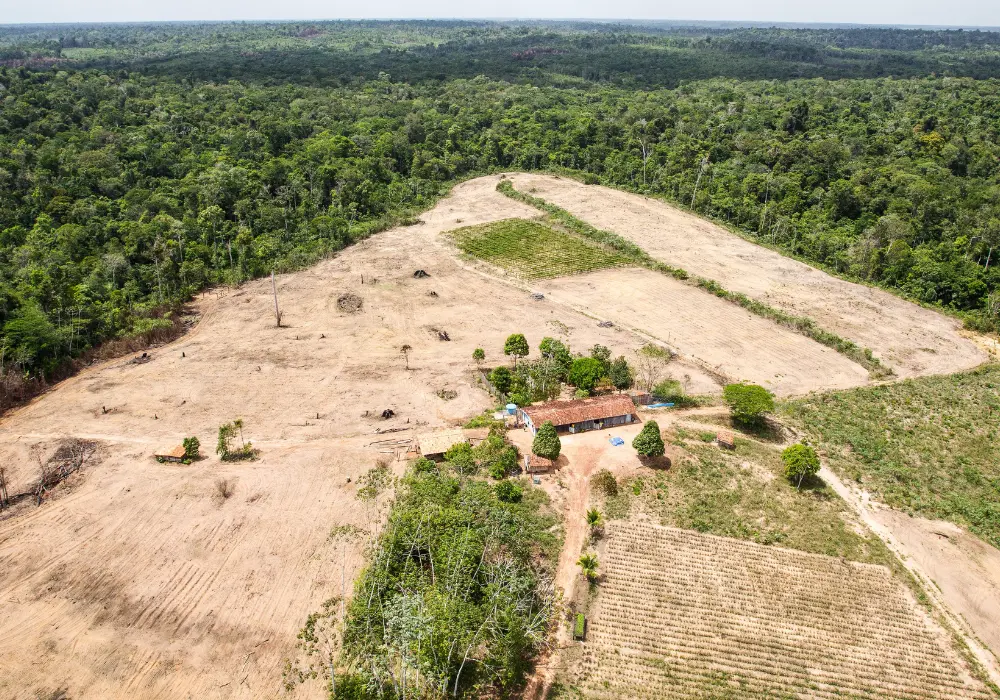
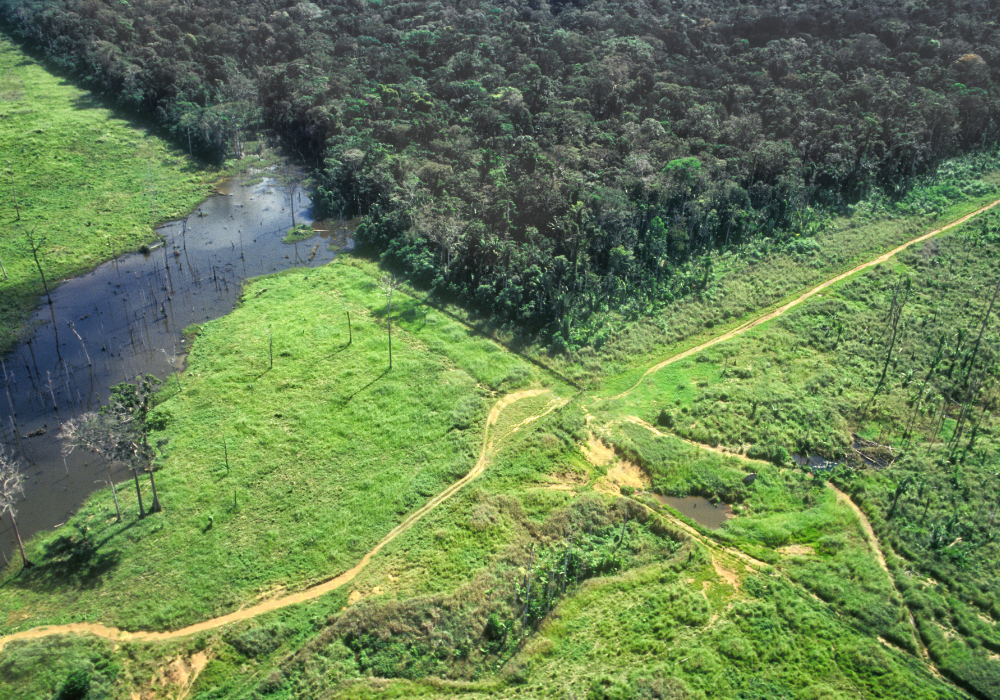
- Deforestation: Each acre of the Amazon rainforest cleared and burned releases massive volumes of stored carbon into the atmosphere, mimicking the output of a fossil-fuel power plant.
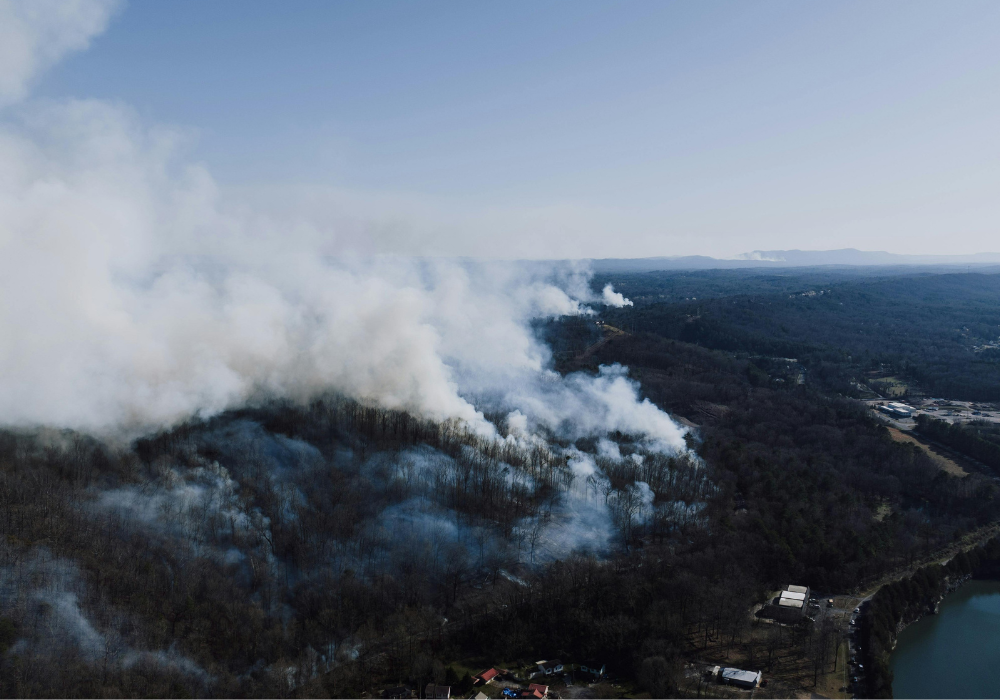
- Megafires: Mismanaged forests fuel unprecedented wildfire seasons. In 2023, severe Canadian forest fires emitted approximately three billion tons of carbon in a single year—completely eclipsing Canada’s combined annual industrial and transportation emissions.
Simultaneously, nature serves as a biological machine capable of drawing carbon dioxide out of the air. When forests, agricultural soils, mangrove swamps, and kelp ecosystems are actively restored and protected, they absorb vast quantities of atmospheric carbon. Aligning economic incentives to simultaneously halt ecosystem degradation and reward ecological restoration unlocks unprecedented climate mitigation potential.
Official Statements & Expert Analysis: Overcoming Skepticism
The push to price and trade natural carbon assets faces intense skepticism, largely catalyzed by high-profile exposés and structural failures within historical voluntary carbon markets. Critics worry that financializing nature opens the door to corporate greenwashing and commodifies ecosystems without guaranteeing real-world climate benefits.
The Additionality Problem Explained
In the interview, Costello addressed the core flaw that plagued early voluntary nature projects: the "additionality problem."
"If I said, ‘Hey, I’m looking for someone who will agree not to deforest next year, come sign up for my program,’ the first people to sign up are the people that wouldn’t have deforested anyway," Costello explained. "You’re paying somebody for a ton of carbon, but the payment isn’t really translating into a change on the ground."
In voluntary settings, proving that a financial incentive directly prevented ecological destruction is notoriously difficult.
The Compliance Solution: Jurisdiction-Wide Caps
Costello argues that the solution is not to abandon nature-based pricing, but to graduate it from the fractured voluntary market into robust compliance frameworks.
By shifting from isolated project-level accounting to jurisdiction-wide monitoring, regulators can track total annual emissions across all properties within a defined geographic boundary. Under this compliance architecture, if a government or region sets an absolute cap and manages its entire landscape—accounting for both industrial smokestacks and natural fluxes—the additionality problem is solved. The overarching cap guarantees that every credit generated corresponds to a real, measurable net reduction in atmospheric carbon.
Integrity Versus Low Prices
A recurring critique of carbon pricing is the risk of "cheap carbon," where low allowance prices fail to motivate deep decarbonization. Costello parsed this dynamic by dividing low prices into two distinct categories:
- Integrity-Driven Low Prices: When market participants lack confidence in the underlying asset—akin to buying a used car without being allowed to look under the hood—demand drops, pushing prices down. This plagued historical voluntary markets.
- Efficiency-Driven Low Prices: When credits represent fully verified, high-integrity carbon removals delivered through low-cost natural pathways, market efficiency improves.
"If reductions cost $30 a ton instead of $80, you can set a more ambitious target," Costello noted. "If the tons are real and cheap, we should be going for them."
Future Outlook: The Road Ahead for Measurement, Verification, and Markets
Transforming nature into a regulated asset class requires overcoming monumental technical hurdles in Monitoring, Reporting, and Verification (MRV). While measuring smokestack emissions via direct physical sensing or fuel-consumption proxies is well-established, quantifying carbon fluxes across complex ecosystems demands advanced technological integration.
The Spectrum of Ecosystem Measurement
- Forests: Scientists possess robust data and methodologies for measuring carbon fluxes in terrestrial forests, making them the most viable starting point for compliance integration.
- Agriculture: Monitoring soil carbon sequestration by incentivizing sustainable farming practices presents moderate complexity, but frameworks are rapidly advancing.
- Oceans and Coastal Waters: Marine ecosystems—such as mangrove swamps and kelp forests—hold immense sequestration capacity, but accurate quantification remains extremely difficult. While physical and chemical oceanography confirm their carbon uptake, precise micro-level metric tracking across vast marine areas is still in its infancy.
Conclusion: A Pragmatic Path Forward
Costello advocates for a phased, pragmatic approach to market design. Rather than attempting to incorporate every marine and terrestrial ecosystem on day one, regulators should build compliance architecture where data is mature—starting with forests and land management—and expand outward as MRV technologies evolve.
By bridging the historical divide between industrial regulation and natural ecosystem management, governments can unlock gigatons of cheap, credible carbon reductions. If executed with transparency and rigorous oversight, integrating nature into compliance markets may well prove to be the decisive turning point in humanity’s fight against climate change.



