

WASHINGTON — The landscape of American energy infrastructure is currently defined by a profound paradox. On one hand, clean energy developers are racing against the clock, launching unprecedented numbers of utility-scale solar, wind, and battery storage projects. On the other hand, a wave of policy uncertainty, legislative rollbacks, and tightening federal rules has created a chilling effect across the manufacturing sector, resulting in billions of dollars in canceled factories and thousands of lost jobs.
This bifurcated reality is laid bare in the latest “Clean Economy Works” report released by E2 (Environmental Entrepreneurs). Tracking market dynamics through the first quarter of 2026, the report captures a critical inflection point for the U.S. clean energy economy. As developers scramble to secure financing and break ground before looming federal deadlines tied to the controversial Omnibus Budget and Bilateral Appropriations Act (OBBA) passed last year, the broader industrial ecosystem is grappling with rising cancellations, shifting capital investments, and a cooling manufacturing market.
Executive Overview: A Race Against Time Amid Policy Headwinds
The opening months of 2026 have yielded a surge of activity unlike anything seen in recent years. Between January and March, clean energy developers announced 54 new utility-scale renewable energy and storage projects. This figure represents a staggering acceleration, nearly doubling the volume of active projects announced during the entirety of 2025.
Altogether, these new Q1 announcements account for more than $18 billion in planned capital investment. If fully realized, these installations will add over 12 gigawatts (GW) of new electricity generation and storage capacity to the domestic grid—enough juice to power approximately 2 million American homes.
Yet, this frantic pace is born out of urgency rather than unbridled market confidence. Industry insiders have spent months warning lawmakers and regulators about a looming cliff: a July 4 federal deadline that threatens to fundamentally alter, and severely restrict, access to critical clean energy tax incentives established under previous climate legislation. With future financing hanging in the balance, companies are aggressively pushing to break ground before the rules of engagement change.
Simultaneously, however, the industry is absorbing heavy blows from changing political tides. E2’s data reveals that while new projects are being rushed onto the drawing boards, cancellations are mounting at an alarming rate. The friction between soaring domestic electricity demand—fueled by the explosive growth of artificial intelligence (AI) data centers, industrial reshoring, and the ongoing transition to electric transportation—and hostile regulatory policies has created a high-stakes tug-of-war for the future of American energy.
Detailed Chronology: Q1 2026 and the Escalating Regulatory Squeeze
To understand the current volatility of the clean energy sector, it is necessary to examine the rapid sequence of events and policy pressures shaping corporate strategy in 2026.
The Legislative Catalyst and the July 4 Deadline
The genesis of the current rush can be traced directly to the passage of the OBBA late last year. The legislation introduced sweeping revisions to the federal tax code concerning energy credits, imposing stricter domestic content requirements, labor standards, and administrative hurdles. More critically, it established a hard transition threshold—culminating in a July 4 implementation deadline—that threatens to strip away favorable financing structures for projects that have not yet broken ground or secured binding commitments.
For renewable energy developers, capital expenditure relies heavily on predictability. The prospect of losing lucrative tax credits has forced executive boards to accelerate development pipelines from multi-year timelines into compressed, months-long sprints. This explains why Q1 2026 saw developers announce nearly as many utility-scale projects in a single quarter as they did throughout the entire preceding year.
The Counter-Wave of Cancellations
Even as developers greenlit new projects to beat the clock, the administration’s persistent rhetoric and congressional efforts to dismantle clean energy funding mechanisms took a severe toll. During the same three-month window, companies scrapped 38 utility-scale solar, wind, and battery storage projects.

To put this in perspective, this single-quarter cancellation total represents nearly half of the 85 projects that were abandoned during all of 2025. The fallout translates into tangible losses for the grid and local economies alike:
- Generation Capacity Lost: Nearly 8 GW of planned electricity generation, sufficient to power 2 to 3 million homes.
- Capital Investment Lost: Approximately $13 billion in canceled local infrastructure investments.
- Job Opportunities Lost: Roughly 33,000 construction and engineering jobs either downsized or eliminated entirely.
For comparison, the total economic damage of canceled projects throughout the full 12 months of 2025 stood at around $27 billion in lost investment and 45,000 jobs. The fact that two-thirds of that annual damage was nearly matched in just the first three months of 2026 highlights an accelerating crisis of confidence among developers navigating the new regulatory regime.
Supporting Context & Metrics: Manufacturing Slump and Sectoral Divides
While power generation projects are being rushed through planning phases under duress, the manufacturing arm of the clean energy economy is experiencing a profound contraction. The ecosystem that once thrived on a steady stream of domestic factory announcements is seeing its momentum stall out.
The Manufacturing Slowdown
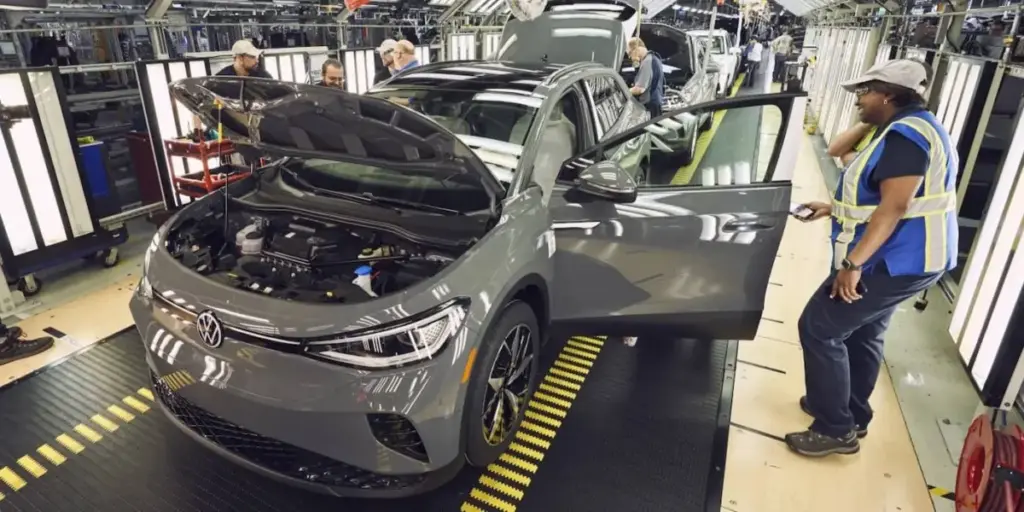
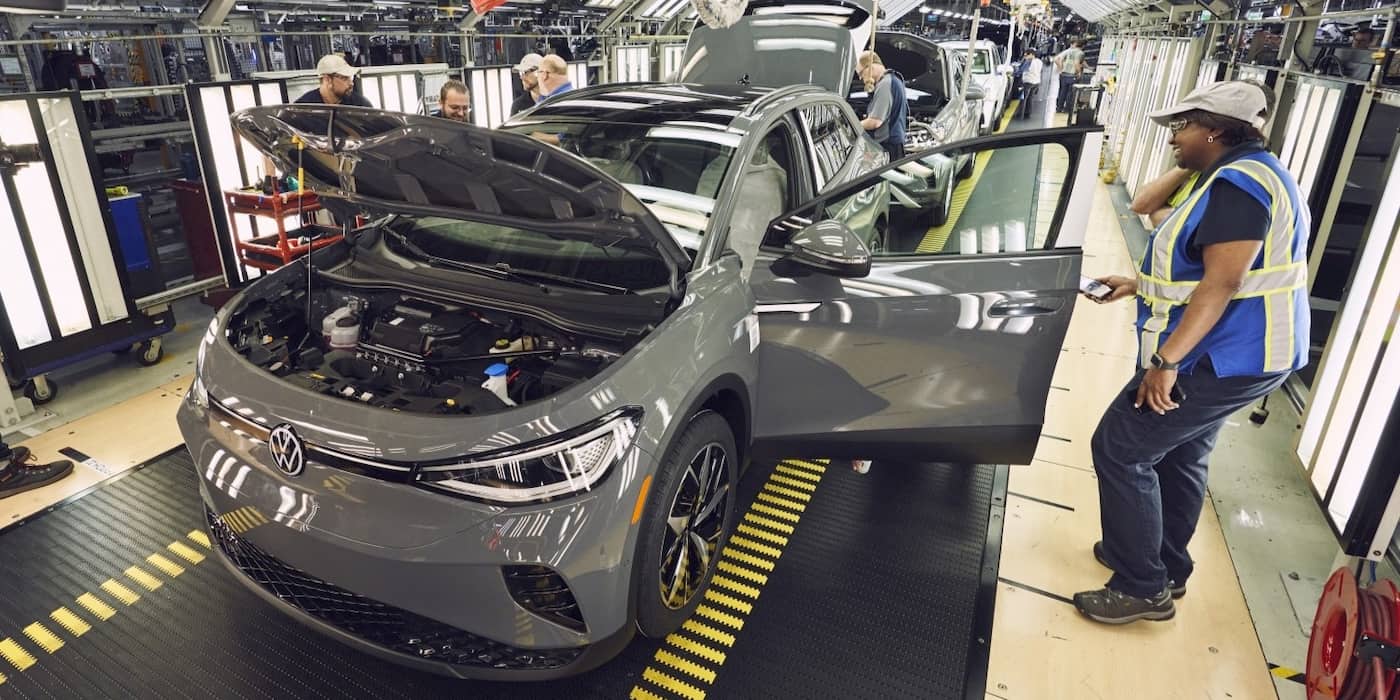
During Q1 2026, E2 tracked seven major manufacturing projects that were either canceled, closed indefinitely, or severely downsized across key industrial states, including Ohio, Oklahoma, North Carolina, and Georgia. These scrapped facilities represented nearly $1.35 billion in lost capital and approximately 8,100 potential jobs.
Conversely, companies announced only 12 new major clean energy manufacturing projects during the entire quarter, totaling a modest $758 million in investment and fewer than 2,000 jobs. This represents a dramatic deceleration compared to the boom years of 2023 and 2024, when the market routinely witnessed the announcement of more than 60 new clean energy factories every single quarter.

Divergent Realities Across Sectors
A granular look at the data reveals that pain is not distributed equally across all clean energy verticals. Certain sectors are proving resilient, while others are bearing the brunt of political and market headwinds.
- Grid and Transmission Equipment (The Stable Outlier): Manufacturing tied to the electrical grid, transformers, and transmission technology has emerged as the most resilient sector. Since 2022, companies have announced more than $6.4 billion in active investment across 58 grid-related projects, with only a single project cancellation totaling $150 million recorded to date. This stability is directly tied to the urgent, unavoidable need to upgrade aging grids to handle modern loads.
- Renewable Energy Manufacturing (Solar & Wind): Solar and wind manufacturing has held its ground reasonably well. The sector boasts roughly 116 active projects accounting for $20.4 billion in investment. Cancellations here have been relatively modest, totaling about $2 billion—less than 10% of total announced capital.
- Battery Energy Storage Manufacturing (High Volatility): Battery manufacturing has experienced a high rate of turbulence relative to its size. E2 tracked nearly $16.9 billion in active battery storage manufacturing investments, but more than $8.6 billion tied to 18 distinct projects has already been canceled or downsized. This means roughly one-third of all announced battery manufacturing capital has evaporated.
- Electric Vehicle (EV) Manufacturing (The Hardest Hit): As the largest clean energy manufacturing sector tracked by E2, the EV space encompasses 166 active projects totaling over $84.4 billion in announced investments. However, it has also absorbed the heaviest body blows. Since 2022, the sector has seen 58 canceled, closed, or downsized manufacturing projects, wiping out approximately $25.5 billion in investment—nearly 25% of the total capital ever pledged to the sector.
Official Statements and Industry Perspectives
The dissonance between surging project demand and cratering manufacturing investment has drawn sharp critiques from economic analysts, industry advocates, and environmental groups.
Bob Keefe, executive director of E2, emphasized the self-defeating nature of current federal policies in statements accompanying the release of the report. "We are witnessing a bizarre economic friction where the federal government is actively undermining the very industries our country desperately needs to keep the lights on," Keefe noted. "Electricity demand is soaring due to data centers, advanced manufacturing, and transportation electrification. Renewable energy is the absolute fastest and cheapest way to meet that demand, yet policy uncertainty is freezing long-term industrial planning."
Industry leaders have echoed these concerns, pointing out the geographic irony embedded in the data. According to E2’s tracking, Republican-held congressional districts continue to capture the largest share of both overall clean energy investments and project cancellations. Lawmakers who publicly advocate for the repeal of clean energy incentives are finding their own constituents absorbing the brunt of the economic fallout—losing thousands of high-paying manufacturing jobs and millions in local tax revenues.
Utility executives and grid operators have also sounded alarms regarding supply chain reliability. With major battery and EV component factories being downsized or canceled, domestic automakers and energy storage providers face increased reliance on foreign supply chains, undercutting long-standing goals of national energy independence.

Future Outlook: Navigating the Post-July 4 Landscape
As the industry looks past the looming July 4 federal deadline, the trajectory of the American clean energy economy remains shrouded in uncertainty.
On the generation side, the immediate outlook points to a frantic second quarter. Developers will continue to break ground on as many utility-scale solar, wind, and storage projects as humanly and financially possible before the new tax rules take full effect. This rush could artificially inflate Q2 deployment numbers, masking underlying structural challenges that threaten to slow the market down in late 2026 and 2027.
However, the longer-term outlook for manufacturing and grid readiness is more precarious. Unless legislative stability is restored, the multi-billion-dollar investments required to build out a robust domestic supply chain for electric vehicles and advanced battery storage may continue to stall. Economists warn that persistent regulatory hostility could cause international capital to bypass the United States entirely, routing investments toward markets in Europe and Asia where clean energy policy enjoys bipartisan, long-term backing.
Ultimately, the U.S. power grid faces a mathematical reality that transcends political cycles: electricity demand is projected to grow exponentially over the next decade. Whether policymakers choose to embrace or obstruct the renewable energy solutions required to meet that demand will determine not only the stability of the nation’s power supply, but its future economic competitiveness on the global stage.



