

Executive Overview
As diplomats, climate strategists, and civil society advocates prepare for the COP31 UN Climate Summit in Antalya, Türkiye, a critical battle over the global economic architecture of the climate transition is taking center stage. At the core of the negotiations is the operationalization of a dedicated international mechanism designed to ensure that the global pivot away from fossil fuels is equitable, safe, and socially protective. Provisionally dubbed the Belém Action Mechanism—or the Belém-Antalya Mechanism (BAM)—this initiative emerged from ground-breaking commitments made at COP30 in Belém, Brazil, and aims to provide structured support to vulnerable nations, affected workers, and fossil-fuel-dependent communities.
While the conceptual imperative of a "just transition" has earned unanimous rhetoric across the United Nations framework, transforming philosophical alignment into an actionable, adequately funded international body remains fraught with geopolitical tension. Developed economies, emerging giants, energy exporters, and climate-vulnerable nations hold fundamentally divergent views on the mechanism’s scope, financial backing, and regulatory authority.
With civil society groups pressing for concrete governance structures to be adopted in Antalya and fully implemented by COP32 in Ethiopia (2027), negotiators face an uphill struggle. The outcome at COP31 will determine whether the mechanism becomes a vital lifeline for economic diversification and labor protection in the Global South, or merely another high-level talking shop struggling against the weight of international gridlock.
Detailed Chronology & Key Milestones
The path toward a formalized UN mechanism for just transition has been defined by incremental institutional milestones, procedural debates, and diplomatic compromises across successive climate summits.
       2022 (COP27 - Sharm El-Sheikh)
       ├── Establishment of the Just Transition Work Programme (JTWP)
       │
       2023 (COP28 - Dubai)
       ├── Launch of operational workstreams under the JTWP
       │
       2025 (COP30 - Belém)
       ├── Agreement to establish a dedicated Just Transition Mechanism
       │
       June 2026 (Bonn Climate Talks - SB64)
       ├── Adoption of progress review framework for JTWP
       └── Draft informal note outlining options for mechanism design
       │
       Sept 30 – Oct 2, 2026 (Sydney Workshop)
       ├── High-level intersessional meeting co-hosted by Türkiye & Australia
       │
       November 2026 (COP31 - Antalya)
       ├── Target for adopting the formal structural decision on the Mechanism
       │
       2027 (COP32 - Ethiopia)
       └── Target for full operationalization via a proposed Transitional Committee
1. The Foundation: COP27 to COP29
The formal negotiation stream for an equitable shift began at COP27 in Sharm El-Sheikh (2022) with the creation of the Just Transition Work Programme (JTWP). Launched operationally a year later at COP28 in Dubai, the JTWP was tasked with facilitating high-level dialogues on achieving economic decarbonization without compromising social equity, labor standards, or sustainable development.
2. The Belém Breakthrough: COP30
At COP30 in Belém, Brazil, momentum translated into structural intent. Governments agreed in principle to construct a dedicated mechanism under the UN Framework Convention on Climate Change (UNFCCC) and the Paris Agreement. This body was conceptualized to move beyond theoretical debates, establishing a institutional channel for technical assistance, capacity building, and financial mobilization.
3. The Bonn Gridlock and Progress: June 2026
During the mid-year climate negotiations in Bonn (SB64), the just transition track stood out as one of the few areas where negotiators achieved procedural consensus amidst broader stalemates on adaptation financing and emissions reduction targets. Delegates agreed on modalities to review the progress of the JTWP.
Crucially, negotiations yielded an informal preliminary document capturing diverse options for the governance, scope, and functions of the new mechanism. However, this text also laid bare sharp institutional divides regarding how closely the JTWP review should link to the launch of the mechanism.
4. The Bridge to Antalya: Sydney Intersessional (2026)
To maintain momentum ahead of COP31, the incoming joint leadership of Türkiye and Australia organized an informal diplomatic workshop in Sydney (September 30 – October 2, 2026). This meeting served as a critical crucible for governments and non-governmental organizations to reconcile technical disagreements before arriving in Antalya.
Supporting Context, Sectoral Impact & Economic Metrics
Understanding the urgency behind the Belém-Antalya Mechanism requires examining the staggering socio-economic dislocations threatened by rapid industrial decarbonization, particularly in high-emitting and commodity-dependent economies.
+-----------------------------------------------------------------------+
|              ECONOMIC IMPACT OF INDUSTRIAL TRANSITION                 |
+-----------------------------------------------------------------------+
|  Global Coal Sector Employment (2022)                                 |
|  ├── Total Industry Workforce: 7.8 Million                            |
|  └── Direct Coal Mining Jobs: 3.1 Million (IEA Data)                  |
|                                                                       |
|  Income Dislocation Metrics (OECD Mass Layoff Analysis)               |
|  ├── Energy-Intensive Sectors: Average 58% Income Loss (Year 1)       |
|  └── Non-Energy Sectors: Average 52% Income Loss (Year 1)             |
+-----------------------------------------------------------------------+
Labor Vulnerabilities in the Fossil Fuel Phase-Out
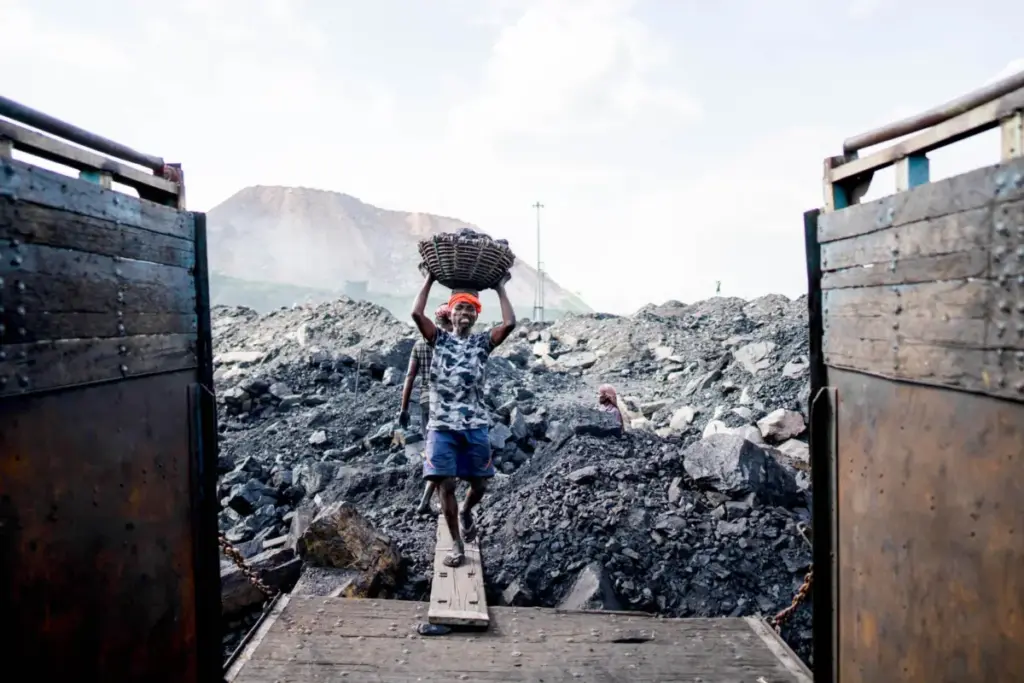
Data from the International Energy Agency (IEA) highlights the human scale of the energy shift. In 2022, approximately 7.8 million people were employed worldwide in coal-related activities, with 3.1 million directly engaged in open-cast and underground coal mining. In industrial hubs like Dhanbad, India, or the Mpumalanga province in South Africa, entire regional economies, municipal budgets, and secondary services depend almost entirely on coal extraction.

The economic fallout of unmanaged transitions is severe. According to research published by the Organisation for Economic Co-operation and Development (OECD), workers displaced from mass layoffs in energy-intensive industries (such as power generation, heavy manufacturing, and transport) experience an average income drop of 58% in their first year of unemployment, compared to a 52% drop seen in non-energy sectors. Without active labor market policies, retraining programs, and social safety nets, regional economies face long-term structural depression.
                   COMPARE: REGIONAL TRANSITION PROFILES

         INDIA (e.g., Dhanbad)             COSTA RICA
     +---------------------------+   +---------------------------+
     | Heavy Coal Reliance       |   | Low Fossil Fuel Profile   |
     | Direct Mining Economy     |   | Focus on Agriculture/    |
     | High Socio-Economic Risk  |   | Sustainable Transport     |
     +---------------------------+   +---------------------------+
                                          /
                                         /
            REQUIRES TAILORED COUNTRY-SPECIFIC POLICIES
Sectoral Expansion Beyond Power Generation
While early negotiations focused primarily on energy transition, experts and civil society groups emphasize that the mechanism must address a far broader range of sectors:
- Heavy Industry & Steel: Transitioning to green hydrogen and zero-emission manufacturing requires massive capital re-allocation and re-skilling of specialized industrial labor.
- Agriculture & Food Systems: As demonstrated by pilot initiatives in Latin America, agricultural transitions must safeguard smallholder farmers against climate volatility while curbing land-use emissions.
- Transport & Logistics: Electrification of commercial transport affects millions of drivers, maintenance workers, and municipal infrastructure networks.
The Financial Dilemma: Grants vs. Debt
The defining dispute in establishing the mechanism centers on capital delivery. Developing nations are heavily burdened by sovereign debt traps, where taking on commercial loans to execute clean transitions compromises fiscal stability.
+-----------------------------------------------------------------------+
|                     FINANCING ARCHITECTURE DEBATE                     |
+-----------------------------------------------------------------------+
|                                                                       |
|   DEVELOPED NATIONS                         DEVELOPING BLOCS          |
|   (EU, US, Donor States)                    (LMDCs, African Group)    |
|   +-----------------------+                 +---------------------+   |
|   | Focus on Private Risk |                 | Insist on Grant-    |   |
|   | Mitigation & Existing |    VS.          | Based, Non-Debt     |   |
|   | Multilateral Banks    |                 | Direct Capital      |   |
|   +-----------------------+                 +---------------------+   |
|                                                                       |
+-----------------------------------------------------------------------+
Existing instruments, such as the Just Energy Transition Partnerships (JETPs) negotiated outside the UN framework with countries like Indonesia and South Africa, have faced severe friction. In Indonesia, complex financing terms and reliance on market-rate loans contributed to delays in early coal plant retirements, serving as a cautionary tale for negotiators in Antalya. Consequently, developing nations insist that the new UN mechanism must prioritize grant-based and non-debt-inducing finance.
Official Statements & Geopolitical Fractures
The negotiation room in Bonn revealed deeply entrenched geopolitical blocs, each seeking to shape the Belém-Antalya Mechanism to protect their domestic economic interests and international standing.
+-----------------------------------------------------------------------+
|                    GLOBAL NEGOTIATING POSITIONS                       |
+-----------------------------------------------------------------------+
|  BLOC             PRIMARY DIPLOMATIC STRATEGY                         |
|  -------------------------------------------------------------------  |
|  UN Leadership    Demands global support for workers/communities;      |
|                   urges actionable UN framework.                      |
|                                                                       |
|  Civil Society    Calls for BAM operationalization by 2027;              |
|  (CAN / FARN)     insists on direct seats for labor and Indigenous.    |
|                                                                       |
|  LMDCs & Arab     Rejects top-down fossil fuel targets or mandatory   |
|  Group            conditionalities; resists import carbon adjustments.|
|                                                                       |
|  European Union   Rejects using the UN mechanism to challenge domestic|
|  & Developed      border carbon adjustments (CBAM); resists direct    |
|  Nations          financial liabilities.                              |
|                                                                       |
|  African Group    Demands strong linkage between JTWP review and      |
|                   new funding; champions "whole-of-society" approach. |
+-----------------------------------------------------------------------+
High-Level UN Imperative
In an address to the High-Level Political Forum in New York, United Nations Secretary-General António Guterres emphasized the imperative for concrete policy delivery:
"We need to support the countries, communities and workers that depend on fossil fuels throughout the transition."
Civil Society and Expert Perspectives
Civil society organizations have emerged as the primary champions for an empowered mechanism with direct representation for marginalized communities.
Anabella Rosemberg, Senior Advisor on Just Transition at Climate Action Network (CAN) International, observed that while the Bonn climate talks produced a useful preliminary note outlining options, critical work remains undone:
"In the months ahead of COP31, this issue should be a priority for the COP31 presidencies—both Türkiye and Australia."
Camila Mercure, Climate Policy Coordinator at the Environment and Natural Resources Foundation (FARN) in Argentina, highlighted the operational requirements of the mechanism:

"The mechanism must contribute to international cooperation between countries, serve as a guide, support countries so that they can develop just transition strategies, and act as a channel for accessing funding to implement projects within their territories."
Addressing governance structures, Laura Restrepo Alameda, Advocacy Officer at Climate Action Network Latin America (CANLA), urged negotiators to guarantee civil society a seat at the table:
"The key milestone between now and COP31 must be to define a structure for the BAM with clear governance, coordination and the inclusion of civil society, workers, and Indigenous peoples."
From an academic perspective, Sandeep Pai, Senior Lead for International Energy Transitions at Duke University, offered a stark assessment of the gap between global diplomatic agreements and national implementation:
"Global and broad declarations on a just transition mechanism are a good signal. But we would be fooling ourselves if we think that just because something is getting declared, it will be implemented… Many of those who are asking for money don’t know what they’re asking for, and those who have the money don’t want to give. You can write a paragraph about finance in the negotiations, but this fundamental reality will not change."
The Negotiating Divide: Scope and Boundary Disputes
                      THE DIVERGENT DEFINITIONAL SCOPE

  NARROW APPROACH (Developed Nations)      BROAD APPROACH (Developing Nations)
  +----------------------------------+    +------------------------------------+
  | - Rapid Fossil Fuel Phase-Out    |    | - Whole-of-Economy Transformation  |
  | - Target-Driven Mitigation Goals |    | - Green Industrial Policy & Growth |
  | - Sector-Specific Energy Shift   |    | - Sustainable Economic Development |
+----------------------------------+ +------------------------------------+- The Like-Minded Developing Countries (LMDCs) & Arab Group: Led by major producers and developing economies including Saudi Arabia, China, and India, these groups strongly oppose setting rigid, top-down mitigation targets or imposing trade conditionalities under the guise of transition mechanisms. During Bonn talks, Saudi Arabia maintained that preliminary drafting notes held no formal binding status.
- The European Union & Western Allies: Developed economies favor a narrow definition centered on energy phase-outs, clean technology deployment, and target-setting aligned with global emissions reductions. Furthermore, the EU firmly rejects attempts by developing nations or Russia to use the mechanism as a forum to dispute carbon market measures, such as the Carbon Border Adjustment Mechanism (CBAM).
- The African Group & Vulnerable States: These nations argue that the mechanism must embody a comprehensive, "whole-of-economy, whole-of-society" approach. They prioritize international technology transfer, capacity building, and sovereign debt alleviation to enable sustainable industrial development.
Future Outlook & Strategic Roadmap
As diplomats gather in Antalya for COP31, the trajectory of the Belém-Antalya Mechanism hinges on resolving several pivotal structural questions.
                      PROPOSED IMPLEMENTATION TIMELINE

  COP31 (Antalya - Nov 2026)             INTERIM PERIOD (2027)               COP32 (Ethiopia - late 2027)
+----------------------------+         +-----------------------+           +----------------------------+
| Establish BAM Framework    | ------> | Transitional Committee| --------> | Full Operationalization &  |
| Mandate Governance Model   |         | Finalizes Modalities |           | Project Resource Allocation|
+----------------------------+         +-----------------------+           +----------------------------+
Key Priorities for the COP31 Presidency
To deliver a meaningful decision in Antalya, the joint leadership of Türkiye and Australia must navigate three key strategic priorities:
- Governance & Representation: Establishing an inclusive governance board that grants institutional standing to trade unions, civil society representatives, local communities, and Indigenous groups.
- Mapping and Synergy: Utilizing the UN Framework secretariat’s mapping exercise to harmonize existing initiatives, preventing administrative duplication while identifying funding gaps.
- Resource Mobilization Strategy: Structuring a transitional resource taskforce to facilitate public-private partnerships, multilateral bank alignments, and non-debt capital flows.
The Road to COP32 in Ethiopia (2027)
Negotiators acknowledge that not all technical operational details will be finalized in Antalya. An ambitious yet realistic political outcome at COP31 would be the formal adoption of the mechanism’s core mandate and governance framework, accompanied by the establishment of a Transitional Committee.
This committee would be charged with negotiating technical modalities, sector-specific frameworks, and financial channels over the course of 2027, ensuring that the Belém-Antalya Mechanism moves from a disputed draft text to a fully operational global instrument when world leaders convene for COP32 in Ethiopia.
Whether this initiative ultimately succeeds will depend on the willingness of wealthy donor states to provide genuine financial backing, matched by a commitment from developing economies to implement transparent, policy-backed transition plans on the ground. Without both, the Belém-Antalya Mechanism risks becoming a footnoted compromise in global climate politics.



