

Executive Overview
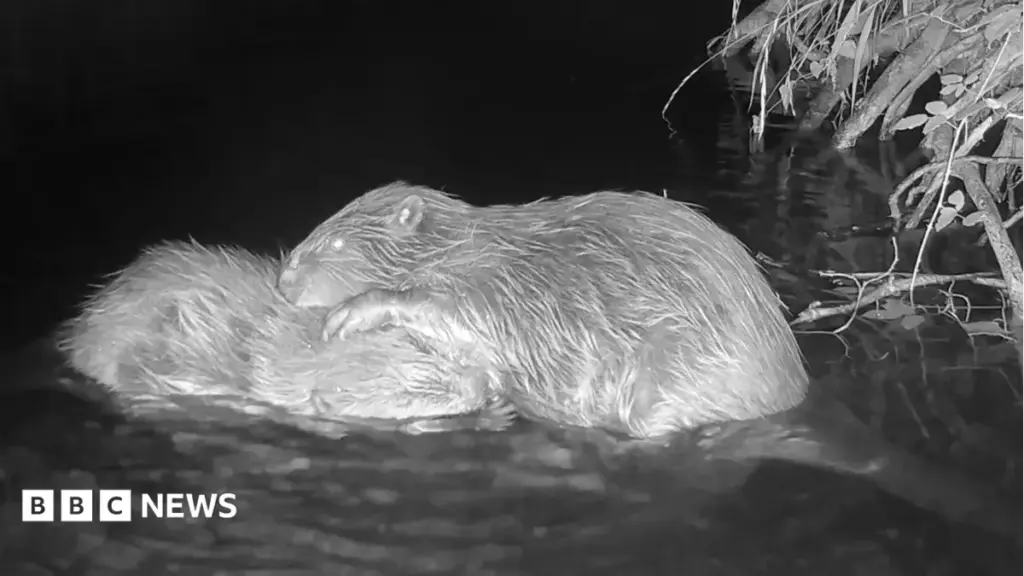
In a milestone development for British conservation, wildlife experts and environmentalists have expressed renewed optimism following the confirmation that two wild-released beavers on Exmoor have successfully bonded. Captured on remote trail cameras engaging in mutual grooming—a definitive behavioral indicator of pair-formation and social cohesion—the semi-aquatic rodents are settling into their Somerset home on the National Trust’s sprawling 5,000-hectare Holnicote Estate.
Released into the wild in February 2026, the arrival of these beavers formed a crucial chapter in the National Trust’s ongoing, ambitious strategy to reverse decades of environmental degradation through nature-based solutions. By actively restoring natural processes across rivers, wetlands, and floodplains, the project aims to tackle the dual crises of biodiversity loss and climate change impacts, specifically escalating flood risks.
The successful pairing of these two individuals represents far more than a heartwarming wildlife sighting; it is a biological endorsement of the habitat quality, food availability, and spatial capacity provided by the Holnicote Estate. Because Eurasian beavers (Castor fiber) are notoriously selective when establishing territories and typically form lifelong monogamous bonds, this early pairing significantly elevates the probability of successful reproduction. In turn, this could lead to the establishment of a resilient, self-sustaining local population.
As these ecosystem engineers begin to settle into their newly claimed territory, their instinctive behaviors—ranging from constructing complex dams and excavating networks of canals to engineering dynamic wetlands—are expected to reshape the landscape. These ecological modifications not only enhance structural habitat heterogeneity for a multitude of native species, from amphibians to rare birds, but also act as a vital buffer against extreme weather events, slowing the flow of water through catchments and retaining precious moisture during increasingly frequent summer droughts.
Detailed Chronology: From Captivity to Catchment
To fully understand the significance of this recent milestone, it is essential to trace the deliberate, highly regulated steps that brought these beavers to the rugged landscapes of Exmoor. The journey of landscape-scale ecological restoration at Holnicote is built on years of rigorous planning, hydrological monitoring, and community consultation.
The Foundation Years: Preparing the Landscape
Long before the first beaver paw touched the muddy banks of Holnicote’s waterways, the National Trust undertook intensive groundwork. Recognizing that modern British river catchments had been heavily straightened, channelized, and disconnected from their natural floodplains, conservationists focused on reinstating natural hydrological functions. Over the preceding decade, projects across the 5,000-hectare estate involved removing artificial barriers, re-meandering minor watercourses, and encouraging the natural regeneration of riparian vegetation.
These preparatory phases were vital. Beavers cannot thrive in sterile, highly modified drainage ditches devoid of woody forage and deep water. By transforming the estate into a mosaic of slow-flowing streams, damp woodlands, and expansive valley mires, the National Trust effectively laid out the welcome mat for the return of Britain’s largest native rodent.
The February 2026 Release
The pivotal moment arrived in February 2026, when the beavers were officially released into their designated enclosure and wider catchment zones on the Holnicote Estate. Sourced from carefully managed populations and subjected to comprehensive health screenings, the animals stepped into an environment specifically curated to support their complex ecological needs.
The release was executed under strict government licensing, reflecting the cautious yet progressive regulatory framework governing beaver reintroductions in England. Conservation teams monitored the immediate post-release behavior of the animals via telemetry and strategic trail camera placements. Initially, the primary concern was dispersal: would the beavers find their bearings, secure adequate shelter, and tolerate one another’s presence, or would they attempt to wander away from the designated release site in search of more established territories?
The Breakthrough: Trail Camera Confessions
For weeks following the February release, rangers tracked signs of activity—chewed willow stems, fresh mud-slides, and occasional footprints in the soft silt. However, definitive proof of social integration remained elusive until recently, when motion-activated trail cameras captured high-definition footage of the two beavers engaging in mutual grooming.
Grooming (allogrooming) is a sophisticated social behavior among beavers. It serves a dual purpose: maintaining the physical condition of their dense, insulating fur, and reinforcing the social bond between partners. In territorial mammals, cooperative behaviors of this nature indicate that the animals have moved past the initial stress of relocation, recognized each other as compatible mates, and committed to defending a shared territory. This behavioral breakthrough marks the transition from mere survival to the establishment of a permanent, functioning family unit.
Supporting Context & Metrics: The Science of Ecosystem Engineering
The return of the beaver to Somerset is not merely an exercise in species reintroduction; it is a calculated ecological intervention designed to leverage the unique physiological and behavioral traits of an apex ecosystem engineer. To appreciate the scale of change anticipated at Holnicote, one must examine the metrics and mechanisms driving beaver-induced landscape modification.
The Architectural Blueprint of a Wetland
Beavers are uniquely adapted to modify their environment to suit their safety and foraging requirements. Unlike most wildlife, which passively adapts to its surroundings, the beaver actively shapes its habitat through several key mechanisms:
- Dam Construction: By felling small trees and weaving together branches, mud, and stones across minor streams, beavers create leaky dams. These structures raise local water tables, transforming linear streams into expansive, shallow ponds that provide safe aquatic travel corridors away from terrestrial predators.
- Canal Excavation: To transport heavy logs and branches safely from foraging sites to their lodges, beavers dig networks of radial canals. These waterways increase hydrological connectivity, allowing water to disperse across wider floodplain areas during high-flow events.
- Lodge Building: Using wood and mud, beavers construct secure, domed lodges featuring underwater entrances. These structures offer optimal thermal regulation and protection against predators for growing family groups.
Hydrological Resilience and Flood Mitigation
One of the most compelling arguments for the reintroduction of beavers on the Holnicote Estate is their capacity for natural flood management (NFM). Traditional engineering approaches to flood defense rely on concrete walls, artificial embankments, and channel dredging—methods that are costly to maintain and often transfer flood risks downstream.
Beaver dams, by contrast, act as natural speed bumps for water. During intense rainfall events, upstream dams capture and temporarily store vast volumes of water, desynchronizing peak flows and flattening the flood hydrograph. Research associated with similar UK beaver projects indicates that upstream storage can delay peak runoff by several hours, significantly reducing downstream flood pulses that threaten rural communities and agricultural land.
Conversely, during prolonged summer droughts, the water held back by beaver complexes slowly bleeds back into the catchment, maintaining base river flows, keeping wetland soils hydrated, and providing a critical lifeline for aquatic invertebrates, fish, and terrestrial wildlife.
Biodiversity Uplift Metrics
The transformation of uniform streams into complex wetland mosaics triggers a cascade of biodiversity benefits, often referred to as the "beaver effect." Key ecological metrics anticipated at Holnicote include:
- Avian Abundance: Flooded deadwood and dense marginal vegetation provide prime nesting and feeding habitats for specialist bird species, including snipe, reed warblers, and kingfishers.
- Amphibian Recovery: Stable, fish-free shallow pools created by beaver dams offer ideal breeding conditions for amphibians such as smooth newts, common frogs, and toads.
- Invertebrate Richness: Increased accumulation of organic matter and woody debris fosters thriving communities of aquatic macroinvertebrates, which in turn support higher trophic levels, including bats, otters, and predatory birds.
Official Statements and Stakeholder Perspectives
The successful pairing of the Holnicote beavers has elicited enthusiastic responses from conservation professionals, land managers, and environmental authorities, underscoring the collaborative spirit required to restore Britain’s natural heritage.
Speaking on the behavioral milestone, National Trust ranger Mathieu Burtschell emphasized the ecological significance of the animals’ adaptation to the Exmoor site:
"The fact that they have paired up is a good indication that they have found the right conditions at Holnicote, with enough suitable habitat, food and space to establish a territory together."
Burtschell’s observations highlight the precision with which the release site was selected and managed. Wildlife managers understand that introducing animals into sub-optimal habitats frequently leads to dispersal, stress, and mortality. The rapid formation of a bond demonstrates that Holnicote’s extensive restoration works—spanning woodland regeneration, river reconnection, and the creation of buffer zones—have successfully recreated a functioning, hospitable ecosystem.
The broader National Trust framework views the Holnicote project as a flagship initiative for climate resilience. Dr. Pieter van de Westhuizen, a senior conservation scientist monitoring the estate, noted that projects like this provide empirical data essential for scaling up nature-based solutions across the UK:
"We are moving away from passive conservation toward active ecological restoration. Beavers are our greatest biological allies in this endeavor. By letting them do what they do best, we are not only bringing back a lost native species; we are repairing the fundamental plumbing of our landscape so that it can withstand the extremes of a changing climate."
Local farming communities and landowners, who historically harbored concerns regarding the potential impacts of beaver activity on agricultural drainage, have been closely consulted throughout the process. Mitigation strategies, including flow devices (often called "beaver deceivers") and adaptive management plans, have been put in place to ensure that the ecological benefits of the project coexist harmoniously with local agricultural practices. Representatives from the regional catchment partnerships have praised the National Trust for maintaining an open dialogue, ensuring that community interests are balanced with ambitious conservation goals.
Future Outlook: The Next Phase for Exmoor’s Beavers
As the newly bonded beaver pair cements its presence on the Holnicote Estate, conservationists are turning their attention to the long-term trajectory of the population and the wider implications for British wildlife policy.
Anticipating Reproduction and Family Dynamics
Given that Eurasian beavers typically mate for life and produce litters (known as kits) annually—usually numbering between two and four offspring—conservation teams are cautiously optimistic about the prospect of new arrivals in the coming seasons. The birth of kits would mark a critical transition from an introduced pair to a self-sustaining local population.
Monitoring protocols will inevitably intensify. Rather than relying solely on invasive physical tracking, researchers will increasingly depend on non-invasive monitoring techniques, including environmental DNA (eDNA) water sampling, drone-based thermal imaging, and an expanded network of motion-activated trail cameras. These tools will allow scientists to map the precise expansion of the beaver territory, identify newly constructed engineering works, and assess the broader ecological impacts on local fish and plant populations.
Scaling Landscape Recovery
The success at Holnicote serves as a compelling case study for the wider national strategy on species reintroductions. As the UK government and environmental agencies review frameworks for wild releases under the updated biodiversity targets, empirical data gathered from Exmoor will play a pivotal role in shaping future policy.
The integration of beavers into large-scale estate management demonstrates that proactive habitat restoration can yield rapid, measurable dividends for climate resilience and biodiversity recovery. If the Holnicote population continues to thrive, it may eventually serve as a source population for future reintroductions across the West Country and beyond, helping to repopulate suitable river catchments that have been devoid of these vital engineers for centuries.
A Resilient Landscape for Tomorrow
Ultimately, the story of the Holnicote beavers is one of ecological healing. It reminds observers that nature possesses profound self-healing capabilities, provided that the fundamental building blocks—space, water, clean air, and structural diversity—are restored.
As these two remarkable rodents groom one another on the misty riverbanks of Exmoor, they are quietly constructing a legacy that extends far beyond their immediate territory. Their dams, canals, and wetlands will anchor water in the landscape, buffer against floods, quench the thirst of summer, and provide sanctuary to countless other species. For conservationists on the Holnicote Estate and across the United Kingdom, the successful bonding of these beavers is not just a moment to celebrate; it is a powerful glimpse into a wilder, more resilient ecological future.



