

Executive Overview
At the heart of Berlin, the annual IFA trade show—officially titled “Innovation For All”—has long served as a global barometer for consumer electronics, entertainment systems, and the accelerating wave of artificial intelligence. Yet, as the ecological pressures of the twenty-first century mount, the 2026 exhibition signaled a profound structural shift. Clean technology is no longer occupying the peripheral sidelines as a niche category for early adopters; it has moved squarely to center stage.
Across the sprawling exhibition halls, a diverse array of enterprises, ranging from multinational tech giants to nimble tropical startups, showcased technologies designed to bridge the historical divide between ecological responsibility and consumer convenience. The underlying thesis of this year’s convention is clear: for sustainability to achieve true mass adoption, it must seamlessly integrate into human routines without demanding uncomfortable sacrifices or aesthetic compromises.
This year’s showcase highlighted five distinct vectors of modern environmental innovation:
- Xiaomi is expanding its automotive footprint into Europe, anchoring electric vehicles within a broader human-centric device ecosystem.
- Lesstics is transforming hazardous agricultural waste in the Philippines into high-performance, non-toxic structural building materials.
- Yarbo is pioneering scalable, autonomous land management to eliminate the notoriously high emissions associated with traditional small-engine yard care.
- Valentin is tackling hidden urban infrastructure crises by intercepting organic waste and grease directly beneath kitchen sinks.
- Jackery is redefining residential and portable energy storage through advanced safety architectures, modular design, and human-centric engineering.
Together, these innovations illustrate that the path to a low-carbon future is not monolithic. Rather, it requires a multifaceted toolkit that addresses everything from heavy logistics and municipal infrastructure to residential energy resilience and waste valorization.
Detailed Chronology: Day One Innovations on the Show Floor
The opening day of IFA Berlin set a relentless pace, with exhibitors unveiling hardware explicitly engineered to solve localized environmental challenges while appealing directly to consumer desires.

Xiaomi Drives the Human x Car x Home Ecosystem into Europe
One of the largest footprints on the exhibition floor belonged to consumer electronics giant Xiaomi, which used the global stage to confirm its imminent entry into the European automotive market. The company announced that its highly anticipated SU7 and YU7 models will officially arrive on European shores next year, pending final regulatory clearances.
Visitors swarmed the exhibit to inspect the SU7, SU7 Max, and SU7 Ultra parked indoors, while a YU7 SUV was stationed outside for dynamic display. Equipped with advanced LiDAR sensors slated to power an intelligent driving suite next year, these vehicles represent the critical final link in Xiaomi’s proprietary "Human x Car x Home" ecosystem.
Beyond their raw performance specifications and sporty aesthetics tailored explicitly to European driver preferences, the vehicles feature evolving onboard intelligence. Notably, an AI Spatial Interaction sensor introduces gesture-based cabin controls, minimizing reliance on distracting touchscreens. By injecting high-performance styling and smart-device synergy into the electric vehicle sector, Xiaomi is positioning EVs not merely as a moral imperative, but as deeply compelling objects of desire for automotive enthusiasts.
Lesstics Upcycles Coconut Waste into Sustainable Building Materials
Shifting from personal mobility to the built environment, Philippine startup Lesstics drew considerable attention with its flagship innovation: the Earth Board. In many tropical agricultural regions, the vast quantities of coconut husks left over from production pose a severe waste management hurdle, frequently ending up burned in open air and generating substantial carbon emissions.
Using a proprietary manufacturing process, Lesstics converts this fibrous waste into versatile construction boards suitable for walls, ceilings, flooring, cabinetry, and furniture. Structurally, the material bridges the gap between traditional wood composites: it achieves the surface uniformity of particle board while matching the structural strength of Oriented Strand Board (OSB) thanks to its elongated natural fibers. Furthermore, Lesstics replaces toxic formaldehyde binders with a proprietary bio-based polyurethane resin.

The resulting Earth Boards are naturally fire-retardant, sound-absorbing, thermally insulating, and water-resistant. Crucially, in regions like the Philippines where native lumber-grade pine trees do not thrive and local forests are heavily protected, these boards offer a superior, lower-cost alternative to imported wood products—proving that circular economy initiatives can simultaneously lower ecological footprints and reduce material costs.
Yarbo Scales Autonomous Efficiency for Large-Yard Maintenance
Maintaining expansive properties has historically been a carbon-intensive endeavor. Traditional lawn care relies on heavy machinery with high embodied manufacturing emissions, compounded by small, uncalibrated internal combustion engines that emit pollutants at rates vastly exceeding modern automobiles. While residential electrification has made strides with push mowers, scaling electric tools to properties spanning multiple acres remains logistically difficult due to battery limitations and physical labor constraints.
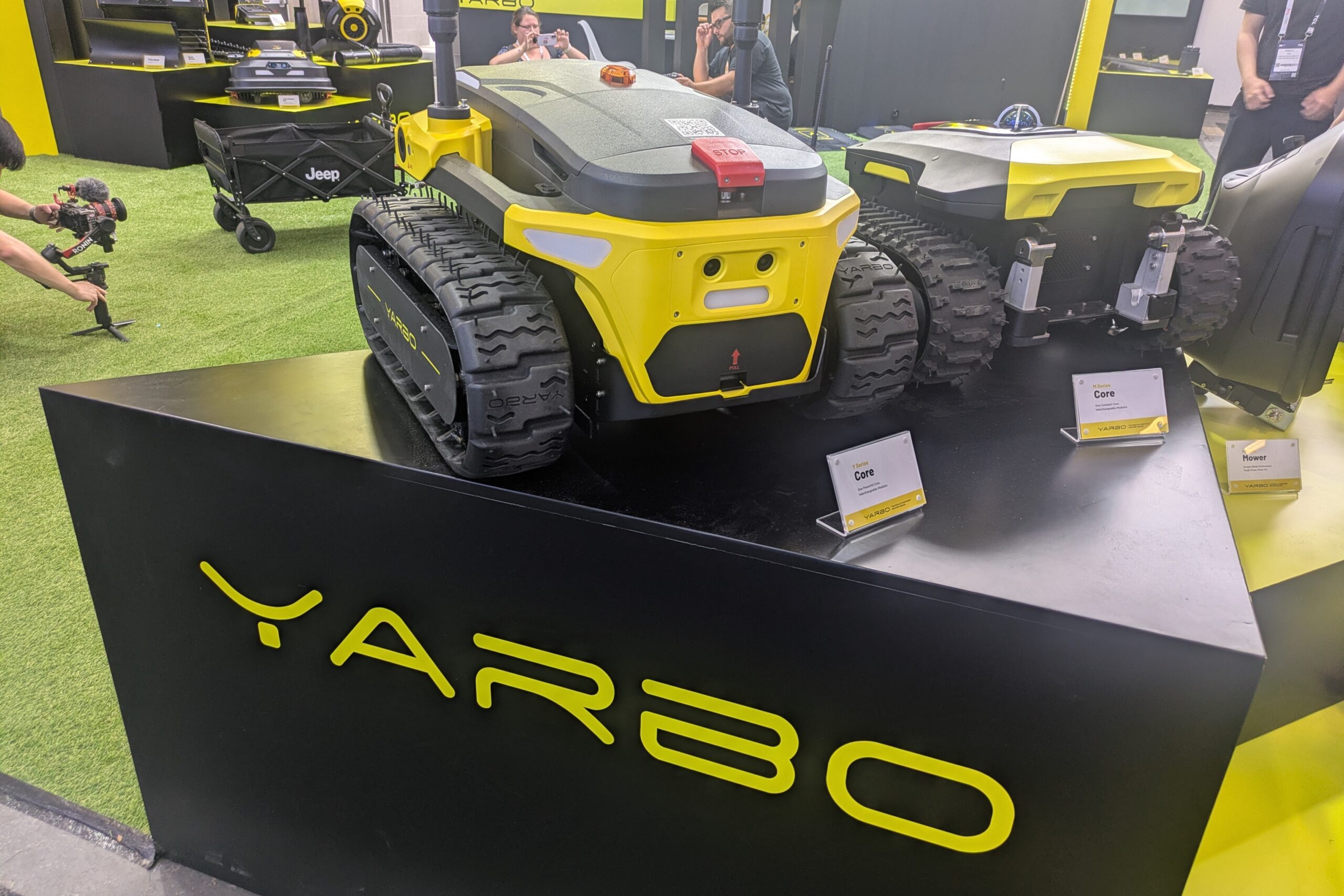
Yarbo addressed this industrial bottleneck by showcasing its established Y-series alongside its newly debuted, compact M-series yard robots, specifically engineered for lots of up to several acres. By shifting from human-operated labor to continuous automation, Yarbo alters the operational math of property maintenance.
Operating autonomously throughout the week, the rugged M-series can quietly mow up to 1.5 acres per day without human supervision, easily managing multi-acre estates with a fraction of the noise and zero direct emissions. The system’s modular architecture allows it to pivot seamlessly between lawn mowing, leaf clearance, and heavy snow removal. Built with heavy-duty tracks designed to navigate harsh terrains without getting stuck, and supported by high-speed wireless charging that replenishes batteries from 10% to 90% in just 65 minutes, Yarbo demonstrates how robotics can replace oversized industrial equipment with efficient, automated micro-fleets.
Valentin Intercepts Urban Infrastructure Crises at the Kitchen Sink
Beneath the polished surfaces of modern kitchens lies a hidden environmental challenge. Conventional sink habits routinely send oils, fats, and organic food scraps down residential plumbing. This waste contributes to the formation of sewer-blocking "fatbergs," triggers destructive pipe-cleaning chemicals, and overloads municipal wastewater treatment facilities where anaerobic digestion produces methane, a potent greenhouse gas.

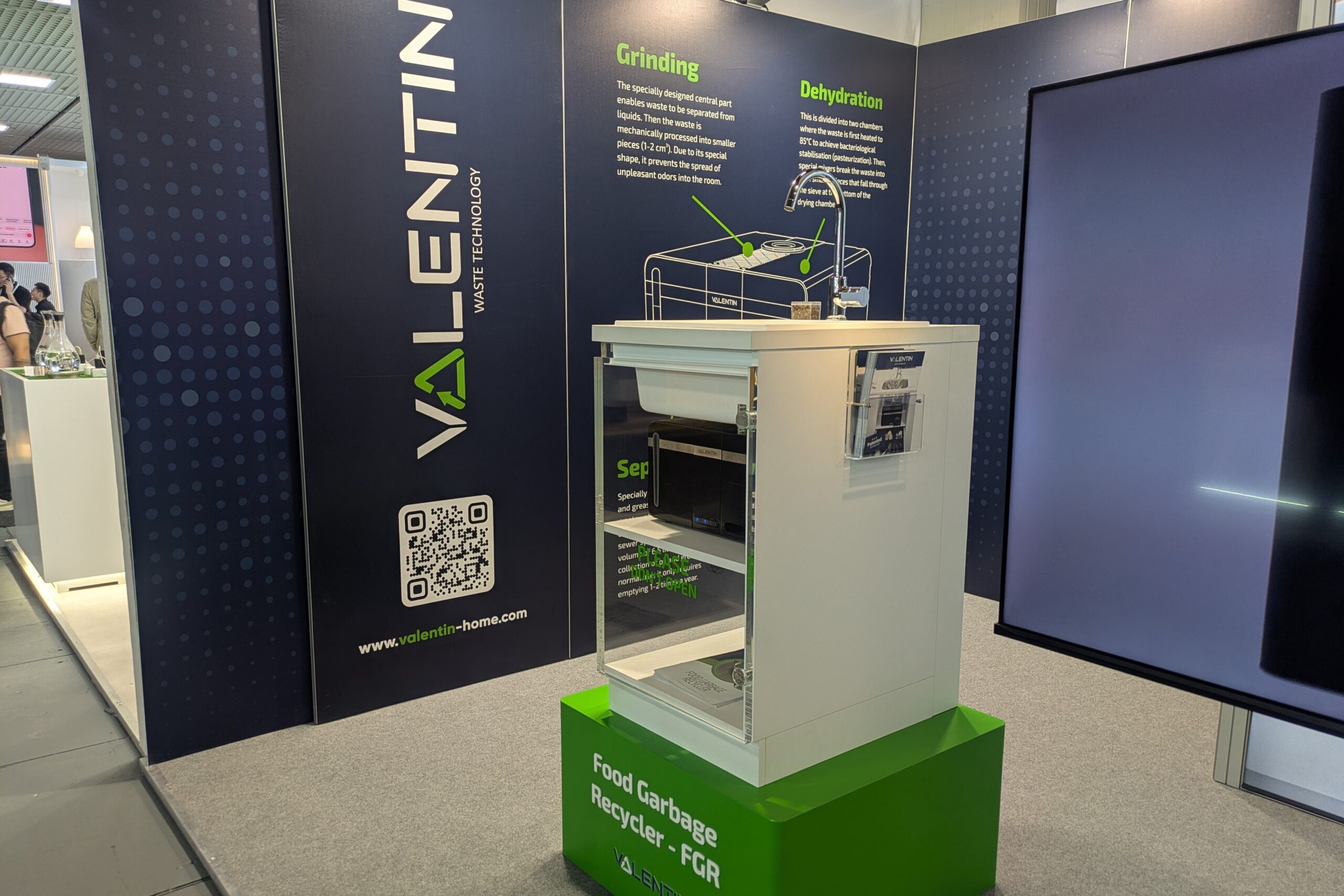
Slovenian startup Valentin has engineered an ingenious mechanical solution: an under-sink, compact recovery unit that filters and separates fats and organic matter directly at the point of origin.
The intercepted organic waste is automatically dehydrated, transforming into a safe, nutrient-dense fertilizer that homeowners can harvest every few weeks. Exhaust gases generated during the drying cycle are safely vented through existing residential plumbing stacks, completely neutralizing odors. Meanwhile, separated cooking oils are consolidated into a clean canister for easy disposal every few months. By preventing clogs, protecting municipal water systems from contamination, and eliminating the need for loud garbage disposals or manual sink strainers, Valentin elevates domestic convenience while quietly cutting urban wastewater emissions.
Jackery Champions Safety and Modularity in Energy Storage
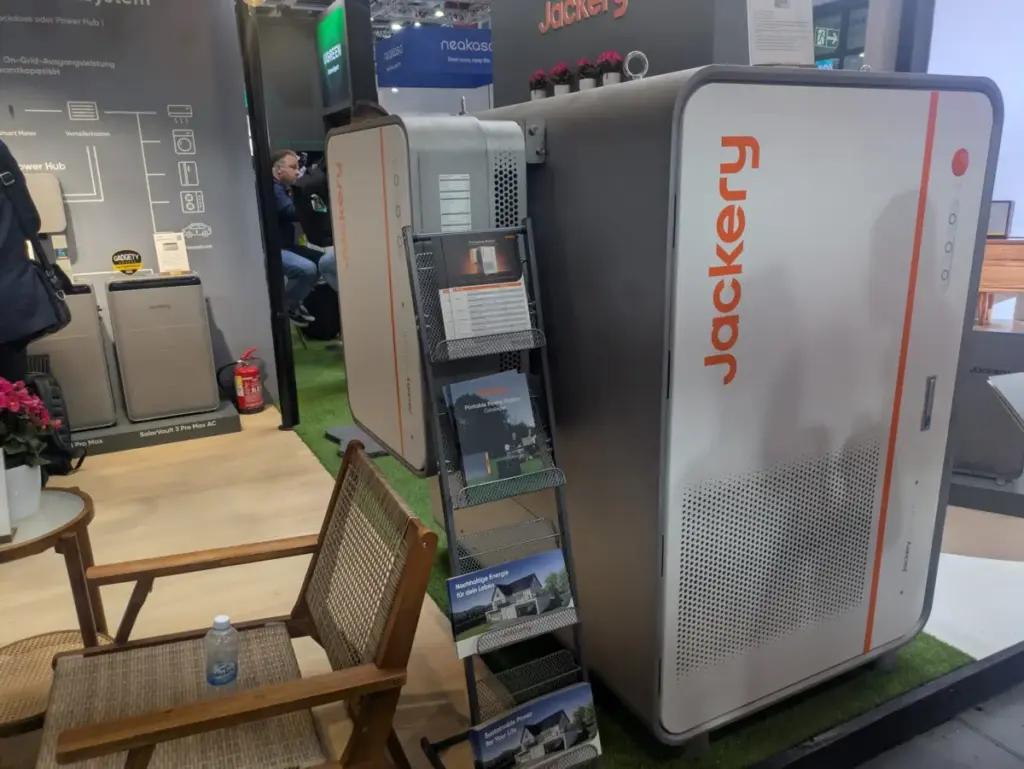
Rounding out the major hardware unveilings on day one, Jackery displayed its extensive ecosystem of residential and portable power solutions, reinforcing its standing as a dominant player in the global solar generator market.
Central to Jackery’s showcase was its uncompromising focus on consumer safety and user experience. Addressing persistent public anxiety regarding battery technology, the company introduced its FortiShield Safety System—touted as the industry’s first comprehensive seven-layer security framework customized for diverse device categories. Manufactured within the energy sector’s first certified carbon-neutral factory, Jackery’s hardware lineup spanned multiple scales:
- Portable Power: The Explorer 2000 Plus V2 achieves a higher power output while shedding 12.6% in volume and 22.1% in weight compared to its predecessor. Similarly, the Explorer 1000 Plus model trims 25% in size and 9% in weight.
- Residential Integration: The sleek FridgeGuard system offers dedicated, stylish backup battery support specifically tailored for household refrigeration units.
- Balcony and Fence Solar: The modular Solar Vault 3 improves micro-inverter management, complemented by a strategic partnership with SunBooster Vertical to introduce flexible, bifacial solar strips that weave seamlessly into standard wire fencing to optimize winter energy capture.
- Commercial-Residential Scale: The newly unveiled Energycore 100kWh liquid-cooled energy storage system delivers 100 kW of power with a UPS-grade 10-millisecond switchover speed, bridging the gap between whole-home batteries and heavy commercial installations.
- Emergency Resilience: Developed in collaboration with the American Red Cross, the specialized Explorer 2000 Plus V2 integrates automated Storm Warning functions and Emergency Reserve Modes to safeguard households against climate-driven grid disruptions.
Supporting Context & Metrics
To fully appreciate the developments at IFA Berlin 2026, one must examine the broader macroeconomic and environmental data driving these industries:
| Technology Sector | Primary Environmental Challenge Addressed | Key Technical Metric / Innovation | Market Impact |
|---|---|---|---|
| Xiaomi EVs | Urban transport emissions & resource inefficiency | LiDAR-guided autonomous driving; AI gesture control | Accelerates mainstream European EV adoption by pairing sporty design with mobile-home ecosystems. |
| Lesstics Earth Board | Tropical agricultural waste burning & deforestation | Bio-based polyurethane binders (zero formaldehyde); OSB-level strength | Replaces toxic, imported lumber with high-performance panels derived from discarded coconut husks. |
| Yarbo Robotics | Small-engine pollution & high-acreage labor intensity | 1.5 acres/day autonomous coverage; 65-minute fast charging | Replaces heavy commercial maintenance fleets with quiet, electric, multi-functional robotics. |
| Valentin Unit | Sewer blockages ("fatbergs") & wastewater methane | Under-sink fat separation and automated organic dehydration | Cuts municipal water treatment loads and turns kitchen waste into safe residential fertilizer. |
| Jackery Energy Storage | Grid instability & fossil fuel dependence | FortiShield 7-layer safety framework; 100kWh liquid-cooled ESS | Democratizes energy resilience while ensuring manufacturing neutrality. |
The convergence of these technologies underscores a vital market realization: environmental efficiency must be packaged with superior utility. Whether it is a coconut-fiber wall board that outperforms traditional plywood at a lower cost, or a robotic lawn-maintenance system that turns arduous weekend chores into a zero-emission automated background process, the common denominator is enhanced consumer value.
Official Statements and Industry Insights
Reflecting on the overarching philosophy of the convention, Jackery Founder and CEO Jack Sun shared critical insights during an executive briefing regarding the future of sustainable product design.
"Our primary mission is not simply to build green technology, but to identify the exact friction points that prevent people from living sustainably," Jack Sun stated during an in-depth strategy discussion. "If a sustainable solution is harder to install, more expensive, or less reliable than the fossil-fuel alternative, mass adoption will stall. Innovation must focus on total solutions that make sustainable living effortless, affordable, and aesthetically compelling."
This sentiment echoes throughout the exhibition halls of IFA Berlin. Industry analysts note that while a dedicated subset of consumers will willingly endure inconvenience, higher costs, or complex maintenance routines out of ideological commitment to carbon reduction, the vast majority of the global population prioritizes comfort, simplicity, and economic sense.
By designing products that resolve these fundamental consumer pain points—such as Yarbo automating multi-acre property care, Valentin eliminating the mess of food waste disposal, or Jackery providing seamless, drop-in energy resilience—the clean tech sector is actively lowering the behavioral barriers to ecological stewardship.
Future Outlook
As IFA Berlin draws its curtains, the trajectory for clean technology over the next decade is sharply defined. The exhibition demonstrated that the transition to a sustainable global economy will not be driven by sweeping top-down mandates alone, but by the relentless bottom-up evolution of smart, integrated consumer goods.
In the near term, we can expect several critical developments to materialize:
- Ecosystem Convergence: The boundaries between personal electronics, domestic appliances, and electric vehicles will continue to blur, as demonstrated by Xiaomi’s cross-platform architecture. Consumers will increasingly manage their homes, vehicles, and energy profiles through unified, AI-assisted interfaces.
- Material Science Disruption: Startups like Lesstics prove that localized agricultural waste streams hold immense potential to displace carbon-heavy industrial materials. Expect wider commercial adoption of bio-composites that eliminate toxic resins while protecting fragile ecosystems.
- Autonomous Infrastructure: Robotics will increasingly absorb the labor-intensive, high-emission tasks of property management and urban maintenance, shifting manual upkeep to autonomous, renewable-powered fleets.
- Decentralized Resilience: As climate volatility intensifies grid vulnerabilities, modular, safe, and intelligent home energy storage systems will transition from luxury additions to standard residential infrastructure.
Ultimately, the 2026 IFA exhibition made it abundantly clear: the future of clean technology is not about asking humanity to do less, live worse, or make painful sacrifices. It is about engineering smarter tools that elevate our quality of life while naturally healing the planet in the background.



