

Published on September 9, 2026
By Agustina Íñiguez (Enriched & Expanded Edition)
Executive Overview
Throughout the long and winding narrative of human construction, few geometric forms have carried as much weight, versatility, and enduring fascination as the circle. From the cosmic geometry of ancient temples and the soaring oculus of classical antiquity to the intricate rose windows of Gothic cathedrals and the structural portholes of maritime vessels, the circle has consistently served as a bridge between the earthly and the divine.
Yet, as society crossed the threshold into the 20th century, the cultural meaning of the circle underwent a radical metamorphosis. Propelled by rapid advancements in aviation, space exploration, and industrial engineering, circular forms ceased to represent merely sacred cosmic orders. Instead, they began to evoke high-speed machines, spacecraft, pressurized capsules, and entirely new vocabularies for human habitation.
This article explores the trajectory of circular geometry across millennia. By examining foundational milestones—ranging from the Roman Pantheon and medieval cathedrals to the nautical-inspired modernism of Le Corbusier and Clorindo Testa, the speculative visions of Buckminster Fuller and Archigram, and the ecological resilience demanded by contemporary architecture—we trace how the circle has transitioned from an emblem of imperial divinity to a timeless vessel for alternative worlds.
Detailed Chronology: The Evolution of the Circle in Built Form
Antiquity and the Sacred Cosmos: The Roman Pantheon
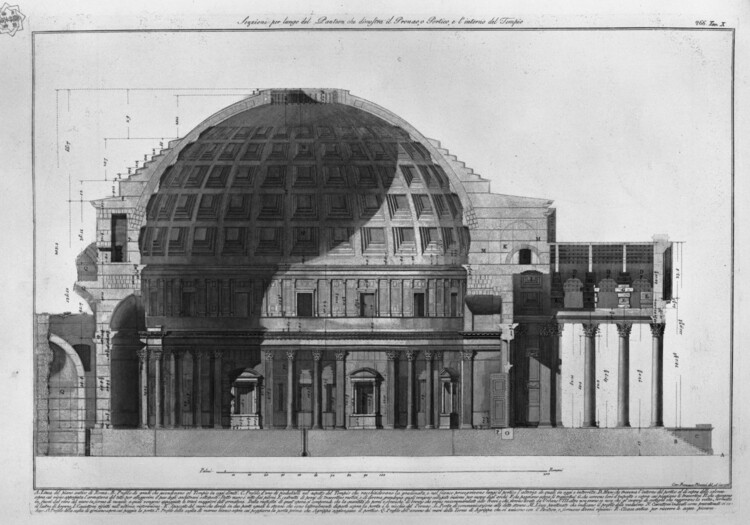
To understand the enduring power of the circle, one must first look back to the monumental foundations of classical architecture. The Roman Pantheon, commissioned originally by Marcus Agrippa in 27 BCE and reconstructed under Emperor Hadrian following successive fires, remains the quintessential study in celestial geometry.
Conceived as a massive brick-and-concrete drum crowned by an unreinforced hemispherical dome, the Pantheon’s interior creates a perfectly balanced space. Bathed in natural sunlight that cascades through a central, 9-meter-wide oculus, the room’s perimeter is defined by alternating triangular and rounded altars.
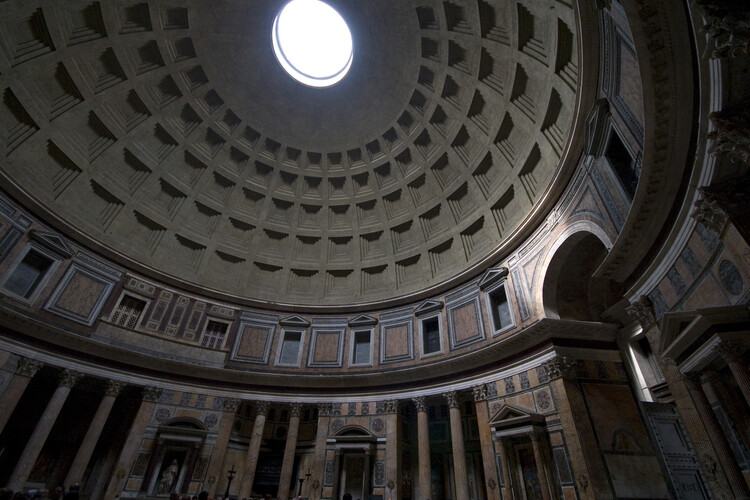
In this masterpiece, the sphere established a direct, profound analogy with the heavens. Contained firmly within concrete and brick walls, the cosmos was brought down to earth. The circular oculus did not simply illuminate the space; it tracked the passage of time via a moving beam of light, honoring both the Roman pantheon of gods and the absolute, overarching authority of the Roman Empire.
[ Ancient Cosmos: The Oculus ] ---> [ Medieval Transcendence: The Rose Window ] ---> [ Industrial Age: The Porthole ]The Medieval Era: Divine Light and the Rose Window
Unlike the open oculus of classical antiquity, the rose window of medieval architecture emerged around 1135 CE, pioneered by Abbot Suger during the construction of the Abbey Church of Saint-Denis. Positioned strategically beneath the western facade’s crenellations, the rose window revolutionized religious spatial planning by introducing a stained-glass cosmic wheel that filtered colored light into the nave.
As Gothic architecture flourished, these circular windows became standard fixtures, symbolizing the eye of God, the wheel of fortune, and the orderly perfection of the universe. In structures like the Rhenish imperial basilica of Worms, a circular solar disk was thoughtfully integrated into the western apse wall, framing the ruling monarch when seated upon his throne. Here, the circle transitioned from an open conduit of the sky to a filtered, transcendent screen mediating divine authority and earthly power.
The Industrial Revolution and Nautical Portholes
How did a geometric symbol of the heavens become inextricably linked to machinery, naval engineering, and mobility? The answer lies in 16th-century naval history. As Colin Bisset documents, King Henry VIII of England mandated the installation of heavy new cannons on his warships. Because these artillery pieces were too large to maneuver at the bow or stern, structural openings had to be cut directly into the sides of the hulls.
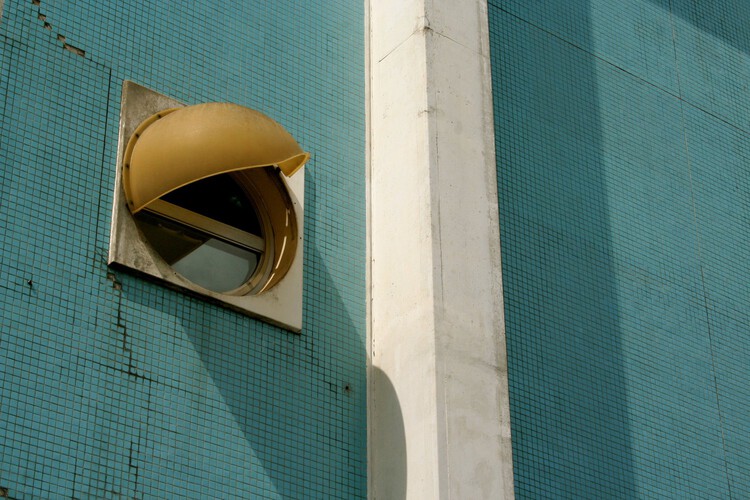
Initially referred to by the French term porte (door or opening), these apertures eventually evolved into the maritime porthole.
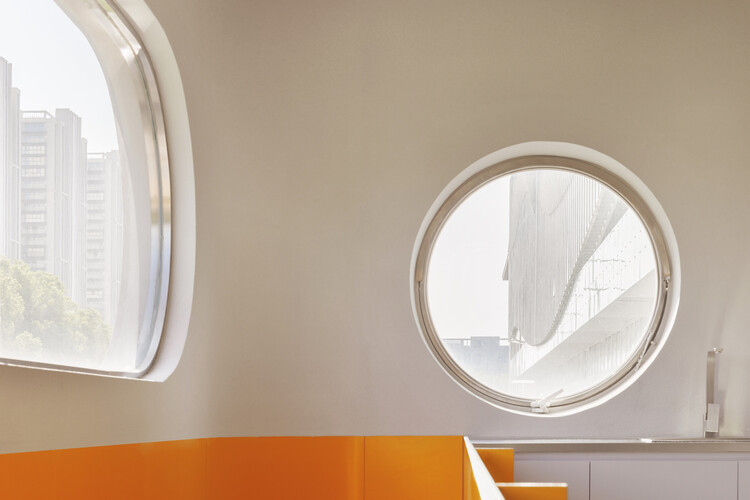
Beyond their practical function of providing natural light, ventilation, and cross-breeze to deep-sea cabins while withstanding crushing oceanic pressures, portholes offered a structural advantage. Unlike square corners, which concentrate physical stress and act as failure points under extreme loads, circular openings distribute tension evenly. This structural integrity made them indispensable not only for passenger ships and naval destroyers, but later for deep-sea submersibles, high-altitude aircraft, and orbital space stations.
The Modern Movement and the "Machine for Living"
The early 20th century redefined the circle through the lens of industrial production and mechanical efficiency. Influenced by the rise of the Machine Age, architects began to look past traditional masonry toward the dynamic aesthetics of ocean liners, locomotives, and airplanes.
Le Corbusier’s watershed 1923 treatise, Toward an Architecture, challenged designers to draw inspiration from the streamlined efficiency of ships. Propounding the controversial yet revolutionary concept of the house as a "machine for living," Le Corbusier, alongside contemporaries like Georges-Henri Pingusson and Jean Prouvé, embraced round windows. Prouvé notably incorporated circular apertures into his prefabricated "Tropical House," validating the port-hole window as a legitimate architectural element for mass-produced living.
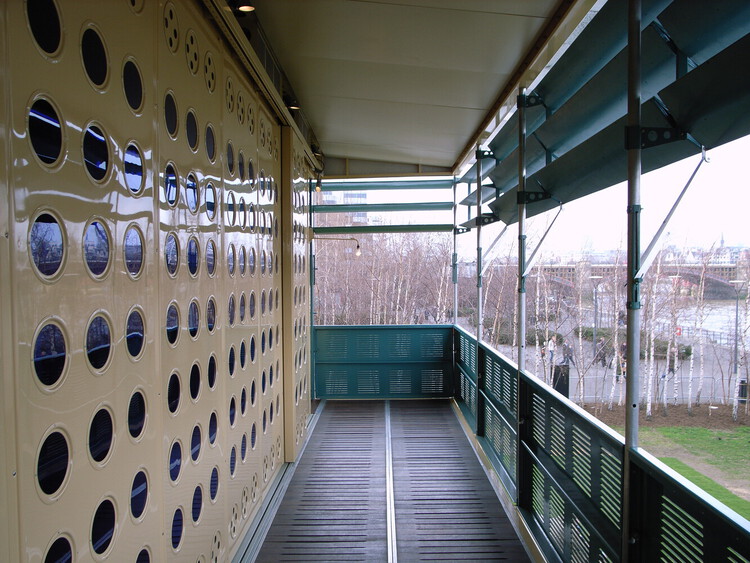
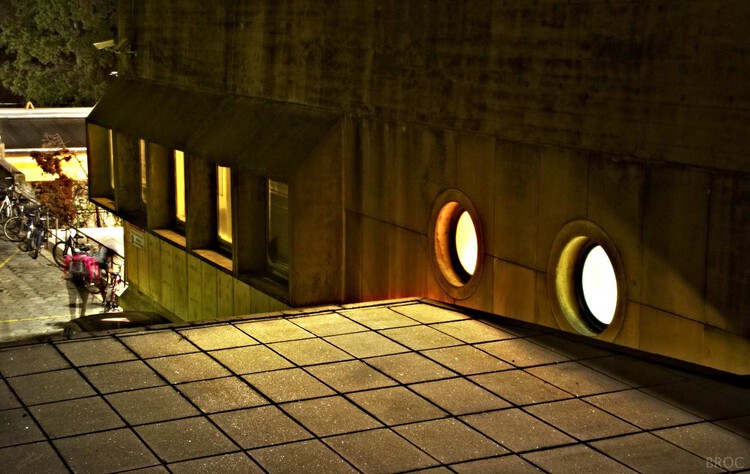
Simultaneously, in South America, architect Clorindo Testa channeled a lifelong passion for model ship-building into monumental public commissions. His design for the Naval Hospital in Buenos Aires (developed around 1970 with Héctor Lacarra and Juan Genoud) explicitly mirrors a warship, featuring round windows arranged like vessel portholes and a rooftop water tank resembling a command tower. Testa similarly utilized circular motifs in the Mariano Moreno National Library, juxtaposing massive glass curtain walls with precise portholes and rectangular frames to curate fractured, dynamic views of the urban landscape.
Futurist Manifestos and the Space Age Aesthetic
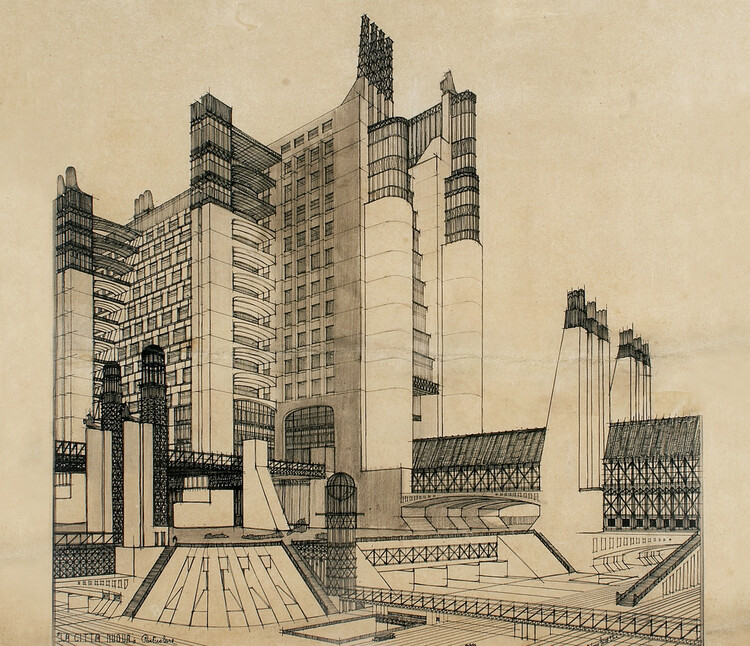
In 1914, Italian architect and urban theorist Antonio Sant’Elia published the Manifesto of Futurist Architecture, proclaiming an end to static, historical compositions in favor of a dynamic, calculation-driven built environment:
"That Futurist architecture is the architecture of calculation, of audacious temerity and simplicity; the architecture of reinforced concrete, iron, glass, cardboard, textile fiber, and all substitutes for wood, stone, and brick, which make it possible to achieve maximum elasticity and lightness…"
Satirized in cinematic masterworks like Jacques Tati’s Mon Oncle (1958)—where circular windows were anthropomorphized into mechanical eyes contrasting two distinct worlds of modernity—the circle quickly became the ultimate shorthand for the future.
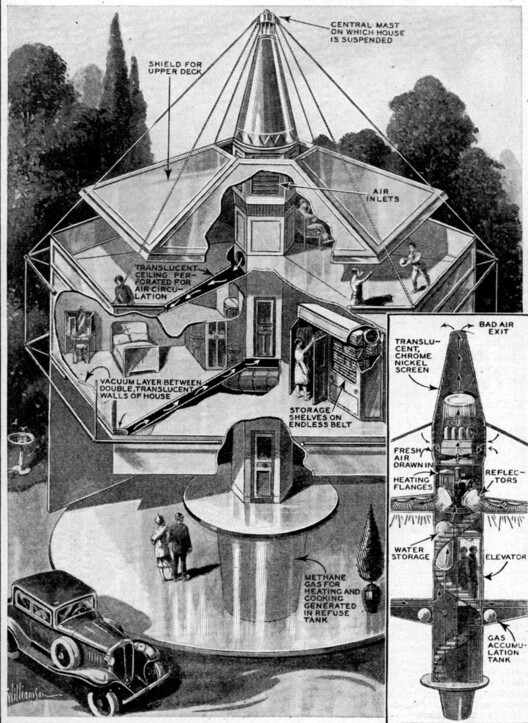
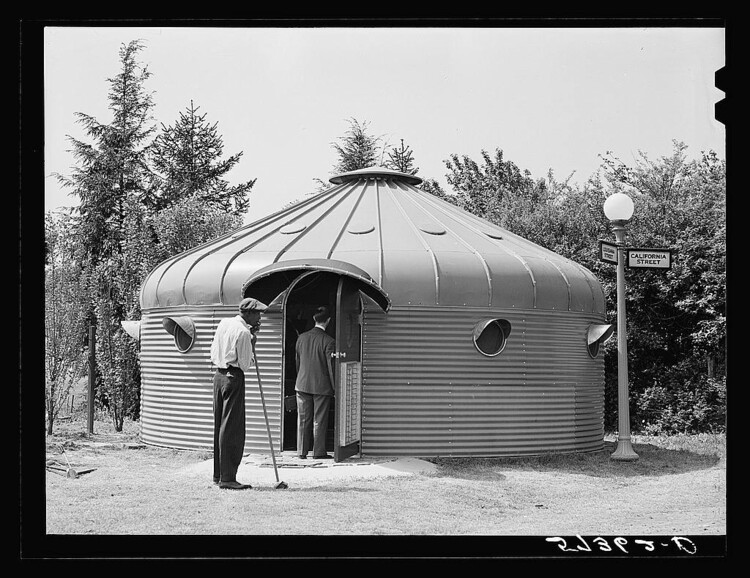
During the Space Age of the 1950s through the 1970s, this aesthetic reached a fever pitch. Visionary designers such as Buckminster Fuller championed self-sustaining, circular geometries. Fuller’s unbuilt Dymaxion House (conceived around 1920) proposed a highly aerodynamic, circular, single-family dwelling that could be mass-produced, flat-packed, and shipped worldwide to alleviate postwar housing crises. Although never fully commercialized on a mass scale, Fuller’s principles laid foundational tracks for sustainable engineering, geodesic domes, and autonomous energy systems.
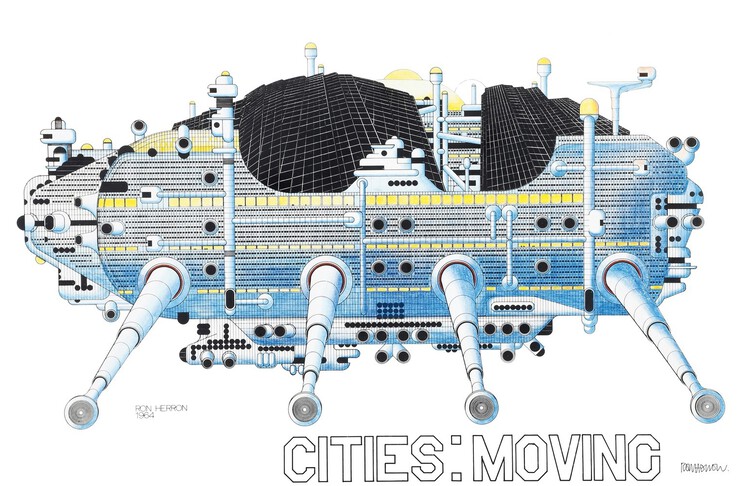
Similarly, experimental collectives like Archigram dissolved conventional boundaries between architecture and technology. Their speculative projects envisioned mobile, modular cities—such as the Walking City—where circular capsules functioned as self-contained life-support units traversing dynamic, changing landscapes.
The Residential Sphere: The Bolwoningen Phenomenon
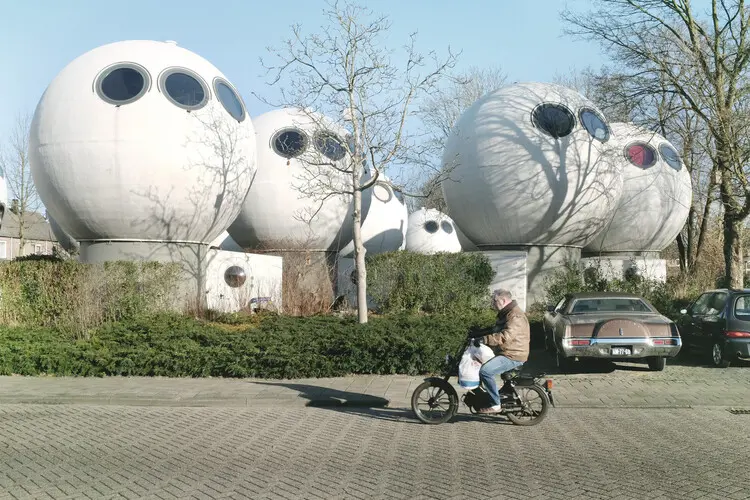
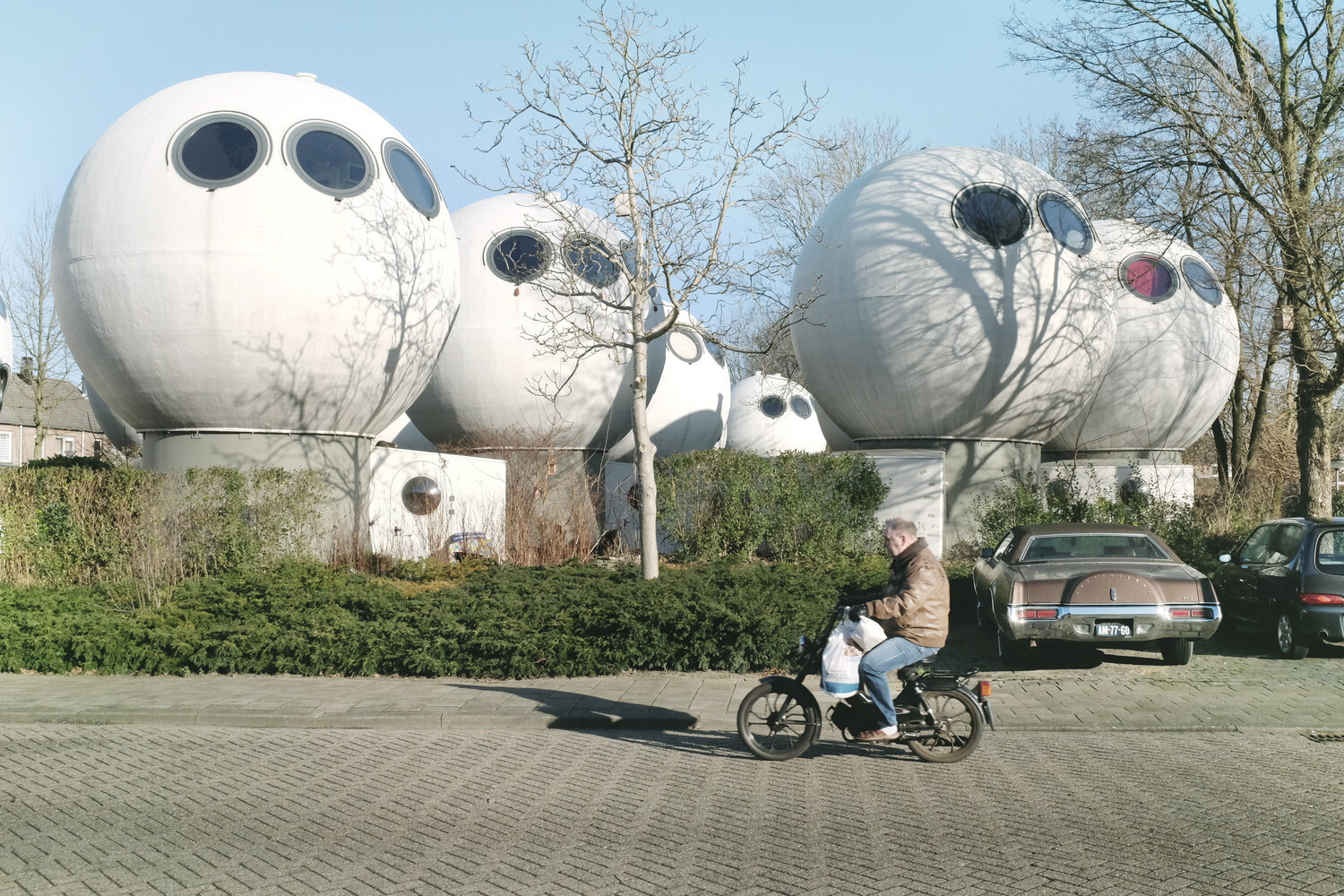
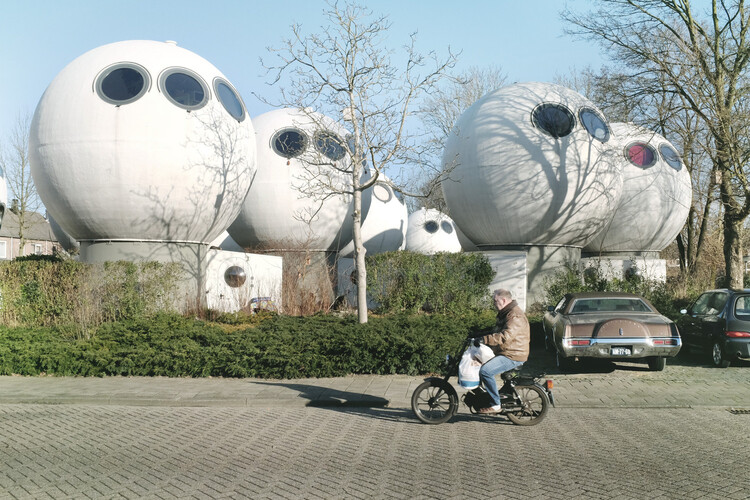
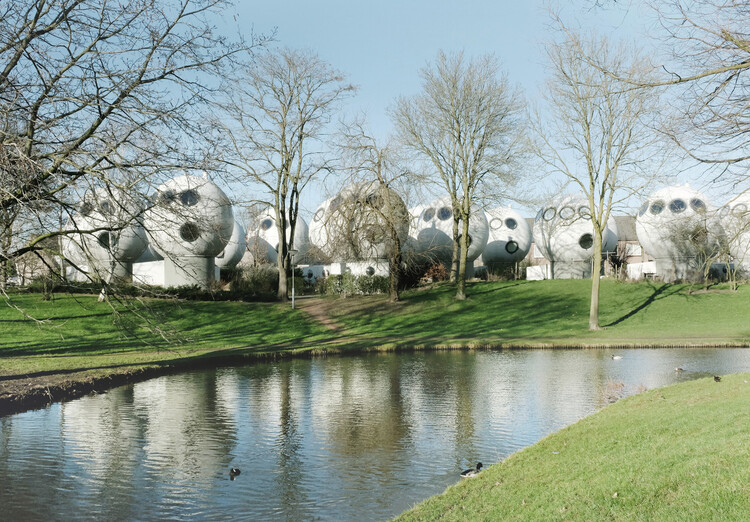
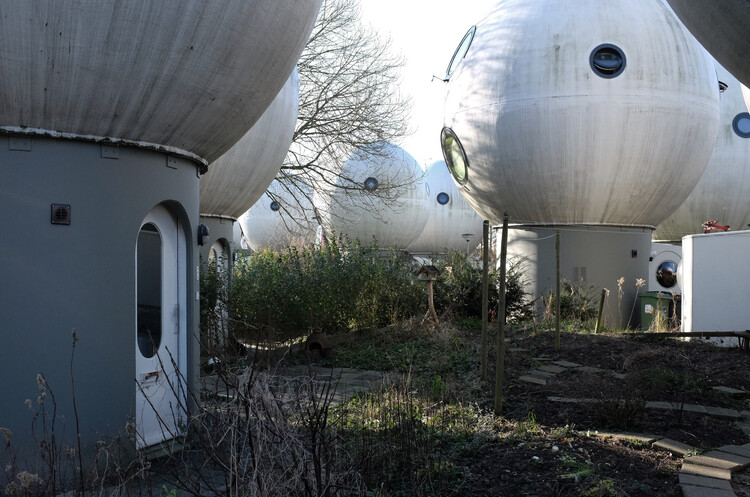
Taking speculative geometry from paper to physical reality, Dutch architect Dries Kreijkamp materialized the ultimate human capsule in 1984 with the Bolwoningen housing community in Den Bosch, Netherlands.
Comprising a cluster of prefabricated, spherical homes pierced by circular windows, Kreijkamp’s design defied standard housing typologies. Beyond the structural efficiency, low energy consumption, and ease of assembly inherent to spherical volumes, Kreijkamp grounded his philosophy in biological and cosmic roots:
"We live on a sphere, we are born out of a sphere… why not live in a sphere?"
Supporting Context & Metrics: Structural and Spatial Performance
To fully appreciate why architects continually return to the circle, one must examine its mathematical and physical properties:
- Stress Distribution: Circular apertures reduce stress concentration factor (SCF) by up to 50% compared to square or rectangular windows of equivalent area, making them vital for high-pressure environments (submarines, spacecraft, and deep underground bunkers).
- Surface-Area-to-Volume Ratio: A sphere possesses the smallest possible surface area for a given volume. In architectural terms, this minimizes thermal loss and material usage, yielding superior energy efficiency.
- Acoustics and Airflow: Circular and domed interiors eliminate hard 90-degree acoustic dead zones, promoting uniform sound distribution and aerodynamic wind-resistance—crucial factors in both ancient acoustic theaters and high-velocity modern towers.
Official Statements & Critical Perspectives
Reflecting on the enduring legacy of circular design, contemporary architectural historians and theorists note that the circle’s narrative has shifted across generations.
Dr. Elena Vance, a scholar of modernist typology, remarks:
"When Le Corbusier and the Futurists adopted the circle, it was an aggressive declaration of speed, industrial power, and escape from historical baggage. Today, however, we are witnessing a philosophical pivot. The circle is no longer just about launching ourselves into outer space; it represents closing loops down here on Earth."
This sentiment is echoed in contemporary practice, where the circular window or curved volume is frequently deployed not to mimic a spaceship, but to symbolize ecological resilience, closed-loop circular economies, and a softer, more organic interface with the natural world.
Future Outlook: The Circle in Contemporary and Speculative Architecture
As architecture navigates an era dominated by ecological anxiety, climate change, and the search for alternative modes of existence—the core theme of The Lure of Escapism in Architecture and Alternative Worlds—the circle retains its magnetic pull.
In contemporary projects ranging from Bernard Tschumi’s fluid museum spaces to experimental micro-dwellings and modular off-grid pods, circular geometries continue to evolve. No longer exclusively tied to the cold techno-optimism of mid-century space races, today’s circular architecture speaks to:
- Resilience & Regeneration: Embodying the circular economy, where building materials are designed for endless disassembly and reuse.
- Biomimetic Living: Returning to natural cellular shapes that echo organic growth patterns rather than rigid Cartesian grids.
- Psychological Sanctuary: Providing cocoon-like, womb-like spaces that offer psychological refuge from an increasingly hyper-connected, linear, and chaotic digital world.
From the divine sunlight piercing the Roman Pantheon to the theoretical space pods of Archigram and the resilient eco-domes of tomorrow, the circle remains architecture’s most potent shape—a profound reminder that whenever humanity seeks to imagine a new world, it invariably draws a circle around its dreams.



