

Executive Overview
In an era defined by growing ecological consciousness and mounting environmental anxieties, grassroots community action continues to prove its unparalleled potency. Along the picturesque banks and winding currents of the River Wear in northern England, a dedicated collective of local environmental stewards has achieved yet another remarkable milestone in their ongoing war against waste. The Durham City Riverscape Community, a specialized volunteer-driven group that combines community engagement with aquatic adventure, recently pulled an astounding 50 bags of rubbish from the river during a single, intensive weekend operation.
This latest harvest of discarded plastics, decaying packaging, and submerged debris is far from an isolated incident. Formed in the tense months immediately preceding the global COVID-19 pandemic, the Riverscape Community has transformed from a small band of optimistic neighbors into a well-coordinated, highly effective eco-flotilla. Paddling on surfboards, navigating in canoes, and wading through chilly shallows in wetsuits and life-vests, these volunteers have quietly removed tonnes of refuse from one of the region’s most historic and visually stunning waterways.
As the group rapidly approaches a monumental threshold—the collection of their one-thousandth bag of trash—their efforts offer a compelling case study in civic pride, municipal-community partnerships, and the persistent scourge of modern fly-tipping. From rescuing household appliances submerged beneath the water’s surface to meticulously clearing plastic wrappers from delicate riverbanks dominated by the shadow of Durham Cathedral, this story encapsulates both the best of human stewardship and the sobering reality of environmental degradation in twenty-first-century waterways.
Detailed Chronology: From Pandemic Precursors to Aquatic Action
The Genesis of an Eco-Movement
The origins of the Durham City Riverscape Community trace back to a critical juncture just before the coronavirus pandemic disrupted daily life across the globe. Recognizing a growing visual and ecological blight along the River Wear—a river that snakes its way through the heart of Durham, defining the city’s geographic and cultural identity—a small circle of local residents decided that passive observation was no longer an option.
Initially established as a modest initiative to encourage local tidy-ups, the group quickly realized that conventional litter-picking methods deployed purely on foot would be insufficient. The true scale of the problem lay not just on the accessible walking paths flanking the river, but hidden within the currents, snagged on submerged tree roots, and trapped along difficult-to-reach embankments. This realization spurred the evolution of the group into an aquatic-focused task force. Armed with grabber tools, high-visibility vests, waterproof containers, and watercraft including canoes and surfboards, the volunteers took to the water.
The Evolution of the Monthly Sweep
Over the intervening years, what began as an ad-hoc gathering has transformed into a disciplined, monthly ritual. Rain or shine, summer heat or winter chill, the volunteers mobilize with clockwork regularity. Each monthly sweep is meticulously planned, prioritizing zones most vulnerable to litter accumulation, such as slow-moving eddies, bridge abutments, and urban stretches where discarded waste from the city center inevitably finds its way into the watershed.
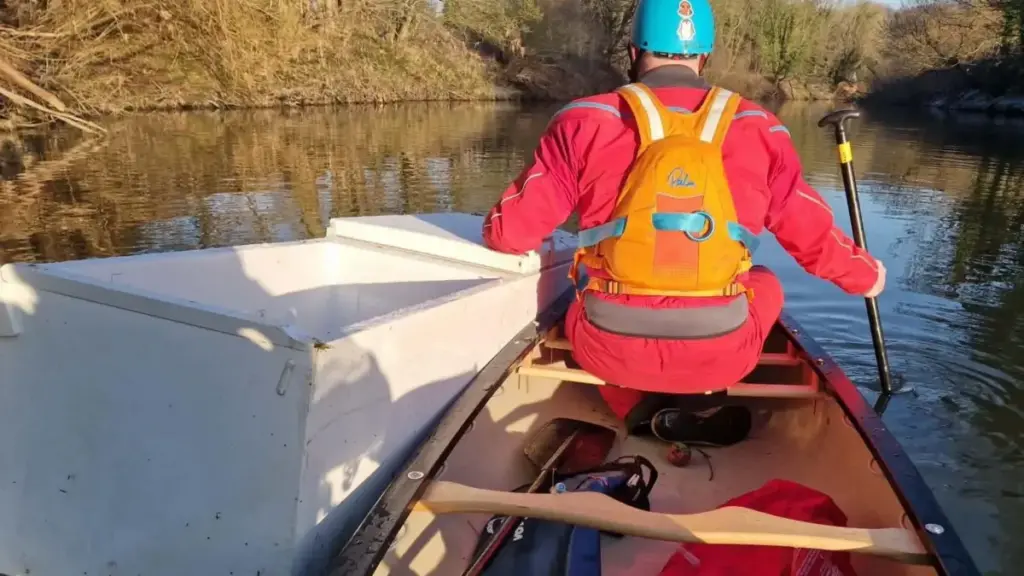
The operational tactics of the group are as inventive as they are daring. Donning wetsuits, helmets, and life-vests, volunteers navigate the sometimes unpredictable currents of the Wear. A striking image of the group’s methodology features a volunteer kneeling on a surfboard, using a specialized grabber tool to retrieve half-submerged debris while maintaining balance in the water. Another volunteer paddles a canoe with a massive domestic appliance lashed alongside it. These are not merely well-meaning ramblers with carrier bags; they are a specialized, river-bound cleanup crew equipped to handle complex aquatic recovery missions.
The 50-Bag Weekend: A Microcosm of Ongoing Toil
The most recent weekend gathering serves as a stark reminder of the sheer volume of waste entering the river system. In just a few intensive hours of labor, the team amassed more than 50 heavy-duty bags of rubbish. The haul included the usual suspects of modern consumer culture—single-use plastic bottles, aluminum cans, takeaway food containers, and packaging wrappers—alongside industrial debris and items discarded with blatant disregard for the natural environment.

As these bags were hauled ashore and stacked near the historic river railings, with Durham Cathedral looming majestically on the hill above, the contrast between human heritage and modern pollution could not have been starker. Yet, the atmosphere among the volunteers remained resolutely upbeat, marked by the camaraderie born of shared physical labor and a common purpose.
Supporting Context & Metrics: Quantifying the Scourge of the Wear
To truly understand the impact of the Durham City Riverscape Community, one must examine the metrics that define their mission. While individual weekend hauls like the recent 50-bag collection are impressive, the cumulative statistics tell a far more profound story about the state of the local environment and the relentless drive of the volunteers.
Approaching the 1,000-Bag Milestone
According to lead volunteer Graham Hollingwood, the group is now within striking distance of a truly sobering milestone: the collection of 1,000 bags of rubbish. To visualize this achievement, consider that a thousand heavy-duty refuse bags represent an immense tonnage of discarded material that would otherwise have decomposed into microplastics, choked local wildlife, or drifted downstream toward the North Sea.
This metric is not merely a quantitative measure of success; it is an indictment of ongoing littering habits. Every bag filled represents a tangible failure of public waste disposal etiquette, yet simultaneously stands as a monument to grassroots resilience. Hollingwood notes that approaching this figure "just shows how much work goes into protecting our riverbanks" and underscores the "phenomenal" physical and mental effort expended by the volunteer network month after month.
The Fridge Challenge: Tackling Extreme Fly-Tipping
While standard litter-picking typically involves dealing with small, discarded items, the Riverscape Community has increasingly found itself on the front lines of heavy-duty environmental crime: aquatic fly-tipping.
Earlier this year, the group faced what Hollingwood describes as their most formidable challenge to date. During a routine sweep, volunteers located a full-sized domestic fridge-freezer submerged within the River Wear. Discarding large household appliances into waterways is not only an egregious act of environmental vandalism; it poses severe chemical and biological hazards, releasing refrigerants, insulation materials, and heavy metals into delicate aquatic ecosystems.
Extracting a waterlogged, heavy appliance from the middle of a flowing river requires extraordinary coordination, strength, and ingenuity. Rather than abandoning the object for municipal removal—which can often take weeks or months to coordinate—the paddling eco-warriors devised a tactical extraction plan. Utilizing a canoe as a stabilization vessel and leveraging collective muscle, the team successfully hauled the heavy appliance to the surface, towed it along the water’s edge, and hoisted it ashore. This feat cemented the group’s reputation not just as litter pickers, but as an indispensable environmental emergency response unit for the River Wear.
Official Statements and Strategic Partnerships
The remarkable trajectory of the Durham City Riverscape Community would arguably not have been possible without a robust framework of institutional support. Grassroots enthusiasm, while vital, often founders without adequate funding, logistical backing, and formal recognition. In Durham, this gap has been bridged by a vital partnership between the volunteers and the local municipal authority.

The Voice of Leadership: Graham Hollingwood
Reflecting on the journey thus far, lead volunteer Graham Hollingwood is quick to credit the backbone of their operation. In statements highlighting the symbiotic relationship between community action and local governance, Hollingwood emphasized the indispensable role played by the local council.
"None of this incredible progress would be possible without the phenomenal, unwavering support of the City of Durham Parish Council," Hollingwood stated. He elaborated on how this backing translates into operational reality on the water: "Their funding, practical backing, and ongoing encouragement give us the resources and confidence we need to keep getting out on the water, tackle massive fly-tipping hazards, and make a genuine, lasting impact on the local environment."
Institutional Endorsement: Adam Shanley
Echoing these sentiments is Adam Shanley, Clerk of the City of Durham Parish Council and, notably, a co-founder of the litter-picking group itself. Shanley’s dual perspective—spanning both municipal administration and frontline environmental activism—provides a unique vantage point on the value of civic engagement.
"The scale of dedication from our volunteers is nothing short of extraordinary," Shanley remarked. Speaking on behalf of the local authority, he added, "It is an absolute privilege for the council to support and stand alongside such a proactive, passionate team."
Looking toward the future, Shanley offered a definitive pledge of continued institutional commitment: "We will continue to back our volunteers every step of the way as they work tirelessly to safeguard the River Wear for generations to come."
This partnership serves as an exemplary model for municipal-community cooperation. By cutting through bureaucratic red tape and directly empowering citizens with equipment, safety gear, and disposal logistics, the City of Durham Parish Council has amplified the effectiveness of its residents tenfold.
Future Outlook: Challenges, Aspirations, and the Road Ahead
As the Durham City Riverscape Community looks beyond their impending 1,000-bag milestone, the mood among volunteers and municipal leaders is one of resolute determination tempered by sober realism. While celebrating past successes is important, the underlying systemic issues that necessitate these monthly cleanups remain unresolved.
The Persistent Threat of Consumer Apathy and Fly-Tipping
The fundamental challenge facing river preservation in Durham is not a lack of willing volunteers, but the persistent influx of new waste. So long as individuals continue to treat waterways as convenient dumping grounds for domestic appliances, plastic packaging, and casual litter, groups like Riverscape will find themselves engaged in an endless cycle of remediation.

Addressing this root cause requires a multi-pronged approach that extends far beyond weekend cleanups. Future initiatives must integrate stricter enforcement against illegal fly-tipping, enhanced public education campaigns regarding the ecological fragility of the River Wear, and the expansion of accessible, low-cost waste disposal options for local residents. Furthermore, corporate accountability—particularly concerning the manufacturers of single-use plastics that inevitably find their way into river catchments—must remain a central talking point in broader environmental advocacy.
Scaling Up and Inspiring Regional Action
Buoyed by their success on the Wear, the Riverscape Community serves as a powerful blueprint for other towns and cities across the North East and beyond. The visual impact of seeing volunteers in wetsuits and safety helmets operating surfboards beneath the ancient spires of Durham Cathedral captures the public imagination in a way that traditional administrative reports rarely achieve.
Plans for the future include expanding community outreach programs, engaging local schools to foster an early conservation ethic in the next generation, and potentially establishing inter-river networks to share best practices across the region. As digital engagement grows through platforms like X (formerly Twitter), Facebook, Instagram, and Nextdoor, the group’s message reaches a wider audience than ever before, inspiring digital followers to transition into physical participants.
Conclusion: A Legacy Carved in Clean Waters
The River Wear has flowed past the historic heart of Durham for millennia, bearing witness to the rise and fall of civilizations, industrial revolutions, and the quiet transformations of modern life. Today, it bears witness to a different kind of history—one written by ordinary citizens who refuse to let negligence mar their natural heritage.
When the Durham City Riverscape Community crosses its milestone 1,000th bag of rubbish in the near future, it will be a moment for both celebration and solemn reflection. It celebrates the boundless capacity of human empathy, teamwork, and civic responsibility. Yet, it also issues a silent challenge to society at large: to respect the waters that sustain us, to honor the natural world that surrounds our urban centers, and to ensure that future generations inherit a River Wear defined not by the waste we discard, but by the care we provide.



