

Executive Overview
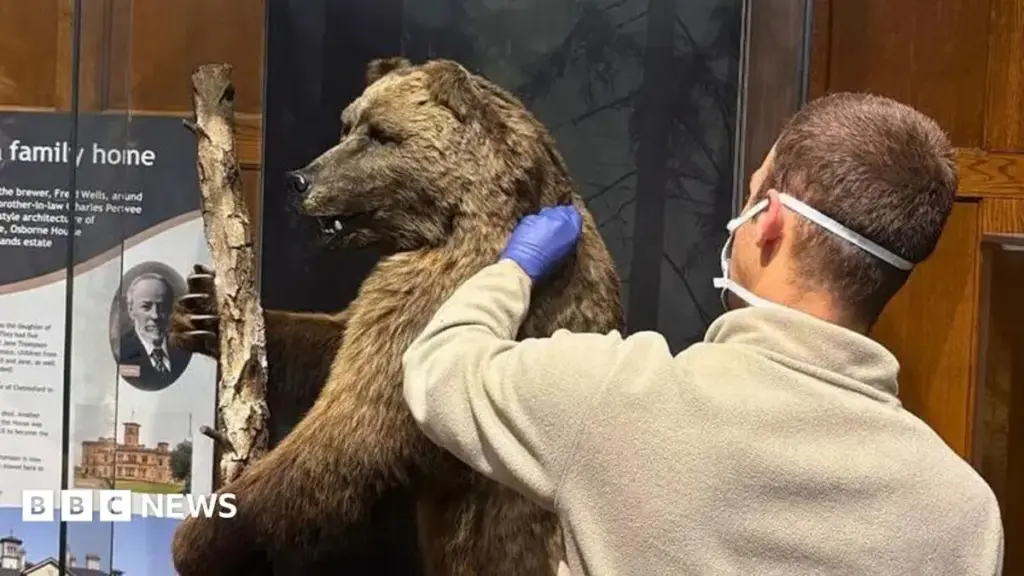
In the quiet, climate-controlled galleries of the Museum of Chelmsford, a century-old brown bear stands as an unblinking, permanent fixture of local history. Affectionately known by staff and visitors alike as "Boris," this taxidermy specimen arrived in Essex in 1932 as part of a sprawling collection bequeathed by a globe-trotting game hunter. For decades, Boris served a purely passive purpose: a dusty relic of a bygone colonial era, a silent photogenic curiosity for generations of schoolchildren, and the unofficial, albeit eccentric, mascot of the institution.
However, in a fascinating convergence of heritage preservation and cutting-edge forensic science, Boris has recently been conscripted into the global fight against organized wildlife crime.
Hayden Leigh, a determined forensic science graduate and doctoral researcher at the University of Staffordshire, has extracted hair samples from the historic bear. His mission is neither purely historical nor purely academic; it is an urgent attempt to develop more cost-effective, reliable, and accessible methods for tracking and prosecuting the illegal poaching and trafficking of modern-day brown bears (Ursus arctos).
While the international scientific community has spent decades meticulously mapping the microscopic characteristics of domestic dogs, cats, and common livestock, wild species—particularly large carnivores—have often been left in a forensic blind spot. When illegal pelts, rugs, or body parts are seized by border control agents or environmental enforcement agencies, forensic investigators frequently hit a wall. Traditional DNA profiling, while definitive, is notoriously expensive, time-consuming, and prone to failure when samples have been degraded by environmental exposure, chemical tanning, or age.
Leigh’s PhD research offers a compelling alternative. By turning to historical taxidermy collections like the one housed in Chelmsford, he is analyzing the microscopic cuticles, structural layers, and residual DNA of centuries-old specimens to create a comprehensive baseline. This baseline aims to bridge the gap between crime scene evidence and courtroom convictions. Far from being dead artifacts of a contentious past, museum archives are proving to be living laboratories capable of saving endangered species in the 21st century.
Detailed Chronology: From an Edwardian Attic to a Modern Forensics Lab
The journey that brought Boris the bear from the wild expanses of Eastern Europe to the forefront of forensic science is a tale spanning more than a century, defined by accidental preservation, bureaucratic persistence, and innovative scientific methodology.
1900s–1930s: The Origin of a Specimen
While the exact provenance of Boris remains partially shrouded in the mists of early 20th-century record-keeping, archival notes indicate that the bear was hunted and taxidermied at the turn of the 20th century. During an era when European sportsmen routinely scoured the dense, untamed forests of Romania, Bulgaria, and Russia for big game, Boris was shot, preserved by a master taxidermist, and eventually acquired by a prolific local game hunter.
In 1932, following the hunter’s death or retirement from collecting, the vast accumulation of taxidermy—including exotic birds, hoofed mammals, and the imposing brown bear—was bequeathed to the Museum of Chelmsford. For nearly a century, Boris remained stationary, absorbing decades of museum dust, fluctuating gallery temperatures, and the occasional curious touch from passing children. Little did the original preparators know that the keratin strands of the bear’s fur would one day be subjected to electron-level scrutiny to combat transnational wildlife crime.
The Quest for Samples: Rejection and Resilience
Before Boris could become a forensic asset, researcher Hayden Leigh faced a monumental logistical hurdle: finding a museum willing to sacrifice even a microscopic strand of hair from a preserved historical specimen.
Museum curators are notoriously protective of their collections, guarding against pest infestations, light degradation, and structural damage. Leigh’s quest began with cold-calling and emailing approximately 30 different zoos, natural history institutions, and regional museums across the United Kingdom and Europe. Rejection, polite indifference, and silence were his primary returns. Many institutions feared that tampering with historical taxidermy—even for noble scientific pursuits—would set a dangerous precedent or risk damaging fragile artifacts.
The breakthrough came when Leigh contacted the Museum of Chelmsford. Recognizing the unique opportunity to lend historical weight to a cutting-edge environmental project, the museum’s curators and local council authorities agreed to collaborate. Under strict supervisory conditions, tiny, non-destructive hair samples were harvested from Boris, unlocking a treasure trove of pristine, unpolluted historical DNA and structural keratin.
Laboratory Analysis: Unlocking the Microscopic Code
Once secure in the laboratories at the University of Staffordshire, Leigh’s work entered its most intensive phase. Using advanced microscopy, he began dissecting the morphological architecture of Boris’s fur.
"I have been using a microscope to analyse the cuticles, and different layers of the bear’s fur as well as its DNA," Leigh explains.
Unlike living animals, which present logistical nightmares for researchers attempting to map full-body hair variations, Boris offered a controlled, static environment. Leigh meticulously examined whether hair characteristics varied across different regions of the bear’s body—assessing how guard hairs from the shoulder blades differed from the softer underfur of the belly or the coarse hair of the paws.
By cataloging these variations with absolute precision, Leigh is building a diagnostic framework. If law enforcement officers recover a single hair from a poacher’s vehicle, a suspect’s jacket, or an illegal trafficking shipment, forensic examiners will soon have a vastly superior morphological map to cross-reference, significantly narrowing down species identification before committing scarce resources to full genetic sequencing.
Supporting Context & Metrics: The Scale of the Crisis and the Science of Hair
To understand the profound importance of Hayden Leigh’s work with Boris, one must examine the grim global realities of modern wildlife crime and the unique limitations of current forensic methodologies.
The Plight of the European Brown Bear
While brown bears are often associated with the vast wilderness of North America (where they are known as grizzlies), Europe maintains significant, yet increasingly fragmented, wild populations. The primary strongholds for Ursus arctos outside of Russia are found in the Carpathian Mountains of Romania and the rugged terrain of Bulgaria, alongside smaller, vulnerable populations in Scandinavia and the Alps.
Despite being protected under various international treaties, including the Convention on International Trade in Endangered Species of Wild Fauna and Flora (CITES) and the European Union’s Habitats Directive, brown bears face persistent threats from:
- Poaching: Driven by the illicit international trade in gall bladders (used in traditional medicines), paws, and pelts.
- Human-Wildlife Conflict: Retaliatory killings by farmers protecting livestock or beekeepers.
- Habitat Fragmentation: Infrastructure development cutting off migration corridors, driving bears into closer, more dangerous proximity with human settlements.
When poachers kill a bear illegally, the physical evidence left behind is frequently fragmentary. A tuft of fur snagged on a barbed-wire fence, a stray hair embedded in the fiber of a poacher’s carpet, or a bundle of fibers on the floor of an unregistered abattoir are often the only physical links connecting a suspect to a crime scene.
The Forensic Bottleneck: DNA vs. Morphology
For decades, forensic science has relied heavily on mitochondrial and nuclear DNA analysis to identify animal species from trace evidence. While DNA is undeniably powerful, it comes with severe operational limitations in the field of wildlife crime enforcement:
| Forensic Method | Advantages | Disadvantages |
|---|---|---|
| DNA Profiling | Highly definitive; can individualize specimens; widely accepted in court. | Expensive; requires specialized laboratory equipment; time-consuming; prone to degradation from UV light, heat, and chemical treatments. |
| Morphological Analysis (Hair Microscopy) | Cost-effective; rapid preliminary screening; can be performed with standard light microscopes; non-destructive to primary evidence. | Historically under-researched for wild species; requires extensive baseline databases to avoid misidentification. |
Leigh points out a glaring disparity in existing scientific literature. "There’s been hundreds of studies done on dog hairs and cat hairs and general domestic animals," he notes. "And I thought, well, let’s make a wider impact than on the wider wildlife crime investigations."
By elevating the rigor of morphological hair analysis for wild carnivores, Leigh’s research aims to create a triage system for wildlife crime investigators. Law enforcement agencies can quickly and affordably analyze hair samples under a microscope to confirm whether a seized item is indeed an endangered bear product, reserving expensive DNA sequencing for definitive courtroom confirmation.
The Unsung Value of Historical Taxidermy
One of the most innovative aspects of Leigh’s research is its reliance on museum collections rather than live or freshly culled animals. Obtaining hair samples from wild brown bears involves tranquilizing, trapping, or tracking live animals—a process that is expensive, hazardous to both researchers and wildlife, and ethically fraught.
Conversely, historical taxidermy collections act as stable, pre-assembled biobanks. Boris represents a pristine sample of pre-industrial, nineteenth-century bear genetics and morphology, untouched by modern anthropogenic pollutants or severe genetic bottlenecks that plague contemporary, fragmented wild populations.
"Taxidermy samples from museums can play a valuable role in the research of animal hair within a forensic context," Leigh emphasizes. "They are often far more accessible than obtaining hair from live animals… Having access to a preserved specimen had also meant an opportunity to examine authentic animal hair in a controlled and ethical way, without needing to disturb a live animal."
Official Statements and Institutional Perspectives
The intersection of local cultural heritage, municipal governance, and cutting-edge forensic science has generated widespread enthusiasm among civic leaders and academic supervisors alike.
Councillor Jennie Lardge, cabinet member for culture and leisure at Chelmsford City Council, reflected on the fascinating evolution of the museum’s most famous resident. Acknowledging that taxidermy is frequently viewed through a modern, critical lens, Lardge highlighted the redemptive quality of Boris’s new scientific calling.
"Taxidermy is often considered a controversial part of museum collections," Lardge noted. "However, it is wonderful that Boris’ legacy will be to help protect other animals from illegal hunting. It highlights the scientific value of historic taxidermy collections in museums in 2026, and we are delighted that the Museum of Chelmsford has been able to support this important project."
From an academic standpoint, supervisors at the University of Staffordshire have lauded the project for its ingenuity and real-world applicability. Forensic science programs globally are increasingly pushing students to look beyond textbook case studies and engage directly with active conservation challenges. By repurposing a Victorian-era museum piece to solve 21st-century environmental crimes, Leigh has demonstrated the multidisciplinary potential inherent in modern forensic investigation.
Future Outlook: The Global Impact of a Victorian Bear
As Hayden Leigh moves toward the completion of his doctoral thesis, the implications of his research extend far beyond the display cases of the Museum of Chelmsford. The methodology he has pioneered—combining microscopic cuticular analysis with historical baseline DNA profiling—paves the way for a standardized protocol that can be adopted by international wildlife enforcement agencies such as INTERPOL, Europol, and national wildlife crime units.
Scaling the Database
The immediate next phase for this line of research involves expanding the baseline database. While Boris provides an invaluable anchor for brown bear morphology, Leigh and his academic peers are already casting their nets wider, looking toward other European museum collections to sample wolves, lynx, and wildcats.
If forensic scientists can establish a comprehensive, open-access repository of microscopic hair characteristics for Europe’s apex predators, the turnaround time for investigating wildlife trafficking rings will plummet. Border agents equipped with field microscopes could soon perform preliminary species identification at ports of entry, intercepting illegal pelts and traditional medicine ingredients before they ever reach black-market distribution networks.
Redefining the Museum’s Role in Modern Society
For the Museum of Chelmsford, Boris’s newfound celebrity status marks a profound shift in institutional identity. No longer just a static monument to Victorian hunting expeditions, the museum has transitioned into an active participant in global biodiversity conservation.
As institutions worldwide grapple with how to ethically curate and contextualize historical taxidermy collections in the 21st century, the story of Boris offers a brilliant blueprint. By opening their archives to scientific inquiry, regional museums can transform dusty relics into vital shields for endangered wildlife.
In the end, Boris the bear has found a second life. Though he remains firmly bolted to his wooden platform in Essex, a microscopic piece of his 120-year-old fur is traveling the globe—serving as an invisible, unyielding witness in the ongoing war against wildlife crime, and helping to ensure that wild brown bears continue to roam the forests of Europe for generations to come.



