At this year’s IFA Berlin, amid a sea of consumer electronics and incremental smart-home updates, XPENG stood out by delivering a masterclass in applied "Physical AI." While many tech companies lean on artificial intelligence merely as a marketing buzzword, XPENG brought tangible hardware, deep technical transparency, and a clear vision of how edge-computed intelligence will soon reshape European transportation and daily life.
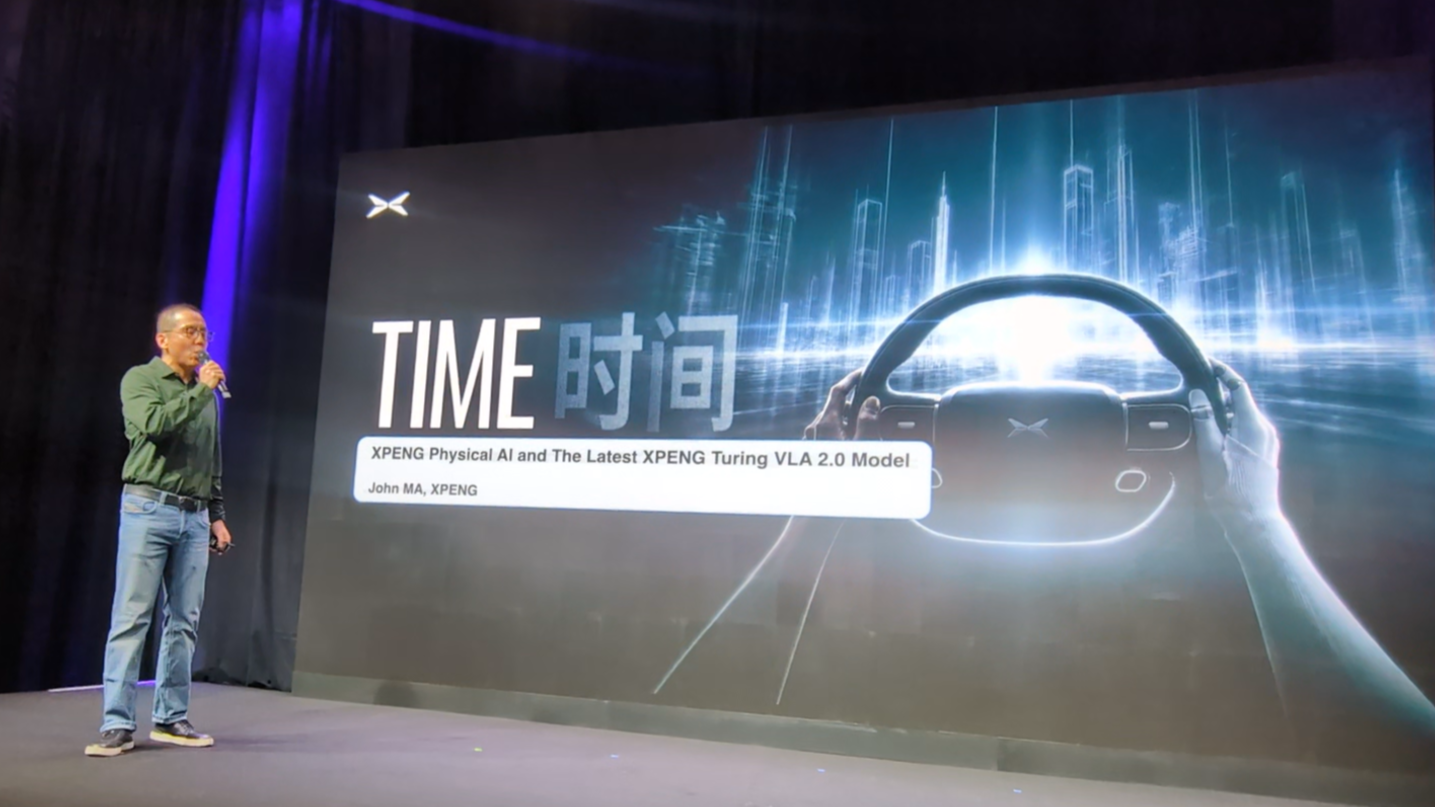
Dr. John Ma, XPENG’s Senior Director and Head of ADAS & Smart Cabin Overseas Delivery, delivered a keynote presentation dissecting the complexities of the company’s latest VLA 2.0 Turing model. Following his address, CleanTechnica sat down with Dr. Ma for an exclusive interview to explore how on-board processing, strict European privacy regulations, multi-modal voice agents, and humanoid robotics converge in XPENG’s evolving ecosystem.
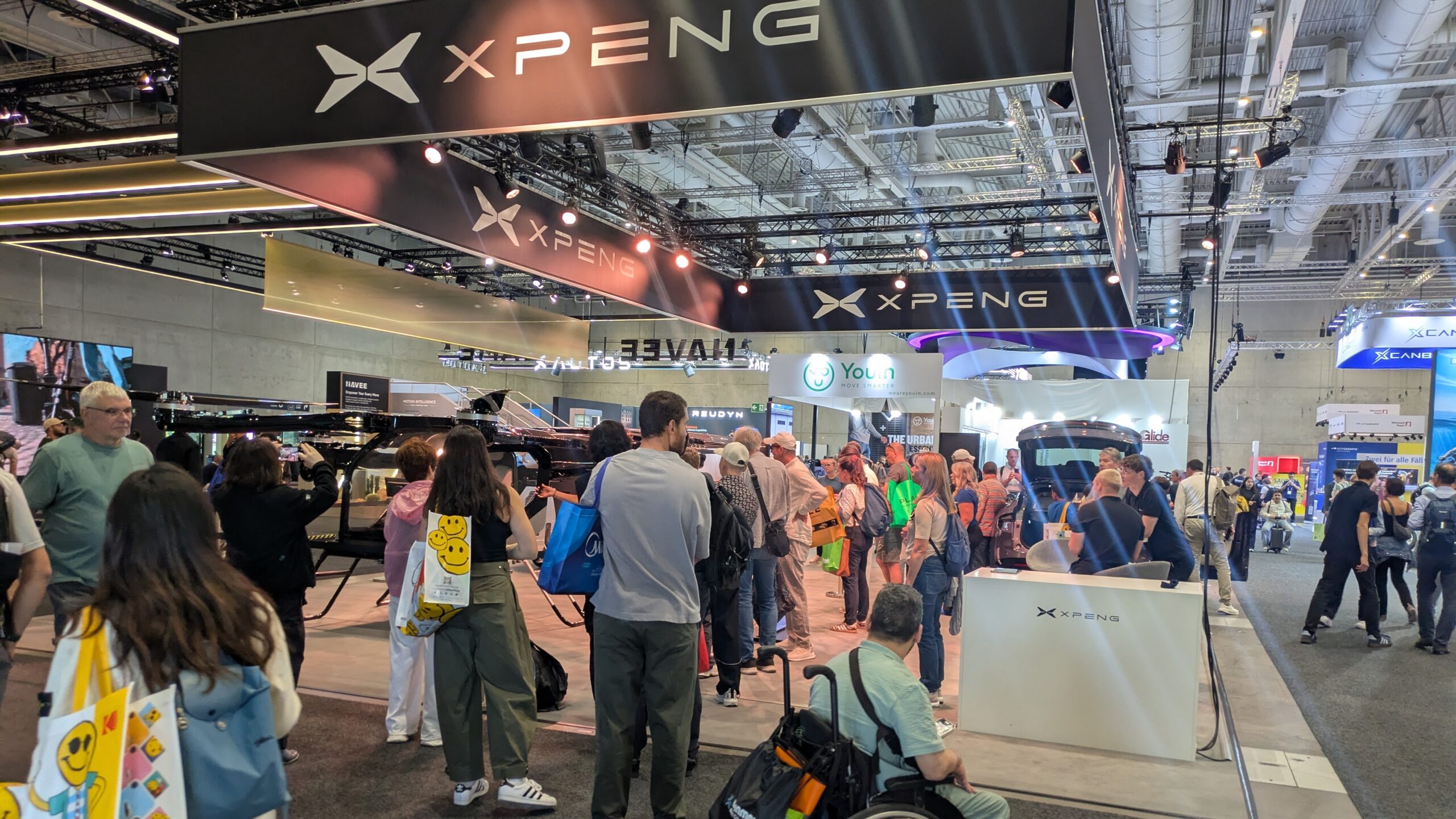
Beyond the presentation halls, XPENG’s exhibition floor drew massive crowds. Attendees marveled at the IRON humanoid robot, inspected the production-bound flying car, and explored the highly anticipated L03 electric vehicle. As XPENG accelerates its global footprint—backed by a robust 31,600-employee workforce where nearly 45% are dedicated to research and development—the company is positioning itself not just as an EV manufacturer, but as a pioneer of integrated physical artificial intelligence.
Detailed Chronology & Technical Breakdown
The Imperative of Physical AI Constraints
The core of Dr. Ma’s IFA presentation focused on a fundamental reality often overlooked in software-centric AI circles: the unforgiving nature of the physical world. Unlike cloud-based large language models that benefit from vast server farms and elastic latency windows, onboard automotive AI operates under strict physical boundaries.
Energy Consumption: Advanced chipsets must draw minimal power to preserve vehicle range.
Latency: Response times must be instantaneous. In autonomous driving, milliseconds dictate safety.
Regulatory Compliance: Every algorithmic adjustment must satisfy stringent international safety certifications and local legal frameworks.
To tackle these challenges, XPENG relies on its proprietary Turing chipset architecture, which delivers industry-leading processing power directly on the edge. Rather than routing sensor data to remote data centers—a practice that introduces latency and privacy vulnerabilities—XPENG processes complex environments locally inside the vehicle.
Inside the VLA 2.0 Turing Model: The Dimension of Time
The most significant advancement in the VLA 2.0 (Version 6.3.0) update is the integration of temporal context. Traditional autonomous systems often react strictly to the immediate present. XPENG’s updated model, however, evaluates historical data to understand past events, navigate the present, and anticipate the future.
Infini-VLA: Places onboard decision-making into a temporal framework. By processing up to 30 seconds of historical data while strictly conserving computing power, the vehicle builds a continuous behavioral memory.
Streaming Inference: Anticipates immediate trajectory shifts, drastically improving response times by up to 300%.
X-Foresight: Projects environmental states six seconds into the future, enabling proactive navigation decisions.
Flow Matching: Evaluates multiple potential trajectory solutions simultaneously, selecting the safest and most efficient path through complex traffic conditions.
These technologies are no longer theoretical; they are actively deployed in China. XPENG’s commercial Robotaxi fleet is currently operating in Guangzhou, with broader geographical coverage scheduled for rollout next year.
Supporting Context & Metrics: XPENG’s Global Scaling
XPENG’s presence at IFA Berlin underscores a broader strategic pivot toward international markets, with Europe serving as a critical proving ground. Developing technologies for European roads requires rigorous localization to adapt to distinct traffic laws, winding infrastructure, and driver habits.
Workforce and R&D Investment
A company’s ambitions are best measured by its resource allocation. XPENG currently employs over 31,600 people globally. Crucially, 44.79% of its workforce is dedicated entirely to Research and Development (R&D). This massive engineering talent pool explains the rapid cadence of major software deployments, such as the VLA 2.0 iteration, and hardware innovations like the Turing chip family.
Show Floor Highlights: The L03 and Beyond
Visitors crowding XPENG’s IFA booth experienced a snapshot of a multi-modal future.
The Flying Car: Many attendees initially dismissed the displayed flying car as a static concept piece. They were visibly surprised to learn that XPENG is actively ramping up production lines this year while navigating ongoing regulatory approval processes.
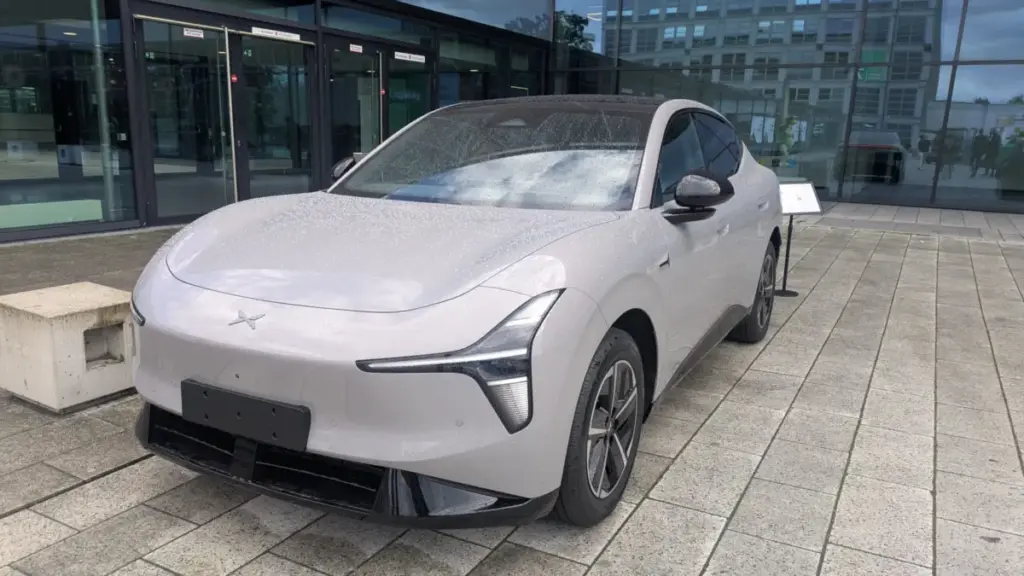
The L03 EV: Following its debut in Munich, the L03 captured significant attention in Berlin. Attendees repeatedly praised its spacious cabin, premium material quality, and high-end audio performance. Several visitors expressed shock upon learning the vehicle’s actual price point, having assumed from its feature set and build quality that it belonged to a much higher luxury bracket. With VLA 2.0 intelligent driving capabilities slated for European activation via an over-the-air (OTA) update early next year, the L03 is well-positioned to make a major market impact.
Official Statements: Exclusive Q&A with Dr. John Ma
Following his keynote, Dr. John Ma sat down to discuss the architectural scaling of VLA 2.0, multi-lingual voice control, and the future integration of autonomous vehicles and robotics.
Scaling VLA 2.0 to Single-Chip and Legacy Hardware
Q:XPENG currently offers VLA 2.0 on newer models equipped with three in-house Turing chips, plus a fourth for redundancy in Robotaxis. How will users experience the upcoming "distilled" version of the model designed for single Turing chips and older dual-Orin setups?
Dr. John Ma: "We just did some public trials of our single Turing chipset machine, and Orin execution is still under development. I would not like to say that we want to compromise the experience. We still think safety must be guaranteed—there can be no safety compromises.
As for smoothness, maybe there will be some slight differences because computing power has physical constraints, even though we try to distill the best parts of the model into a smaller footprint. We haven’t had a formal release to all passengers yet; we are actively gathering feedback. If we notice scenarios that aren’t quite up to standard, we will address them via OTA updates. In theory, we do not want to lose anything. We will try our best to ensure it is comparable to our Ultra machine [which features three chipsets], but there must be some slight variances. We are letting customer feedback guide our final tuning."
Multilingual Master Agent Voice Control
Q:The version 6.3.0 update introduced Master Agent conversational voice control for vehicle operations on Ultra and Robotaxi platforms. How is this natural language capability expanding into international languages and dialects?
Dr. John Ma: "With our Turing chipset—specifically utilizing the third chip for audio interactions—our system is built upon a foundational foundation model that is a large language model itself. This means it is inherently natural and capable of rapid linguistic adaptation.
We already support multiple languages, including English, Mandarin, and Cantonese, alongside European languages like French, German, Spanish, Italian, and others. We have major news and live demonstrations planned for the upcoming Paris Motor Show, so stay tuned."
The Universality of XLLM Across Form Factors
Q:Can XPENG’s locally executed Large Language Model (XLLM) architecture be generalized beyond vehicles to other autonomous hardware?
Dr. John Ma: "Yes, exactly. That is the beauty of our technology. We use the VLA 2.0 architecture, which bridges everything in the physical world through vision, language, and action. That is why we use this exact model as the foundational base for our humanoid robots and our flying cars.
It has immense potential to be derived into diverse applications—not just vehicles, not just robots, but potentially anything. For now, our primary focus is delivering exceptional quality to the European market, passing homologation, and tuning our models to local traffic laws and user habits. Our overseas development teams share one big mission: embracing and deeply adapting to local markets."
Closing the Loop: Vehicles Meeting Humanoid Robots
Q:Given that XPENG processes everything onboard—which naturally solves data privacy challenges—what new, groundbreaking applications emerge when you possess this level of edge-computing power?
Dr. John Ma: "There is a key concept I’ve been thinking about: the next evolutionary step of Physical AI is to fundamentally change human daily life. We build autonomous vehicles, humanoid robots, and flying cars. If we limit AI strictly to vehicles, the scope remains narrow.
Humanoid robots represent a very central product for us, recently receiving independent investment. Looking ahead, what if we combine these physical AI devices together? Imagine a scenario where a humanoid robot is onboard your vehicle. When you need to pick up groceries, your vehicle drives itself to the destination. Instead of you getting out, your robot steps out of the vehicle, walks into the supermarket, retrieves your bags, returns to the vehicle, and the car drives you home.
It creates a completely closed-loop experience. Through the XPENG app, you don’t just utilize a digital agent; you deploy a physical agent. That will be truly fantastic."
Future Outlook
XPENG’s roadmap points toward an aggressively interconnected future. By anchoring its technological philosophy in edge-computed Physical AI, the company bypasses many of the cloud dependency and privacy pitfalls plaguing competitors.
As European customer deliveries for the L03 ramp up—and as VLA 2.0 software updates roll out to unlock advanced autonomous capabilities early next year—XPENG is establishing itself as a serious contender in the Western automotive landscape. Furthermore, the impending convergence of intelligent vehicles, autonomous flight systems, and the IRON humanoid robot signals that XPENG’s ambitions extend far beyond traditional vehicle manufacturing.
With 44.79% of its expanding workforce dedicated to R&D, XPENG is transitioning from a regional innovator into a global architect of physical autonomy. Industry watchers should keep a close eye on the upcoming Paris Motor Show, where further announcements regarding international voice integration and robotic deployment are expected to unfold.