

Executive Overview
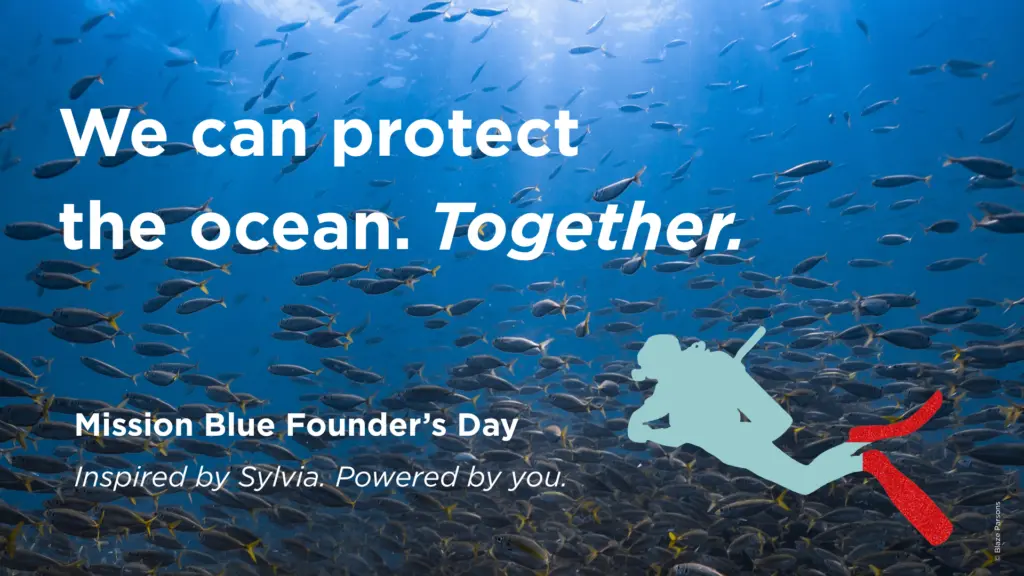
On August 30, the global marine conservation community will mark a historic milestone as Mission Blue—the internationally renowned ocean advocacy foundation established by legendary oceanographer Dr. Sylvia Earle—celebrates its inaugural Founder’s Day. This newly minted annual tradition is designed to do far more than honor the birthday of the woman affectionately known worldwide as "Her Deepness." Instead, Founder’s Day serves as a strategic mobilization platform, channeling Dr. Earle’s lifelong philosophy into a renewed, decentralized charge for planetary stewardship.
At its core, Mission Blue operates on a deceptively simple yet profoundly effective formula articulated by Dr. Earle herself: When people know, they care; and when they care, they act. Over decades of tireless research, exploration, and public advocacy, Dr. Earle has transformed the global consciousness surrounding the marine biosphere. She has steered humanity away from viewing the oceans as a bottomless garbage dump and an inexhaustible pantry, reframing them as the vital, beating heart of Earth’s life-support system.
However, as ecological pressures on the world’s oceans reach unprecedented thresholds—driven by overfishing, industrial pollution, climate change, and ocean acidification—Mission Blue recognizes that individual inspiration alone is no longer enough. The inaugural Founder’s Day seeks to institutionalize a shift from passive admiration to active, collective intervention. By leveraging the foundation’s sprawling network of "Hope Spots"—special marine areas scientifically identified as critical to the health of the planet—Founder’s Day is structured to activate grassroots communities, scientists, educators, philanthropists, and everyday citizens.
This comprehensive report explores the genesis of Mission Blue’s Founder’s Day, examines the structural mechanics of the global Hope Spots network, analyzes the psychological and ecological imperatives driving this new tradition, and outlines the tangible pathways through which individuals can participate in what is rapidly becoming one of the most vital conservation movements of the 21st century.
Detailed Chronology: From Submersibles to a Global Movement
To understand the weight and momentum behind the first-ever Founder’s Day, one must trace the extraordinary trajectory of Dr. Sylvia Earle’s life and the evolution of Mission Blue.
The Pioneer Years: Mapping the Unknown Deep
Long before founding Mission Blue, Dr. Sylvia Earle was shattering glass ceilings in the male-dominated fields of marine biology and oceanography. Born in New Jersey in 1935 and raised on a West Coast farm, Earle developed an early, all-consuming fascination with the natural world, particularly aquatic life. She earned her Bachelor of Science from Barry University, followed by a Master’s degree and a Ph.D. from Duke University.
Throughout the 1960s and 1970s, Earle participated in groundbreaking underwater expeditions. In 1970, she served as the leader of the pioneering Tektite II project, spending two weeks living in an underwater habitat 50 feet below the surface of the Caribbean Sea alongside an all-female crew of aquanauts. Four years later, she broke depth records by walking untethered on the seafloor at a staggering depth of 1,250 feet off the coast of Oahu, Hawaii, using an experimental atmospheric diving suit.
These daring descents granted Earle a perspective shared by very few human beings in history: a panoramic, intimate view of the oceans as dynamic, interconnected, and increasingly fragile ecosystems.
The Birth of Mission Blue
By the turn of the 21st century, the cumulative impacts of industrial exploitation on marine ecosystems had become alarming. Coral reefs were bleaching, pelagic fisheries were collapsing, and vast gyres of plastic waste were accumulating in remote oceanic basins. Recognizing that traditional, fragmented conservation efforts were falling short, Dr. Earle leveraged her prestigious platform as a TED Prize winner in 2009 to launch Mission Blue.
The premise of the TED Prize was simple yet ambitious: grant the winner one wish to change the world. Dr. Earle’s wish was clear and resonant:
"I wish you would use all means at your disposal—films, expeditions, the web, new submarines—to create a global network of marine protected areas, Hope Spots large enough to save and restore the blue heart of the planet."
From that single, galvanizing moment, Mission Blue was born. Over the subsequent decade and a half, the foundation grew from an ambitious vision into an international coalition of NGOs, scientists, fishermen, indigenous communities, and corporate partners, all united under the banner of ocean restoration.
Institutionalizing the Legacy: The Inaugural Founder’s Day
As Mission Blue matured into a globally recognized force for conservation, leadership within the foundation identified a critical need to cement its underlying ethos into an enduring cultural institution. While Dr. Earle remains the spiritual North Star of the organization, the board and operational team recognized that the longevity of the movement depended on distributing ownership of the mission to the global populace.
Thus, the concept of Founder’s Day was born. Scheduled annually on August 30 to coincide with Dr. Earle’s birthday, the event is intentionally designed not as a retrospective gala celebrating a single individual, but as a forward-looking day of action. It marks the formal transition of Mission Blue from a visionary-led enterprise to a self-sustaining, community-powered global movement.
Supporting Context & Metrics: The Hope Spots Architecture
The operational backbone of Mission Blue is its Hope Spots initiative. These are not merely scenic areas or tourist destinations; they are scientifically designated sites that are critical to the health of the ocean due to their unique biodiversity, abundance of threatened species, or vital ecological functions.
Understanding Hope Spots
As of 2024, Mission Blue has recognized over 150 Hope Spots spanning the globe, from the icy waters of the Arctic to the vibrant coral ecosystems of the Coral Triangle, and down to the deep abyssal trenches. However, the designation of a Hope Spot is only the first step. The true power of the initiative lies in the appointment of Hope Spot Champions—passionate local leaders, indigenous stewards, scientists, and educators who step forward to champion the protection of their local waters.
+-------------------------------------------------------------------+
                 THE MISSION BLUE CONSERVATION CYCLE
+-------------------------------------------------------------------+

   [ Scientific Identification ] ---> Identifies critical marine areas
                 |
                 v
   [ Hope Spot Designation ]   ---> Establishes global recognition
                 |
                 v
   [ Local Champion Rally ]    ---> Mobilizes communities & stakeholders
                 |
                 v
   [ Grassroots Action ]       ---> Drives policy change & active restoration
Metrics from marine conservation studies consistently underscore the efficacy of this localized approach. According to data tracked by marine ecologists, marine protected areas (MPAs) that enjoy strong local community engagement and enforcement exhibit fish biomass recovery rates up to five times higher than top-down, government-mandated reserves that lack local buy-in.
Why the Ocean Needs Immediate Intervention
The urgency surrounding the launch of Founder’s Day is underscored by grim environmental metrics:
- The Carbon Sink: The ocean has absorbed over 90% of the excess heat generated by anthropogenic climate change and roughly 30% of all human carbon dioxide emissions, resulting in unprecedented ocean warming and acidification.
- Biodiversity Loss: According to the Intergovernmental Science-Policy Platform on Biodiversity and Ecosystem Services (IPBES), approximately 66% of marine environments have been significantly altered by human actions, putting thousands of species at risk of functional extinction.
- Economic Stakes: Over 3 billion people rely on marine and coastal biodiversity as their primary source of protein and livelihood. The degradation of coastal fisheries threatens global food security and economic stability.
In this context, Mission Blue’s Hope Spots and the mobilization engine of Founder’s Day provide a scalable framework to reverse these trends. By empowering local actors to protect regional waters, Mission Blue stitches together a global quilt of marine resilience.
Official Statements and Perspectives
The launch of the first Founder’s Day has drawn enthusiastic statements from leaders within Mission Blue and the broader environmental conservation community.
Reflecting on the philosophy behind the new tradition, Dr. Sylvia Earle noted:
"People often ask me if I am hopeful about the future of the ocean. My answer is yes, but only if we realize that time is running out. We have the knowledge, we have the tools, and we know what is at stake. But we cannot rely on any single individual to save the blue heart of the planet. Founder’s Day is a celebration of what happens when the spark of inspiration catches fire across communities, borders, and generations. When you take action for the ocean, you are taking action for your own future."
Echoing these sentiments, Mission Blue Executive Director emphasized the structural importance of community-led conservation:
"Mission Blue has never been a top-down organization; it is an ecosystem of passionate people. Whether it is a teacher introducing elementary students to marine biology, a scientist tracking migratory whale patterns, or a donor funding a community-led reef restoration project, every action counts. Founder’s Day is designed to remind our global network that while Dr. Earle showed us the path, walking it is a collective responsibility."
International conservation partners have also lauded the initiative. Dr. Jennifer Martinez, a marine biologist and member of the Hope Spots Council, remarked:
"The genius of Mission Blue’s approach is that it democratizes ocean conservation. You don’t need a multi-million-dollar research vessel to make a difference. You need passion, local knowledge, and the willingness to connect with your community. Founder’s Day provides the focal point for all of us to synchronize our efforts on a global scale."
Future Outlook: Building a Permanent Legacy of Ocean Stewardship
As Mission Blue looks toward the horizon, the establishment of Founder’s Day marks a pivotal evolution in how environmental organizations mobilize public support. Moving forward, the foundation plans to utilize the annual August 30 event as a key performance marker for global conservation goals, aiming to expand the Hope Spot network to cover 30% of the ocean by 2030—a target widely endorsed by international scientific bodies (often referred to as the "30×30" initiative).
Strategic Pillars for the Future
- Digital Mobilization and Education: Utilizing modern digital platforms, educational toolkits, and virtual reality expeditions, Mission Blue aims to bring the wonders of the deep sea directly into classrooms worldwide, fostering ocean literacy in the next generation.
- Amplifying Indigenous Leadership: Future Hope Spot campaigns will increasingly center on indigenous communities who have managed coastal waters sustainably for centuries, integrating traditional ecological knowledge with modern marine science.
- Enhanced Philanthropic Infrastructure: Founder’s Day will serve as the anchor for peer-to-peer fundraising campaigns, ensuring that grassroots projects in developing nations receive the direct financial support necessary to secure legal protections and enforcement mechanisms for their local marine environments.
How You Can Take Part: Actionable Ways to Celebrate Founder’s Day
Founder’s Day is built on the premise that every individual possesses the power to effect meaningful change. You do not need to be a professional oceanographer or a seasoned activist to participate. Mission Blue has outlined several direct pathways for individuals, families, and organizations to get involved:
- Support Conservation Financially: Make a direct gift to support Mission Blue’s operational overhead and the ongoing expansion of the global Hope Spots network. Contributions directly fund scientific expeditions, community outreach, and advocacy tools.
- Launch a Peer-to-Peer Fundraiser: Take the initiative by setting up a personalized fundraising page dedicated to Founder’s Day. Invite your friends, family, and colleagues to contribute in honor of Dr. Earle’s birthday, turning personal celebrations into collective impact.
- Spread Ocean Literacy: Introduce someone new to the ocean. Share Mission Blue’s documentaries, articles, or videos within your social network. Spark conversations about the importance of marine ecosystems during dinner parties, community meetings, or classroom discussions.
- Advocate for a Local Special Place: Speak up for a Hope Spot or any body of water in your region that requires protection. Write to local representatives, participate in local beach cleanups, or support sustainable seafood initiatives in your community.
Conclusion
The health of the global ocean is inextricably linked to the survival of humanity. As we approach the inaugural Founder’s Day on August 30, Mission Blue invites the global community to step up, speak out, and take action.
Inspired by the visionary life of Dr. Sylvia Earle and powered by the collective energy of millions of concerned citizens worldwide, Founder’s Day is more than a commemoration—it is a clarion call. It reminds us that while the challenges facing our blue planet are immense, the power of a united, activated global community is boundless.
Because protecting the ocean takes all of us.



