

By Global Environment & Industry Desk
In partnership with Grist and WABE, Atlanta’s NPR station
Executive Overview
For years, the state of Georgia aggressively positioned itself as the undisputed capital of the American clean energy transition. Bolstered by aggressive economic development packages, strategic worker-training initiatives, and a warm welcome from Republican Governor Brian Kemp, the state transformed into a magnet for multi-billion-dollar investments. Electric vehicles (EVs), next-generation solar panels, and high-capacity lithium-ion batteries became the building blocks of a new industrial renaissance across the American Southeast.
However, the golden era of unbridled EV growth has hit a formidable roadblock. A volatile shift in federal political leadership, the sudden evaporation of consumer tax incentives, new trade tariffs, and localized regulatory hurdles have dramatically destabilized the landscape. Over the past year and a half, automakers, battery cell manufacturers, and supply-chain partners have been forced to navigate a grueling period of economic turbulence marked by canceled expansions, high-profile immigration raids, and cooling consumer demand.
Yet, rather than retreating, Georgia’s manufacturing sector is proving remarkably resilient. Facing a volatile economic climate, industry leaders are not abandoning their long-term electrification goals; instead, they are pivoting. By transforming rigid assembly lines into flexible, multi-powertrain operations, leaning heavily into the production of hybrid vehicles, and diversifying battery applications toward grid storage, Georgia’s automotive and clean energy juggernauts are rewriting the playbook for modern industrial survival.
Detailed Chronology: From Industrial Gold Rush to Policy Whiplash
The Rise of the Southeast’s Clean Energy Hub
The transformation of Georgia’s industrial corridors did not happen by accident. For the better part of a decade, Governor Brian Kemp’s administration rolled out the red carpet for clean tech companies. State officials combined lucrative tax credits with specialized workforce development programs, ensuring that local technical colleges could feed a steady stream of trained labor directly into upcoming factories.
The strategy paid immediate dividends.
- 2018: Homegrown Georgia bus manufacturer Blue Bird achieved a major milestone by commercially launching its pioneering line of electric school buses, eventually leading to a major factory expansion in 2023.
- 2022: South Korean automotive giant Hyundai broke ground on a sprawling, multi-billion-dollar Metaplant near Savannah, billed as a dedicated hub exclusively for electric vehicle production.
- 2024: Kia officially joined the fray, integrating EV manufacturing into its established production lines at its West Point plant.
- 2025: Rivian—the high-profile electric adventure vehicle manufacturer—officially broke ground on its massive manufacturing plant east of Atlanta, marking one of the largest economic development projects in the annals of Georgia history.
Alongside these headline-grabbing assembly plants, a robust sub-economy of battery makers, recycling facilities, and domestic solar panel producers poured capital into the state, turning Georgia into a crown jewel of the federal clean energy push.
The Storm Clouds Gather: Policy Whiplash and Federal Headwinds
That upward trajectory stalled abruptly following a sweeping shift in national politics. Under the second Trump administration, the macroeconomic and regulatory environment for clean technology underwent an overnight transformation.
Federal consumer tax credits for electric vehicle purchases were dismantled. At the same time, the administration imposed aggressive tariffs on imported battery packs, charging hardware, and vital upstream components. Environmental regulations governing gas-powered vehicle emissions were significantly loosened, and the Biden-era mandate pushing federal agencies to rapidly electrify their vehicle fleets was unceremoniously scrapped.
The friction was not solely regulatory. Exactly one year ago, federal immigration enforcement agents executed a massive, highly disruptive raid on an electric vehicle battery manufacturing facility in the state, detaining more than 400 workers—primarily South Korean nationals whose specialized technical expertise was critical to bringing the high-tech plant online.
The combination of regulatory rollbacks, trade barriers, labor disruptions, and shifting consumer sentiment plunged what had been a runaway economic engine into a deeply uncertain phase.
Supporting Context & Metrics: Navigating the Slump
Despite the severe friction introduced by shifting political winds, the underlying fundamentals of the market reveal a nuanced reality: while some projects have flinched, the overarching industrial commitment remains largely intact.
According to data compiled by the Southern Alliance for Clean Energy (SACE), the region has absorbed noticeable body blows over the past twelve months. Companies have grappled with localized layoffs—most notably at SK Battery—and roughly $4 billion in planned clean energy and EV investments across the wider Southeast have either been scaled back or canceled outright.
However, that contraction is heavily overshadowed by the sheer scale of surviving capital. SACE metrics indicate that nearly $74 billion in clean manufacturing investments are still actively moving forward across the region. Georgia continues to anchor this economic footprint, but the nature of the products rolling off its assembly lines has fundamentally shifted.
The Charging Infrastructure Gap
Compounding the manufacturing adjustments are structural hurdles unique to Georgia’s domestic market. Unlike progressive states on the West Coast or the Northeast, Georgia maintains virtually no state-level purchase incentives to encourage consumer EV adoption. In fact, the state levies a punitive annual extra registration fee on electric vehicles specifically designed to offset lost revenues from gasoline taxes.
"When it comes to electric vehicles, Georgia politics remains utterly confused," notes Stan Cross, electric vehicle program director at the Southern Alliance for Clean Energy. While the state aggressively courts upstream manufacturing jobs to boost local employment, its downstream policies actively discourage local residents from buying the very products being built in their backyards.
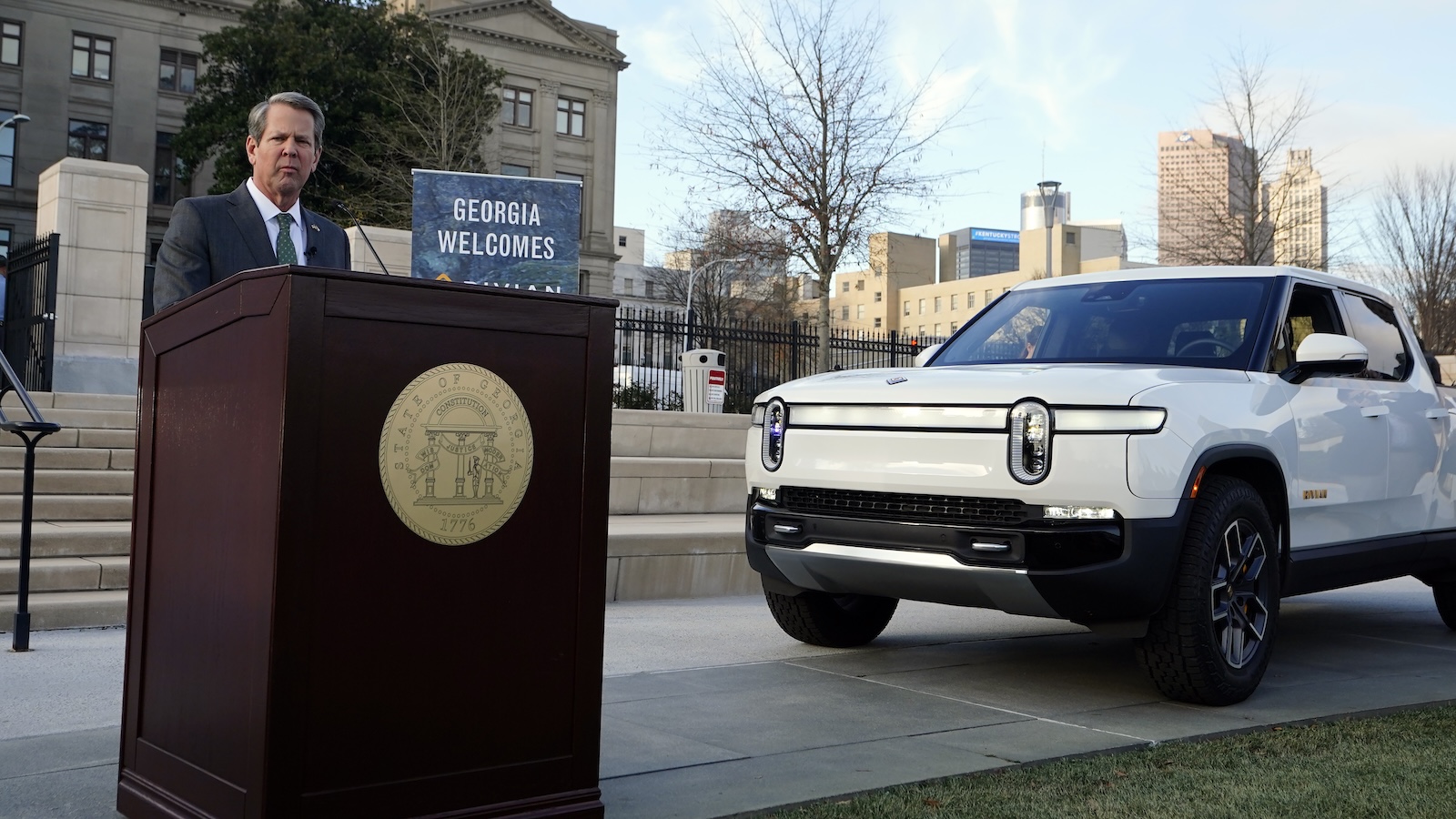
Nevertheless, private enterprise and regional utilities are quietly working to bridge the infrastructure gap. Kia and Hyundai are active stakeholders in IONNA, a major high-speed charging network consortium that has begun deploying high-capacity charging stations across the state, including a flagship installation directly at the Kia factory site in West Point. Furthermore, regional electric utilities have ramped up their investments; SACE reports that utility-led EV infrastructure spending across the Southeast rose by 14 percent over the past year.
Official Statements and Industry Insights
To understand how automakers are surviving this turbulent climate, one only needs to walk the floor of Kia’s manufacturing plant in West Point, Georgia.
Here, a complex, continuously moving line weaves its way through the factory. Rather than churning out massive, uniform batches of a single vehicle model—the traditional mass-production model perfected by Henry Ford—the West Point plant operates with the agility of a high-end short-order kitchen.
Engineered with cutting-edge manufacturing flexibility, the plant can seamlessly shift between disparate vehicle models, custom colors, diverse trim packages, and entirely different powertrains on the same line. Whether a shell requires a traditional internal combustion engine, a hybrid setup, or a purely electric drivetrain, the factory adapts in real time.
+-----------------------------------------------------------------+
                 KIA WEST POINT FLEXIBLE PRODUCTION
+-----------------------------------------------------------------+
 [ Raw Steel Chassis ]
         │
         ▼
 [ Multi-Powertrain Main Assembly Line ]
         ├──► Gas-Powered Engines (Traditional ICE)
         ├──► Hybrid Powertrains   (Current Market Demand)
         └──► All-Electric Battery Packs (Future Scaling)
         │
         ▼
 [ Custom Delivery to Dealerships per Real-Time Consumer Demand ]
+-----------------------------------------------------------------+
"What we’ve seen is a transition back away from maybe full EV vehicle building to this kind of a middle-of-the-road opportunity," explains Stuart Countess, CEO of the Kia manufacturing facility in West Point.
Countess emphasizes that corporate long-term faith in electric vehicles remains completely unshaken. However, the realities of consumer economics—specifically vehicle sticker prices, consumer anxiety over charging access, and the abrupt removal of federal point-of-sale subsidies—have created a temporary ceiling.
"We had a tax incentive credit that did go away," Countess notes candidly. "Sales were really moving in the right direction, but once it went away, it became a much different environment."
In response to this altered landscape, sister company Hyundai has mirrored Kia’s strategic pivot, rapidly integrating hybrid production capabilities into its multibillion-dollar Savannah Metaplant, which was originally blueprinted exclusively for pure-play EVs.
"It’s kind of a messy period we’re in right now," observes Stephanie Valdez-Streaty, director of industry insights at Cox Automotive. "But I think the manufacturers are adjusting."
Concurrently, upstream battery manufacturers across Georgia are executing a parallel pivot. Recognizing that passenger vehicle adoption rates are experiencing a temporary plateau, several major battery cell producers have retooled their operations to manufacture high-capacity energy storage systems (ESS) for utility grids and commercial solar installations, hedging their bets against automotive market fluctuations.
"The state continues to have a lot riding on the success of both the electric vehicle but also the battery market," says SACE’s Stan Cross. He stresses that while legislative leaders remain paralyzed by partisan rhetoric surrounding green energy, regulatory avenues offer a powerful alternative. "Though we’re not seeing a lot of activity on the legislative side, we do see potential on the regulatory side and really are encouraging Georgia Power to step up and help kind of fill the void that policymakers in the state are creating."
Future Outlook: The Long-Term Trajectory of Mobility
As the automotive sector crawls out of an 18-month trough of uncertainty, industry analysts are urging patience. The transition from a century-old combustion engine economy to a fully electrified transportation network was never slated to be a linear sprint; rather, it is a generational industrial transformation fraught with inevitable political friction and economic growing pains.
For Georgia, the immediate future will likely be defined by flexibility. Automakers will continue to lean heavily on hybrids and plug-in hybrids to capture cost-conscious consumers who are reluctant to make the immediate leap to pure battery-electric vehicles. Meanwhile, suppliers will diversify their product lines between vehicular power units and stationary grid storage batteries to insulate themselves against macro-level policy shocks.
Despite the current disconnect between state-level hostility toward green subsidies and the state’s aggressive recruitment of industrial manufacturing, experts believe physical proximity to production will ultimately shift cultural and consumer tides.
"It’s like that familiarity, right?" argues Cox Automotive’s Stephanie Valdez-Streaty, pointing to the psychological impact of having thousands of local residents employed directly by clean tech firms. "People have jobs at those companies and familiarity with those products."
Ultimately, the consensus among industry insiders is clear: the automotive world is still going electric. The destination has not changed, even if the road map has required a sudden and pragmatic recalculation. As Georgia’s factories continue to hum—adjusting their mix of gas, hybrid, and electric models to meet the pulse of the market—the Peach State remains uniquely positioned to weather the storm and emerge as a resilient powerhouse in the future economy of global mobility.



